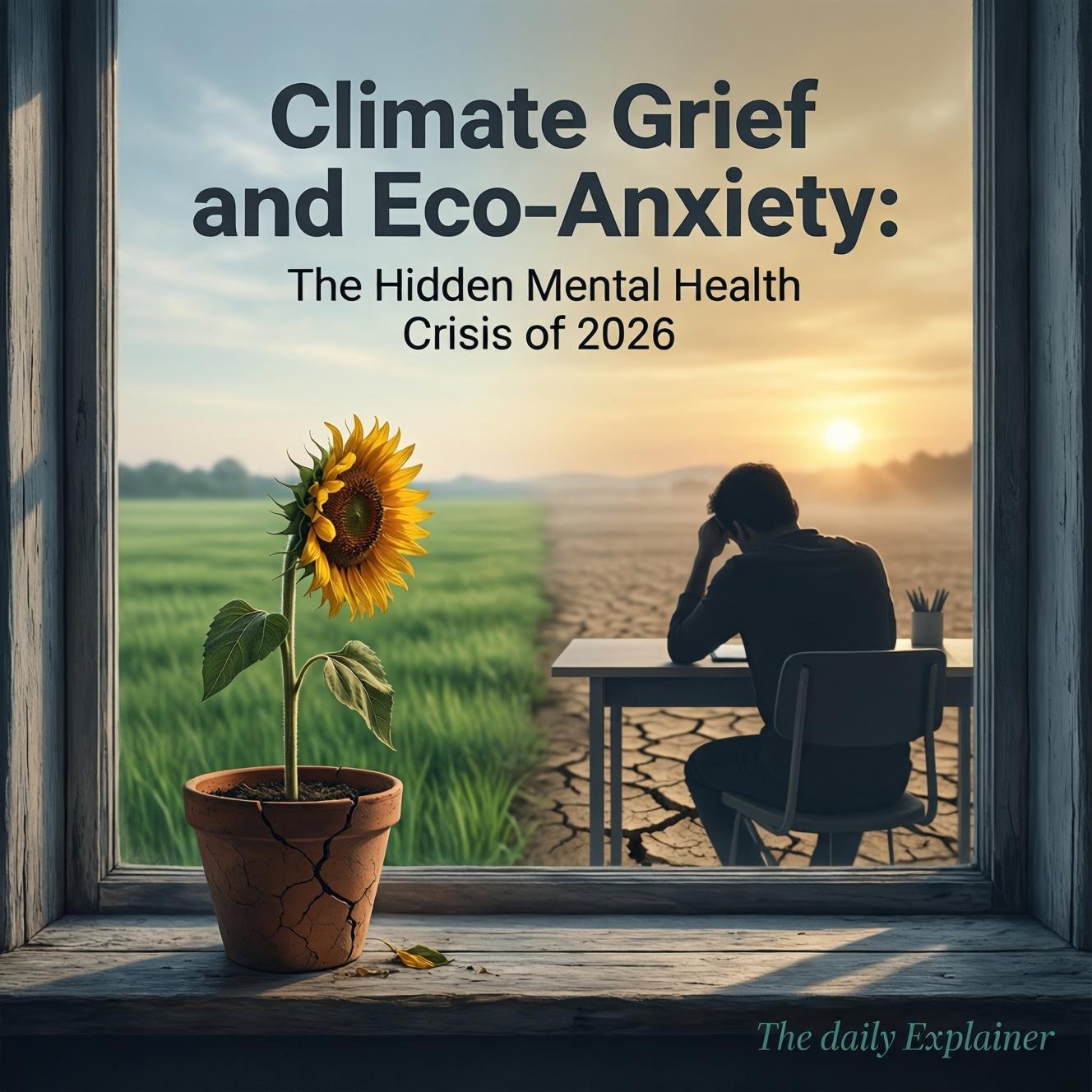
In 2026, the psychological toll of the climate crisis is finally being recognized as a public health emergency, affecting millions through direct trauma, chronic stress, and existential dread.
Introduction – Why This Matters
In my years of writing about climate change, I’ve received thousands of comments and emails from readers. The most common sentiment, by far, is not confusion about the science or skepticism about the solutions. It’s a deep, heavy, often unspoken feeling that I’ve come to recognize as grief. The information about climate grief and Eco-anxiety is in detailed below.
People write to me about the forest near their childhood home that burned down. They write about the fear they feel when they look at their young children and imagine the world they will inherit. They write about the exhaustion of trying to live sustainably in an unsustainable world, and the guilt of knowing their individual actions are a drop in a very large, very troubled bucket. They write about feeling alone in these feelings, unsure if it’s normal to mourn a planet that is still, technically, here.
What I’ve found is that this is not a personal failing. It is a collective, rational response to an overwhelming threat. And in 2026, it is reaching crisis proportions.
The mental health impacts of climate change are no longer a fringe concern. The American Psychological Association (APA) has been publishing reports on the topic since 2017. The Lancet Countdown on Health and Climate Change now tracks mental health indicators. The World Health Organization (WHO) has called for climate change to be integrated into mental health programs globally.
This article is about that hidden crisis. We will define terms like “eco-anxiety” and “climate grief,” explore the pathways from a warming planet to a wounded psyche, share stories of those affected, and—most importantly—offer hope and strategies for coping, connecting, and finding meaning in the fight.
Background / Context
The recognition that environmental change affects mental health is not entirely new. Researchers have long studied the psychological impacts of natural disasters—the PTSD that follows a hurricane, the depression that follows a flood. But the climate crisis is different. It is not a single event with a clear beginning and end. It is a slow, unfolding, existential threat. It is the news that gets worse every year. It is the heatwave that feels different from all the heatwaves before. It is the creeping knowledge that the stable world our ancestors knew is gone, and a more chaotic, uncertain world is settling in.
The term “eco-anxiety” began appearing in academic literature and popular discourse around 2017, when the APA issued a report on the mental health impacts of climate change . It was defined as “a chronic fear of environmental doom.” “Climate grief” emerged around the same time, describing the mourning for lost or degraded ecosystems, species, and ways of life.
The COVID-19 pandemic, paradoxically, helped bring this issue into sharper focus. It was a global crisis that affected everyone, and it normalized conversations about collective trauma, anxiety, and grief. It opened a door for discussing how large-scale, existential threats affect our mental well-being.
By 2026, the evidence is overwhelming. A major global study published in The Lancet Planetary Health in 2024 found that 59% of young people (ages 16-25) were very or extremely worried about climate change, and over 45% said their feelings about climate change negatively affected their daily life and functioning. This is not a niche issue; it is a generational health crisis.
Key Concepts Defined
To understand this hidden crisis, we need a precise vocabulary that captures the unique psychological challenges of living through an era of ecological collapse.
- Eco-Anxiety: A chronic fear of environmental doom. It’s not a clinical diagnosis, but a recognized psychological response to the awareness of the climate crisis. It can manifest as worry, panic attacks, insomnia, and obsessive thoughts about the future.
- Climate Grief (or Ecological Grief): The mourning for the loss of ecosystems, species, landscapes, and ways of life due to climate change. This can be grief for places we have personally loved and lost, or “anticipatory grief” for what we know we will lose in the future.
- Solastalgia: A term coined by philosopher Glenn Albrecht. It describes the distress caused by environmental change close to home. It’s the homesickness you feel while you are still at home, because your home has been transformed by forces beyond your control (e.g., drought, fire, development) .
- Pre-Traumatic Stress: A term used by some therapists to describe the anxiety and dread people feel before a disaster strikes, knowing that it is likely coming. It’s like PTSD, but for the future.
- Post-Traumatic Growth: A positive psychological concept that refers to the positive change experienced as a result of struggling with a major life crisis. In the climate context, it can mean finding new purpose, deeper connections, and a stronger commitment to action in the wake of a climate-related trauma.
- Collective Trauma: A psychological reaction to a traumatic event that affects an entire society. Climate change, with its global scale and unfolding nature, is a form of slow-motion collective trauma.
- Burnout: A state of emotional, physical, and mental exhaustion caused by excessive and prolonged stress. It is common among climate activists, scientists, and journalists who are constantly exposed to the scale of the crisis and the slow pace of action.
- Environmental Identity: The sense of connection people feel to the natural world, and the part of their self-concept that is based on their relationship with nature. Climate change can threaten this identity, leading to grief and anxiety.
How It Works (A Step-by-Step Breakdown of Climate Impacts on Mental Health)
The pathway from a warming planet to a struggling psyche is complex and multifaceted. Here is a step-by-step breakdown of the three main pathways identified by researchers at the American Psychological Association and others.
Step 1: Direct Impacts – Acute Trauma from Extreme Weather
This is the most straightforward pathway. A person experiences a climate-related disaster: a hurricane, wildfire, flood, or heatwave.
- The Event: They may lose their home, their belongings, their livelihood, or even loved ones. They may fear for their own life.
- The Immediate Aftermath: The psychological aftermath includes acute stress, shock, and grief. Displacement and uncertainty compound the trauma.
- Long-Term Effects: For many, this leads to post-traumatic stress disorder (PTSD), depression, anxiety disorders, and substance abuse. The 2024 Texas heatwave that followed Hurricane Beryl, as discussed in our Compound Disasters article, created a perfect storm of trauma: the fear of the storm, the stress of the power outage, and the physical danger of the subsequent heat, all compounded.
Step 2: Indirect Impacts – Chronic Stress from Gradual Change
This pathway is slower but affects far more people. It’s the erosion of well-being from long-term, gradual changes.
- Economic and Livelihood Stress: Farmers watch their crops fail year after year due to drought. Fishermen see their catches decline as oceans warm and acidify. Tourism operators lose business as ski slopes lose snow and coral reefs bleach. This financial insecurity leads to chronic anxiety, depression, and family stress.
- Displacement and Migration: As some areas become less habitable, people are forced to move. This “climate migration” involves the loss of community, culture, and identity, leading to grief, isolation, and mental health challenges for both those who leave and those who stay behind in emptied communities.
- Physical Health Impacts Leading to Mental Health Impacts: Heatwaves exacerbate cardiovascular and respiratory conditions. Vector-borne diseases spread to new areas. Chronic physical illness is a well-established risk factor for depression and anxiety.
Step 3: Existential and Awareness Impacts – The Weight of Knowing
This is the most universal pathway, affecting people who may never experience a direct climate disaster. It’s the psychological toll of simply knowing about the crisis.
- Information Overload: The constant stream of alarming news—melting ice sheets, record-breaking fires, dire IPCC reports—creates a state of chronic low-grade fear and helplessness. This is the core of eco-anxiety.
- Threat to Identity and Future: For young people especially, the climate crisis casts a shadow over their entire future. It affects decisions about careers, relationships, and whether to have children. This can lead to feelings of hopelessness, powerlessness, and despair. The Lancet study showing 59% of young people are very or extremely worried is a direct measure of this pathway.
- Moral Injury and Burnout: For those working on the front lines—climate scientists, activists, journalists—there is the additional burden of knowing the scale of the problem and the inadequacy of the response. This can lead to a form of moral injury and profound burnout.
Key Takeaways Box:
- Three pathways to harm: Climate change affects mental health directly (disaster trauma), indirectly (chronic stress), and existentially (awareness of the crisis).
- It’s a generational crisis: Young people are disproportionately affected, with over half reporting that climate worry negatively impacts their daily lives .
- It’s not just anxiety: The spectrum includes grief (for lost places), solastalgia (homesickness at home), and burnout (among activists).
- It’s a rational response: Feeling anxious or grieving about the state of the planet is not a pathology; it’s a sane reaction to a threatening reality.
Why It’s Important
The mental health crisis driven by climate change is not a separate issue from the physical crisis. They are deeply intertwined, and ignoring the psychological dimension undermines all other efforts.
- It Undermines the Capacity to Act: Anxiety and hopelessness are paralyzing. If people feel overwhelmed and powerless, they are less likely to engage in the collective action needed to drive the transition. As we explored in our articles on the Circular Economy and Breakthrough Technologies, we need an engaged, hopeful populace to drive change. Mental health support is a prerequisite for effective climate action.
- It’s a Massive Public Health Burden: Mental health conditions are already a leading cause of disability worldwide. Climate change is adding a new, significant layer of risk. Health systems, already strained, must prepare for a surge in climate-related mental health needs. The WHO has called for integrating climate considerations into all mental health programs.
- It Disproportionately Affects the Vulnerable: As with the physical impacts of climate change, the mental health burden falls most heavily on those with the fewest resources. Frontline communities, Indigenous peoples whose cultures are tied to specific landscapes, young people, and those with pre-existing mental health conditions are most at risk. This is a matter of climate justice.
- It Complicates Recovery from Disasters: A community that is traumatized and depressed will struggle to rebuild after a disaster. Addressing mental health needs is essential for effective and equitable recovery, a key part of Climate Adaptation.
- It Affects Decision-Making: As Dr. Lise Van Susteren has argued, overwhelming emotions can lead to either paralysis or reckless behavior. Acknowledging and processing our feelings about the climate crisis is essential for making clear-headed, rational decisions about our future.
Sustainability in the Future
Building a truly sustainable future means building one that supports not just physical and economic well-being, but psychological well-being as well. Here’s what that looks like.
- Integrating Mental Health into Climate Policy: Just as every climate impact assessment should consider effects on infrastructure and agriculture, it should also consider effects on mental health. The ISO 14092:2026 standard for local adaptation planning provides a framework, and mental health indicators should be part of it .
- Training “Climate-Aware” Therapists: The mental health profession needs to develop expertise in climate-related distress. Therapists need to understand eco-anxiety, climate grief, and solastalgia, and be able to help clients process these feelings without pathologizing them .
- Building Community Connections: One of the most powerful antidotes to anxiety and despair is connection. Building strong, resilient communities—through neighborhood groups, mutual aid networks, and community gardens—provides social support and a sense of collective agency.
- Supporting Young People: Schools and universities must create spaces for young people to express their climate feelings, learn about solutions, and engage in meaningful action. The Lancet study’s findings are a call to action for educational institutions.
- Cultivating Hope Through Action: As we’ve seen in our articles on solutions, hope is not a passive emotion; it is a byproduct of action. Engaging in meaningful work—whether it’s volunteering, advocating for policy, or simply reducing your own footprint—can counteract feelings of helplessness. The APA recommends “taking action” as a key coping strategy.
Common Misconceptions
The topic of climate and mental health is often misunderstood. Here are some of the most common myths.
Misconception 1: “Eco-anxiety is just a made-up problem for privileged people who have nothing real to worry about.”
This is dismissive and inaccurate. While it’s true that those facing direct climate impacts have the most urgent needs, eco-anxiety is a real and documented psychological response. It affects people across all demographics. Dismissing it only adds to the isolation and shame that sufferers feel.
Misconception 2: “Feeling anxious about climate change means you have a mental illness.”
No. Eco-anxiety is not a clinical diagnosis. It is a rational, understandable response to a genuine threat. It only becomes a disorder if it significantly impairs a person’s ability to function. The goal is not to eliminate the feeling, but to manage it and channel it constructively.
Misconception 3: “The best way to deal with climate anxiety is to stop reading the news.”
While taking breaks from the news is a healthy coping strategy, “sticking your head in the sand” is not a solution. Avoidance can actually increase anxiety in the long run. A better approach is to find a balance: stay informed, but also focus on solutions and take meaningful action.
Misconception 4: “Only young people are affected.”
While young people are disproportionately affected, as the Lancet study shows, people of all ages experience climate-related distress. Parents worry about their children’s future. Older adults grieve the loss of familiar landscapes and species. Frontline workers experience burnout. It is a universal issue.
Misconception 5: “There’s nothing we can do about it.”
This is the core of the despair, and it is false. As our articles on Climate Adaptation vs. Mitigation, the Circular Economy, and Breakthrough Technologies show, there is a vast amount we can do. Focusing on action is one of the most effective ways to counter anxiety.
Recent Developments (2025-2026)
The past year has seen growing recognition of the climate-mental health connection.
- WHO Issues Guidance on Integrating Climate into Mental Health Programs (2025): The World Health Organization released a technical guidance document for countries on how to integrate climate change considerations into their national mental health and psychosocial support programs.
- Major Lancet Study on Youth Climate Anxiety (2024, but widely discussed in 2025-2026): The study’s findings continue to resonate and shape policy discussions. It provided the first large-scale, global data on the extent of climate distress among young people .
- APA Updates its Mental Health and Climate Change Report (Expected 2026): The American Psychological Association is in the process of updating its landmark 2017 report, incorporating new research on eco-anxiety, climate grief, and effective interventions.
- Climate-Aware Therapy Networks Grow: Grassroots networks of therapists specializing in climate-related distress are expanding globally. Groups like the Climate Psychology Alliance and the Eco-Anxiety Network are providing training, resources, and support for both therapists and clients.
- Integration into Disaster Response: Following the 2026 Chile wildfires and other recent compound disasters, mental health support is being more systematically integrated into emergency response and recovery efforts, recognizing that psychological recovery is as important as physical rebuilding.
Real-Life Examples
These examples put a human face on the statistics.
1. The Young People of the Lancet Study
Imagine being 19 years old, looking at your future, and feeling that it has been stolen from you by generations before you. This is the reality for millions of young people. The Lancet study participant who said, “I feel like I’m living in a slow-motion apocalypse,” captures this feeling perfectly. These young people are not just worried; they are grieving for a future they feel they’ve lost, and they are angry at the inaction of those in power.
2. The Farmer Watching His Land Die
A farmer in the American Midwest or the Australian outback has spent their life caring for the land. Their identity is tied to it. When year after year of drought turns their fields to dust, they don’t just lose income; they lose a part of themselves. This is solastalgia in its purest form. The distress of watching a beloved place transform into something unrecognizable is a profound and often unrecognized form of grief. The rates of depression and suicide among farmers are significantly higher than the general population, and climate change is exacerbating this crisis.
3. The Climate Activist Facing Burnout
Consider the young activist who has dedicated years of their life to fighting for climate action. They have organized protests, lobbied politicians, and spoken at countless events. But year after year, emissions continue to rise, and the 1.5°C Target slips further away. The constant exposure to bad news, the moral weight of the crisis, and the frustration of slow progress can lead to profound burnout—a state of emotional, physical, and mental exhaustion that can make it impossible to continue the fight. As one activist told VICE News, “I can’t afford to stop, but I don’t know how to go on.”
4. The Community Displaced by Wildfire
In the aftermath of a megafire, a community gathers in a shelter. They have lost their homes, their possessions, their sense of security. The children have nightmares. The adults are in shock. This is the direct trauma pathway. The recovery process is not just about rebuilding houses; it’s about rebuilding lives. Mental health support is as essential as FEMA trailers.
Success Stories
Despite the weight of this topic, there are stories of resilience, healing, and hope.
- Community-Led Mental Health Support in Australia After the “Black Summer” Fires: Following the devastating 2019-2020 bushfires, Australian communities developed grassroots mental health support networks. These peer-to-peer programs, run by and for those affected, have proven to be highly effective in reducing isolation and promoting recovery. They are now a model for post-disaster mental health response.
- The Growth of Climate-Aware Therapy Networks: The emergence of networks like the Climate Psychology Alliance is a powerful success story. They provide training for therapists, host support groups for those with eco-anxiety, and offer a space where people can talk about their climate feelings without judgment. This normalizes the experience and provides crucial support.
- University Programs Supporting Student Activism: Some universities are now offering mental health resources specifically designed for student climate activists. They provide counseling, peer support groups, and workshops on avoiding burnout. This recognizes that young people on the front lines of the movement need specific support to sustain their engagement.
- The “Good Grief” Network: This US-based nonprofit offers a 10-step program inspired by addiction recovery models, adapted for collective climate grief. It helps people move from despair to meaningful action by working through feelings of grief, fear, and hopelessness in a supportive community setting. For more on community-based initiatives, the WorldClassBlogs “Nonprofit Hub” features stories of similar organizations.
Conclusion and Key Takeaways
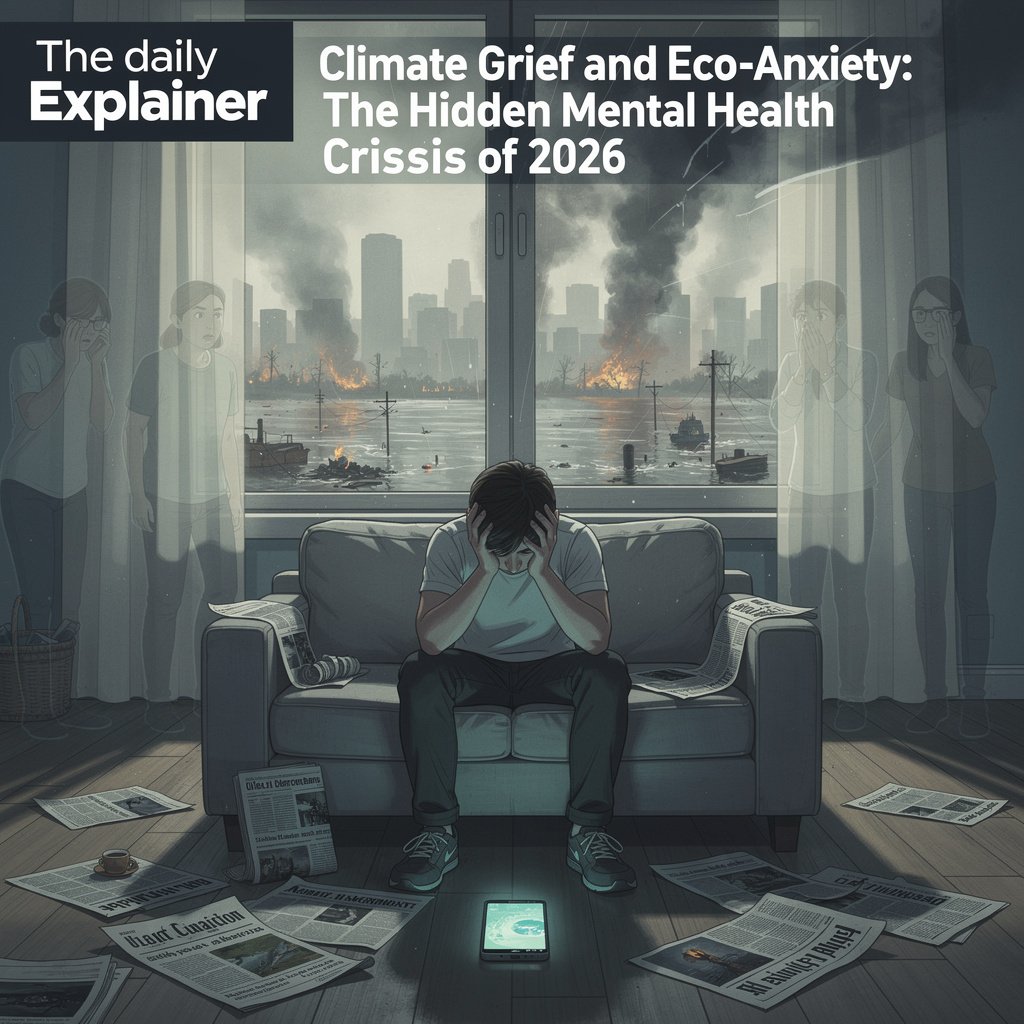
The climate crisis is not just a crisis of physics and chemistry. It is a crisis of the human heart. As we watch the cryosphere melt, the forests burn, and compound disasters unfold, we are also experiencing a profound psychological toll. Eco-anxiety, climate grief, and solastalgia are not signs of weakness; they are signs that we are paying attention, that we care, and that we are connected to the living world.
Ignoring this hidden crisis will not make it go away. It will only compound the suffering and undermine our collective capacity to act. The solutions we’ve explored—the Circular Economy, the Breakthrough Technologies, the urgent work of Mitigation and Adaptation—require an engaged, resilient, and hopeful populace. They require us to be psychologically equipped for the long fight.
Acknowledging our feelings, connecting with others, seeking support when needed, and channeling our distress into meaningful action are not just self-care strategies. They are acts of resistance and resilience. They are how we stay in the fight for as long as it takes.
Key Takeaways:
- Climate change is a mental health crisis: It affects well-being through direct trauma, chronic stress, and existential anxiety.
- Young people are on the front lines: Over half of young people globally report that climate worry negatively impacts their daily lives.
- The feelings are rational, not pathological: Eco-anxiety and climate grief are sane responses to a threatening reality. The goal is to manage them, not eliminate them.
- Connection and action are key antidotes: Building community, talking about feelings, and engaging in meaningful action are among the most effective ways to cope.
- We need systemic support: Mental health services must be integrated into climate policy, disaster response, and support for activists.
FAQs (Frequently Asked Questions)
- What is eco-anxiety?
Eco-anxiety is a chronic fear of environmental doom. It’s the worry, stress, and anxiety caused by awareness of climate change and its potential impacts. It’s not a clinical diagnosis, but a recognized psychological response. - What is climate grief?
Climate grief, or ecological grief, is the mourning for lost or degraded ecosystems, species, landscapes, and ways of life due to climate change. It can be grief for what we’ve already lost, or anticipatory grief for what we know we will lose. - What is solastalgia?
A term coined by philosopher Glenn Albrecht, solastalgia is the distress caused by environmental change close to home. It’s the feeling of homesickness while you are still at home, because your home environment has been degraded. - Is eco-anxiety a mental illness?
No. The American Psychological Association and other experts are clear that eco-anxiety is a rational response to a real threat, not a mental disorder. It only becomes a clinical concern if it significantly impairs a person’s ability to function. - How many people are affected by climate-related mental health issues?
A major 2024 study in The Lancet Planetary Health found that 59% of young people (ages 16-25) were very or extremely worried about climate change, and over 45% said their feelings negatively affected their daily life . The total number of people affected across all age groups is likely in the billions. - What did the Lancet study on youth and climate change find?
It surveyed 10,000 young people across 10 countries and found overwhelming levels of worry and distress. Many reported feeling betrayed by governments and adults for failing to act on climate change . - How do natural disasters affect mental health?
Directly experiencing a climate-related disaster (hurricane, fire, flood) can lead to PTSD, depression, anxiety disorders, and substance abuse. The trauma is compounded by displacement, loss of loved ones, and loss of livelihood. - How does slow-onset change (like drought) affect mental health?
Slow-onset changes cause chronic stress. Farmers watching their crops fail year after year, or communities watching their coastlines erode, experience ongoing anxiety, depression, and grief. This is a form of solastalgia. - What is pre-traumatic stress?
A term used by some therapists to describe the anxiety and dread people feel before a disaster strikes, knowing it is likely coming. It’s the psychological anticipation of trauma. - What is climate activist burnout?
A state of emotional, physical, and mental exhaustion caused by the prolonged stress of working on climate issues. Constant exposure to bad news, slow progress, and the moral weight of the crisis can lead to burnout. - Are children and young people more vulnerable?
Yes. The Lancet study shows they are disproportionately affected. They face a lifetime of climate impacts and feel their future has been compromised. They also have less developed coping mechanisms. - What can I do if I’m feeling eco-anxiety?
Experts recommend several strategies: acknowledge and validate your feelings, talk to others about them, take breaks from climate news, connect with nature, and, most importantly, take meaningful action. Action is a powerful antidote to despair. - Should I see a therapist for climate anxiety?
If your feelings are significantly impacting your daily life, seeking professional help is a good idea. Look for a therapist who is “climate-aware” and understands eco-anxiety and climate grief. Networks like the Climate Psychology Alliance can help. - What is the role of the American Psychological Association (APA)?
The APA has been a leader in researching and raising awareness about the mental health impacts of climate change. Their 2017 report, “Mental Health and Our Changing Climate,” was a landmark publication, and they are updating it in 2026 . - What is the World Health Organization (WHO) doing?
The WHO has called for climate change to be integrated into mental health programs globally. In 2025, they issued technical guidance for countries on how to do this . - How can communities build psychological resilience?
By strengthening social connections, creating spaces for people to talk about climate feelings, investing in local mental health services, and involving community members in climate adaptation planning. A connected community is a resilient community. - What is post-traumatic growth?
A positive psychological concept referring to the positive change experienced as a result of struggling with a major life crisis. In the climate context, it can mean finding new purpose, deeper connections, and a stronger commitment to action after a disaster. - How can parents help their children with climate anxiety?
Listen to their concerns without dismissing them. Validate their feelings. Focus on solutions and actions the family can take together. Limit exposure to alarming news. Reassure them that adults are working on the problem. - Is hope naive in the face of climate change?
Hope is not naive; it is essential. But it must be an active, engaged hope, not a passive waiting for rescue. As we’ve seen in our articles on solutions, there is much to be hopeful about. Action fuels hope, and hope fuels action. - What is the Climate Psychology Alliance?
An international network of therapists, researchers, and others interested in the psychological dimensions of climate change. They provide training, resources, and support for climate-aware therapy . - How does climate-related mental health connect to climate justice?
The mental health burden, like the physical burden, falls most heavily on those who have contributed least to the problem—frontline communities, Indigenous peoples, and young people. Addressing this inequity is a matter of justice. - Where can I find support for climate grief?
Start by talking to trusted friends and family. Look for local or online support groups (like those offered by the Good Grief Network). Seek out a climate-aware therapist. Organizations like the Climate Psychology Alliance have resources. For more on community-based support, explore the WorldClassBlogs “Nonprofit Hub”.
About Author
This article was written by the editorial team at The Daily Explainer, as the third in our series on climate solutions, following our exploration of the Circular Economy and Breakthrough Climate Technologies. This piece addresses the human dimension, building on our previous comprehensive series on climate challenges: the Cryosphere Crisis, the Nature-Climate Feedback Loop, the need for Climate Adaptation vs. Mitigation, the reality of Compound Climate Disasters, and the urgency of the 1.5°C Target. We synthesize insights from the Lancet, the American Psychological Association, the World Health Organization, and leading climate psychology practitioners. For any questions or feedback, please feel free to contact us.
Free Resources
- Climate Psychology Alliance: Offers resources, a therapist directory, and support groups for those experiencing climate-related distress.
- Good Grief Network: A nonprofit offering a 10-step program for moving from despair to action on climate change.
- American Psychological Association (APA): Publishes reports and resources on the intersection of mental health and climate change.
- The Lancet Countdown on Health and Climate Change: An annual report tracking the health impacts of climate change, including mental health indicators.
Discussion
Have you experienced eco-anxiety or climate grief? How do you cope? What would help you feel more supported? Share your thoughts and experiences in the comments below—your story may help someone else feel less alone. For more articles and insights, visit our blog and our Explained section. Together, we can build the resilience needed to face this challenge.
About The Author



This web site is really a walk-through for all of the info you wanted about this and didn’t know who to ask. Glimpse here, and you’ll definitely discover it.