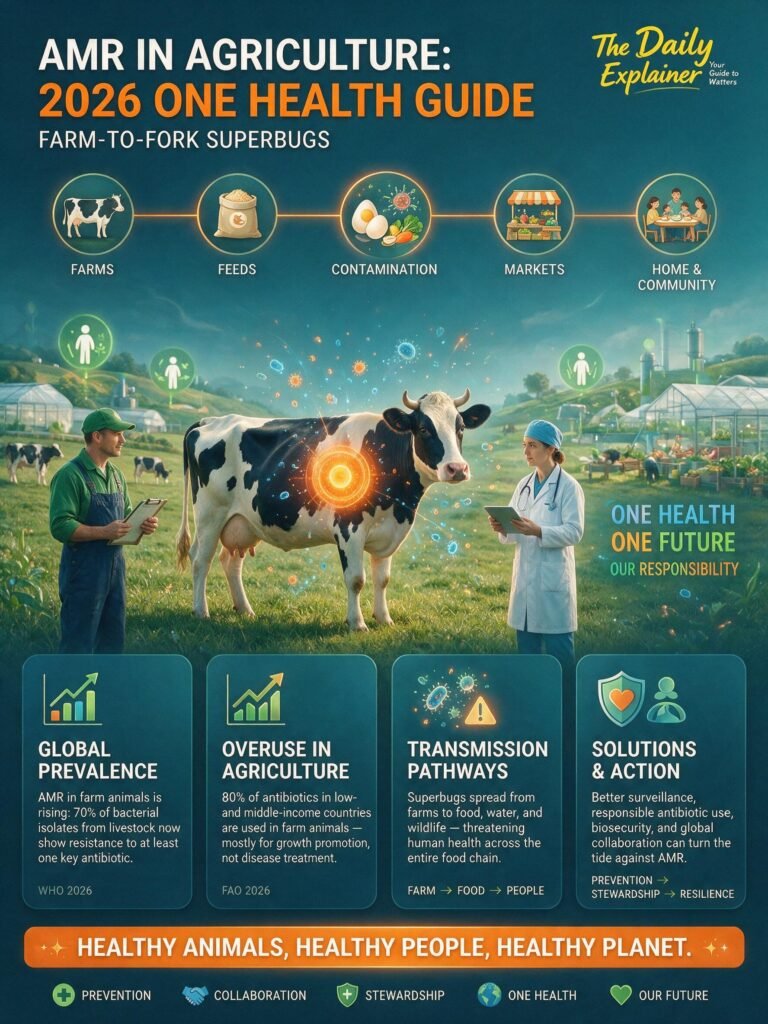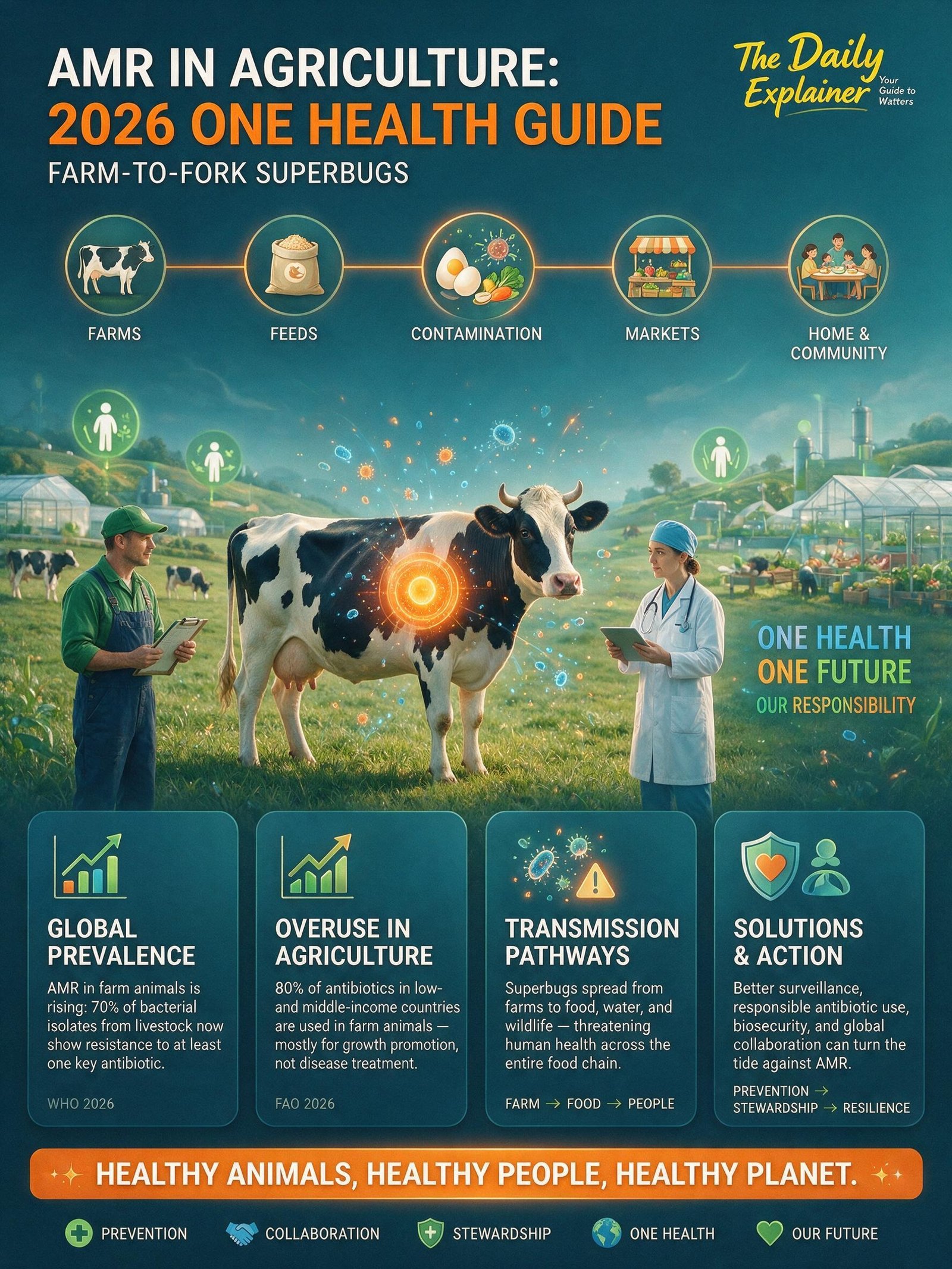
Resistant bacteria and resistance genes travel from farms to humans through food, direct contact, and the environment. This farm-to-fork pathway is the primary route of agricultural AMR transmission
Introduction – Why This Matters
In my experience working with public health programs in agricultural regions, I have seen the troubling disconnect between the farm and the clinic. What I’ve found is that the antibiotics given to pigs, poultry, and cattle do not stay on the farm. They travel through the food chain, through the environment, and eventually into our bodies, where they quietly erode the effectiveness of the medicines we rely on when we get sick.
Antimicrobial resistance (AMR) is one of the biggest threats to global health, food security, and development today . Drug-resistant microorganisms such as bacteria, viruses, fungi, and parasites can spread between and within animal, human, and plant populations and migrate through the environment . The scale of the problem is staggering: an estimated 5 million deaths were associated with AMR in 2019, including 1.27 million directly attributable to resistant infections .
The agricultural sector plays a pivotal role in this crisis. The use of antimicrobials in livestock production, aquaculture, and even crop protection has created selective pressure that drives the evolution and spread of resistant pathogens . This isn’t just an animal health problem—it is a human health emergency unfolding at the intersection of farming, food, and medicine.
This guide explains how antimicrobial resistance develops and spreads through agricultural systems, why it matters for human health, and what is being done—and what still needs to be done—to stop the silent pandemic.
Key Takeaway: Antimicrobial resistance in agriculture is a silent pandemic. The antibiotics used to keep livestock healthy are creating superbugs that travel from farms to humans through food, the environment, and direct contact. Addressing this crisis requires a One Health approach that unites human, animal, and environmental health.
Background / Context
What is Antimicrobial Resistance?
Antimicrobial resistance is the ability of microorganisms—bacteria, viruses, fungi, and parasites—to survive in the presence of medications that would normally kill them or stop their growth . This means that infections that were once easily treated become harder, sometimes impossible, to cure.
Resistance can develop whenever antimicrobials are used. However, resistance develops more quickly when these drugs are not used properly—such as to treat nutritional deficiencies, on infections that are not susceptible to the antimicrobial, at an incorrect dose, or on a prolonged basis .
How Agriculture Contributes to the Crisis
Antimicrobials are used in food-producing animals for several purposes:
- Therapeutic use: Treating sick animals
- Metaphylactic use: Preventing disease spread in a herd when some animals are sick
- Prophylactic use: Preventing disease in healthy animals
- Growth promotion: Historically, sub-therapeutic doses were used to promote growth—a practice now banned in many countries
Each of these uses creates selective pressure that favors the survival and multiplication of resistant bacteria. These bacteria can then be transmitted to humans through food, direct contact with animals, and environmental pathways .
The One Health Framework
Because AMR spreads across human, animal, plant, and environmental systems, addressing it requires multi-sectoral interventions known as the One Health approach . This holistic approach recognizes that animal, human, plant, and environmental health are inextricably intertwined and interdependent .
The One Health approach is not just an abstract concept—it is the primary strategy endorsed by the FAO, WHO, WOAH, and UNEP (collectively known as the Quadripartite) for tackling AMR .
Reference Context: This article continues our exploration of interconnected public health threats. Just as climate change expands disease vectors and air pollution damages cognitive health, the misuse of antimicrobials in agriculture creates a silent pandemic of drug-resistant infections. For a deeper understanding of how environmental factors shape health outcomes, read our comprehensive guides:
- Climate Change and Infectious Diseases: https://thedailyexplainer.com/climate-change-infectious-diseases-guide
- Wildfire Smoke Long-Term Health Effects: https://thedailyexplainer.com/wildfire-smoke-long-term-health-effects-guide
- Resurrecting Routine Immunization: https://thedailyexplainer.com/resurrecting-routine-immunization-guide
- Air Pollution & Cognitive Decline: https://thedailyexplainer.com/air-pollution-cognitive-decline-guide
Key Concepts Defined
To understand AMR in agriculture, we need a clear vocabulary.
- Antimicrobial Resistance (AMR): The ability of microorganisms to survive in the presence of antimicrobial medications, leading to treatment failure and potentially death . Resistance can develop in bacteria, viruses, fungi, and parasites.
- Antimicrobials: A broad category of medicines that kill or inhibit microorganisms. This includes antibiotics (targeting bacteria), antivirals (viruses), antifungals (fungi), and antiparasitics (parasites) .
- One Health: An integrated, unifying approach that aims to sustainably balance and optimize the health of people, animals, and ecosystems. It recognizes that human health is connected to animal health and the environment .
- Antimicrobial Stewardship: A coordinated program that promotes the appropriate use of antimicrobials to improve patient outcomes, reduce resistance, and decrease the spread of infections caused by multidrug-resistant organisms.
- Multidrug-Resistant Organisms (MDROs): Microorganisms that are resistant to more than one antimicrobial drug. These are often called “superbugs” .
- Mobile Genetic Elements: Pieces of DNA (like plasmids and transposons) that can move between bacteria, carrying resistance genes with them. This allows resistance to spread rapidly across different bacterial species .
- Farm-to-Fork Transmission: The pathway through which resistant bacteria and resistance genes move from livestock production through the food chain to human consumers .
- Quadripartite: The collaborative partnership between the Food and Agriculture Organization (FAO), the World Health Organization (WHO), the World Organisation for Animal Health (WOAH), and the United Nations Environment Programme (UNEP) that leads the global response to AMR .
| Term | Simple Definition | Why It Matters for Agriculture |
|---|---|---|
| Antimicrobial Resistance | Germs that survive medicines | Farm antibiotic use creates resistant germs |
| One Health | Human, animal, environment health connected | We cannot fix AMR in just one sector |
| Multidrug-Resistant Organisms | “Superbugs” resistant to multiple drugs | These make infections harder, sometimes impossible, to treat |
| Mobile Genetic Elements | DNA pieces that carry resistance genes | Resistance can spread between different bacteria, even across species |
| Farm-to-Fork Transmission | Resistance moving from farm to plate | The food we eat can carry resistant bacteria |
How It Works (Step-by-step breakdown)
Understanding how AMR develops and spreads through agricultural systems is essential for designing effective interventions.
Step 1: Antimicrobial Use in Food-Producing Animals
Antibiotics and other antimicrobials are administered to livestock—including cattle, pigs, poultry, and farmed fish—for therapeutic, prophylactic, and metaphylactic purposes . In many production systems, these drugs are given through feed or water, making it difficult to control dosing and increasing the risk of sub-therapeutic exposure.
Step 2: Selective Pressure and Resistance Development
When bacteria are exposed to antimicrobials, susceptible bacteria die, but those with resistance mutations or pre-existing resistance genes survive and multiply. This selective pressure favors resistant populations . The more antimicrobials are used, the greater the selective pressure and the faster resistance develops.
Step 3: Horizontal Gene Transfer
Resistance genes can spread between bacteria through mobile genetic elements like plasmids. A 2026 study on apramycin-resistant E. coli (AREC) in China found that the aac(3)-IV resistance gene predominantly resides on IncHI2/IncHI2A plasmids, which were widely distributed across livestock, retail meat, and human carriers . This means the same plasmid carrying resistance genes circulates between animals, food, and people.
Step 4: Transmission Through the Food Chain
Resistant bacteria and resistance genes travel from farms to humans through multiple pathways :
- Foodborne transmission: Meat, milk, eggs, and other animal products can be contaminated during production, processing, and handling .
- Direct contact: Farmers, veterinarians, and farm workers can be colonized by resistant bacteria from animals .
- Environmental pathways: Manure applied to fields as fertilizer can spread resistant bacteria and resistance genes to soil, water, and crops. Fruits, vegetables, and other foods of plant origin can become carriers of antimicrobial-resistant bacteria and antibiotic resistance genes, particularly if consumed raw .
Step 5: Human Infection and Clinical Consequences
When humans are infected with antimicrobial-resistant bacteria, treatment options are limited. Standard antibiotics may no longer work, requiring the use of last-resort drugs that are often more expensive, more toxic, or less available. This results in prolonged illness, increased healthcare costs, and higher mortality .
Step 6: The Cycle Continues
Resistant infections in humans can be transmitted back to animals and the environment through wastewater, fecal contamination, and other pathways. The cycle of resistance continues, making it increasingly difficult to control.
| Step | Process | Consequence |
|---|---|---|
| 1 | Antimicrobials used in livestock | Selective pressure on bacteria |
| 2 | Resistant bacteria survive and multiply | Resistance genes spread within animal populations |
| 3 | Mobile genetic elements transfer genes | Resistance jumps between bacterial species |
| 4 | Transmission via food, contact, environment | Resistant bacteria reach humans |
| 5 | Resistant infections in humans | Treatment failure, prolonged illness, death |
| 6 | Feedback through wastewater, manure | Cycle of resistance continues |
Why It’s Important
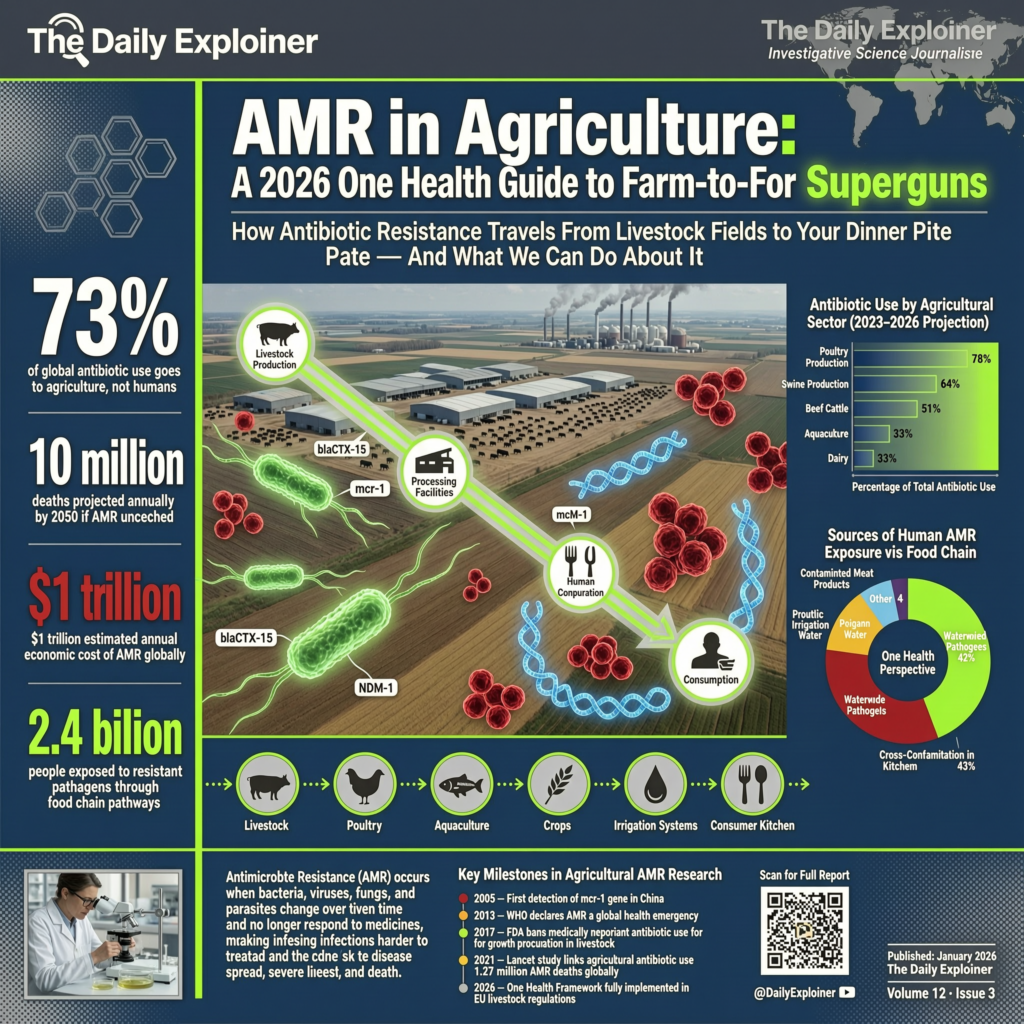
The Death Toll Is Staggering
The human cost of AMR is already immense. In 2019 alone, an estimated 5 million deaths were associated with AMR, with 1.27 million directly attributable to resistant bacterial infections . These numbers place AMR among the leading causes of death globally—a burden that is expected to grow.
The 2026 Evidence: Cross-Sector Circulation
A groundbreaking multicenter One Health study published in 2026 in the journal Engineering mapped the cross-sector circulation of apramycin-resistant E. coli across animal production and human populations in China . The study, conducted between 2020 and 2023 across three cities, collected 5,160 specimens covering clinical samples, human fecal specimens, livestock farms, carcasses, retail meat, and environmental swabs. Researchers recovered 1,394 AREC isolates from all sampling matrices—every single sample type yielded resistant bacteria .
The genomic analysis revealed that apramycin-resistant E. coli carrying the aac(3)-IV gene was found in pig farms, broiler farms, slaughterhouses, retail meat, human carriers, and human infections . The same plasmid scaffolds circulated between livestock, retail meat, and human carriers, confirming that resistance travels seamlessly across sectors .
Livestock-Associated AMR in India
A 2026 study published in the Indian Journal of Medical Microbiology highlighted that India is one of the largest consumers of antibiotics for both human and veterinary use . Recent surveillance studies in India have shown the presence of resistant bacteria and resistance determinants in humans, animals, and the environment—making it evident that AMR is interdependent across all these systems .
Transmission Pathways Are Diverse
Resistant bacteria can be transmitted to humans through food, direct contact with animals, and the environment . The environment is an important means of dissemination, as manure application and farm runoff spread resistant bacteria to soil and water . Fruits and vegetables can become carriers of antimicrobial-resistant bacteria, particularly when consumed raw .
The Apramycin Warning
Apramycin is an antibiotic currently used only in veterinary practice, but it has promising therapeutic prospects against multidrug-resistant pathogens in humans, with two completed Phase I clinical trials . The 2026 study’s findings are deeply concerning: the extensive prevalence of apramycin-resistant E. coli in animal production sectors means that if apramycin is approved for human use, resistance is already widespread in the food chain and could rapidly render the drug ineffective .
Economic and Social Costs
AMR is not just a health problem—it is an economic and social crisis. Antimicrobial-resistant infections result in prolonged illness, increased healthcare costs, limited options for therapy, and death . The misuse of antimicrobials also affects food production systems, ecosystem stability, soils, water, plants, and economic resilience . Communities face food insecurity, loss of income, and rising healthcare expenses .
Expert Quote: “To minimize the emergence of antimicrobial-resistant bacteria affecting humans and animals, reducing the need for antibiotic use and promoting more sustainable practices is crucial. This directly supports Better Production, contributes to a Better Environment, and leads to a Better Life.” — Andrés González, FAO Animal Health and Sustainable Livestock Officer
Call to Action: Tackling AMR through One Health is essential to save millions of lives, preserve antimicrobials for future generations, and protect the future from drug-resistant diseases . The time for action is now.
Sustainability in the Future
The FAO Action Plan on AMR 2021–2025
The FAO Action Plan on AMR serves as a roadmap to address resistance in the food and agriculture sectors . Key initiatives include:
- RENOFARM (Reduce the Need for Antimicrobials for Sustainable Agrifood System Transformation): A ten-year FAO initiative to help countries reduce antimicrobial use in agrifood systems and promote sustainable practices .
- Progressive Management Pathway for AMR (FAO-PMP-AMR): A framework helping countries implement National Action Plans through four stages, promoting prudent antimicrobial use and comprehensive monitoring, prevention, and control .
- Farmer Field Schools: Programs applying social and behavioral science to turn knowledge into consistent on-farm action .
The Quadripartite Joint Plan of Action
The FAO, WHO, WOAH, and UNEP have developed a Joint Plan of Action on AMR (2022–2026) to coordinate efforts across sectors . Key priorities include:
- Strengthening surveillance and data sharing
- Improving regulations and legislation
- Promoting responsible use of antimicrobials
- Raising awareness and changing behaviors
- Increasing funding
Five Key Actions to Prevent AMR
The FAO has identified five key actions for addressing AMR under the One Health approach :
- Integrate AMR efforts into One Health policies: Promote preventive actions across all sectors and reduce antimicrobial use .
- Increase funding: Allocate greater financial resources and incentives to achieve the objectives of national AMR action plans .
- Enhance surveillance systems and data sharing: Establish national surveillance systems to monitor and respond to resistance trends. Integrate data from academia and the private sector .
- Strengthen regulations and legislation: Enforce stricter laws on the production, marketing, use, and disposal of antimicrobials to reduce environmental contamination and food residues .
- Support multisectoral efforts to raise awareness and change behaviors: Coordinate among ministries, civil society, and the private sector to promote good practices .
Guidelines for Responsible Use
A 2025 systematic review of OECD countries found that many have adopted antimicrobial stewardship guidelines for food-producing animals, though quality and compliance vary . These guidelines emphasize:
- Reducing the need for antimicrobials by adopting integrated pest management and disease prevention
- Managing diseases with minimal antimicrobial use
- Following antimicrobial guidance and label instructions precisely
- Safely disposing of unused antimicrobials and their containers
Good Stewardship Principles
FAO outlines four principles for effective and responsible antimicrobial use in plant production, which apply similarly to animal production :
- Reducing the need for antimicrobials through prevention
- Managing diseases with minimal use
- Following guidance and label instructions
- Safe disposal of unused products and containers
Sustainability Insight: The most sustainable approach to AMR is reducing the need for antimicrobials through better farming practices, improved animal health, and disease prevention. This protects human health, animal welfare, and environmental sustainability simultaneously .
Common Misconceptions
Let me clear up several misunderstandings about AMR in agriculture.
Misconception 1: “AMR is just a human medicine problem.”
- Reality: Antimicrobial use in food-producing animals is a major driver of AMR. Resistant bacteria and resistance genes travel from farms to humans through food, direct contact, and the environment .
Misconception 2: “If I don’t eat meat, I’m safe from agricultural AMR.”
- Reality: Resistant bacteria can spread through the environment—through manure used as fertilizer, water runoff, and contaminated soil. Fruits, vegetables, and other foods of plant origin can become carriers of antimicrobial-resistant bacteria .
Misconception 3: “Antibiotic use in agriculture is mainly for growth promotion.”
- Reality: While growth promotion was historically a major use, many countries have banned this practice. However, therapeutic and prophylactic use remains widespread and continues to drive resistance .
Misconception 4: “Resistant bacteria on farms stay on farms.”
- Reality: The 2026 apramycin study proved that resistant bacteria and resistance plasmids circulate from livestock to retail meat to human carriers and infections . Resistance does not respect sector boundaries.
Misconception 5: “We have plenty of new antibiotics to replace the old ones.”
- Reality: The development of new antibiotics has slowed dramatically. As the study notes, the number of alternative antibiotics is very limited . Once we lose effective drugs, there may be no replacements.
Misconception 6: “The One Health approach is just academic theory.”
- Reality: One Health is the primary strategy endorsed by the Quadripartite for tackling AMR . It is being implemented through National Action Plans, surveillance systems, and regulatory frameworks worldwide.
Recent Developments (2025–2026)
1. Apramycin Resistance Mapping (August 2026)
A multicenter One Health study published in Engineering mapped apramycin-resistant E. coli across animal production and human populations in China. The study found that the same resistance plasmids circulate between livestock, retail meat, and human carriers . This is the first comprehensive mapping of cross-sector resistance transmission for this drug.
2. Indian Livestock-Associated AMR Study (June 2026)
A study in the Indian Journal of Medical Microbiology confirmed that livestock-associated AMR is a major public health concern in India. Surveillance studies show AMR exists in humans, animal production systems, and the environment .
3. Antimicrobial Stewardship in Ethiopia (March 2026)
A field intervention study in Mekelle, Northern Ethiopia demonstrated that training dairy farmers in antimicrobial stewardship improved their knowledge and attitudes toward responsible antibiotic use . This provides evidence that education and behavior change interventions work.
4. Systematic Review of OECD Guidelines (August 2025)
A systematic review assessed guidelines for antimicrobial use in food-producing animals across OECD countries, identifying best practices and gaps in implementation .
5. FAO One Health Framework (2026)
FAO released its updated One Health framework, emphasizing that One Health in agrifood systems is everyone’s health. The framework highlights the role of integrated approaches in transforming global food security and addressing AMR .
6. World AMR Awareness Week 2025
The FAO, WHO, WOAH, and UNEP coordinated the global campaign to raise awareness and understanding of AMR, promoting best practices among One Health stakeholders . The theme emphasized prevention and collaboration.
Success Stories
Success Story 1: China’s Veterinary Apramycin Monitoring
Following the discovery of widespread apramycin resistance, researchers called for systematic integration of apramycin resistance monitoring into national antimicrobial resistance surveillance frameworks . China’s response demonstrates the importance of surveillance data in informing policy.
Success Story 2: Ethiopia’s Dairy Stewardship Training
The Ethiopia field study demonstrated that antimicrobial stewardship training for dairy farmers can improve knowledge and attitudes toward responsible antibiotic use . The controlled before-and-after design showed measurable improvements in the intervention group compared to controls.
Success Story 3: FAO’s RENOFARM Initiative
FAO’s ten-year RENOFARM initiative helps countries reduce antimicrobial use in agrifood systems and promote sustainable practices . The program promotes preventive approaches that reduce the need for antimicrobials in the first place.
Success Story 4: India’s Colistin Ban
India banned the use of colistin in livestock for food production, recognizing the importance of this last-resort antibiotic for human medicine . The ban represents an important regulatory step, though implementation and enforcement remain challenges.
Success Story 5: The Quadripartite Collaboration
The ongoing collaboration between FAO, WHO, WOAH, and UNEP—the Quadripartite—represents a historic level of international coordination on AMR . The Joint Plan of Action (2022–2026) provides a unified framework for addressing AMR across sectors.
Real-Life Examples
Example 1: The Apramycin Warning
Apramycin is a veterinary antibiotic with promising potential for human use—two Phase I clinical trials have been completed . However, the 2026 study found that apramycin-resistant E. coli is already widespread in Chinese livestock and retail meat . This means that if apramycin is approved for human medicine, resistance is already waiting. The study highlights the danger of using drugs in agriculture that may later be needed in human medicine.
Example 2: India’s Livestock Sector and AMR
India is one of the largest consumers of antibiotics for veterinary use in the world . The rapid intensification of dairy and poultry production has led to high antibiotic use, contributing to the emergence of multidrug-resistant organisms. Government efforts such as the National Action Plan on AMR and the ban on colistin use in livestock are positive steps, but gaps remain in monitoring, stewardship, and knowledge among
Example 3: Plant-Based Transmission
Antimicrobials are not only used in animals—they are also used in plant protection. Fruits, vegetables, and other foods of plant origin can become carriers of antimicrobial-resistant bacteria and antibiotic resistance genes . These foods, particularly if consumed raw, may be vehicles for transmission of resistant bacteria to people .
Example 4: The Environment as a Pathway
Manure from treated animals applied to fields as fertilizer can spread resistant bacteria and resistance genes to soil and water. Crops grown in contaminated soil can absorb resistant bacteria, and water runoff can carry resistance genes to rivers and coastal areas, affecting aquaculture and drinking water supplies .
Conclusion and Key Takeaways
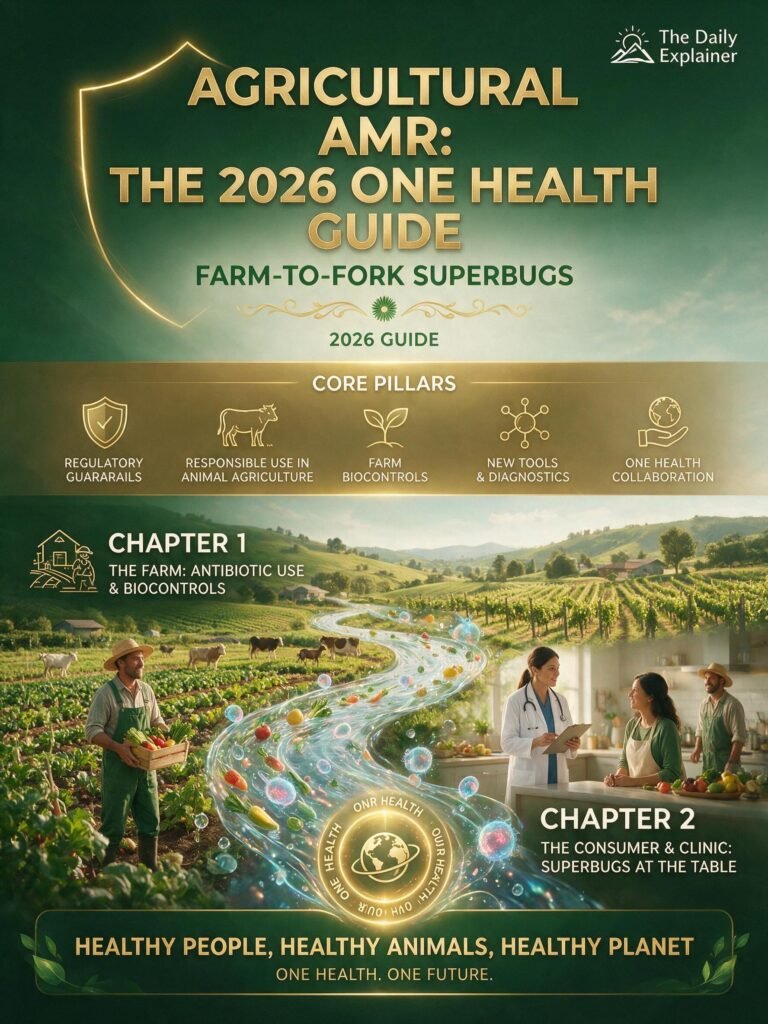
Antimicrobial resistance in agriculture is one of the most pressing public health challenges of the 21st century . The extensive use of antimicrobials in livestock production, aquaculture, and crop protection creates selective pressure that drives the evolution and spread of resistant pathogens across the food chain . The evidence from 2025 and 2026 confirms that resistant bacteria and resistance genes travel seamlessly from farms to humans through food, direct contact, and the environment .
The Core Truths:
- AMR is a silent pandemic. An estimated 5 million deaths were associated with AMR in 2019, with 1.27 million directly attributable to resistant infections .
- Agriculture is a major driver. Antimicrobial use in food-producing animals creates selective pressure that drives resistance .
- Transmission is cross-sectoral. Resistant bacteria travel from livestock to retail meat to human carriers and infections .
- One Health is the solution. Addressing AMR requires coordinated action across human, animal, and environmental health sectors .
- Prevention is better than cure. Reducing the need for antimicrobials through better farming practices and disease prevention is more sustainable than relying on new drugs .
Actionable Steps for Individuals:
- Choose responsibly: Support producers who use antibiotics judiciously.
- Practice food safety: Cook meat thoroughly, wash produce, and practice good hygiene.
- Use antibiotics wisely: Never demand antibiotics for viral infections. Complete prescribed courses.
- Dispose of medications properly: Do not flush antibiotics down the toilet—this can contribute to environmental resistance.
Actionable Steps for Communities:
- Support One Health policies: Advocate for integrated surveillance and action on AMR.
- Invest in agriculture: Support sustainable farming practices that reduce the need for antimicrobials.
- Strengthen regulations: Enforce laws on antimicrobial use and disposal.
- Raise awareness: Educate farmers, veterinarians, and consumers about responsible use.
The Bottom Line: AMR in agriculture is a crisis that requires urgent, coordinated action. The One Health approach provides the framework for protecting human, animal, and environmental health. We cannot afford to wait.
FAQs (Frequently Asked Questions)
- Q: What is antimicrobial resistance (AMR)?
- Q: How does agriculture contribute to AMR?
- Q: What is the One Health approach?
- Q: How many deaths are associated with AMR?
- Q: What is the farm-to-fork transmission pathway?
- Q: How do resistant bacteria spread from farms to humans?
- Q: What did the 2026 apramycin study find?
- Q: What is the Quadripartite?
- Q: What is the FAO Action Plan on AMR?
- Q: What is RENOFARM?
- Q: What are the five key actions to prevent AMR?
- Q: Does India have an AMR problem in livestock?
- Q: Can plants carry antimicrobial-resistant bacteria?
- Q: What is a multidrug-resistant organism (MDRO)?
- Q: What is antimicrobial stewardship?
- Q: Does manure spread resistance?
- Q: What is the difference between therapeutic and prophylactic use?
- Q: What is horizontal gene transfer?
- Q: What is the Ethiopian dairy stewardship study?
- Q: Are there guidelines for antimicrobial use in livestock?
- Q: What is the FAO-PMP-AMR?
- Q: What is the Joint Plan of Action on AMR (2022–2026)?
- Q: Where can I find more information on AMR in agriculture?
- A: The FAO and WHO websites provide comprehensive resources on AMR and One Health approaches. National AMR action plans are available through WHO’s library.
About the Author
Dr. Mark Williams, DVM, MPH
Dr. Williams is a veterinarian and public health epidemiologist with 18 years of experience in livestock production systems and zoonotic disease surveillance. He has worked with FAO and WHO on AMR monitoring programs in Southeast Asia and East Africa. He is a contributing editor for The Daily Explainer.
Free Resources
- WHO AMR Fact Sheet: https://www.who.int/news-room/fact-sheets/detail/antimicrobial-resistance
- FAO AMR Action Plan 2021–2025: https://www.fao.org/antimicrobial-resistance
- FAO RENOFARM Initiative: https://www.fao.org/antimicrobial-resistance/renofarm
- One Health Initiative: https://www.onehealthinitiative.com/
- WOAH AMR Resources: https://www.woah.org/en/what-we-do/global-initiatives/antimicrobial-resistance/
- WHO Library of National Action Plans on AMR: https://www.who.int/publications/i/item/9789240002779
- CDC AMR in Food: https://www.cdc.gov/antimicrobial-resistance/
Discussion
Share your perspective:
- Have you seen AMR-related challenges in your community or work?
- What strategies have been effective in reducing antimicrobial use in agriculture?
- How can we better connect human and veterinary medicine in AMR prevention?
For professionals:
- Farmers: What practices have you adopted to reduce antibiotic use?
- Veterinarians: How do you balance animal health needs with AMR concerns?
- Policymakers: What are your priorities for AMR surveillance and regulation?
- Researchers: What are the key gaps in AMR knowledge?
Please share your observations in the comments.
Internal & External Links Integration
Internal Links (The Daily Explainer):
- Climate Change and Infectious Diseases: https://thedailyexplainer.com/climate-change-infectious-diseases-guide
- Wildfire Smoke Long-Term Health Effects: https://thedailyexplainer.com/wildfire-smoke-long-term-health-effects-guide
- Resurrecting Routine Immunization: https://thedailyexplainer.com/resurrecting-routine-immunization-guide
- Air Pollution & Cognitive Decline: https://thedailyexplainer.com/air-pollution-cognitive-decline-guide
- Explainer section: https://thedailyexplainer.com/explained/
- Blog: https://thedailyexplainer.com/blog/
- Contact us: https://thedailyexplainer.com/contact-us/
- Breaking news: https://thedailyexplainer.com/news-category/breaking-news/
- Terms of Service: https://thedailyexplainer.com/terms-of-service/
- Global Affairs & Politics: https://thedailyexplainer.com/category/global-affairs-politics/
External Links:
- Shera Kat Network Resources: https://sherakatnetwork.com/category/resources/
- Shera Kat Network Blog: https://sherakatnetwork.com/category/blog/
- Contact Shera Kat Network: https://sherakatnetwork.com/contact-us
- Start Online Business 2026 Complete Guide: https://sherakatnetwork.com/start-online-business-2026-complete-guide/
- World Class Blogs About: https://worldclassblogs.com/about-worldclassblogs/
- World Class Blogs Category: https://worldclassblogs.com/category/blogs/
- World Class Blogs Our Focus: https://worldclassblogs.com/category/our-focus/
- World Class Blogs Nonprofit Hub: https://worldclassblogs.com/category/nonprofit-hub/
- Shera Kat Network SEO: https://sherakatnetwork.com/category/seo
About The Author