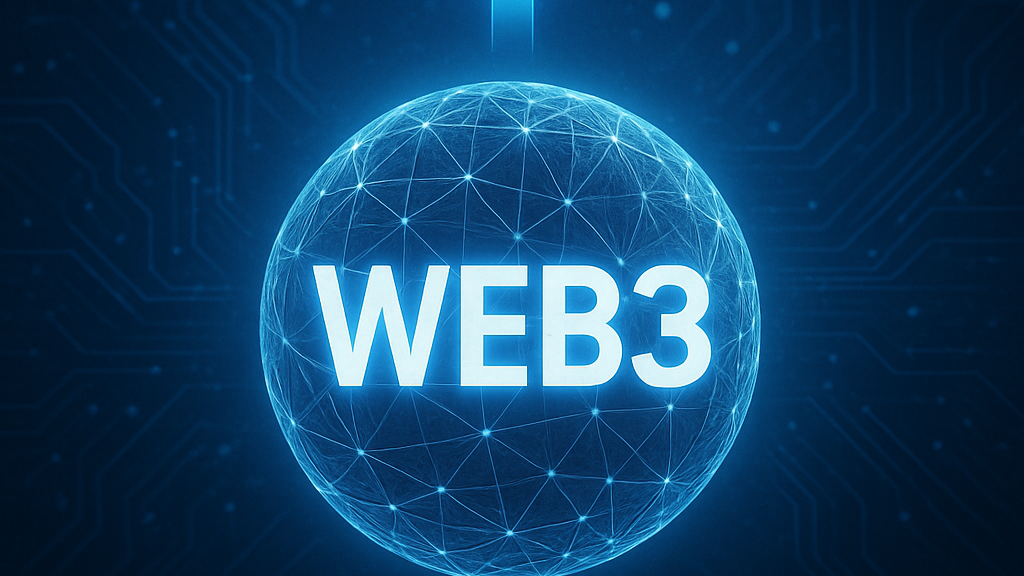
The Evolution of the Internet: From Web1's read-only to Web2's read-write to Web3's read-write-own paradigm.
Introduction: The Internet We Were Promised vs. The Internet We Got
The early internet promised a decentralized global commons—a digital frontier where anyone could publish, connect, and innovate without gatekeepers. But today’s internet (Web2) is dominated by a handful of tech giants that control our data, attention, and digital lives. We’ve become the product, our personal information monetized by platforms that can de-platform users arbitrarily and extract enormous value while contributing little back to the creators and communities that generate that value.
Web3 represents a fundamental course correction—a vision for a new internet built on open protocols, blockchain technology, and user ownership. It’s not just an incremental improvement but a complete re-architecting of digital power structures. Understanding Web3 is essential for anyone who uses the internet, creates digital content, or cares about the future of digital rights, privacy, and economic opportunity. This represents one of the most significant technological and social shifts of our time, with implications that extend across our entire Culture & Society.
Background/Context: The Evolution of Digital Power Structures

To understand Web3, we must first understand how we got here:
Web1 (1990-2004): The Read-Only Web
- Static websites, primarily HTML pages
- Users were consumers of information
- Open protocols like HTTP, SMTP, FTP
- Decentralized infrastructure, limited interactivity
Web2 (2004-Present): The Read-Write Web
- Dynamic, interactive platforms (social media, apps)
- Users became content creators
- Centralized platforms (Google, Facebook, Amazon) captured most value
- Data monetization, surveillance capitalism, platform risk
Web3 (Emerging): The Read-Write-Own Web
- Decentralized applications (dApps) built on blockchain
- Users own their data, digital assets, and identity
- Value flows to users and creators through token economies
- Trust through code and cryptography rather than corporations
The term “Web3” was coined by Ethereum co-founder Gavin Wood in 2014, describing a “stack of technologies” that would create a more democratic internet. The vision has gained tremendous momentum with the growth of Ethereum, the rise of DeFi and NFTs, and increasing mainstream recognition of the problems with the current centralized model.
Key Concepts Defined: The Lexicon of the New Internet
- Web3: The vision of a decentralized internet built on blockchain technology, characterized by user ownership, cryptographic security, and token-based economics.
- dApps (Decentralized Applications): Applications that run on decentralized networks rather than centralized servers, typically open-source and community-governed.
- DAO (Decentralized Autonomous Organization): An organization represented by rules encoded as a computer program that is transparent, controlled by organization members, and not influenced by a central government.
- Digital Sovereignty: The concept that individuals should have ultimate control over their digital identity, data, and assets.
- Tokenomics: The economic system design behind cryptocurrency tokens, including distribution, incentives, and utility.
- Zero-Knowledge Proofs: Cryptographic methods that allow one party to prove to another that a statement is true without revealing any information beyond the validity of the statement itself—crucial for Web3 privacy.
How It Works (Step-by-Step): The Architecture of a User-Centric Internet
Web3 represents a fundamental shift in digital architecture. Let’s explore how this new stack operates across key internet functions.
Part 1: Identity and Authentication
Web2 Model: You create accounts on each platform (Google, Facebook, Twitter) using your email or social login. The platform owns your identity data and can suspend your account at any time.
Web3 Model: Self-Sovereign Identity
- Step 1: You create a cryptographic keypair—a public address (your username) and a private key (your password).
- Step 2: This keypair becomes your universal identity across all Web3 applications.
- Step 3: When you interact with a dApp, you connect your wallet and sign transactions with your private key.
- Step 4: You maintain complete control. No platform can freeze your identity or prevent you from accessing your data.
Part 2: Data Storage and Ownership
Web2 Model: Your data (posts, photos, messages) is stored on company servers. The platform owns and monetizes this data, and you risk losing access if banned.
Web3 Model: User-Controlled Data
- Step 1: Your data is stored on decentralized networks like IPFS (InterPlanetary File System) or Arweave.
- Step 2: You control access through your cryptographic keys.
- Step 3: Applications request permission to access specific data for specific purposes.
- Step 4: You can revoke access at any time and take your data to competing applications.
Part 3: Value Exchange and Monetization
Web2 Model: Platforms capture most of the economic value created by users through advertising and data monetization. Creators receive minimal compensation.
Web3 Model: User and Creator Aligned Economics
- Step 1: Value is represented through tokens (fungible and non-fungible).
- Step 2: Users earn tokens for contributions (content creation, curation, governance).
- Step 3: Creators receive direct payments and automatic royalties through smart contracts.
- Step 4: Value accrues to token holders rather than just platform shareholders.
Part 4: Governance and Decision-Making
Web2 Model: Corporate executives and boards make all decisions behind closed doors. Users have no meaningful say in platform policies.
Web3 Model: Community Governance through DAOs
- Step 1: Protocol decisions are made through transparent, on-chain voting.
- Step 2: Token holders propose and vote on changes.
- Step 3: Smart contracts automatically execute approved decisions.
- Step 4: Governance power is distributed according to token ownership or contribution.
Why It’s Important: The Paradigm Shift to User Sovereignty
- Digital Property Rights: Web3 establishes true digital ownership through NFTs and tokens, enabling new forms of creativity, investment, and economic activity.
- Censorship Resistance: Decentralized platforms cannot arbitrarily remove content or de-platform users, protecting free expression.
- Reduced Platform Risk: Builders can create on open protocols without fear of being de-platformed or having their business model destroyed by platform policy changes.
- Global Financial Inclusion: Web3’s permissionless nature provides financial services to the billions excluded from traditional banking systems.
- Innovation Through Composability: Open protocols can be combined like “digital legos,” accelerating innovation beyond what’s possible in walled gardens.
- Alignment of Incentives: Token-based models align the interests of users, creators, and developers in ways that corporate shareholder models cannot.
Common Misconceptions and Real Challenges
- “Web3 is just cryptocurrency with a different name.” While cryptocurrency is a key component, Web3 encompasses a much broader vision including decentralized storage, identity, governance, and social networks.
- “Web3 is completely anonymous and lawless.” Web3 transactions are typically pseudonymous and recorded on public ledgers. Regulation is evolving, and many Web3 projects prioritize compliance and legitimate use cases.
- “The technology is too slow and expensive for mainstream use.” While early blockchain networks had scalability issues, Layer 2 solutions and next-generation protocols are achieving speeds and costs comparable to Web2 services.
- “Web3 is just a rebranding of the same speculative crypto projects.” While speculation exists, serious Web3 projects are building functional alternatives to Web2 services with genuine utility and sustainable models.
- “Users don’t want responsibility for their keys and data.” This is a valid UX challenge, but solutions like social recovery wallets and improved key management are making self-sovereignty more accessible.
Recent Developments & Real-Life Examples
Recent Development: The Emergence of Decentralized Social Networks
The acquisition of Twitter by Elon Musk and growing concerns about content moderation have accelerated development of decentralized social protocols like Farcaster and Lens Protocol. These networks:
- Store social graphs on-chain, making them portable between applications
- Enable users to own their followers and content
- Allow multiple client applications to compete while sharing the same network
- Demonstrate that social media can be built as public infrastructure rather than private property
Real-Life Example: Brave Browser – Web3 in Action Today
The Brave browser represents a practical Web3 application that millions already use:
- Built-in Crypto Wallet: Users can manage cryptocurrencies and NFTs directly in the browser
- Basic Attention Token (BAT): Users earn BAT tokens for viewing privacy-respecting ads
- User Data Protection: Blocks trackers and ads by default
- IPFS Integration: Can natively access decentralized storage
With over 50 million monthly active users, Brave demonstrates that Web3 principles can deliver better user experiences today, not just in some distant future. This shows how Web3 can integrate with and enhance existing Digital Business Models.
Case Study: The Helium Network – Decentralized Physical Infrastructure
Background: Helium launched in 2013 with an ambitious vision: create a decentralized wireless network owned and operated by its users rather than telecom giants.
The Model:
- Individuals purchase and deploy wireless hotspots in their homes
- These hotspots provide IoT (Internet of Things) coverage for nearby devices
- Hotspot owners earn HNT tokens for providing coverage
- The network grows organically based on economic incentives
The Results:
- Over 1 million hotspots deployed globally
- Coverage in over 77,000 cities across 192 countries
- Major customers including Lime, Salesforce, and Volvo
- Demonstration that physical infrastructure can be built and maintained through decentralized coordination
The Challenges and Lessons:
- Proving Decentralized Models Work: Helium showed that complex physical infrastructure could be built without central planning
- The Importance of Token Design: The HNT token economics successfully incentivized global network growth
- Regulatory Navigation: Operating in telecom required careful engagement with regulators worldwide
- Pivoting for Sustainability: The project has evolved its model and migrated to the Solana blockchain to improve scalability
Helium represents a powerful example of how Web3 principles can extend beyond purely digital applications to reshape physical infrastructure and create new economic models.
The Future of Web3: Challenges and Opportunities
Technical Challenges:
- Scalability: Achieving Web2-level performance while maintaining decentralization
- User Experience: Making key management and transaction signing seamless for non-technical users
- Interoperability: Enabling seamless movement of assets and data across different blockchain networks
Social and Regulatory Challenges:
- Education: Helping billions understand and adopt new mental models for digital ownership
- Regulation: Developing frameworks that protect consumers without stifling innovation
- Wealth Distribution: Ensuring Web3 doesn’t simply replicate or exacerbate existing inequalities
The Opportunities:
- New Creative Economies: Artists, musicians, and writers can earn sustainable incomes through direct fan support and royalties
- Global Coordination: DAOs can mobilize resources and talent at unprecedented scale for everything from open-source software to humanitarian aid
- Digital Public Goods: Protocol-owned liquidity and community treasuries can fund public goods that are underfunded in traditional models
- Authentic Digital Communities: Ownership and governance rights can foster deeper engagement and more meaningful online interactions
Conclusion & Key Takeaways
Web3 represents the most significant reimagining of the internet since its commercialization. It’s not merely a technological upgrade but a philosophical shift toward user sovereignty, open protocols, and aligned incentives.
Key Takeaways:
- Ownership is the New Frontier: The fundamental innovation of Web3 is verifiable digital ownership through cryptography and blockchain technology.
- Protocols Over Platforms: Web3 shifts value creation from walled-garden platforms to open protocols that anyone can build upon.
- User Sovereignty Requires Responsibility: With greater control comes greater responsibility for managing keys, understanding risks, and participating in governance.
- The Stack is Still Maturing: Significant technical and UX challenges remain, but rapid innovation is addressing them.
- This is a Cultural Shift: Adopting Web3 requires new mental models about identity, property, and community that challenge Web2 assumptions.
- Start Exploring Now: The best way to understand Web3 is to use it—set up a wallet, join a DAO, mint an NFT, or participate in governance.
The transition to Web3 won’t happen overnight, and the end result likely won’t be a complete replacement of Web2. Instead, we’ll see a hybrid internet where decentralized protocols complement and compete with centralized services, giving users genuine choice about how they interact online. Those who understand this transition early will be best positioned to shape and benefit from the next era of the internet. For insights into managing the psychological aspects of this digital transformation, explore our guide on Mental Wellbeing.
Frequently Asked Questions (FAQs)
1. Do I need to use cryptocurrency to use Web3?
While many Web3 applications involve tokens, you can use some Web3 services without directly handling cryptocurrency. However, understanding basic crypto concepts is helpful for fully participating in the ecosystem.
2. How is Web3 different from the metaverse?
Web3 refers to the decentralized architecture of the internet (the backend). The metaverse refers to immersive digital worlds (the frontend). Web3 technologies can power metaverse economies and ownership systems.
3. Can Web3 really compete with big tech companies?
Yes, through different economic models and value propositions. Web3 doesn’t need to beat Google at search; it can create entirely new categories where user ownership and alignment are competitive advantages.
4. What happens if I lose my private keys?
Unlike Web2 where you can reset passwords, losing your private keys typically means permanent loss of access to your assets and identity. However, solutions like social recovery wallets are making this risk more manageable.
5. Are there any successful Web3 applications with real users?
Yes—Uniswap processes billions in trading volume, Brave has over 50 million users, and NFT marketplaces like OpenSea have millions of active users. The ecosystem is growing rapidly beyond early adopters.
6. How does Web3 handle illegal content?
This is a complex challenge. While content itself might be stored on decentralized networks, access points (frontends) can still moderate illegal content, and law enforcement can investigate on-chain transactions.
7. Can Web3 be regulated?
Yes, and it already is in many jurisdictions. Regulators are focusing on exchanges, token offerings, and specific use cases rather than trying to regulate the underlying protocols themselves.
8. What’s the environmental impact of Web3?
This varies significantly by blockchain. Ethereum’s move to Proof-of-Stake reduced its energy consumption by ~99.95%. Many newer Web3 protocols use eco-friendly consensus mechanisms from the start.
9. How do I start building in Web3?
Learn Solidity for Ethereum development, start with simple smart contracts, contribute to open-source Web3 projects, and participate in developer communities and hackathons.
10. Will Web3 replace the current internet?
More likely, Web3 will become a layer that integrates with and eventually transforms parts of the existing internet, much like how mobile didn’t replace desktop but changed how we interact with digital services.
11. What are the biggest barriers to Web3 adoption?
User experience, scalability, regulatory uncertainty, and the mental shift required to take responsibility for digital sovereignty.
12. How do DAOs make decisions?
Typically through token-based voting, where the weight of your vote corresponds to your token holdings or through more advanced mechanisms like quadratic voting to prevent whale dominance.
13. Can Web3 work on mobile devices?
Yes, mobile wallets like MetaMask Mobile, Phantom, and Rainbow make Web3 accessible on smartphones, and many dApps have mobile-optimized interfaces.
14. What role do NFTs play in Web3?
NFTs establish verifiable ownership of digital assets, serving as the foundation for digital property rights in the Web3 economy—from art and collectibles to identity and access credentials.
15. Where can I learn more about specific Web3 projects and trends?
Follow Web3 developers and researchers on Twitter, join Discord communities of projects you’re interested in, and read protocol documentation. For broader context, explore our full Blog and consider how these changes might impact traditional Business Resources and economic models.
About The Author




Woah! I’m really enjoying the template/theme of this site.
It’s simple, yet effective. A lot of times it’s hard to get
that “perfect balance” between superb usability and appearance.
I must say you have done a great job with this. Additionally, the blog loads super fast for me on Internet explorer.
Excellent Blog!
Excellent blog here! Also your website loads up very fast!
What web host are you using? Can I get your affiliate link to your host?
I wish my web site loaded up as quickly as yours lol