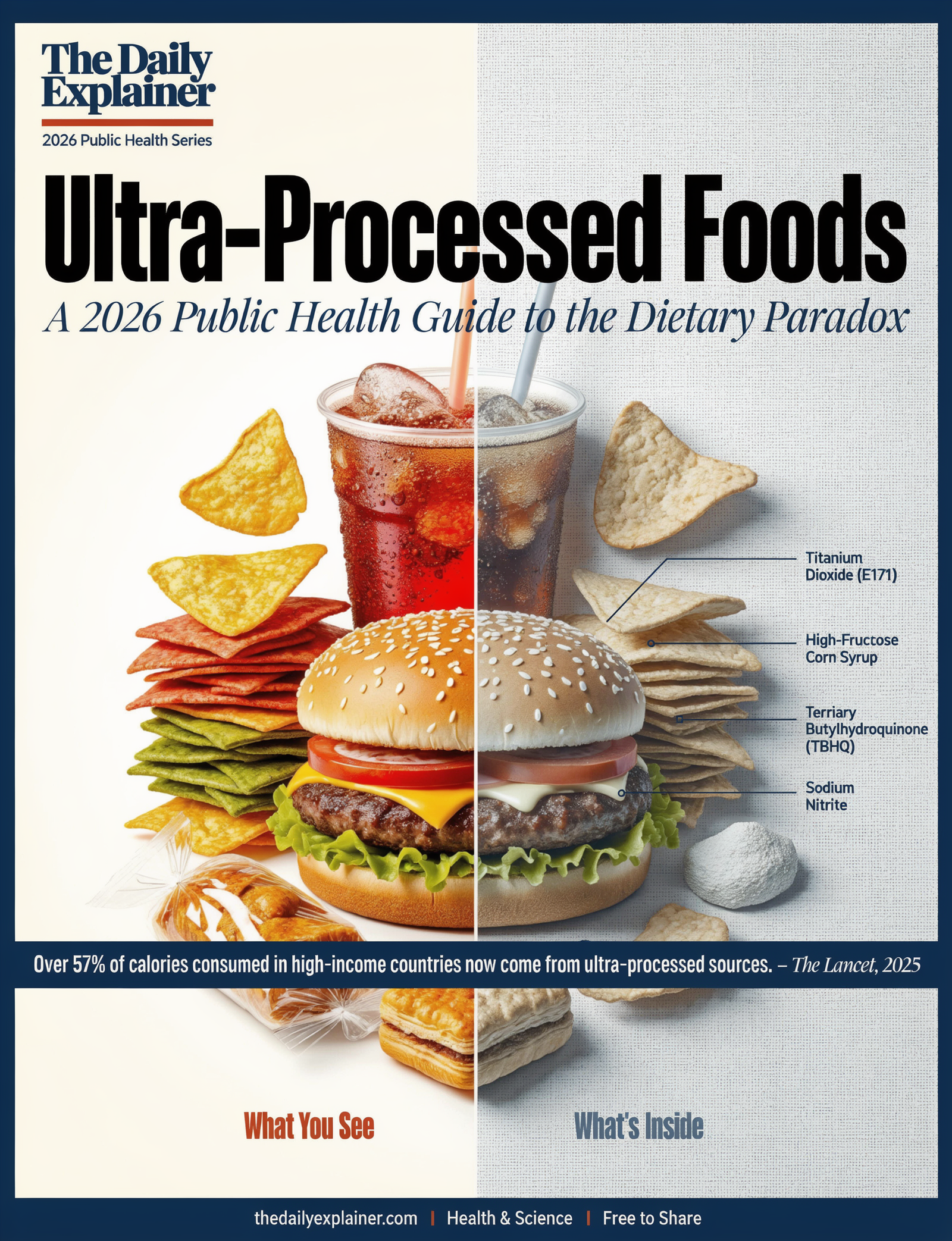
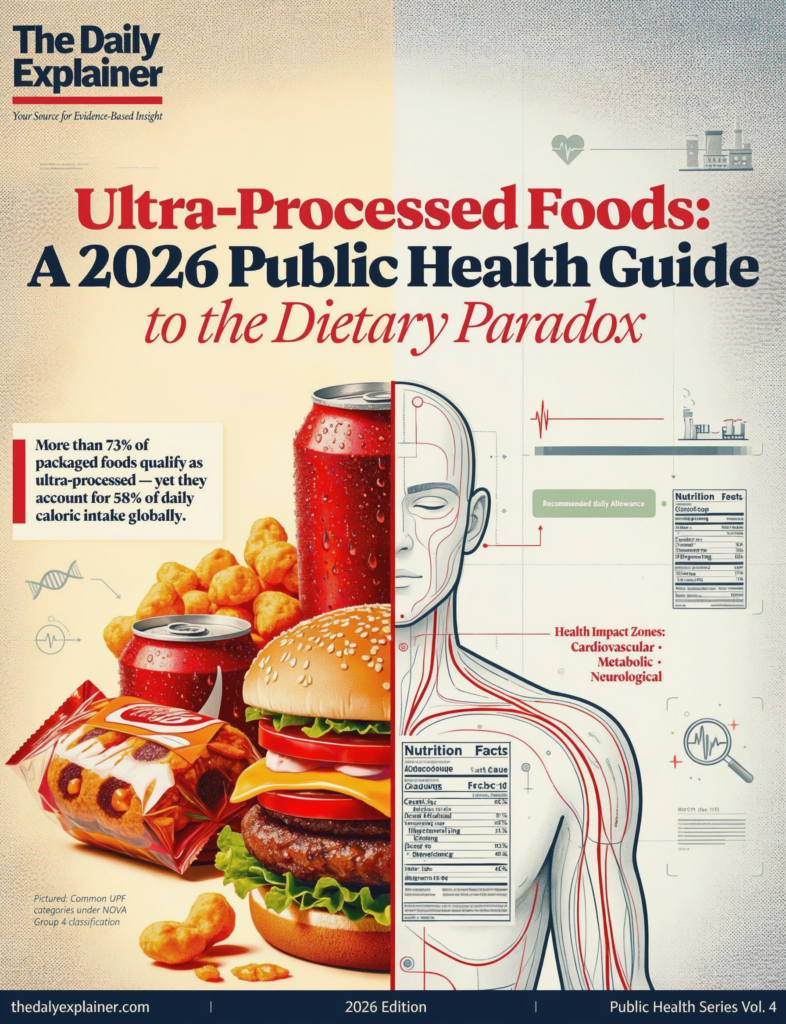
Ultra-processed foods now dominate diets in high-income countries and are rising rapidly in middle-income nations .
Introduction – Why This Matters
In my experience working with communities facing high rates of diet-related chronic disease, I have seen the confusion that surrounds food choices. A family wants to eat healthier, but they are surrounded by cheap, convenient, and heavily marketed products that are engineered to be irresistible. The food environment itself seems to work against them.
What I’ve found is that the rise of ultra-processed foods (UPFs) is one of the most consequential public health developments of our time—and one of the most misunderstood. These products, defined by the NOVA food classification system as industrial formulations made mostly or entirely from substances derived from foods and additives, with little if any intact whole food, now dominate diets in high-income countries and are rapidly spreading elsewhere . In the United States, UPFs account for nearly 60% of total energy intake; in the United Kingdom, about 50%; and even in middle-income countries like Brazil and Mexico, the share has climbed from 10% to over 23% in recent decades .
The 2025 Lancet Series on ultra-processed foods, bringing together 43 international experts, concluded that the global rise of UPFs is a central driver of the worldwide increase in obesity, diabetes, cardiovascular disease, and other chronic conditions . Drawing on more than 100 long-term studies, the analysis found consistent links between UPF consumption and at least 12 health conditions . The evidence is now strong enough, the authors argue, to justify coordinated government policy action .
Yet the debate is far from settled. Critics argue that the NOVA classification system is imprecise, that the health associations may reflect nutritional composition rather than processing per se, and that some UPFs—such as fortified plant-based milks and meat alternatives—can be part of a healthy diet . This is the public health paradox of ultra-processed foods: the category is simultaneously indispensable as a concept for understanding modern dietary patterns and fraught with ambiguity when applied to specific products.
This guide explains the science behind the UPF debate, the health evidence, the policy implications, and what you can do to navigate the food environment.
Key Takeaway: Ultra-processed foods are a central driver of the global chronic disease burden, but the category is heterogeneous, the evidence is debated, and policy solutions must be carefully designed to avoid unintended consequences.
Background / Context
The Rise of Ultra-Processed Foods
Over the past half-century, food systems have undergone a profound transformation. Traditional diets based on fresh and minimally processed foods have been increasingly displaced by industrial formulations designed for convenience, long shelf life, and high profitability.
The statistics are striking. From 1990 to 2010, UPF consumption in Spain increased threefold, from 11% to 32% of total energy intake . In the UK, UPFs account for 50.4% of energy intake; in Germany, 46.2% . Globally, sales of UPFs—including soft drinks, confectionery, snacks, and processed meats—reached approximately 1,000 billion kilograms in 2021 .
The Lancet Series documented that UPF consumption has risen sharply in countries at all income levels: from 24% to 55% in Canada across eight decades; from 11% to 32% in Spain; from 13% to 33% in South Korea; and from 4% to 10% in China, each over approximately three decades . While increases have slowed in countries with already very high consumption, they are accelerating rapidly in middle-income nations.
The NOVA Classification System
At the heart of the UPF debate is the NOVA food classification system, developed in 2009 by Carlos Monteiro and colleagues at the University of São Paulo . NOVA categorizes foods into four groups based on the extent and purpose of processing:
- Group 1: Unprocessed or minimally processed foods—Fresh or minimally altered foods such as fruits, vegetables, nuts, eggs, milk, and meat.
- Group 2: Processed culinary ingredients—Substances extracted from Group 1 foods, such as oils, butter, sugar, and salt.
- Group 3: Processed foods—Products made by adding Group 2 ingredients to Group 1 foods, such as canned vegetables, cheese, and freshly made bread.
- Group 4: Ultra-processed foods—Industrial formulations made mostly or entirely from substances derived from foods and additives, with little if any intact Group 1 food. Examples include frozen pizza, soda, fast food, sweets, salty snacks, canned soup, and most breakfast cereals .
The distinguishing features of UPFs include the use of ingredients not typically found in home kitchens—such as high-fructose corn syrup, hydrogenated oils, protein isolates, and cosmetic additives—and processing techniques that create novel products designed to be ready-to-consume, storable, and hyper-palatable .
Reference Context: This article continues our exploration of public health challenges driven by systemic factors. Just as antimicrobial resistance requires a One Health approach and air pollution demands environmental policy, addressing the UPF paradox requires understanding the commercial determinants of dietary patterns. For a deeper understanding of how systemic factors shape health outcomes, read our comprehensive guides:
- Climate Change and Infectious Diseases: https://thedailyexplainer.com/climate-change-infectious-diseases-guide
- Wildfire Smoke Long-Term Health Effects: https://thedailyexplainer.com/wildfire-smoke-long-term-health-effects-guide
- Resurrecting Routine Immunization: https://thedailyexplainer.com/resurrecting-routine-immunization-guide
- Air Pollution & Cognitive Decline: https://thedailyexplainer.com/air-pollution-cognitive-decline-guide
- AMR in Agriculture: https://thedailyexplainer.com/antimicrobial-resistance-agriculture-guide
- Youth Mental Health & Social Media Algorithms: https://thedailyexplainer.com/youth-mental-health-social-media-algorithms-guide
Key Concepts Defined
To understand the UPF paradox, we need a clear vocabulary.
- Ultra-Processed Foods (UPFs): Industrial formulations made mostly or entirely from substances derived from foods and additives, with little if any intact whole food. They are designed to be ready-to-consume, storable, and often hyper-palatable .
- NOVA Classification: The food classification system that categorizes foods into four groups based on the extent and purpose of processing. It is the most widely used framework for studying UPFs and health.
- Hyper-palatability: A contested concept referring to the idea that UPFs are engineered to be excessively tasty, potentially triggering addictive responses through pleasure and reward pathways . Critics argue this concept is circular because the definition of hyper-palatable foods already assumes they drive overconsumption .
- Food Environment: The physical, economic, policy, and sociocultural context in which people make food choices. The rise of UPFs is a transformation of the food environment.
- Food Deserts: Areas where residents face barriers to accessing a healthy and affordable diet. A 2025 study using actual purchasing data from 1.6 million Londoners found that food deserts are concentrated in low-income and minority communities, and that store proximity is not the main driver—financial and social inequality are .
- Commercial Determinants of Health: The strategies, policies, and practices of commercial entities that affect health. The Lancet Series argues that the UPF industry, like the tobacco industry before it, uses its power to shape public policy and scientific discourse .
| Term | Simple Definition | Why It Matters |
|---|---|---|
| Ultra-Processed Foods | Industrial formulations with additives | They dominate modern diets and are linked to chronic disease |
| NOVA Classification | System categorizing foods by processing level | The primary framework for UPF research |
| Hyper-palatability | Engineering foods to be irresistible | May drive overconsumption through reward pathways |
| Food Environment | Context in which food choices are made | Shaped by corporate marketing and policy |
| Commercial Determinants | Corporate practices affecting health | UPF industry influence blocks effective policy |
How It Works (Step-by-step breakdown)
Understanding how UPFs affect health requires examining the mechanisms at multiple levels.
Step 1: Formulation and Production
UPFs are created through industrial processes that break down whole foods into their constituent components—starches, sugars, fats, proteins—and then reassemble them with additives to create novel products. Common ingredients include high-fructose corn syrup, hydrogenated oils, protein isolates, modified starches, emulsifiers, and artificial colors and flavors . These ingredients are often inexpensive, and the resulting products have long shelf lives and high profit margins.
Step 2: Displacement of Traditional Diets
UPFs are designed to replace traditional dishes and meals made from fresh and minimally processed foods . As UPFs become more available and affordable, they displace whole foods, leading to dietary patterns that are energy-dense and low in fiber, vitamins, minerals, and protective plant compounds .
Step 3: Consumption and Overconsumption
UPFs are engineered to be hyper-palatable and easy to consume. Controlled feeding trials have found that participants consuming UPF-heavy diets eat hundreds of extra calories per day—even when meals are matched for nutrients—leading to rapid weight gain . One NIH randomized controlled trial found that participants on a diet with approximately 80% UPF gained about 1 kg (mostly fat mass) over two weeks, while those on an unprocessed diet lost the same amount .
Step 4: Metabolic Effects
The health effects of UPFs extend beyond excess calories. Proposed mechanisms include:
- Nutrient displacement: UPF-heavy diets are lower in fiber, protein, and micronutrients .
- Glycemic effects: Processing disrupts the food matrix, accelerating digestion and causing rapid swings in blood glucose and insulin. A blinded crossover study found that high-glycemic index meals triggered greater brain activity in regions associated with craving and reward—independent of palatability .
- Gut and inflammatory pathways: UPFs are associated with changes in the gut microbiome, increased inflammation, and metabolic dysfunction .
- Additive effects: Some studies suggest that the food additives in UPFs—emulsifiers, sweeteners, colorants—may have independent health effects, though evidence remains limited .
Step 5: The Addiction Question
The concept of “food addiction” has gained traction. The Yale Food Addiction Scale (YFAS) is used to assess addictive-like eating behaviors. Some researchers argue that the addictive properties of certain UPF ingredients—salt, fat, caffeine, and sugar—are similar to those of cocaine and heroin, as evaluated by the YFAS . However, critics note that the concept of hyper-palatability is circular and that palatability primarily affects what one eats, not how much .
| Step | Process | Health Consequence |
|---|---|---|
| 1 | Industrial formulation | Creates novel products with additives |
| 2 | Displacement of whole foods | Reduces intake of protective nutrients |
| 3 | Overconsumption | Excess calorie intake, weight gain |
| 4 | Metabolic effects | Glycemic swings, inflammation, gut changes |
| 5 | Addictive potential | May drive compulsive overconsumption |
Why It’s Important
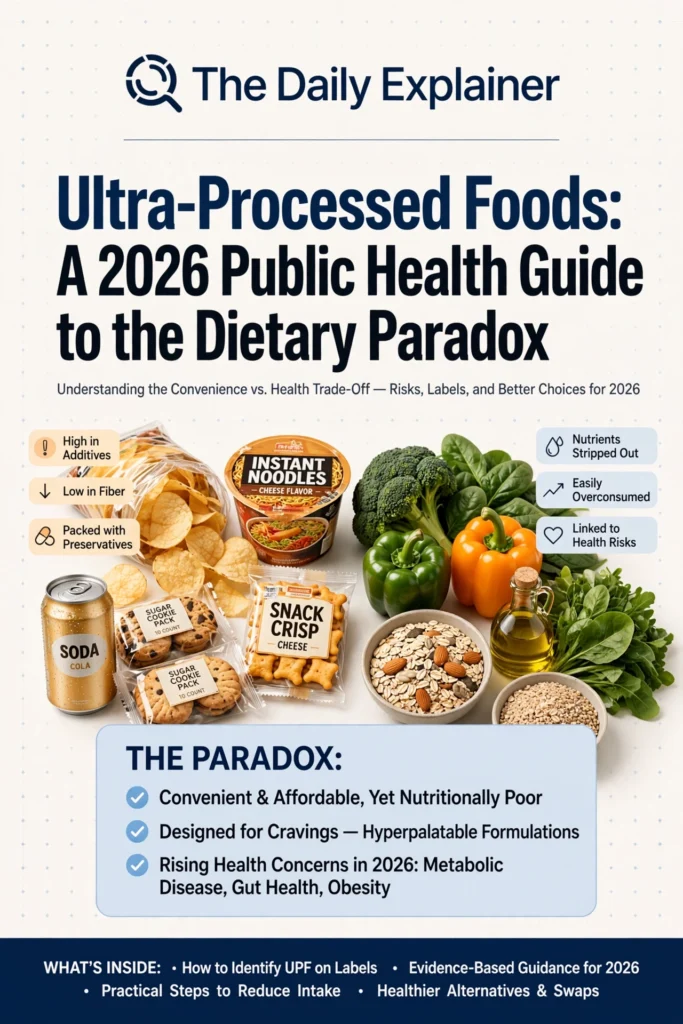
The Global Burden of Disease
The 2025 Lancet Series, drawing on decades of dietary data and more than 100 long-term studies, concluded that the displacement of traditional, whole-food-based diets by UPFs now represents one of the most pressing challenges in public health . The analysis found that UPF-heavy diets are consistently linked to:
- Obesity: Controlled trials show rapid weight gain on UPF diets .
- Type 2 diabetes: Convincing evidence from dose-response meta-analyses .
- Cardiovascular disease: Convincing evidence for cardiovascular disease-related mortality, and highly suggestive evidence for heart disease-related mortality .
- Hypertension and abdominal obesity: Suggestive evidence .
- Depression and mental health: A 2026 review found consistent associations between UPF consumption and worse profiles for depressive and anxiety-related outcomes .
- All-cause mortality: People with the highest intake face significantly higher risks .
The 2026 Evidence
A comprehensive narrative review published in 2026 in Discover Public Health framed UPFs as a “planetary nutrition nexus exposure”—a population-level factor with recurring observational associations with common mental disorder-related outcomes and plausibly linked to food-system externalities .
The review found that across observational syntheses, higher UPF intake is consistently associated with worse profiles for depressive outcomes, anxiety-related outcomes, and non-specific psychological distress. Prospective cohorts strengthen temporal ordering for depressive outcomes, though residual confounding and reverse causality remain plausible .
The Food Desert Reality
The UPF crisis is not evenly distributed. A 2025 study using supermarket transaction data from 1.6 million Londoners found that food deserts—areas where residents’ diets are nutritionally deficient—are concentrated in low-income and minority communities . Areas in London’s east (Newham, Barking and Dagenham) and northwest (Ealing, Brent) showed high adherence to high-sugar and high-carbohydrate purchases, suggesting residents face barriers to accessing a nutritionally adequate diet .
The study’s lead author, Tayla Broadbridge, emphasized that store proximity is not the driver: “Our findings emphasise the need for targeted interventions that address local food access issues according to specific socioeconomic characteristics” .
Corporate Influence and Policy Barriers
The Lancet Series argues that the main barrier to progress on UPF regulation is “the industry’s corporate political activities, coordinated globally to counter opposition and block regulation” . The UPF industry is compared to the tobacco industry, with experts calling for coordinated policy action modeled on tobacco control .
In the United States, recent initiatives to address UPFs have been halted by industry pressure and federal reversals, contrasting with countries such as Canada, Mexico, and Brazil, which have implemented bold public health measures .
Expert Quote: “The growing consumption of ultra-processed foods is reshaping diets worldwide, displacing fresh and minimally processed foods and meals. This change in what people eat is fueled by powerful global corporations who generate huge profits by prioritizing ultra-processed products, supported by extensive marketing and political lobbying that block effective public health policies to support healthy eating.” — Dr Carlos Monteiro, University of São Paulo
Call to Action: The Lancet Series calls for governments to move beyond encouraging individual behavior change and instead adopt coordinated policies that reshape the food environment, regulate corporate power, and promote minimally processed foods .
Sustainability in the Future
Policy Levers
The Lancet Series outlines a coordinated package of policy measures :
- Front-of-package labels: Labels that flag UPFs using ingredient markers such as colorants, sweeteners, and emulsifiers, as well as excessive saturated fat, sugar, and salt.
- Bans on UPF sales in public institutions: Schools, hospitals, and other public settings should not sell UPFs.
- Marketing restrictions: Particularly for children and on digital media.
- Fiscal policies: Taxes on UPFs to fund fresh-food subsidies for low-income households and potable drinking water infrastructure.
- Limits on supermarket shelf space: Reducing the prominence of UPFs in retail environments.
The Environmental Dimension
A 2026 AJPH special section highlighted that most UPF policies have focused on human health outcomes and overlooked environmental impacts, including pollution, biodiversity loss, and greenhouse gas emissions. The UPF system is inseparable from plastics, with corporations such as Coca-Cola and Unilever ranking as top global plastic polluters. The authors propose policy efforts, including warning labels that document both health and environmental harms .
The Debate on Evidence and Policy
The scientific community remains divided on the strength of the evidence. A 2026 Nature Food Perspectives piece addresses four common criticisms of the NOVA system: imprecise differentiation between processing techniques, arbitrary criteria for differentiating UPFs from non-UPFs, unclear biological mechanisms, and inconclusive evidence of health harms from observational studies . The authors attribute these criticisms to misinterpretation of NOVA’s intended purpose and argue that continued skepticism delays public health policy .
A competing Perspective suggests that UPF research requires strengthening scientific rigor by assessing how limitations of dietary assessment, ambiguities of NOVA, and residual confounding affect causal inference . The author distinguishes between methodological criticisms that offer opportunities for scientific advancement and corporate interference strategies that undermine scientific integrity .
Reforms to Food Policy: 10 Key Strategies
A 2025 American Journal of Public Health analysis outlined 10 key strategies to transform the US food system, including :
- Banning advertising of UPFs to children
- Implementing warning labels on UPFs
- Taxing UPFs to fund subsidies for healthy foods
- Restricting UPF marketing near schools
- Removing UPFs from government food assistance programs
Common Misconceptions
Let me clear up several misunderstandings about UPFs.
Misconception 1: “All UPFs are equally bad for you.”
- Reality: The category is heterogeneous. Fortified plant-based milks (soymilk), plant-based meat alternatives, and medical nutrition products are classified as UPFs but can be part of a healthy diet . A 2024 meta-analysis found that substituting soymilk for cow’s milk resulted in statistically significant reductions in LDL-C and blood pressure .
Misconception 2: “The health risks of UPFs are proven beyond doubt.”
- Reality: While the evidence is strong, the debate continues. Critics argue that UPF-health associations may reflect nutritional composition rather than processing per se, and that the NOVA system has poor inter-rater reliability for boundary cases . The Nature Food Perspectives highlight ongoing scientific disagreements .
Misconception 3: “UPFs cause disease because they are hyper-palatable and addictive.”
- Reality: This is contested. Some critics argue that the concept of hyper-palatability is circular—hyper-palatable foods are defined as those linked to overconsumption, which is the phenomenon to be explained . A 2026 PLOS Medicine analysis concluded that “palatability affects what one eats but does not reflect how much one eats” .
Misconception 4: “Individual behavior change is the solution to the UPF crisis.”
- Reality: The Lancet Series emphasizes that individual responsibility alone is insufficient. Structural policies that reshape the food environment, regulate corporate power, and promote minimally processed foods are essential .
Misconception 5: “Food deserts are caused by a lack of supermarkets.”
- Reality: A 2025 study using actual purchasing data found that store proximity is not the main driver. Nutritional disadvantage is concentrated in low-income and minority communities due to financial and social inequality, even in areas with stores nearby .
Misconception 6: “The UPF industry supports public health.”
- Reality: The Lancet Series argues that the main barrier to progress on UPF regulation is industry’s corporate political activities, coordinated globally to block regulation . Experts call for policies modeled on tobacco control .
Recent Developments (2025–2026)
1. The Lancet Series on Ultra-Processed Foods (November 2025)
A major three-part series published in The Lancet brought together 43 international experts to examine the evidence on UPFs and health . Key conclusions: UPFs are a central driver of the global rise in chronic disease, and coordinated government policy action is urgently needed.
2. UPFs and Mental Health Review (April 2026)
A narrative review published in Discover Public Health framed UPFs as a “planetary nutrition nexus exposure” with consistent observational associations with depressive and anxiety-related outcomes .
3. UPF Policy and Corporate Influence (June 2026)
The American Journal of Public Health published a special section on UPFs, establishing the UPF industry as a “leading vector of chronic disease” and calling for coordinated, structural policies modeled on tobacco control .
4. NOVA Classification Debate (June 2026)
Nature Food published side-by-side Perspectives on the debate around UPFs, with one set of authors arguing that skepticism delays policy and another calling for strengthened scientific rigor .
5. Food Desert Mapping (November 2025)
A study using Tesco purchasing data from 1.6 million Londoners identified food desert hotspots in low-income and minority communities and found that store proximity is not the driver—financial and social inequality are .
6. Industrial Formulation Fallacy Critique (April 2026)
A critical appraisal published in Critical Reviews in Food Science and Nutrition argued that the industrial formulation criterion in NOVA creates systematic collinearity with nutritional composition, making it difficult to attribute health effects to processing independently of nutrition .
7. Plant-Based Meat Alternatives Debate (2025)
A perspective article highlighted that plant-based meat and dairy alternatives, despite being classified as UPFs, have been found to exert health benefits in comparison to animal-based counterparts .
Success Stories
Success Story 1: Brazil’s National School Feeding Program
Brazil’s school feeding program has eliminated most UPFs and now requires 90% of meals to be made from fresh or minimally processed foods. This demonstrates that large-scale public procurement can shift dietary patterns .
Success Story 2: Front-of-Package Labeling in Mexico and Chile
Mexico and Chile have implemented mandatory front-of-package warning labels for UPFs. Studies show these labels influence consumer purchasing behavior and have led some manufacturers to reformulate products .
Success Story 3: Canada’s Proposed UPF Policies
Canada has advanced bold public health measures to reduce UPF consumption, including marketing restrictions and taxes. The country serves as a model for policy action in high-income settings .
Real-Life Examples
Example 1: The UK Food Desert Study
The study led by Tayla Broadbridge analyzed Tesco purchasing data from 1.6 million Londoners and identified specific areas where diets are nutritionally deficient. Newham, Barking and Dagenham, Ealing, and Brent were flagged as food desert hotspots. The research shows that nutritional disadvantage is not simply a matter of store access—it reflects socioeconomic conditions and local food retail environments .
Example 2: The Plant-Based Milk Paradox
Soymilk is classified as a UPF under NOVA, while cow’s milk is considered unprocessed. However, a systematic review and meta-analysis of 17 randomized controlled trials found that substituting soymilk for cow’s milk resulted in statistically significant reductions in LDL-C, blood pressure, and C-reactive protein. This challenges the assumption that all UPFs are unhealthful .
Example 3: The SWAP-MEAT Trial
The Study With Appetizing Plantfood-Meat Eating Alternative Trial found that participants consuming plant-based meat alternatives (classified as UPFs) decreased body weight and LDL-C compared to those consuming meat products. There were no differences in inflammatory markers or adverse effects on other endpoints .
Conclusion and Key Takeaways
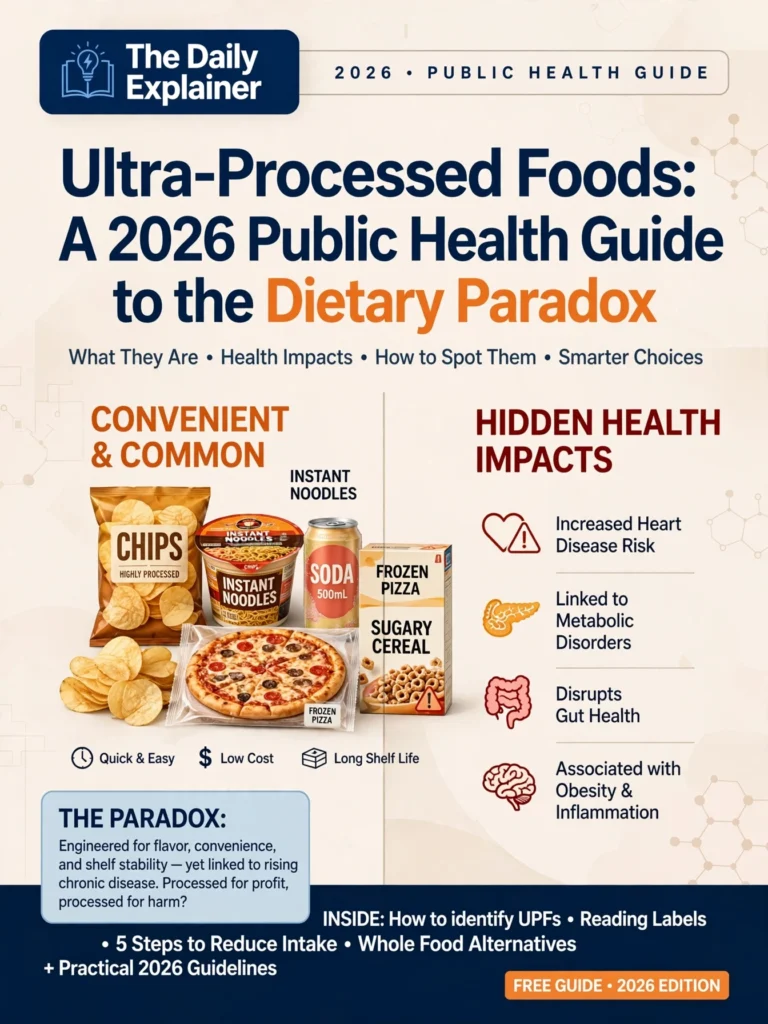
The public health paradox of ultra-processed foods reflects a deeper challenge: a category that is indispensable for understanding modern dietary patterns is simultaneously fraught with ambiguity. The 2025 Lancet Series has established that UPFs are a central driver of the global rise in chronic disease, but the debate over mechanisms, measurement, and policy continues.
The Core Truths:
- UPFs dominate global diets. In high-income countries, they account for 50–60% of energy intake, and consumption is rising rapidly in middle-income countries .
- Health risks are well-documented. UPF-heavy diets are linked to obesity, type 2 diabetes, cardiovascular disease, hypertension, depression, and all-cause mortality .
- The evidence is debated. Critics argue that associations may reflect nutritional composition rather than processing, and the NOVA system has reliability problems .
- The category is heterogeneous. Some UPFs—fortified plant-based milks and meat alternatives—can be part of a healthy diet .
- Policy action is needed. Individual behavior change is insufficient; structural policies that reshape the food environment, regulate corporate power, and promote minimally processed foods are essential .
Actionable Steps for Individuals:
- Read ingredient lists. Look for products with recognizable, whole-food ingredients.
- Choose whole foods when possible. Prioritize fruits, vegetables, whole grains, legumes, and fresh meats.
- Be cautious with packaged foods. Limit products with long ingredient lists and unfamiliar additives.
- Support policies that improve the food environment. Advocate for front-of-package labeling, marketing restrictions, and taxes on UPFs.
Actionable Steps for Communities:
- Support healthy food access programs. Advocate for subsidies for fresh foods in low-income communities.
- Encourage school food reform. Support programs that prioritize fresh and minimally processed foods in schools.
- Promote food literacy. Educate communities about reading labels and understanding food processing.
The Bottom Line: The UPF paradox challenges us to think beyond simple “good food/bad food” categories. The evidence is strong enough to justify policy action, but the solutions must be carefully designed to address the complexity of the food system and avoid unintended consequences.
FAQs (Freqently Asked Questions)
- Q: What are ultra-processed foods?
- Q: What is the NOVA classification system?
- Q: Are all UPFs unhealthy?
- Q: What did the 2025 Lancet Series find?
- Q: What health conditions are linked to UPFs?
- Q: Is the evidence on UPFs and health conclusive?
- Q: What is hyper-palatability?
- Q: Do UPFs cause food addiction?
- Q: How do UPFs affect weight?
- Q: What are food deserts?
- Q: Is store proximity the main cause of food deserts?
- Q: What policy measures does the Lancet Series recommend?
- Q: Does the UPF industry block regulation?
- Q: Are plant-based meats healthy despite being UPFs?
- Q: Is soymilk healthy despite being a UPF?
- Q: What is the main criticism of the NOVA system?
- Q: How do UPFs affect mental health?
- Q: What is the environmental impact of UPFs?
- Q: What countries have implemented UPF policies?
- Q: Is the US taking action on UPFs?
- Q: What is the “industrial formulation fallacy”?
- Q: How can I identify UPFs in the supermarket?
- A: Read ingredient lists. Look for unfamiliar ingredients (high-fructose corn syrup, hydrogenated oils, protein isolates, emulsifiers) and long lists of additives.
- Q: What is the bottom line on UPFs?
- A: The evidence is strong enough to justify policy action, but the solutions must be carefully designed to address the complexity of the food system and avoid unintended consequences.
About the Author
Dr. Emma Richardson, PhD, MPH
Dr. Richardson is a nutritional epidemiologist and public health researcher with 15 years of experience studying dietary patterns, food systems, and chronic disease prevention. She has published on the NOVA classification system and its implications for food policy. She is a contributing editor for The Daily Explainer.
Free Resources
- The Lancet Series on UPFs (2025): https://www.thelancet.com/series/ultra-processed-foods
- NOVA Food Classification: https://www.fao.org/nova
- WHO Nutrition: https://www.who.int/health-topics/nutrition
- Food Environment Atlas (USDA): https://www.ers.usda.gov/data-products/food-environment-atlas
- Global Food Research Program: https://www.globalfoodresearchprogram.org/
- Access to Nutrition Initiative: https://accesstonutrition.org/
Discussion
Share your perspective:
- Have you noticed the rise of UPFs in your community or diet?
- What strategies have been effective in helping people eat healthier?
- What role should governments play in regulating UPFs?
For professionals:
- Nutritionists: How do you counsel patients about UPFs?
- Policy analysts: What UPF policies do you think are most promising?
- Researchers: What are the key gaps in UPF evidence?
Please share your observations in the comments.
Internal & External Links Integration
Internal Links (The Daily Explainer):
- Climate Change and Infectious Diseases: https://thedailyexplainer.com/climate-change-infectious-diseases-guide
- Wildfire Smoke Long-Term Health Effects: https://thedailyexplainer.com/wildfire-smoke-long-term-health-effects-guide
- Resurrecting Routine Immunization: https://thedailyexplainer.com/resurrecting-routine-immunization-guide
- Air Pollution & Cognitive Decline: https://thedailyexplainer.com/air-pollution-cognitive-decline-guide
- AMR in Agriculture: https://thedailyexplainer.com/antimicrobial-resistance-agriculture-guide
- Youth Mental Health & Social Media Algorithms: https://thedailyexplainer.com/youth-mental-health-social-media-algorithms-guide
- Explainer section: https://thedailyexplainer.com/explained/
- Blog: https://thedailyexplainer.com/blog/
- Contact us: https://thedailyexplainer.com/contact-us/
- Breaking news: https://thedailyexplainer.com/news-category/breaking-news/
- Terms of Service: https://thedailyexplainer.com/terms-of-service/
- Global Affairs & Politics: https://thedailyexplainer.com/category/global-affairs-politics/
External Links:
- Shera Kat Network Resources: https://sherakatnetwork.com/category/resources/
- Shera Kat Network Blog: https://sherakatnetwork.com/category/blog/
- Contact Shera Kat Network: https://sherakatnetwork.com/contact-us
- Start Online Business 2026 Complete Guide: https://sherakatnetwork.com/start-online-business-2026-complete-guide/
- World Class Blogs About: https://worldclassblogs.com/about-worldclassblogs/
- World Class Blogs Category: https://worldclassblogs.com/category/blogs/
- World Class Blogs Our Focus: https://worldclassblogs.com/category/our-focus/
- World Class Blogs Nonprofit Hub: https://worldclassblogs.com/category/nonprofit-hub/
- Shera Kat Network SEO: https://sherakatnetwork.com/category/seo
About The Author