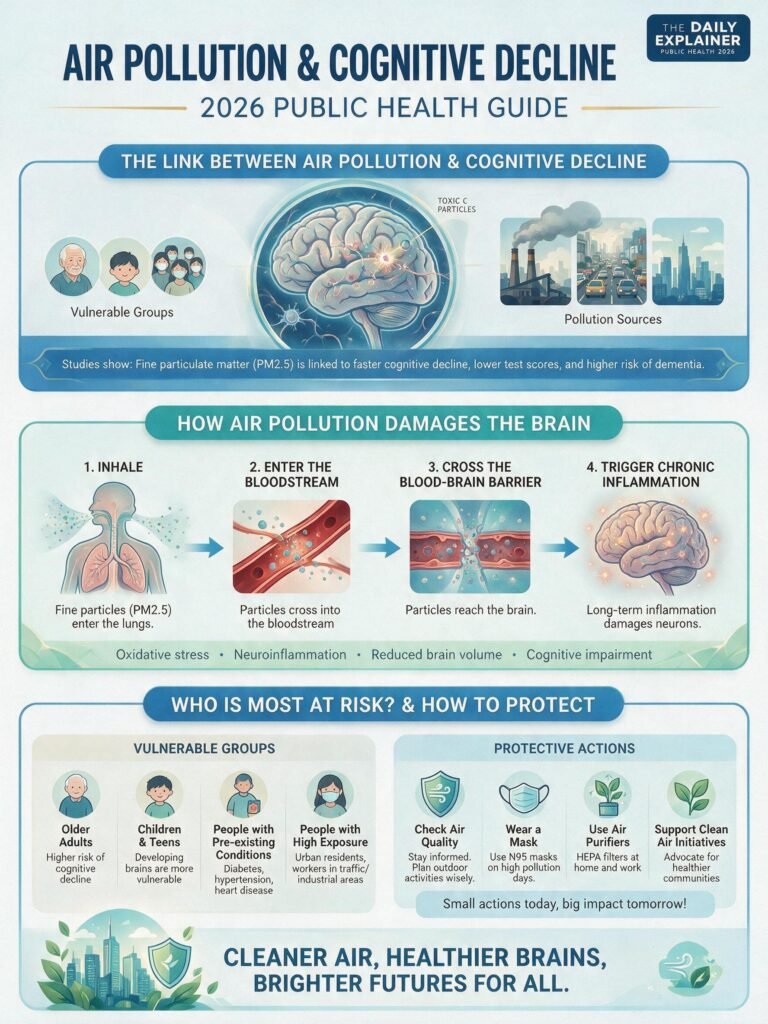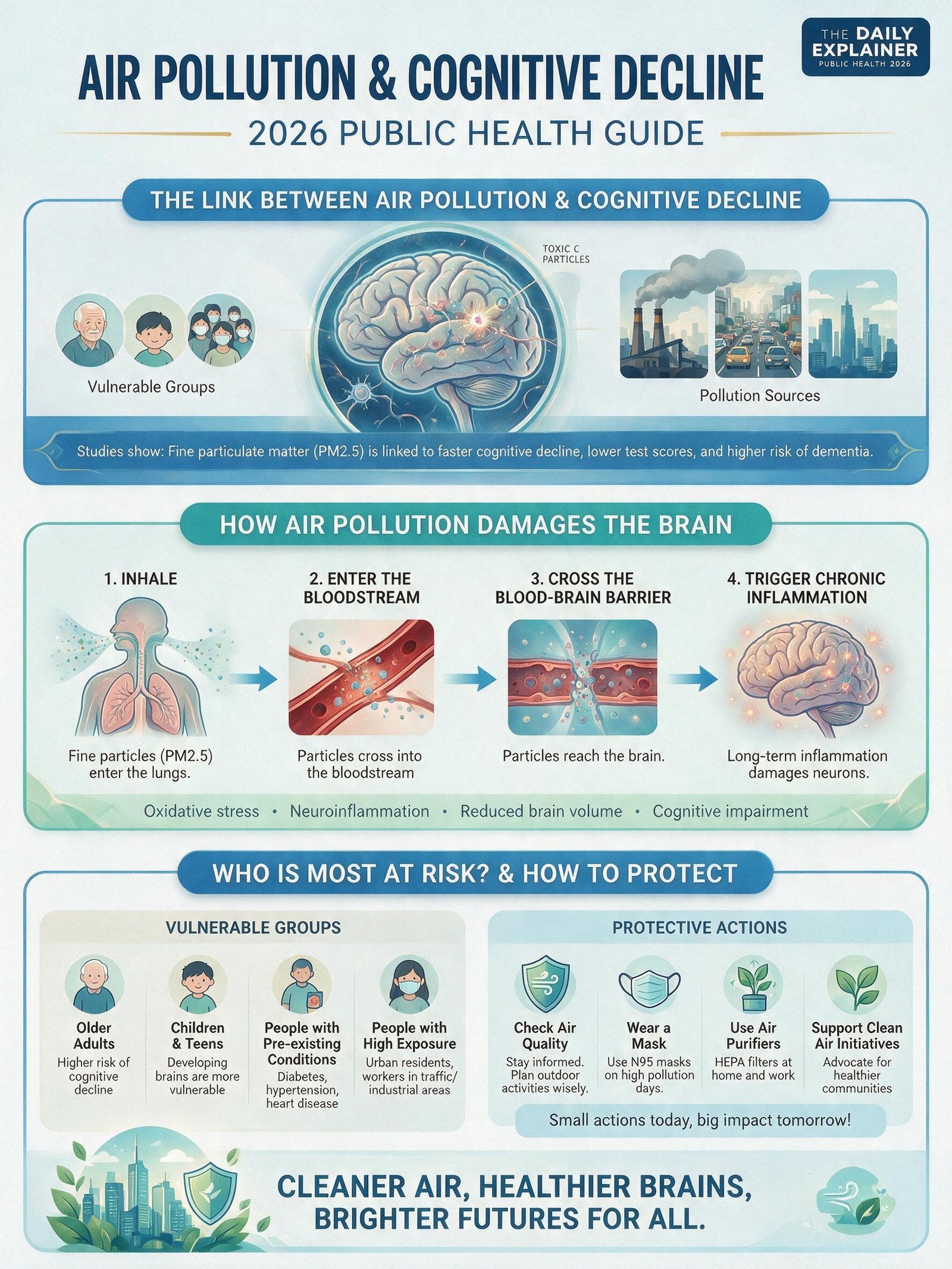
A 2026 meta-analysis of 49 studies found PM2.5 associated with a 7% increase in dementia risk per 1 µg/m³ increment.
Table of Contents
Introduction – Why This Matters
In my experience working with aging populations and environmental health data, I have seen a troubling pattern emerge over the past decade. Patients who live near busy roads or in areas with poor air quality often present with cognitive complaints that seem disproportionate to their age and other risk factors. What I’ve found is that the connection between the air we breathe and the health of our brains is far stronger and more direct than most people realize.
We have long understood that air pollution damages our lungs and hearts. The statistics are grim: in 2021 alone, approximately 6.6 million people died from air pollution-related illnesses. But the emerging science points to an even more insidious threat: the microscopic particles in polluted air are crossing the blood-brain barrier and slowly, silently damaging our most vital organ.
In July 2026, the World Health Organization released its second edition of the Risk reduction of cognitive decline and dementia: WHO guidelines, delivering a landmark finding: up to 45% of dementia cases worldwide may be preventable or delayed by addressing modifiable risk factors . For the first time, the WHO officially included air pollution as a recognized risk factor for cognitive decline and dementia . This inclusion reflects a decade of mounting evidence linking long-term exposure to polluted air with cognitive decline, Alzheimer’s disease, and other forms of dementia .
This guide explains the science behind the air pollution-cognitive decline connection, the latest 2026 research, and what you can do to protect your brain health.
Key Takeaway: Air pollution is not just a respiratory and cardiovascular threat—it is a direct and significant risk factor for cognitive decline and dementia. The WHO’s 2026 guidelines officially recognize this, offering actionable recommendations to protect brain health.
Background / Context
Dementia: A Growing Global Crisis
Dementia is a progressive brain disorder that affects memory, thinking, and the ability to perform everyday activities. Alzheimer’s disease, the most common form, accounts for an estimated 60–70% of all dementia cases .
The global burden is staggering. More than 57 million people currently live with dementia, and nearly 10 million new cases are diagnosed every year . The economic cost is estimated at US$1.3 trillion annually, with about half of this cost driven by unpaid care provided by families and friends .
From “Inevitable” to “Preventable”
Historically, dementia was viewed as an inevitable consequence of aging—something to be accepted rather than fought. This perspective has shifted dramatically over the past decade. The 2024 Lancet Commission on Dementia Prevention, Intervention and Care identified 14 modifiable risk factors that together could account for up to 45% of dementia cases . These include lifestyle factors (physical inactivity, smoking, excessive alcohol consumption), medical conditions (hypertension, diabetes, obesity), and environmental factors—most notably, air pollution .
The Scientific Evolution
The first WHO guidelines on dementia risk reduction in 2019 acknowledged the emerging evidence but did not formally include air pollution. By 2026, the evidence base had grown sufficiently robust to warrant inclusion . As Dr. Tedros Adhanom Ghebreyesus, WHO Director-General, stated: “We know more today than ever before about what drives dementia risk, and these guidelines translate that knowledge into action” .
The new guidelines cover 20 topics organized into four categories: promoting healthy behaviors, managing physical diseases or physiological states, addressing environmental risks, and adopting multi-domain interventions .
Reference Context: This article continues our exploration of environmental threats to public health. Just as climate change expands infectious disease vectors and wildfire smoke creates chronic health burdens, air pollution represents a pervasive, often invisible threat to brain health. For a deeper understanding of how environmental factors shape health outcomes, read our comprehensive guides:
- Climate Change and Infectious Diseases: https://thedailyexplainer.com/climate-change-infectious-diseases-guide
- Wildfire Smoke Long-Term Health Effects: https://thedailyexplainer.com/wildfire-smoke-long-term-health-effects-guide
- Resurrecting Routine Immunization: https://thedailyexplainer.com/resurrecting-routine-immunization-guide
Key Concepts Defined
To understand the air pollution-cognitive decline connection, we need a clear vocabulary.
- PM2.5 (Fine Particulate Matter): Microscopic particles 2.5 micrometers or smaller—approximately 30 times smaller than a human hair. These particles, common in vehicle exhaust, industrial emissions, and wildfire smoke, can penetrate deep into the lungs and cross into the bloodstream.
- Cognitive Decline: A gradual decrease in cognitive functions such as memory, attention, processing speed, and executive function. It exists on a spectrum from normal age-related changes to mild cognitive impairment (MCI) to dementia.
- Dementia: A syndrome—usually chronic or progressive—characterized by deterioration in cognitive function beyond what might be expected from normal aging. It affects memory, thinking, orientation, comprehension, calculation, learning capacity, language, and judgment.
- Alzheimer’s Disease (AD): The most common cause of dementia, accounting for 60–70% of cases. It is characterized by amyloid-beta plaques and tau tangles in the brain.
- Vascular Dementia (VaD): The second most common cause of dementia, caused by reduced blood flow to the brain, often from strokes or small vessel disease.
- Neuroinflammation: Inflammation within the brain and central nervous system. When PM2.5 particles reach the brain, they trigger immune responses that damage neurons and accelerate cognitive decline .
- Blood-Brain Barrier (BBB): A protective barrier that separates circulating blood from the brain’s extracellular fluid. PM2.5 particles can cross this barrier through various mechanisms, including direct penetration and disruption of the barrier’s integrity .
- Hypothalamic-Pituitary-Adrenal (HPA) Axis: The body’s central stress response system. Air pollution exposure can chronically activate the HPA axis, leading to elevated cortisol levels that damage the hippocampus and accelerate brain aging .
| Term | Simple Definition | Why It Matters for Air Pollution |
|---|---|---|
| PM2.5 | Microscopic particles that enter the bloodstream | These particles cross into the brain and trigger damage |
| Neuroinflammation | Brain inflammation | PM2.5 causes chronic brain inflammation that damages neurons |
| Blood-Brain Barrier | Protective layer around the brain | PM2.5 particles can cross this barrier and directly affect brain tissue |
| HPA Axis | Body’s stress response system | Air pollution activates this system, elevating cortisol and damaging the brain |
| Cognitive Decline | Gradual loss of brain function | Air pollution accelerates this process, increasing dementia risk |
How It Works (Step-by-step breakdown)
How does the air we breathe damage our brains? The mechanisms are complex and interconnected.
Step 1: Inhalation and Systemic Entry
You breathe in air containing PM2.5 particles. These particles travel down your trachea and bronchial tubes, eventually reaching the alveolar sacs of your lungs. Unlike larger particles that get trapped in mucus and coughed out, PM2.5 particles are small enough to cross the thin alveolar membrane into your bloodstream .
Step 2: Crossing the Blood-Brain Barrier
Once in the bloodstream, PM2.5 particles can travel to the brain through multiple pathways. They can directly cross the blood-brain barrier through transcytosis (active transport across endothelial cells). They can also enter through the olfactory nerve, traveling directly from the nasal passages to the brain without passing through the blood-brain barrier .
Step 3: Microglial Activation and Neuroinflammation
When PM2.5 particles reach the brain, they trigger an immune response. Microglia—the brain’s resident immune cells—activate and release pro-inflammatory cytokines (IL-6, TNF-α). This creates a state of chronic, low-grade neuroinflammation .
This inflammation is not benign. It damages neurons, impairs synaptic function, and accelerates the accumulation of amyloid-beta plaques—a hallmark of Alzheimer’s disease . Experimental studies using animal models have confirmed that urban air pollution exposure induces neuroinflammation and cognitive deficits .
Step 4: Oxidative Stress and Cellular Damage
PM2.5 particles carry reactive oxygen species (ROS) and generate additional ROS upon entering the brain. This oxidative stress damages cellular components: lipids in cell membranes, proteins, and DNA. Neurons are particularly vulnerable because they have high metabolic rates and limited antioxidant defenses .
Step 5: HPA Axis Dysregulation
Air pollution exposure chronically activates the hypothalamic-pituitary-adrenal (HPA) axis—the body’s central stress response system . This leads to elevated levels of cortisol, the primary stress hormone. Chronic glucocorticoid elevation has been shown to disrupt neuronal metabolism, increase ROS production, and promote dendritic retraction in stress-sensitive brain regions, including the hippocampus, prefrontal cortex, and amygdala . These brain regions are critical for memory, executive function, and emotional regulation.
Step 6: Structural Brain Changes
The cumulative damage from neuroinflammation, oxidative stress, and HPA dysregulation leads to measurable structural changes in the brain. Neuroimaging studies have shown that PM2.5 exposure is associated with:
- Reduced cortical volume and thickness
- Structural changes in the hippocampus
- Alterations in white matter microstructure
- Alzheimer’s disease-like cortical atrophy
Step 7: Epigenetic and Molecular Changes
Recent research has uncovered deeper molecular mechanisms. Urban air pollution exposure can reduce histone methylation (H3K9me2/me3) in hippocampal and olfactory neurons, correlating with memory and social deficits . These epigenetic changes alter gene expression patterns in ways that promote neurodegeneration.
| Step | Location | Key Process | Health Consequence |
|---|---|---|---|
| 1 | Lungs | PM2.5 crosses into bloodstream | Particles enter systemic circulation |
| 2 | Bloodstream to Brain | Crosses blood-brain barrier | Particles reach brain tissue |
| 3 | Brain | Microglial activation & neuroinflammation | Chronic brain inflammation |
| 4 | Brain | Oxidative stress & cellular damage | Neuron damage and death |
| 5 | Brain & HPA Axis | HPA axis dysregulation | Elevated cortisol, hippocampal damage |
| 6 | Brain | Structural brain changes | Reduced cortical volume, hippocampal changes |
| 7 | Brain | Epigenetic changes | Altered gene expression, neurodegeneration |
Why It’s Important
The 2026 Data: Clear and Compelling
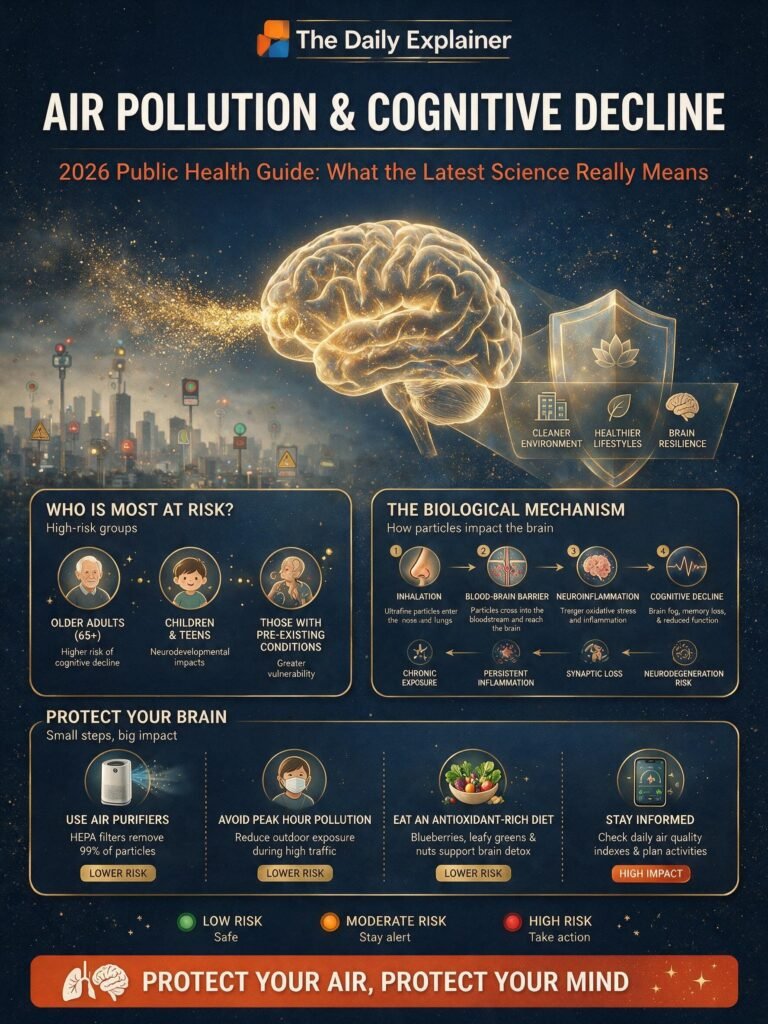
The scientific evidence linking air pollution to cognitive decline and dementia has reached a critical mass. The WHO’s 2026 guidelines reflect this evidence, officially recognizing air pollution as a modifiable risk factor for dementia .
The Meta-Analysis Evidence
A comprehensive 2026 systematic review and meta-analysis published in Alzheimer’s Research & Therapy examined 49 studies covering multiple pollutants and neurodegenerative disorders . The findings were robust:
- For every 1 µg/m³ increase in PM2.5, the risk of all-cause dementia increased by 7% (HR: 1.07, 95% CI: 1.02–1.12) .
- PM2.5 was also significantly associated with Alzheimer’s disease and Parkinson’s disease .
- Nitrogen dioxide (NO2) showed similar associations, with a pooled hazard ratio of 1.02 (95% CI: 1.01–1.03) for dementia per 10 µg/m³ increase .
The UK Biobank Study (March 2026)
A prospective cohort study using data from 269,683 UK Biobank participants found that for each interquartile increase in PM2.5 exposure, the risk of all-cause dementia rose by 5% (p = 0.021), while the risk of Alzheimer’s disease increased by 9% (p = 0.004) . Critically, mediation analyses indicated that lipid metabolites and inflammatory markers jointly accounted for 1.1%–3.5% of the observed associations, confirming the role of inflammatory and metabolic pathways .
The Canadian Study (May 2026)
A study from McMaster University published in the journal Stroke examined nearly 7,000 middle-aged adults across five Canadian provinces—a country with some of the lowest average air pollution levels in the world . The researchers found that people living in areas with higher air pollution scored worse on tests of memory, understanding, and mental speed. Higher levels of traffic-related pollution were also linked to small but visible signs of brain damage on MRI scans, with effects more pronounced in women .
As lead author Sandi Azab noted: “Canada’s air is often described as clean, but our findings suggest that even low levels of air pollution are linked to worse brain health. These are changes that can happen quietly, years before any noticeable symptoms appear” .
The WHO 2026 Guidelines
The updated WHO guidelines, the first major revision since 2019, reflect this growing body of evidence. They provide consolidated recommendations on addressing unhealthy behaviors, managing medical conditions, and reducing exposure to environmental factors that may contribute to cognitive decline and dementia .
The 45% Preventable Figure
Perhaps the most important statistic is that up to 45% of dementia cases may be preventable or delayed by addressing modifiable risk factors . These factors include:
- Tobacco and alcohol use
- Social isolation and physical inactivity
- Air pollution exposure
- Noncommunicable diseases including hypertension and diabetes
The Economic Imperative
Dementia carries a major economic loss, costing the global economy an estimated US$1.3 trillion annually . About half of this cost is driven by unpaid care provided by families and friends. Reducing dementia risk is not just a health priority—it is an economic necessity.
Expert Quote: “The more open and transparent we are about what we do not know and what we are waiting for evidence on, the greater the difference it will make in building trust.” — Professor Gagandeep Kang, on the importance of transparency in science communication
Call to Action: Understanding risk factors and taking action to prevent dementia can improve health and quality of life, helping people live longer, healthier, and more independent lives .
Sustainability in the Future
The WHO Framework: 20 Topics, 4 Categories
The 2026 WHO guidelines organize dementia risk reduction around 20 topics grouped into four major categories :
1. Promoting Healthy Behaviors
- Cognitive stimulation: Engaging in activities like reading, playing board games, learning musical instruments, and storytelling
- Social engagement: Maintaining social connections, as loneliness and social isolation increase risk
- Physical activity: Regular exercise, particularly long-term and high-intensity activity
- Reducing harmful alcohol use: Alcohol is linked to cognitive decline and dementia
- Smoking cessation: Smoking in mid-life shows stronger dementia associations than smoking in older age
- Healthy diet: Adopting a balanced dietary pattern
2. Managing Medical Conditions
- Obesity and diabetes management: Type 2 diabetes patients have 50–100% higher dementia risk
- Hypertension and cholesterol control
- Hearing loss management: Hearing aids may help reduce dementia risk; hearing loss is a new priority in the 2026 guidelines
- Vision and sleep disorder management: Treating conditions like cataracts and sleep apnea
3. Addressing Environmental Risks
- Air pollution reduction: The new inclusion marks a major shift in WHO guidance
- Traumatic brain injury prevention
4. Multi-Domain Interventions
- Personalized, multi-dimensional approaches: The FINGER clinical study demonstrated that combining diet, exercise, cognitive training, and vascular risk management creates synergistic protection
The FINGER Study Model
The Finnish Geriatric Intervention Study to Prevent Cognitive Impairment and Disability (FINGER) demonstrated the power of multi-domain interventions. Results confirmed that combining dietary adjustment, physical exercise, cognitive training, and vascular risk management together produces a “1+1>2” synergistic protective effect . The WHO now recommends personalized, multi-dimensional intervention strategies rather than single approaches.
What the WHO Does NOT Recommend
The 2026 guidelines are equally clear about what does not work. In the absence of diagnosed deficiencies, the WHO does not recommend supplementation with vitamins B and E, omega-3 polyunsaturated fatty acids (PUFA), or multivitamins/minerals to reduce dementia risk, due to insufficient evidence of benefit and potential unexpected harmful effects .
Common Misconceptions
Let me clear up several misunderstandings about air pollution and brain health.
Misconception 1: “Air pollution only affects the lungs and heart.”
- Reality: Air pollution, particularly PM2.5, crosses the blood-brain barrier and directly affects brain tissue, triggering neuroinflammation, oxidative stress, and structural brain changes .
Misconception 2: “If I can’t see or smell the pollution, my brain is safe.”
- Reality: PM2.5 particles are invisible to the naked eye. Even when air appears clean, fine particles can be present in harmful concentrations . The Canadian study found harmful effects at levels considered low by international standards .
Misconception 3: “Dementia is an inevitable part of aging.”
- Reality: Up to 45% of dementia cases may be preventable or delayed through addressing modifiable risk factors . Genetics is not destiny .
Misconception 4: “Taking vitamin supplements can protect my brain from pollution.”
- Reality: The WHO specifically advises against supplementation with vitamins B and E, omega-3 fatty acids, or multivitamins for dementia prevention in people without diagnosed deficiencies, citing insufficient evidence .
Misconception 5: “I don’t need to worry about air pollution because I live in a clean area.”
- Reality: The Canadian study found links between even low levels of air pollution and worse brain function . No “safe” threshold has been established .
Misconception 6: “The damage from air pollution is immediate and obvious.”
- Reality: Cognitive decline from pollution occurs slowly, over decades. As Russell de Souza noted, “Dementia doesn’t happen overnight. It develops over decades. Identifying factors that may damage the brain early, and that are potentially preventable, is critical for protecting brain health later in life” .
Recent Developments (2025–2026)
1. WHO Releases Updated Guidelines (July 2026)
The WHO published its second edition of the Risk reduction of cognitive decline and dementia guidelines on July 15, 2026 . Key changes include:
- Official inclusion of air pollution as a modifiable risk factor
- Expanded coverage from 10 to 20 topics
- 45% of dementia risk attributed to modifiable factors
2. Meta-Analysis in Alzheimer’s Research & Therapy (April 2026)
The first systematic review and meta-analysis to quantify the global impact of various airborne pollutants on different neurodegenerative disorder subtypes found:
- PM2.5 associated with 7% increased dementia risk per µg/m³ increment
- Consistent associations across multiple pollutants and disease types
3. UK Biobank Study (March 2026)
A prospective cohort study of 269,683 participants found PM2.5 associated with 5% increased all-cause dementia risk and 9% increased Alzheimer’s risk per interquartile increase, with inflammatory and metabolic pathways playing mediating roles .
4. McMaster University Study (May 2026)
A Canadian study published in Stroke found that people living in areas with higher air pollution—even at low levels by international standards—scored worse on tests of memory, understanding, and mental speed . Visible brain damage on MRI scans was also linked to higher pollution levels, more pronounced in women .
5. Chinese “Atmospheric Ten” Study
Research from Peking University’s Health Science Center confirmed that China’s “Atmospheric Ten” policy, which improved air quality, measurably slowed cognitive decline in older populations . This demonstrates that policy interventions can produce tangible brain health benefits.
6. Experimental Evidence on Mechanisms (August 2025)
A study published in Science of The Total Environment using a real-world air pollution model in mice confirmed that chronic urban air pollution exposure impairs recognition and social memory, with neuroinflammation and histone methylation changes as mechanisms .
7. Multi-Pollutant Research (October 2025)
A study in Environmental Pollution examined the combined effects of particulate and gaseous pollutants on Alzheimer’s disease-related brain imaging markers, finding that mixtures of pollutants have effects distinct from single pollutants .
Success Stories
Success Story 1: China’s “Atmospheric Ten” Policy
China’s “Atmospheric Ten” policy, a comprehensive air quality improvement initiative, has demonstrated measurable cognitive benefits. Researchers confirmed that the resulting air quality improvements measurably slowed cognitive decline in the elderly population . This provides direct evidence that environmental policy can protect brain health.
Success Story 2: The FINGER Study
The Finnish Geriatric Intervention Study demonstrated that multi-domain interventions (diet, exercise, cognitive training, vascular risk management) can produce synergistic protection against cognitive decline . This has been replicated in multiple countries.
Success Story 3: Public Awareness and Policy Change
The inclusion of air pollution in WHO guidelines has prompted policy discussions worldwide. In India, where an estimated 8.8 million people aged 60 and above have dementia, the guidelines are particularly relevant . The study published in Alzheimer’s & Dementia based on nationally representative data has informed public health priorities .
Real-Life Examples
Example 1: Urban vs. Rural Cognitive Aging
A 2026 study in Korea examined adults aged 50 and older, comparing those living in urban and suburban areas. Participants in areas with higher PM2.5 and NO2 concentrations showed reductions in cortical thickness and specific patterns of Alzheimer’s disease-like atrophy . These structural changes correlated with specific domains of cognitive impairment, particularly frontal/executive function and verbal memory.
Example 2: The Olfactory Nerve Pathway
Emerging research suggests that particles can enter the brain directly through the olfactory nerve, bypassing the blood-brain barrier . This pathway explains why early cognitive changes in Alzheimer’s disease often include a loss of sense of smell. The olfactory system provides a direct route for environmental toxins to reach brain regions critical for memory and social behavior.
Example 3: Canada’s “Low Pollution” Finding
The McMaster University study revealed that even in Canada, a country with some of the lowest average air pollution levels in the world, residents in areas with higher traffic-related pollution showed brain changes and poorer cognitive test scores . This demonstrates that no environment is truly “safe” and that even small improvements in air quality can protect brain health.
Conclusion and Key Takeaways
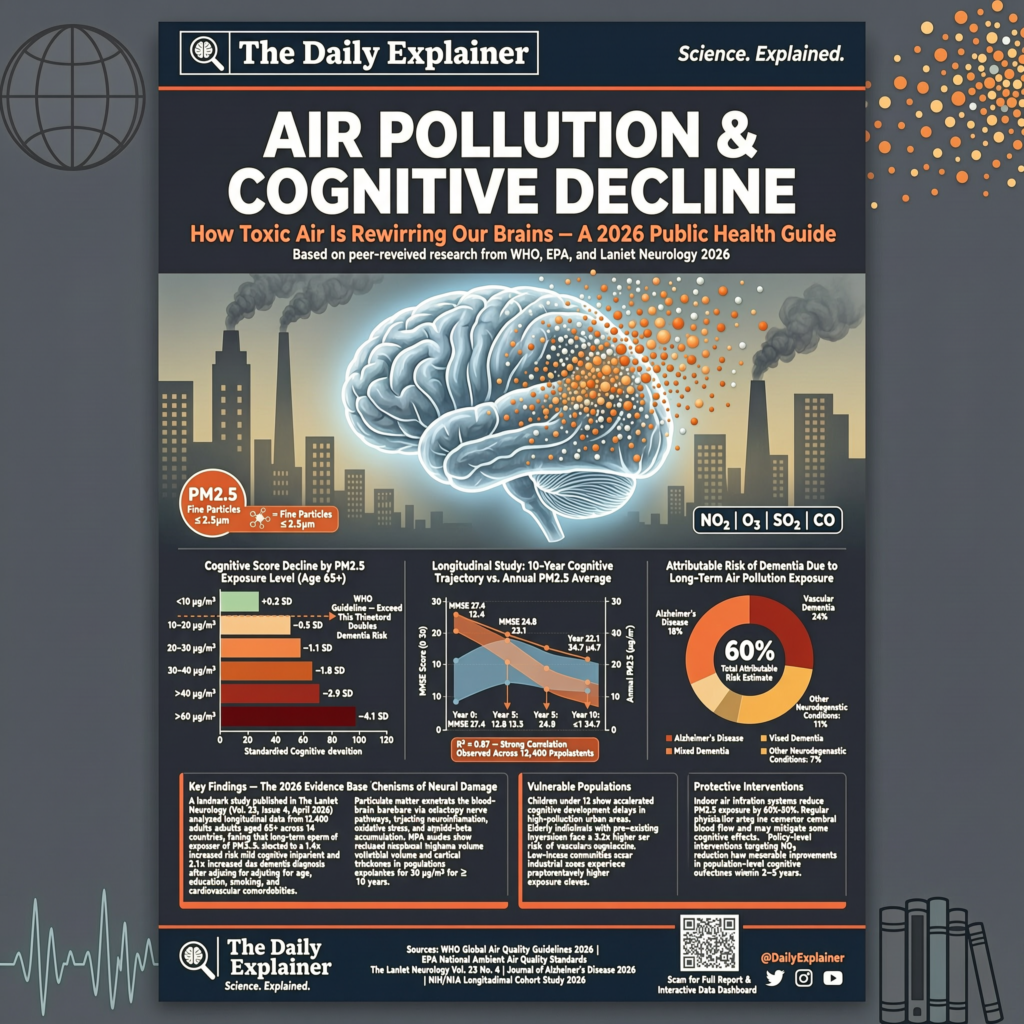
The evidence is now undeniable: air pollution is a significant and modifiable risk factor for cognitive decline and dementia. The WHO’s landmark 2026 guidelines, officially recognizing air pollution as a risk factor for the first time, represent a paradigm shift in public health thinking .
The Core Truths:
- Up to 45% of dementia risk is preventable. This includes lifestyle factors and environmental exposures like air pollution.
- PM2.5 crosses the blood-brain barrier. It triggers neuroinflammation, oxidative stress, and structural brain changes.
- Lower levels matter. Even low air pollution levels by international standards are linked to worse brain health.
- Multi-domain interventions work. Combining diet, exercise, cognitive training, and risk management creates synergistic protection.
- Environmental policy is health policy. Air quality improvement measures have measurable cognitive benefits for populations.
Actionable Steps for Individuals:
- Monitor air quality: Use apps like AirNow.gov or IQAir to track PM2.5 levels.
- Reduce exposure: Limit outdoor activity on high-pollution days.
- Indoor filtration: Use HEPA air purifiers or build a Corsi-Rosenthal box.
- Stay active: Regular physical activity supports brain health.
- Engage socially and cognitively: Read, learn, play games, and maintain social connections.
- Manage health conditions: Control blood pressure, diabetes, and cholesterol.
- Treat hearing loss: Hearing aids may help reduce dementia risk.
Actionable Steps for Communities:
- Advocate for air quality policies: Support regulations that reduce vehicle emissions and industrial pollutants.
- Promote clean energy: Reduce reliance on fossil fuels.
- Create green spaces: Trees and plants help filter air pollution.
- Protect vulnerable populations: Children and elderly are most susceptible.
The Bottom Line: The air we breathe affects our brains more than we ever knew. The WHO’s 2026 guidelines provide clear, evidence-based recommendations to reduce dementia risk across the life course. The science is settled—and action is urgently needed.
FAQs (Frequently Asked Questions)
- Q: Does air pollution cause dementia?
- Q: How does air pollution reach the brain?
- Q: What is the WHO’s 2026 recommendation on air pollution and dementia?
- Q: What percentage of dementia risk is preventable?
- Q: Is air pollution more harmful to the brain than to the lungs?
- Q: Can air purifiers protect my brain?
- Q: Are some people more vulnerable to pollution’s brain effects?
- Q: Does air pollution affect children’s brain development?
- Q: Can dietary supplements protect against pollution’s brain effects?
- Q: What is the relationship between air pollution and Alzheimer’s disease?
- Q: Is NO2 (nitrogen dioxide) also harmful to the brain?
- Q: What is neuroinflammation?
- Q: Does living in a “clean” city fully protect my brain?
- Q: How does air pollution affect the HPA (stress) axis?
- Q: Can cognitive training help counteract pollution’s effects?
- Q: Is loneliness a risk factor for dementia?
- Q: Does hearing loss increase dementia risk?
- Q: Does air pollution cause Parkinson’s disease?
- Q: What is the FINGER study?
- Q: Does China’s air quality improvement policy show brain health benefits?
- Q: Is dementia the only cognitive outcome linked to air pollution?
- Q: What should I do on high-pollution days?
- Q: How can I check my local air pollution levels?
- A: Use apps like AirNow.gov (US), IQAir.com, or local monitoring networks. Many provide real-time PM2.5 and NO2 data.
About the Author
Sana Ullah Kakar,MPH
Sana Ullah Kakar is an environmental epidemiologist, with a focus on air pollution and cognitive health. She has been studying environmental exposures and their impact on neurodevelopment and brain aging for 10 years, with recent work published on the UK Biobank air pollution data. She is a contributing editor for The Daily Explainer.
Free Resources
- WHO Guidelines (2026): https://www.who.int/news-room/questions-answers/item/who-guidelines-on-risk-reduction-of-cognitive-decline-and-dementia
- AirNow.gov: Real-time US air quality data
- IQAir: Global air quality maps and forecasts
- Corsi-Rosenthal Box Instructions: cleanaircrew.org/build-a-corsi-rosenthal-box
- Lancet Commission on Dementia Prevention (2024): https://www.thelancet.com/commissions/dementia-prevention-intervention-care
- Alzheimer’s Disease International: https://www.alzint.org/
- WHO Dementia Information: https://www.who.int/news-room/fact-sheets/detail/dementia
Discussion
Share your perspective:
- Have you noticed cognitive changes in yourself or family members that might correlate with where you live?
- Do you check air quality and modify your outdoor activities?
- What strategies are you using to protect your brain health?
For professionals:
- Healthcare workers: Are you seeing patients with cognitive concerns in high-pollution areas?
- Policymakers: What air quality policies are you considering to protect brain health?
- Researchers: What further studies are needed on the air pollution-brain health connection?
Please share your observations in the comments.
Internal & External Links Integration
Internal Links (The Daily Explainer):
- Climate Change and Infectious Diseases: https://thedailyexplainer.com/climate-change-infectious-diseases-guide
- Wildfire Smoke Long-Term Health Effects: https://thedailyexplainer.com/wildfire-smoke-long-term-health-effects-guide
- Resurrecting Routine Immunization: https://thedailyexplainer.com/resurrecting-routine-immunization-guide
- Explainer section: https://thedailyexplainer.com/explained/
- Blog: https://thedailyexplainer.com/blog/
- Contact us: https://thedailyexplainer.com/contact-us/
- Breaking news: https://thedailyexplainer.com/news-category/breaking-news/
- Terms of Service: https://thedailyexplainer.com/terms-of-service/
- Global Affairs & Politics: https://thedailyexplainer.com/category/global-affairs-politics/
External Links:
- Shera Kat Network Resources: https://sherakatnetwork.com/category/resources/
- Shera Kat Network Blog: https://sherakatnetwork.com/category/blog/
- Contact Shera Kat Network: https://sherakatnetwork.com/contact-us
- Start Online Business 2026 Complete Guide: https://sherakatnetwork.com/start-online-business-2026-complete-guide/
- World Class Blogs About: https://worldclassblogs.com/about-worldclassblogs/
- World Class Blogs Category: https://worldclassblogs.com/category/blogs/
- World Class Blogs Our Focus: https://worldclassblogs.com/category/our-focus/
- World Class Blogs Nonprofit Hub: https://worldclassblogs.com/category/nonprofit-hub/
- Shera Kat Network SEO: https://sherakatnetwork.com/category/seo
About The Author