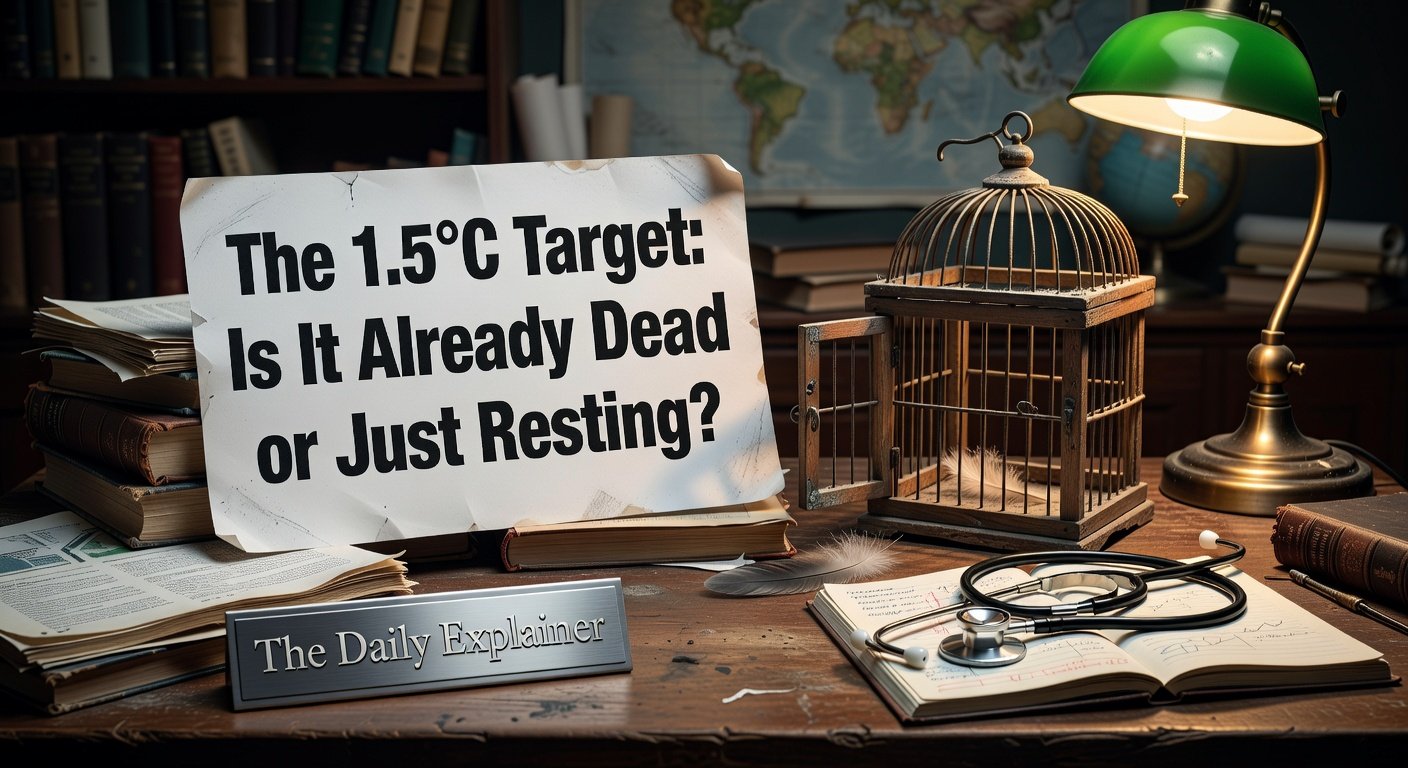
In 2026, the world is not on track to meet the 1.5°C target. But scientists warn that every fraction of a degree matters, and abandoning the goal would be a catastrophic mistake.
Introduction – Why This Matters
In my years of following international climate negotiations, I’ve noticed a strange and dangerous shift in the conversation. At COP meetings, in policy papers, and even in casual discussions, the number “1.5” is still mentioned, but it often feels like a ritualistic incantation rather than a genuine goal. People say it, but their eyes glaze over. What I’ve found is that a quiet, unspoken assumption has taken hold in many circles: that the 1.5°C target is dead. That we’ve already failed. That we should just focus on adapting to a 2.5°C or 3°C world.
This assumption is not just wrong; it is profoundly dangerous.
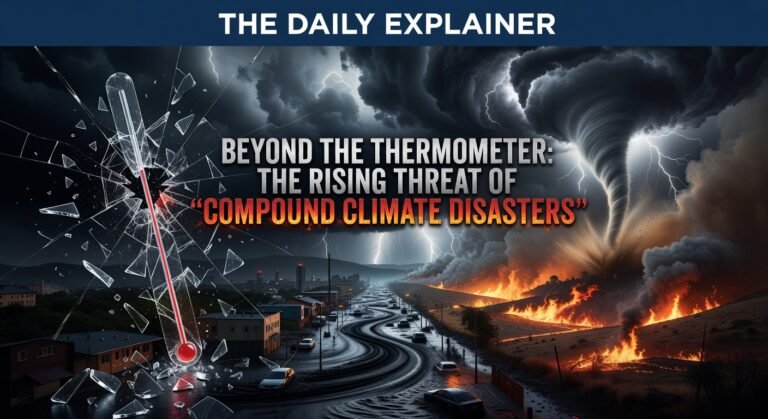
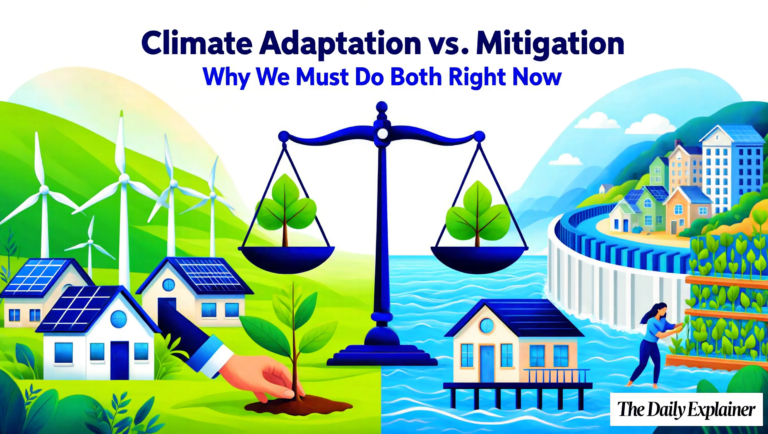
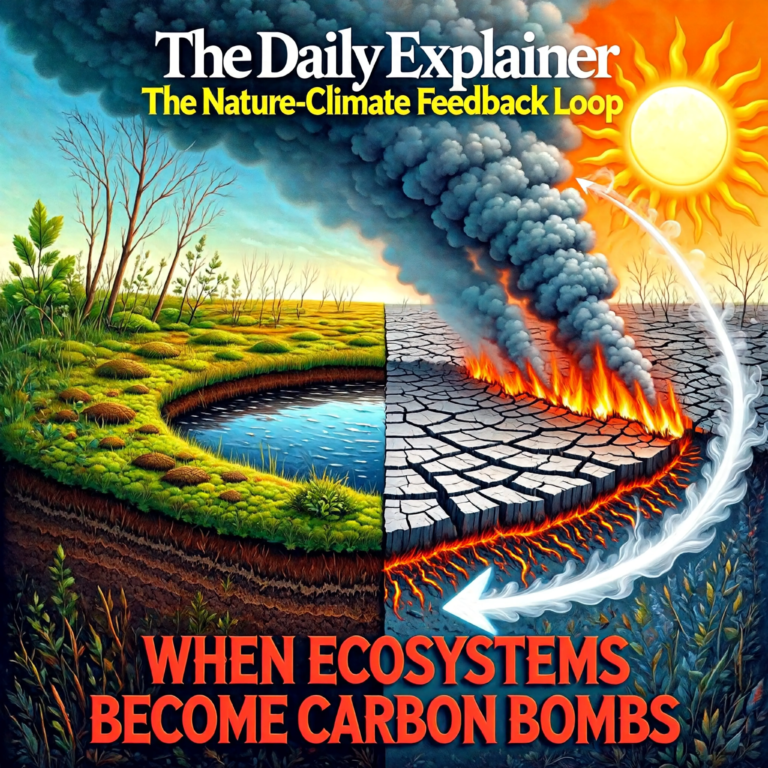
The 1.5°C target, enshrined in the 2015 Paris Agreement, is not an arbitrary number pulled from thin air. It is a scientifically derived threshold, representing the limit beyond which the risks of climate change—from coral reef collapse to ice sheet melt to extreme weather—increase dramatically and, in some cases, irreversibly. As we’ve explored in our series on the Cryosphere Crisis, the Nature-Climate Feedback Loop, the need for Adaptation and Mitigation, and the reality of Compound Disasters, every fraction of a degree of warming matters. The difference between 1.5°C and 2°C is not a matter of a few tenths on a thermometer; it is a matter of entirely different futures for billions of people and countless ecosystems.
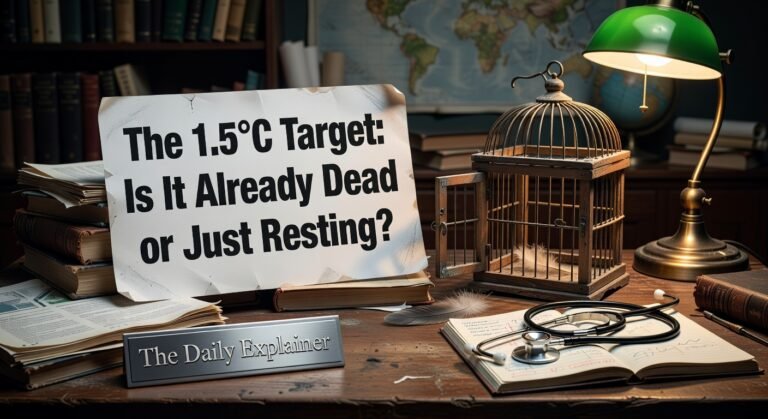
So, in 2026, where do we actually stand? Is the 1.5°C target a living, breathing goal we can still achieve, or is it a corpse we are politely refusing to bury? The answer, as with most things in climate science, is complex. But understanding that complexity is the first step toward honest action.
Background / Context
The story of 1.5°C begins not in Paris, but in the small island nations of the world. During the negotiations leading up to the 2015 Paris Agreement, a coalition of countries—including the Alliance of Small Island States (AOSIS)—pushed back hard against the proposed target of 2°C. They argued, with compelling evidence, that 2°C of warming would mean the literal disappearance of their nations under rising seas. For them, 1.5°C was not an ambitious stretch goal; it was a survival threshold.
Their advocacy led to the inclusion of the 1.5°C target in the final Paris Agreement text, alongside the 2°C goal. The agreement committed signatories to “holding the increase in the global average temperature to well below 2°C above pre-industrial levels and pursuing efforts to limit the temperature increase to 1.5°C above pre-industrial levels, recognizing that this would significantly reduce the risks and impacts of climate change.”
Following Paris, the IPCC was tasked with producing a special report on the impacts of 1.5°C of warming. The resulting IPCC Special Report on Global Warming of 1.5°C (SR15), published in 2018, was a watershed moment. It laid out, in stark scientific detail, the difference between 1.5°C and 2°C:
- At 1.5°C, coral reefs are projected to decline by 70-90%. At 2°C, they are virtually all lost (>99%).
- The risk of an ice-free Arctic Ocean in the summer is 10 times higher at 2°C than at 1.5°C.
- The number of people exposed to climate-related risks and poverty could be hundreds of millions lower at 1.5°C.
SR15 also made clear that limiting warming to 1.5°C was still physically possible, but it would require “rapid and far-reaching transitions in energy, land, urban and infrastructure (including transport and buildings), and industrial systems.” These transitions would be “unprecedented in terms of scale,” but not impossible.
Since 2018, however, global emissions have continued to rise, albeit more slowly. The carbon budget—the total amount of CO2 we can still emit while having a decent chance of staying under 1.5°C—has been shrinking rapidly. And the politics of climate action, as we saw with the “science obfuscation” at COP30, have become increasingly fraught.
Key Concepts Defined
To understand the fate of the 1.5°C target, we need to master a set of technical but essential terms.
- Paris Agreement: The legally binding international treaty on climate change was adopted by 196 parties in 2015. Its central goal is to limit global warming to well below 2°C, preferably to 1.5°C, compared to pre-industrial levels.
- Pre-Industrial Level: The baseline for measuring global warming, typically defined as the average global temperature between 1850 and 1900. This was before large-scale industrialization began to significantly alter the atmosphere.
- Carbon Budget: The estimated total net amount of carbon dioxide that human activities can still emit while having a reasonable chance (typically 50% or 66%) of limiting global warming to a given temperature, such as 1.5°C. Think of it as a finite bank account.
- Net-Zero: The point at which human-caused greenhouse gas emissions are balanced by removing an equivalent amount from the atmosphere. For 1.5°C, the IPCC SR15 indicated the world needs to reach net-zero CO2 emissions around 2050.
- Overshoot: A scenario in which global warming temporarily exceeds 1.5°C before being brought back down later in the century through a combination of deep emissions cuts and carbon dioxide removal (CDR) technologies.
- Nationally Determined Contributions (NDCs): The non-binding national plans submitted by each country under the Paris Agreement outlining their climate actions and targets for reducing emissions. They are updated every five years.
- Carbon Dioxide Removal (CDR): Human activities that remove CO2 from the atmosphere and store it durably. This includes both nature-based solutions (afforestation, reforestation, soil carbon sequestration) and technological solutions (direct air capture, bioenergy with carbon capture and storage – BECCS).
- Hothouse Earth: A theoretical pathway where the climate system crosses a series of tipping points, leading to self-reinforcing warming (like the feedback loops we’ve discussed) and a much hotter, less stable climate state, even if human emissions stop.
How It Works (A Step-by-Step Breakdown of the 1.5°C Pathway)
Achieving the 1.5°C target is not about a single magic solution. It requires a coordinated, global effort across every sector of the economy. Here is a step-by-step breakdown of what a 1.5°C-aligned pathway looks like, according to the IPCC and the International Energy Agency (IEA).
Step 1: Immediate and Deep Emissions Cuts (Now – 2030)
This is the most critical and urgent step. To have a chance at 1.5°C, global greenhouse gas emissions must peak immediately and then decline rapidly. The IPCC SR15 called for global CO2 emissions to fall by about 45% from 2010 levels by 2030. For context, as of 2026, we are not on track. Current policies put us on a path for around 2.7°C of warming . This step requires:
- A massive and rapid scaling up of renewable energy (solar and wind).
- A phase-down, and eventual phase-out, of coal-fired power plants.
- Rapid electrification of transportation and heating.
- Aggressive energy efficiency improvements in buildings and industry.
- An end to deforestation and a shift toward sustainable agriculture.
Step 2: Economy-Wide Transformation (2030 – 2050)
The pace of change accelerates. By 2050, the goal is to reach net-zero CO2 emissions. This means that any remaining emissions from hard-to-decarbonize sectors (like aviation or heavy industry) must be balanced by an equal amount of CO2 removed from the atmosphere. This step requires:
- Completing the transition to a fully decarbonized electricity grid.
- Developing and deploying new technologies like green hydrogen for industry.
- Scaling up sustainable biofuels.
- Transforming agricultural practices to reduce methane and nitrous oxide emissions.
Step 3: Large-Scale Carbon Dioxide Removal (Throughout the Century)
This is the most controversial and uncertain part of the 1.5°C pathway. Almost all scenarios that keep warming to 1.5°C rely on some amount of “overshoot” and subsequent CDR. This means we will likely temporarily exceed 1.5°C, and then use CDR to pull CO2 out of the atmosphere to bring temperatures back down. This step requires:
- Massive investments in nature-based solutions like reforestation and soil carbon sequestration.
- Development and scaling of technological CDR, such as direct air capture (DAC) machines that suck CO2 from the air.
- Responsible governance of CDR to avoid negative side effects (e.g., competition for land between forests and food crops).
Step 4: Continuous Monitoring and Course Correction
Because the climate system is complex and full of feedback loops, we cannot simply set a plan and forget it. We must continuously monitor global temperatures, emissions, and the state of the carbon budget. This allows us to adjust our actions. If warming is happening faster than expected (for example, due to the Nature-Climate Feedback Loop), we must cut emissions even faster.
Key Takeaways Box:
- 1.5°C requires a 45% emissions cut by 2030. We are currently far off track.
- Net-zero CO2 by 2050 is the goal. This means balancing any remaining emissions with removals.
- Some overshoot is likely. We will probably temporarily exceed 1.5°C, making carbon removal technologies critical.
- Every fraction of a degree matters. The difference between 1.5°C and 2°C is measured in lives, ecosystems, and economic stability.
Why It’s Important
The question of whether the 1.5°C target is “dead” is not an abstract debate for climate scientists. It has profound real-world consequences for how governments, businesses, and communities plan for the future.
- It’s a Legal and Political Benchmark: The 1.5°C target is not just a suggestion. As the International Court of Justice reaffirmed in July 2025, it is a legally binding guide for climate policies under the Paris Agreement . If we abandon it, we lose the primary yardstick by which we measure national and corporate climate action. It becomes much harder to hold polluters accountable.
- It Determines the Scale of Adaptation Needed: The difference between a 1.5°C world and a 2.7°C world is the difference between manageable adaptation and catastrophic loss and damage. As we explored in our article on Compound Disasters, every additional tenth of a degree increases the intensity and frequency of extreme events. Planning for a 2.7°C world requires a scale of investment and social transformation that dwarfs what we are currently contemplating.
- It’s a Tipping Point Guardrail: Scientists warn that the 1.5°C threshold is not just a line in the sand; it is a guardrail against activating dangerous tipping points. These include the collapse of the Greenland and West Antarctic ice sheets, the abrupt thaw of permafrost (releasing massive amounts of methane), and the dieback of the Amazon rainforest. Each of these tipping points, as discussed in our articles on the Cryosphere Crisis and the Nature-Climate Feedback Loop, would create self-reinforcing warming, potentially leading us toward a “Hothouse Earth” scenario .
- It’s a Matter of Climate Justice: The 1.5°C target was fought for and won by the most vulnerable nations—those who contributed least to the problem but suffer its worst impacts. Abandoning the target is, in a very real sense, abandoning them. It signals that the world is not willing to make the effort required to ensure their survival. As small island states continue to fight for their existence, giving up on 1.5°C is an act of profound injustice.
Sustainability in the Future
Even if we conclude that 1.5°C is politically or physically out of reach, we must not abandon the effort. The future of sustainability lies in understanding and applying the principle of “every fraction of a degree matters.”
- A 2°C World is Better Than a 3°C World: This is the core message. If we fail to hit 1.5°C, we must not throw up our hands and do nothing. Every ton of CO2 we avoid emitting reduces future warming. Every policy that moves us from a 3°C trajectory to a 2°C trajectory saves millions of lives, trillions of dollars, and countless ecosystems. The goal post may shift, but the game remains the same.
- The “Overshoot” Scenario is Not a Free Pass: Some scenarios allow for temporarily exceeding 1.5°C and then bringing temperatures back down with CDR. This is an extremely risky strategy. It assumes that technologies like direct air capture can be scaled up massively and affordably. It also assumes that the damage done during the overshoot period (e.g., coral reef death, ice sheet melt) is reversible, which it may not be. If we rely on overshoot, we are gambling with the planet’s future.
- Building a “1.5°C-Compatible” World: Even if we miss the target, the investments and transformations required to pursue it are the same ones needed to build a sustainable, resilient, low-carbon economy. The renewable energy infrastructure, the efficient buildings, the restored forests, the electrified transport—these are all good things in their own right. As the Sherakat Network’s guide to starting an online business in 2026 might illustrate, the green economy is creating opportunities regardless of the precise temperature outcome.
- The Need for Radical Honesty: The worst possible future is one where we pretend to pursue 1.5°C while taking minimal action, as some analysts have accused nations of doing. This leads to a “nowhere” pathway where we fail to cut emissions fast enough and also fail to prepare for the higher level of warming we are actually creating. We need radical honesty about the gap between our goals and our actions, and a relentless focus on closing that gap.
Common Misconceptions
The 1.5°C target is surrounded by myths and misunderstandings that paralyze action.
Misconception 1: “We’ve already passed 1.5°C, so it’s over.”
This is false. In 2024, the global average temperature temporarily exceeded 1.5°C above pre-industrial levels for the first time in a single year, driven by a strong El Niño event. But the 1.5°C target refers to a sustained, multi-decade average, not a single year. Passing the threshold for one year is a terrifying glimpse of our future, but it does not mean the target is dead. It means we are on the doorstep.
Misconception 2: “1.5°C is just a political number, not a scientific one.”
It is both. The choice of 1.5°C was politically driven by vulnerable nations, but it is deeply rooted in science. The IPCC SR15 document is a comprehensive review of the scientific literature showing the dramatically different impacts between 1.5°C and 2°C. It is one of the most thoroughly researched and peer-reviewed documents in human history.
Misconception 3: “We should just give up and focus on adaptation.”
As we argued in our article on Climate Adaptation vs. Mitigation, this is a false choice. We must do both. The more we fail at mitigation, the harder and more expensive adaptation becomes. At a certain point, adaptation becomes impossible. Giving up on mitigation is a death sentence for vulnerable communities and ecosystems.
Misconception 4: “Technology will save us.”
Technology is essential, but it is not a magic wand. Relying on unproven technologies like large-scale direct air capture to bail us out is a massive gamble. The technologies we need to cut emissions today—solar, wind, batteries, heat pumps—already exist and are cost-effective. The barrier is not technology; it is political will, vested interests, and a lack of investment. As the WorldClassBlogs “About” page might suggest, understanding and shifting these human and social factors is just as important as developing new tech.
Misconception 5: “My individual actions don’t matter.”
While systemic change is paramount, individual and collective action is a critical driver of that change. When millions of people choose electric vehicles, install solar panels, or advocate for climate policies, they create the political and market pressure for larger transformations. Every ton of carbon matters.
Recent Developments (2025-2026)
The past year has been a rollercoaster for the 1.5°C target, with both alarming news and glimmers of hope.
- The 1.5°C Single-Year Breach (2024): As mentioned, 2024 was the first calendar year with a global average temperature more than 1.5°C above pre-industrial levels. This was a profound psychological and symbolic shock. It made the abstract target suddenly feel tangible and close. While scientists were quick to explain it was a temporary El Niño-driven spike, it served as a stark warning of what “normal” will look like in the coming decades if we don’t act.
- COP30 and the Fight Over Science (November 2025): The COP30 summit in Brazil was a pivotal moment for the 1.5°C target. While the official “Mutirão decision” reaffirmed the commitment to the Paris Agreement goals, the negotiations were marked by intense battles. As noted in our previous articles, some nations attempted to remove references to “irreversible changes to the cryosphere” from the final text . This “science obfuscation” was seen by many as a proxy war over the urgency implied by the 1.5°C target. If the impacts aren’t that bad, the logic goes, we don’t need to cut emissions so fast.
- The International Court of Justice Ruling (July 2025): In a landmark ruling, the International Court of Justice (ICJ) affirmed that the 1.5°C target is a legally binding guide for climate policies under the Paris Agreement . This was a major victory for climate advocates and vulnerable nations, providing a legal tool to challenge insufficient national climate plans. For more on how global affairs and legal frameworks intersect with climate policy, you can explore our Global Affairs & Politics section.
- Updated NDCs and the Ambition Gap: In the lead-up to COP30, countries submitted updated Nationally Determined Contributions. While some, like Brazil and the UK, announced more ambitious targets, the collective impact of all pledges still leaves the world far off track. According to analysis from the World Resources Institute, current policies put us on a path for around 2.7°C of warming, while the full implementation of all announced pledges (including conditional ones) might bring that down to around 2.1°C . The gap between rhetoric and reality remains vast.
Real-Life Examples
The fight over 1.5°C is not abstract; it is playing out in communities around the world.
1. The Rising Seas of Tuvalu
For the nation of Tuvalu, a small island country in the Pacific, the 1.5°C target is not a number; it is a life-or-death threshold. The country’s highest point is just 4.6 meters above sea level, and most of the population lives on land that is within a meter or two of the ocean. Even with 1.5°C of warming, sea-level rise will pose an existential threat. At 2°C, the situation becomes hopeless. Tuvalu’s foreign minister famously gave a speech to the COP26 conference, standing knee-deep in the ocean to dramatize his country’s plight. For Tuvaluans, the question of whether 1.5°C is “dead” is not academic; it is the question of whether their nation will survive.
2. The Great Barrier Reef’s “Final Warning.”
Australia’s Great Barrier Reef has experienced multiple mass bleaching events in the past decade, most recently in 2024 and 2025. Coral bleaching occurs when water temperatures are too high, causing corals to expel the algae living in their tissues and turn white. If temperatures remain high for too long, the corals die. The IPCC SR15 report was clear: at 1.5°C of warming, 70-90% of coral reefs would be lost. At 2°C, it’s 99%. Every fraction of a degree of warming that we avoid buys more time for these ecosystems to adapt and survive. The reef’s ongoing struggle is a real-time indicator of how close we are to crossing that 1.5°C threshold.
3. The Insurance Industry’s “Stress Test.”
The global insurance industry is effectively conducting a massive, real-world stress test on the 1.5°C target. As compound disasters like the 2026 Chile wildfires and the 2024 Texas heatwave become more frequent, insurers are being forced to reassess their risk models. Some are pulling out of high-risk areas entirely, like Florida and California. If the world warms by 2.5°C or 3°C, vast swathes of the planet could become uninsurable, leading to a cascade of economic consequences. The industry’s actions are a powerful, if grim, indicator of the economic stakes embedded in the 1.5°C target.
Success Stories
Despite the daunting challenge, there are genuine successes that show the 1.5°C pathway, while narrow, is still technically and economically viable.
- The Exponential Growth of Renewables: The cost of solar and wind power has plummeted by 80-90% over the past decade. In 2024, renewable energy accounted for over 30% of global electricity generation for the first time. This is a success story that few predicted. The economic case for clean energy is now overwhelming, and this momentum is the single most important factor keeping the 1.5°C target alive.
- The European Green Deal: The EU has committed to becoming the first climate-neutral continent by 2050, with an intermediate target of cutting emissions by 55% by 2030 (from 1990 levels). While implementation is challenging and uneven, the Green Deal is a comprehensive, economy-wide policy framework that is driving real emissions reductions and serving as a model for other regions.
- The Rise of Climate Litigation: The ICJ ruling in 2025 is part of a broader wave of climate litigation. Groups of citizens, NGOs, and even local governments are suing their own governments and major corporations for failing to act consistently with the 1.5°C target. These lawsuits are creating legal pressure to align policies with science. For more on how legal and political systems are adapting to the climate crisis, our Explained section offers deeper dives.
Conclusion and Key Takeaways
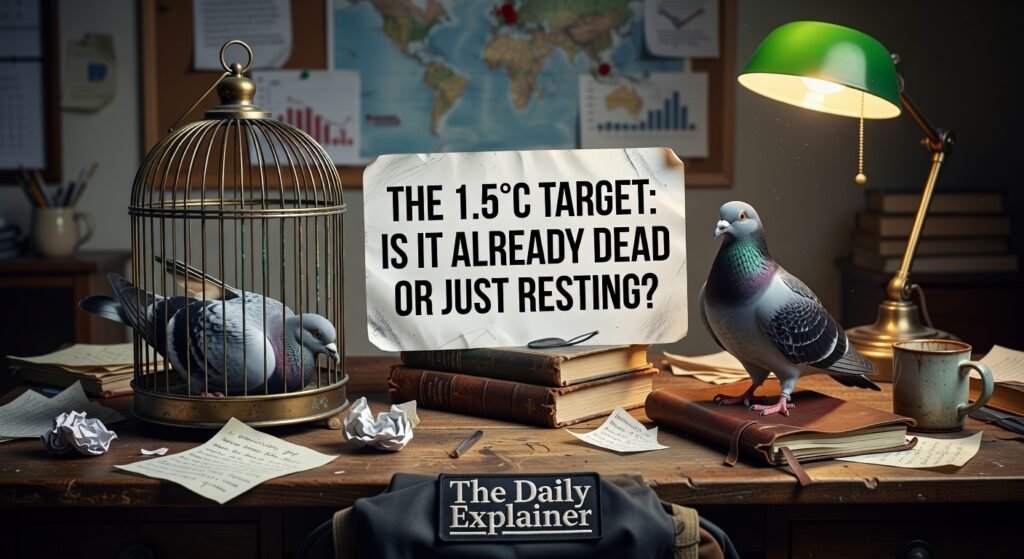
So, is the 1.5°C target dead? The honest answer is: not yet, but it is on life support.
The patient is in critical condition. The single-year breach in 2024 was a flatline alarm. The political battles at COP30 were like arguments among the doctors about the correct treatment. The continued rise in global emissions is the underlying disease that is slowly killing the patient.
But the patient is not dead. The target remains technically achievable, though the window is closing with every passing year. More importantly, abandoning the target would be an act of self-harm. It would remove the single most powerful motivator for urgent action and send a signal to the world that we have given up on a livable future.
The fight for 1.5°C is not about a number. It is about the difference between a world with vibrant coral reefs and one without. It is about the difference between island nations that survive and those that vanish. It is about the difference between manageable climate risks and catastrophic, irreversible loss. As we’ve seen throughout this series—from the melting cryosphere to the burning forests, from the urgent need for adaptation to the terrifying reality of compound disasters—every fraction of a degree matters.
We must fight for every tenth of a degree as if our lives depend on it. Because they do.
Key Takeaways:
- 1.5°C is not dead, but it is gravely threatened. The single-year breach in 2024 was a warning, not a final verdict. The target refers to a multi-decade average.
- The science is clear: The difference between 1.5°C and 2°C is measured in mass extinctions, ice sheet collapse, and human suffering.
- The pathway is narrow but still open: It requires immediate, 45% cuts by 2030 and net-zero CO2 by 2050, relying on both emissions reductions and carbon removal.
- Politics is the biggest obstacle: Vested interests and lack of political will, not technology, are the primary barriers. The fight over language at COP30 shows how science is being contested.
- Giving up is not an option: Even if we miss 1.5°C, every fraction of a degree we avoid saves lives and ecosystems. The fight continues, no matter the final number.
FAQs (Frequently Asked Questions)
- What exactly is the 1.5°C target?
It’s the goal, enshrined in the 2015 Paris Agreement, to limit long-term global average temperature rise to 1.5°C above pre-industrial levels (1850-1900). It represents a scientifically defined threshold beyond which climate risks become significantly more severe. - Didn’t we already hit 1.5°C in 2024?
Yes, the global average temperature for the entire year of 2024 was more than 1.5°C above pre-industrial levels for the first time. However, this was largely driven by a strong El Niño event. The 1.5°C target refers to a sustained average over 20 or 30 years, not a single year. Crossing it for one year is a major warning sign, but it does not mean the target is breached permanently. - What is the “carbon budget” for 1.5°C?
It’s the estimated total amount of CO2 we can still emit while having a certain chance (e.g., 50% or 67%) of limiting warming to 1.5°C. As of early 2026, the remaining carbon budget for a 50% chance of 1.5°C is extremely small—likely less than 10 years of current emissions. - What did the IPCC Special Report on 1.5°C (SR15) say?
Published in 2018, it was a landmark scientific assessment that detailed the dramatically different impacts between 1.5°C and 2°C of warming. It concluded that limiting warming to 1.5°C is still possible but requires “unprecedented” and “rapid” transitions across all sectors of society. - What is the difference between 1.5°C and 2°C of warming?
The difference is immense. At 2°C, virtually all coral reefs are lost (vs. 70-90% at 1.5°C), the risk of an ice-free Arctic summer is 10 times higher, and hundreds of millions more people are exposed to climate-related risks and poverty . - What does “net-zero” mean, and why is it important for 1.5°C?
Net-zero means balancing any remaining human-caused greenhouse gas emissions with an equivalent amount of removals. For a 1.5°C pathway, the world needs to reach net-zero CO2 emissions around 2050. - What is “overshoot” in the context of 1.5°C?
An overshoot scenario is one where global warming temporarily exceeds 1.5°C before being brought back down later in the century, using carbon dioxide removal (CDR) technologies. It is a high-risk strategy. - Can carbon removal technologies really save us?
They are a necessary part of most 1.5°C pathways, but relying on them heavily is risky. Technologies like direct air capture are expensive and unproven at scale. Nature-based solutions like reforestation are proven but compete for land. Overshoot is a gamble. - What are Nationally Determined Contributions (NDCs)?
These are the climate action plans that each country submits under the Paris Agreement. They outline their targets for reducing emissions and their plans for adaptation. They are supposed to become more ambitious over time. - Are current NDCs enough to meet the 1.5°C target?
No. According to the UN and the World Resources Institute, current policies put the world on track for around 2.7°C of warming. Even if all announced pledges are fully implemented, we are still on a path for around 2.1°C . There is a significant “ambition gap.” - What was the International Court of Justice ruling in 2025?
The ICJ affirmed that the 1.5°C target is a legally binding guide for climate policies under the Paris Agreement. This provides a legal basis for holding countries accountable for insufficient climate action . - What happened at COP30 regarding the 1.5°C target?
While the final decision text reaffirmed the Paris Agreement goals, the negotiations were marked by attempts to downplay the severity of climate impacts, a tactic scientists called “science obfuscation” . This was seen as an indirect attack on the urgency implied by the 1.5°C target. - What is the “Hothouse Earth” scenario?
It’s a theoretical future where warming triggers self-reinforcing feedback loops (like permafrost thaw and forest dieback) that push the climate system past a series of tipping points, leading to a much hotter, less stable state, even if human emissions stop . - Is it too late to save the Great Barrier Reef?
Not yet, but time is running out. The IPCC SR15 showed that at 1.5°C, 70-90% of coral reefs are lost. At 2°C, it’s 99%. Every fraction of a degree we avoid gives the reef and its scientists more time to develop and implement adaptation strategies. - How does the 1.5°C target affect small island nations?
It is an existential issue. For nations like Tuvalu and the Maldives, sea-level rise at 2°C would likely make their territories uninhabitable. They were the primary advocates for including the 1.5°C target in the Paris Agreement. - What is the role of methane in meeting the 1.5°C target?
Methane (CH4) is a potent but short-lived greenhouse gas. Cutting methane emissions from sources like oil and gas, agriculture, and landfills is one of the fastest and most effective ways to slow down warming in the near term, buying us more time to tackle CO2. - What are some examples of “tipping points” related to 1.5°C?
Key tipping points include the collapse of the Greenland and West Antarctic ice sheets, the abrupt thaw of permafrost, the dieback of the Amazon rainforest, and the shutdown of major ocean currents like the AMOC. Crossing 1.5°C increases the risk of triggering these. - If we miss 1.5°C, should we just give up?
Absolutely not. The principle of “every fraction of a degree matters” means that fighting for 1.6°C instead of 1.7°C, or 1.7°C instead of 1.8°C, still saves lives, ecosystems, and money. The fight never ends; the stakes just get higher. - How can I, as an individual, help keep the 1.5°C target alive?
You can reduce your own carbon footprint (energy, transport, diet), but more importantly, you can use your voice and your vote to advocate for systemic change. Support policies that put a price on carbon, invest in renewables, and hold corporations accountable. For more on getting involved, you can contact us for resources or explore our blog. - What is the “ambition gap”?
It’s the gap between the emissions cuts countries have pledged in their NDCs and the cuts that are actually needed to meet the 1.5°C target. Closing this gap is the central challenge of international climate politics. - What are the main barriers to achieving 1.5°C?
The primary barriers are political and economic, not technological. They include the political power of the fossil fuel industry, lack of international cooperation, insufficient climate finance for developing countries, and short-term political thinking that prioritizes immediate gains over long-term survival. - How do compound disasters relate to the 1.5°C target?
As we explored in our previous article, compound disasters become more frequent and intense with every increment of warming. The difference between 1.5°C and 2.5°C is the difference between manageable, occasional compound events and a world where they become the norm, overwhelming our capacity to respond . - Where can I find reliable, up-to-date information on the 1.5°C target?
Excellent sources include the IPCC website for the full SR15 report, the World Resources Institute for analysis of NDCs and the ambition gap, and the Climate Action Tracker for independent scientific analysis of government pledges. For more explainers like this one, visit our Explained section.
About Author
This article was written by the editorial team at The Daily Explainer, serving as the culminating piece in our five-part series on climate change. We have explored the Cryosphere Crisis, the Nature-Climate Feedback Loop, the critical need for Climate Adaptation vs. Mitigation, and the terrifying reality of Compound Climate Disasters. This final piece synthesizes those threads to address the most critical number in climate policy. We synthesize reports from the IPCC, the World Resources Institute, and international legal bodies to provide clear, accurate, and actionable information. For any questions or feedback, please feel free to contact us.
Free Resources
- IPCC Special Report on Global Warming of 1.5°C (SR15): The definitive scientific source on the impacts of 1.5°C and the pathways to achieve it.
- Climate Action Tracker: An independent scientific analysis that tracks government climate action and measures it against the Paris Agreement goals.
- World Resources Institute (WRI): Provides excellent data and analysis on NDCs, the ambition gap, and climate policy.
- UNFCCC NDC Registry: The official UN website where all countries’ Nationally Determined Contributions are published.
Discussion
What do you think? Is the 1.5°C target still alive, or is it time to be realistic about a hotter future? How does the debate over this number make you feel about the future? Share your thoughts and questions in the comments below. For more in-depth analysis on climate and other global issues, explore our Global Affairs & Politics section. Your voice is part of the conversation we need to have.
About The Author