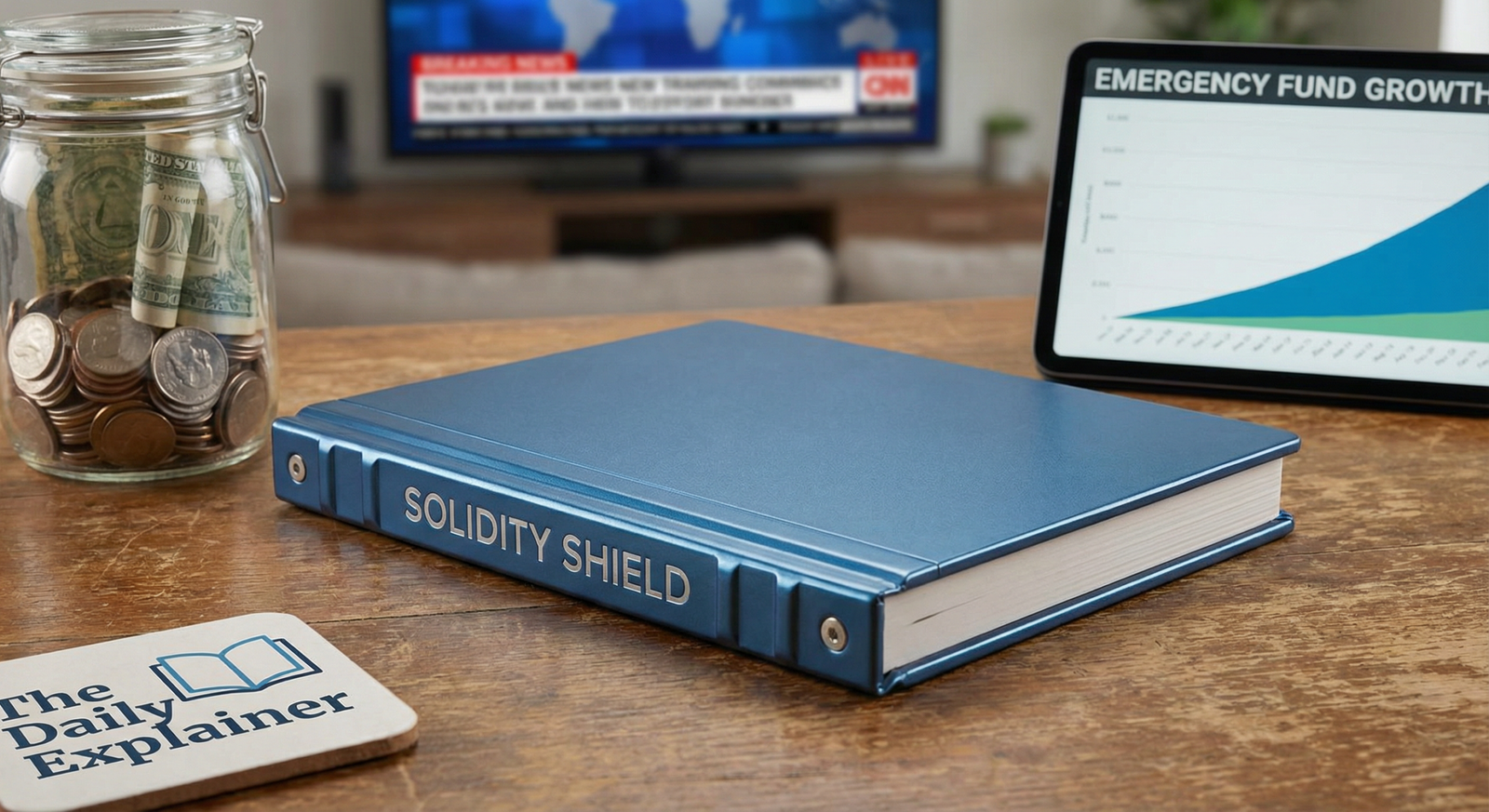
A modern, strategic approach to emergency savings: not one pile of cash, but a layered defense for different levels of financial shock.
Introduction – Why This Matters
Your car’s transmission fails. Your dentist reveals that you need a root canal. Your company announces a round of layoffs. These are not hypothetical; they are inevitable financial shocks. Yet, recent financial surveys reveal a stark reality: a significant portion of adults have no emergency savings, and a majority are uncomfortable with the amount they have managed to save. In the current climate, living paycheck to paycheck is a common reality, making a single unexpected expense a potential catalyst for high-interest debt or worse.
This article is your blueprint for building what I call the “Solidity Shield”—an emergency fund designed not just for a bygone era of stability, but for today’s volatile economy marked by inflation, a softening job market, and unpredictable expenses. For the curious beginner, this is your foundational first step toward true financial security. For the professional seeking a refresher, it’s a modern recalibration of a timeless principle. What I’ve found is that those who treat their emergency fund as a dynamic, strategic asset sleep better at night and make far more confident financial decisions. Let’s build your shield.
Background / Context: The Evolving Need for Emergency Savings
The old rule of thumb—”save three to six months of expenses”—was born in a different economic era. It assumed single-income households, stable employment, predictable inflation, and lower costs for healthcare and education. Today’s financial landscape is fundamentally different. We navigate a gig economy with variable income, face higher structural costs for housing and education, and experience greater economic volatility.
Simultaneously, psychological and systemic barriers are high. Financial stress is a prevalent issue, often leading to short-term thinking that prioritizes immediate relief over long-term stability. Furthermore, easy access to high-interest credit cards and “buy now, pay later” schemes can create an illusion of safety while trapping individuals in debt cycles. As noted in our broader analysis on global affairs and politics, economic policy shifts can also directly impact personal financial stability, making a private buffer more critical than ever.
An emergency fund today isn’t just for job loss; it’s for the deductible on a surprise medical bill, a major car repair in an era of complex electronics, or covering expenses during a sudden reduction in freelance work. It is the bedrock upon which all other financial goals—investing, home ownership, education—are built.
Key Concepts Defined
- Emergency Fund: A dedicated, liquid cash reserve used exclusively for unforeseen, necessary expenses or loss of income. It is not for vacations, planned purchases, or investments.
- Liquidity: How quickly and easily an asset can be converted to cash without significant loss of value. Your emergency fund must be highly liquid.
- High-Yield Savings Account (HYSA): A deposit account offered by online and traditional banks that pays a significantly higher interest rate than standard savings accounts, helping your cash reserve keep pace with inflation.
- FDIC/NCUA Insurance: Government-backed insurance (up to a standard limit) that protects your money in the event a bank (FDIC) or credit union (NCUA) fails. Your emergency fund should always be in an insured account.
- “True Expenses” (YNAB Methodology): A budgeting concept where large, irregular-but-predictable costs (like car maintenance, annual insurance premiums) are saved for monthly, transforming them from emergencies into planned expenses.
- Liability: A debt or obligation you owe (e.g., credit card balance, student loan, mortgage). An emergency fund prevents new, high-interest liabilities.
- Financial Shock: An unexpected event that negatively impacts your financial well-being and requires immediate monetary outlay.
How It Works: Building Your Solidity Shield (Step-by-Step Breakdown)
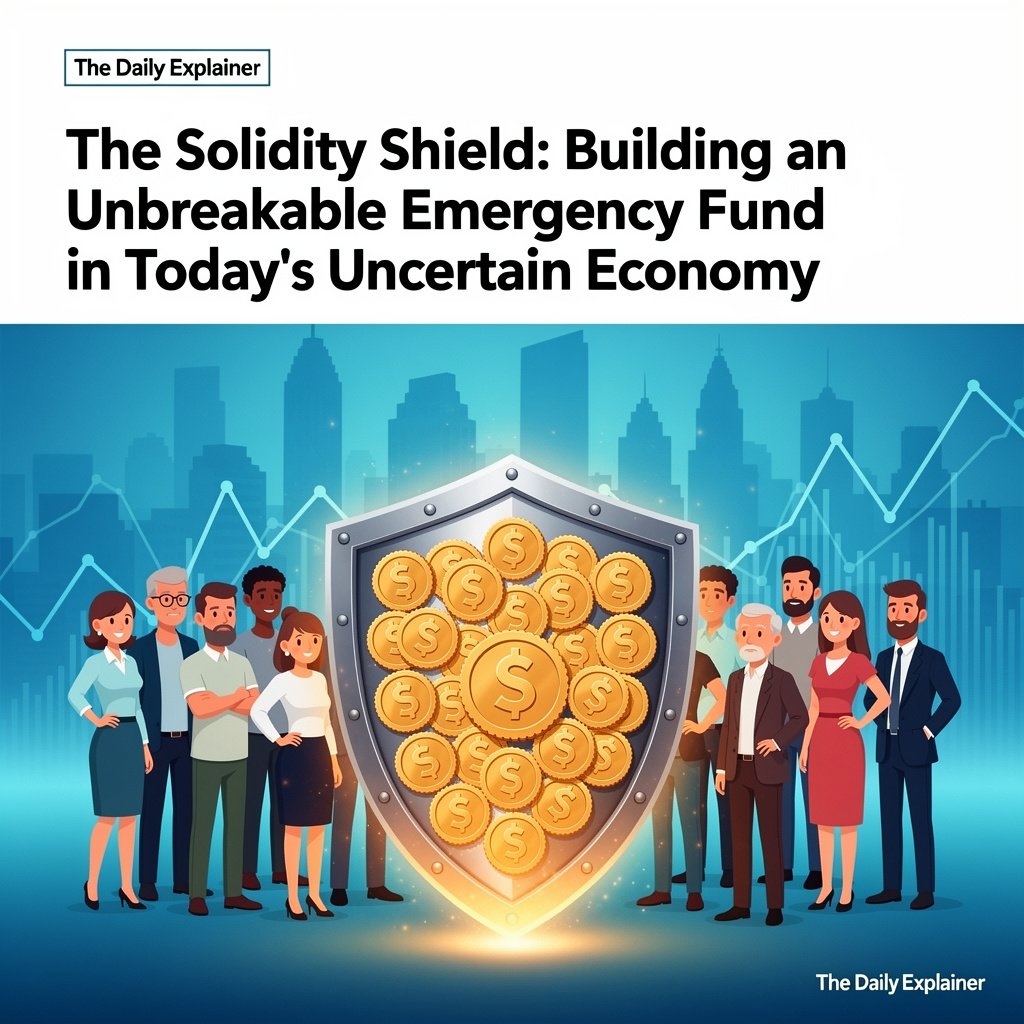
Phase 1: The Mindset & Foundation Shift
- Redefine “Emergency”: Write your personal definition. Example: “My emergency fund is for unavoidable, urgent expenses that impact health, safety, employment, or core living situations. It is not for upgrades, entertainment, or non-urgent repairs.”
- Start Before You’re Ready: Open a dedicated savings account at a separate bank from your checking account today—even with just a small amount. This creates a psychological and logistical barrier to frivolous use. For more foundational financial strategies, explore the excellent resources at Sherakat Network’s blog.
- Target a “Starter Emergency Fund”: If saving a full fund feels impossible, aim for an initial goal that can cover a common minor shock.
Phase 2: Calculate Your Personalized “Solidity Number”
Forget the generic 3-6 months. Your target is personal.
- Calculate Monthly Bare-Bones Expenses: Track every essential cost: housing, utilities, groceries, minimum debt payments, insurance, and absolute necessities. Exclude dining out, subscriptions, and entertainment.
- Assess Your Risk Profile: Ask yourself:
- How stable is my/our income? (Two stable jobs vs. freelance work)
- How many income earners are in the household?
- What are my fixed obligations? (Dependents, chronic health needs)
- What is my access to other resources? (A supportive family, a low-interest HELOC as a secondary buffer)
- Set Your Tiered Target:
- Tier 1 (Basic Stability): Cover your insurance deductibles and a minor repair.
- Tier 2 (Core Shield): A widely recommended minimum for one stable income.
- Tier 3 (Maximum Solidity): For high-risk profiles (e.g., single income, commission-based work, volatile industry), consider extending your target to provide deeper security.
Phase 3: The Strategic Accumulation Engine
- Automate Relentlessly: Set up an automatic transfer from checking to your dedicated emergency savings account for every payday. “Pay yourself first.”
- Harvest Windfalls: Direct all “unexpected” money—tax refunds, bonuses, gifts, rebates—into the fund.
- Conduct a Monthly “Expense Audit”: Use a budgeting app or a simple spreadsheet to find recurring leaks (unused subscriptions, inflated bills) and redirect that cash.
- Increase Contributions with Income Rises: When you get a raise or pay off a debt, commit a portion of that newfound cash flow to your emergency fund before lifestyle inflation absorbs it.
Phase 4: Optimal Placement & Management
- Choose the Right Vehicle: Your emergency fund must be safe, liquid, and accessible. The best option for the core fund is a High-Yield Savings Account (HYSA) at a reputable online bank. They offer better interest rates than traditional banks and are FDIC-insured.
- Consider a Tiered Approach:
- Tier 1 (Immediate Access): Keep a small portion in your primary bank’s savings account for same-day, true emergencies.
- Tier 2 (Core Fund): The bulk in a high-yield savings account, accessible in 1-3 business days.
- Tier 3 (Extended Reserve): For those who have maxed their core fund, consider placing a portion in a safe, liquid vehicle like a money market fund for slightly better yield, understanding it’s for catastrophic scenarios, not minor shocks.
- Never Stop Reviewing: Revisit your “Solidity Number” annually or after any major life change (marriage, child, home purchase, career shift).
Phase 5: The Rules of Engagement (Using the Fund)
- Pause Before Accessing: When a potential emergency arises, pause. Does it fit your written definition? Is it urgent and necessary?
- Document the “Why”: Keep a simple log of the date, amount, and reason for the withdrawal. This creates accountability and data for future planning.
- Replenish as a Top Priority: Treat repayment of the emergency fund as your most urgent “debt.” Temporarily pause other savings goals (but not retirement contributions) to rebuild the shield.
Key Takeaway Box: The Solidity Shield Philosophy
Your emergency fund is not a stagnant pile of cash; it’s an active financial asset. Its primary return is not interest, but risk mitigation, optionality, and profound peace of mind. It transforms you from a passive victim of circumstance into an active manager of your financial life.
Why It’s Important: The Multifaceted Value
The importance of a robust emergency fund transcends merely covering a bill.
- Breaks the Debt Cycle: It’s your primary defense against resorting to payday loans, high-interest credit cards, or 401(k) loans when shocked, which can compound financial damage for years.
- Reduces Financial Stress: Knowing you have a buffer lowers anxiety, which improves decision-making in all areas of life. Chronic financial stress has tangible health impacts.
- Provides Negotiation Power: With cash, you can often negotiate discounts (e.g., paying a medical bill in full) or make better decisions (walking away from a bad car deal) without desperation.
- Protects Long-Term Investments: It prevents you from having to sell stocks or retirement assets at a potential loss during a market downturn to cover a personal emergency—a devastating double-whammy.
- Enables Opportunity: With solidity, you can take calculated career risks, invest in education, or seize an opportunity without the fear of immediate ruin.
Sustainability in the Future
The concept of the emergency fund will evolve, but its core purpose will remain.
- Integration with “True Expense” Sinking Funds: As zero-based budgeting principles become mainstream, emergency funds will increasingly be for true unpredictable shocks, while sinking funds cover predictable irregular expenses (car maintenance, holidays). This makes the emergency fund more focused and sustainable.
- Technology-Enabled Management: Apps will better help users segregate funds, set intelligent targets based on personalized risk algorithms, and automate savings based on cash flow analysis.
- Focus on “Income Insurance”: For gig and freelance workers, the fund will be viewed explicitly as “income replacement insurance,” with targets tied directly to variable income patterns and industry downturns.
- Holistic Financial Wellness Programs: Employers, recognizing the drag of financial stress on productivity, may offer more integrated tools and matching contributions to emergency savings, similar to 401(k) matches.
Common Misconceptions
- Misconception 1: “I have credit cards; that’s my emergency fund.”
- Reality: Credit cards are a high-interest loan, not savings. Using them transforms a financial shock into expensive debt, often making the original problem worse. Your fund should prevent debt, not create it.
- Misconception 2: “My retirement account (401k/IRA) is my backup.”
- Reality: Tapping retirement funds early often incurs hefty penalties and taxes, and you lose the power of compound growth on that money. It should be an absolute last resort, not a plan.
- Misconception 3: “I can’t afford to save; every dollar is spoken for.”
- Reality: Start microscopically. Even saving a very small amount weekly builds the habit and creates psychological momentum. Automation is key—you can’t spend what you don’t see.
- Misconception 4: “It’s just sitting there losing value to inflation.”
- Reality: While inflation is a concern, the primary purpose is capital preservation and immediate access. The “loss” from modest inflation is almost always far less than the guaranteed loss from credit card interest or investment losses from a forced sale. A HYSA mitigates this significantly.
- Misconception 5: “Once I hit my number, I’m done forever.”
- Reality: Your “Solidity Number” is a living target. Life changes—inflation, a new child, a mortgage—require you to revisit and adjust your target annually.
Recent Developments
- The Rise of “Emergency Savings” FinTech Products: Several new apps and banking products now offer separate, automated “pots” or “vaults” specifically for emergency savings, sometimes with round-up features or small yield boosts to incentivize saving.
- Employer-Sponsored Emergency Savings Initiatives: Some forward-thinking companies are beginning to offer payroll-deducted emergency savings accounts, sometimes with small matching contributions, recognizing it as a key component of employee financial wellness.
- High-Yield Savings Becoming the Norm: With the Federal Reserve’s rate actions, interest rates on HYSAs have become more prominent in mainstream financial media, raising public awareness that cash doesn’t have to earn nothing.
- “Liquid” Alternatives Gaining Attention: For those with larger balances, ultra-short-term Treasury ETFs or money market funds are being discussed more frequently as a place for a portion of an emergency fund, though they come with slightly more complexity and (minimal) risk than an FDIC-insured account.
Success Stories & Real-Life Examples
Case Study: “The Freelancer’s Cushion”
A graphic designer, let’s call her Maya, had volatile income. After a painful period where a client delayed payment, forcing her to put living expenses on a credit card, she committed to building her shield.
- Action: She opened a HYSA and named it “Freedom Fund.” She automated a transfer of a conservative percentage of every single client payment into it. She also used a budgeting app to identify and cut non-essential subscriptions.
- Result: Within 18 months, she had saved a buffer equivalent to her bare-bones expenses for several months. When the next client payment was delayed, she paid her bills from her Freedom Fund without stress or debt. The psychological relief, she said, was “worth more than any interest it could earn.” She was able to negotiate from a position of strength, not desperation.
Real-Life Example: The “Deductible Fund”
A young couple, early in their wealth-building journey, felt overwhelmed by the idea of saving a full emergency fund. They started with a focused, achievable goal: save enough to cover the out-of-pocket maximums on their health and auto insurance policies.
- Psychology: This targeted goal felt more concrete and urgent than an abstract “3-6 months.”
- Outcome: Within a year, they hit this target. The peace of mind was immediate. This success then gave them the confidence to expand their goal to a full core emergency fund, using the same automated tactics that had already proven successful.
Conclusion and Key Takeaways
Building your Solidity Shield is the single most transformative act you can take for your financial and psychological well-being. It moves you from fragility to resilience.
Final Takeaways:
- Start Now, Start Small: Open a dedicated account and automate a tiny, sustainable transfer. Habit precedes scale.
- Personalize Your Target: Ditch the generic advice. Calculate your bare-bones expenses and assess your unique risk profile to find your number.
- Prioritize Accessibility & Safety: Use a high-yield savings account (HYSA) for the core of your fund. Its return is in protection, not spectacular yield.
- Defend It Ruthlessly: Define what constitutes an “emergency” for you. Use the fund only for those true shocks, and make replenishment a non-negotiable priority.
- Review Annually: Your financial life changes. Revisit your target and your savings strategy each year to ensure your shield remains strong.
This fund isn’t about living in fear; it’s about creating the freedom to live without fear. Begin today. For more insights on building a secure financial foundation, which is crucial for any venture, you can refer to this guide on starting an online business.
FAQs (20 Detailed Q&A)
1. Where is the absolute best place to keep my emergency fund?
For the vast majority of people, a High-Yield Savings Account (HYSA) at an FDIC-insured bank (often an online bank for the best rates) is the optimal choice. It offers an excellent balance of safety (insured), liquidity (easy access), and a yield that helps combat inflation.
2. How much should I really save if the 3-6 month rule is outdated?
Your target should be based on your bare-bones monthly expenses (rent/mortgage, utilities, food, insurance, minimum debt payments) multiplied by a personal risk factor (job stability, number of income earners, dependents). A single person with a stable government job might need less than a freelance consultant with a family.
3. Should I pay off high-interest debt or build an emergency fund first?
This is a classic dilemma. A pragmatic hybrid approach works best: Build a mini emergency fund first—enough to cover a small shock and avoid new debt. Then, aggressively attack the high-interest debt. Once the debt is gone, redirect all those payments to rapidly build your full emergency fund.
4. What counts as a “true” emergency?
A true emergency is an unexpected, necessary expense that threatens your health, safety, employment, or ability to maintain core shelter. Examples: major medical bill, essential car repair to get to work, urgent home repair (e.g., broken furnace), and living expenses during involuntary unemployment.
5. Can I invest my emergency fund to get a better return?
No. The primary goals are safety and immediate access. The stock market can drop significantly just when you need the money most (e.g., during a recession when job loss is more likely). The risk of loss far outweighs the potential for gain. For long-term goals, explore our partner site’s focus on technology and innovation in investing, but keep your emergency fund safe.
6. How do I save for an emergency fund when I’m living paycheck to paycheck?
Start with a micro-goal. Aim for an initial amount. Scrutinize your budget for any flexible spending—subscriptions, dining out, entertainment—and redirect even small amounts. Use apps that round up transactions and save the change. Any progress builds momentum.
7. Is it okay to have my emergency fund at the same bank as my checking account?
It’s okay, but not optimal. Having it at a separate bank (especially an online-only one) creates a small logistical hurdle that reduces the temptation to dip into it for non-emergencies. “Out of sight, out of mind” works in your favor here.
8. What if I need to use it? How do I rebuild?
First, don’t feel guilty—this is what it’s for! To rebuild: Temporarily pause other discretionary savings goals (but try to maintain retirement contributions if possible). Reinstate the automated transfer you used to build it, and consider adding any windfalls or side income until it’s fully replenished.
9. Do my partner and I need a joint emergency fund or separate ones?
This is both financial and relational. A common approach is to have a joint fund for shared household emergencies (based on shared expenses), and potentially smaller individual funds for personal emergencies or to maintain a sense of autonomy. Clear communication is key.
10. How do I factor inflation into my savings target?
Revisit your target annually. As the cost of your essential expenses creeps up with inflation, your “Solidity Number” should too. This annual check-up ensures your fund’s purchasing power remains constant.
11. Should I include potential medical deductibles in my emergency fund?
Absolutely. One of the most common uses of an emergency fund is for unexpected healthcare costs. Knowing you can cover your annual out-of-pocket maximum is a huge relief. This is a perfect example of a “True Expense” that should be part of your target.
12. What’s the difference between an emergency fund and a “sinking fund”?
An emergency fund is for unpredictable shocks (job loss, ER visit). A sinking fund is for predictable but irregular expenses you save for monthly (car insurance premiums, holiday gifts, car maintenance). Separating them clarifies your planning.
13. Can I use a Roth IRA as a backup emergency fund?
Proceed with caution. You can withdraw your Roth IRA contributions (but not earnings) at any time, tax- and penalty-free. This makes it a potential last-resort backup, but it’s not ideal. You sacrifice decades of tax-free growth on that money. It’s better to have a dedicated cash fund.
14. How do I stay motivated while saving such a large amount?
Celebrate milestones, not just the final goal. Celebrate when you save your first amount, when you cover a deductible, etc. Visual trackers (a simple chart on your fridge) can provide a satisfying sense of progress. Remember the “why”—the profound peace of mind you’re buying.
15. What if my income is irregular (freelancer, contractor)?
The emergency fund is even more critical for you. Calculate your target based on your average bare-bones monthly expenses over a lean period. Automate transfers as a percentage of every payment you receive, not a fixed monthly amount. This builds the fund directly from your cash flow.
16. Are money market funds a safe place for an emergency fund?
They are generally very safe and can offer slightly better yields than HYSAs. However, they are not FDIC-insured (they are SEC-regulated). For most, the HYSA is simpler and safer. If you consider a money market fund, ensure it’s from a reputable firm and understand it’s not government-guaranteed.
17. Do I need an emergency fund if I have a stable government job?
Yes. While job loss risk is lower, you are not immune to other financial shocks: major home repairs, medical emergencies, family crises. The fund provides stability against all forms of unexpected expense, not just unemployment.
18. How does this relate to insurance?
Insurance (health, auto, home, disability) and your emergency fund are complementary defenses. Insurance covers catastrophic, defined risks (often after a deductible). Your emergency fund covers the deductibles, co-pays, and gaps, or emergencies not covered by insurance at all (e.g., sudden travel for a family death).
19. What if I’m retired? Do I still need one?
Absolutely. In retirement, it’s often called a “cash reserve” or “rainy-day fund.” It should cover unexpected expenses so you don’t have to sell investments during a market downturn to pay for a new roof or medical bill. A common rule is to keep a certain amount in cash.
20. Where can I find reputable high-yield savings accounts?
Check independent financial comparison websites (like NerdWallet or Bankrate). Look for banks consistently offering rates significantly above the national average. Ensure they are FDIC-insured. Many of the best rates are from online-only banks, which is fine for an emergency fund. For more tools and insights, the Sherakat Network resources page is a valuable external reference.
About the Author
Sana Ullah Kakar is a Certified Financial Planner® and financial wellness educator. With a background in behavioral finance, Jordan specializes in helping individuals build practical, resilient financial systems that withstand real-world stress. They are a regular contributor to The Daily Explainer, breaking down complex economic concepts into actionable personal steps. You can find more of their work and reach out through our contact page.
Free Resources
- Emergency Fund Calculator & Target Worksheet: A downloadable spreadsheet to calculate your personalized “Solidity Number” and track your progress.
- High-Yield Savings Account (HYSA) Comparison Checklist: Key factors to evaluate when choosing where to park your fund.
- “Is This an Emergency?” Decision Flowchart: A visual guide to help you stick to your defined purpose when tempted to use the fund.
- Sample Automated Savings Calendar: A template for setting up your automatic transfers based on your pay schedule.
(Note: These resources are available to our readers. Please visit our Explained section or contact us to request access.)
Discussion
We want to hear from you!
- What was the moment you realized you needed an emergency fund, or when did yours “save the day”?
- What’s the biggest mental or logistical hurdle you’ve faced in building your savings?
- For those who have achieved a full fund: what strategy made the biggest difference for you?
- What other financial “shields” or safety nets do you think are crucial in today’s economy?
Share your experiences and questions in the comments below. Let’s build a community focused on financial resilience. For the latest updates on factors that might impact your financial planning, keep an eye on our breaking news section.
About The Author