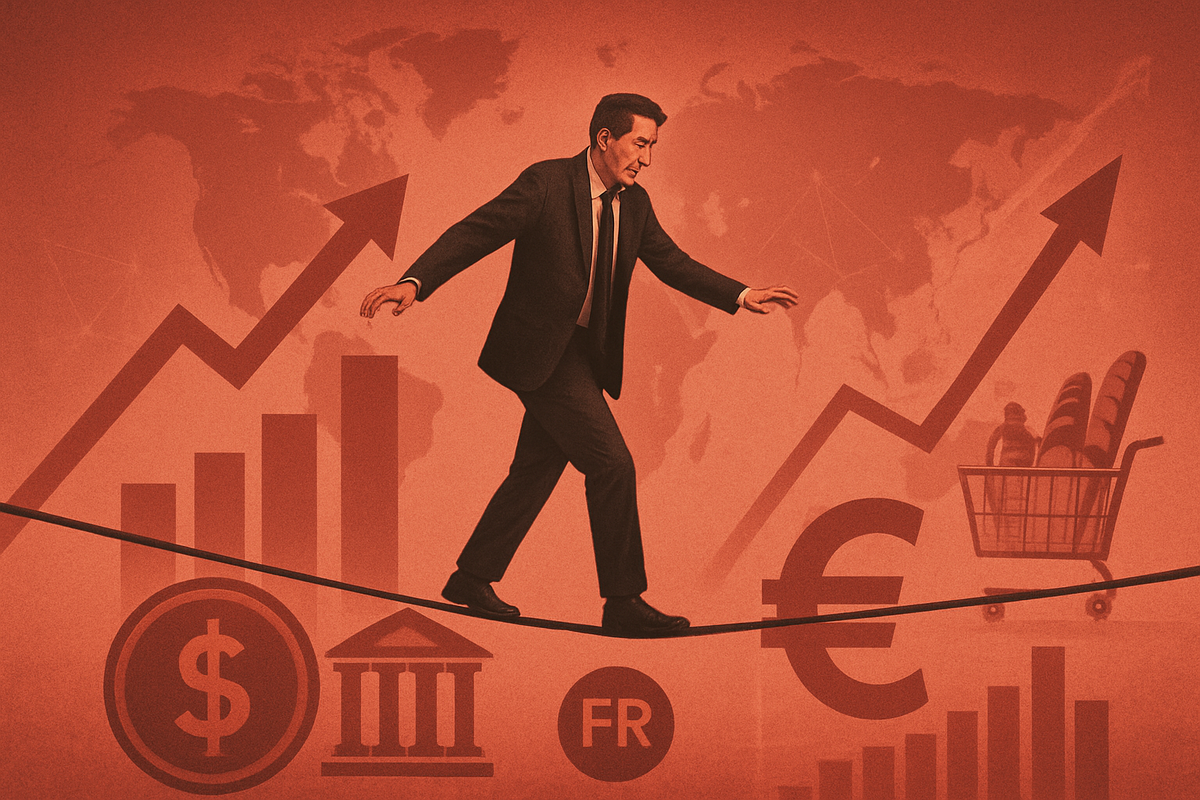
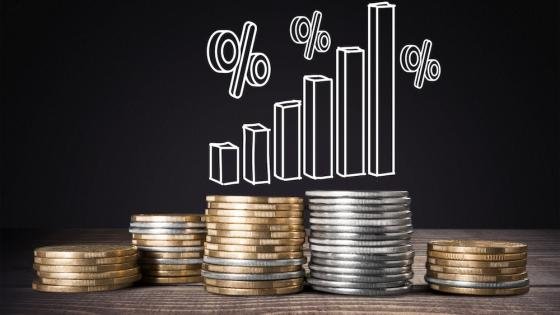
The dual tools of modern monetary policy: raising the policy rate (price of money) and quantitative tightening (quantity of money).
Introduction: The Most Important Meeting You’re Not In
Every six weeks or so, a group of individuals you’ve likely never met gathers in a secure room in Washington, Frankfurt, or London. They don’t manufacture goods, provide services, or build anything tangible. Yet, their decisions—communicated through careful statements and precise decimal points—directly determine your mortgage rate, your company’s borrowing costs, the strength of your national currency, and the price of everything from groceries to gasoline. These are the world’s central bankers, and in 2025, they face their most treacherous challenge in decades.
In my experience analyzing monetary policy for institutional investors, I’ve found that most people view central bank interest rate decisions as either a distant abstraction or a frustrating source of financial uncertainty. The reality is far more consequential. We are living through a historic pivot: the end of the four-decade-long “Great Moderation” of low, stable inflation and the dawn of a new macroeconomic regime defined by volatility, supply shocks, and geopolitical fragmentation. For central banks, the old playbook is obsolete. The “last mile” of inflation is proving stubborn, and the pressure to cut rates is colliding with the risk of re-igniting price pressures.
This guide demystifies the 2025 central bank dilemma. We will move beyond financial jargon to explain how these institutions operate in this new world, why they are keeping rates “higher for longer,” and what their next moves mean for your wallet and your future. Understanding this shift is not just for economists—it’s essential for anyone with a bank account, a job, or a plan for the future.
Background / Context: The End of “Low-For-Long” and the Return of Inflation
For a generation, from the early 1990s until the COVID-19 pandemic, central banks operated in a relatively benign environment. Globalization kept goods cheap, technology boosted productivity, and demographics and weak demand suppressed price pressures. The Federal Reserve’s benchmark interest rate averaged around 4% from 1990-2008, but in the decade following the 2008 financial crisis, it hovered near zero. This era of ultra-loose monetary policy fueled asset bubbles and created an assumption that cheap money was a permanent fixture.
The pandemic shattered this equilibrium. Massive fiscal stimulus collided with broken global supply chains, creating a surge in demand amid constrained supply—the classic recipe for inflation. Russia’s invasion of Ukraine in 2022 compounded this with an energy and food price shock. What central banks initially dismissed as “transitory” spiraled into the worst global inflation crisis in 40 years, peaking at over 9% in the U.S. and Eurozone in 2022.
In response, central banks executed the most aggressive and synchronized monetary policy tightening cycle in modern history. The Fed raised rates from 0% to over 5% in under two years. The shock was brutal but effective: by late 2024, headline inflation had cooled significantly. Now, however, the fight enters a new, more complex phase: battling persistent underlying price pressures while navigating a slowing economy. The “low-for-long” world is gone, replaced by a high-pressure, high-uncertainty regime where central banks have far less room for error.
Key Concepts Defined
- Central Bank: A national institution that manages a state’s currency, money supply, and interest rates. Its core mandates are typically price stability (controlling inflation) and supporting maximum employment. Examples: the U.S. Federal Reserve (Fed), European Central Bank (ECB), Bank of Japan (BOJ).
- Inflation: The rate of increase in prices for goods and services over time, eroding purchasing power. Central banks aim for a low, stable rate (often around 2%).
- Monetary Policy: The actions a central bank takes to influence the cost and availability of money and credit. The primary tool is setting the policy interest rate (e.g., the Fed Funds Rate).
- Quantitative Tightening (QT): The process by which a central bank reduces its balance sheet by selling bonds or allowing them to mature without reinvestment, effectively removing money from the financial system. It is a complementary tool to rate hikes.
- The “Last Mile” of Inflation: The final, most difficult stage of bringing inflation down from moderately high levels (e.g., 3-4%) back to the 2% target. It often involves battling stickier, service-based price increases tied to wages.
- Policy Lag: The delayed effect (often 12-18 months) of a change in monetary policy on the real economy and inflation. This lag makes central banking a game of steering by looking in the rearview mirror.
- Data-Dependent: The current stance of central banks, meaning future decisions on rate cuts or hikes will be determined by incoming economic data, not a preset plan.
- Neutral Interest Rate (r*): The theoretical interest rate that neither stimulates nor restrains the economy when inflation is at target. Its level in the new regime is highly uncertain and crucial for policy.
How It Works: The Central Bank’s Toolkit in the New Regime (Step-by-Step)
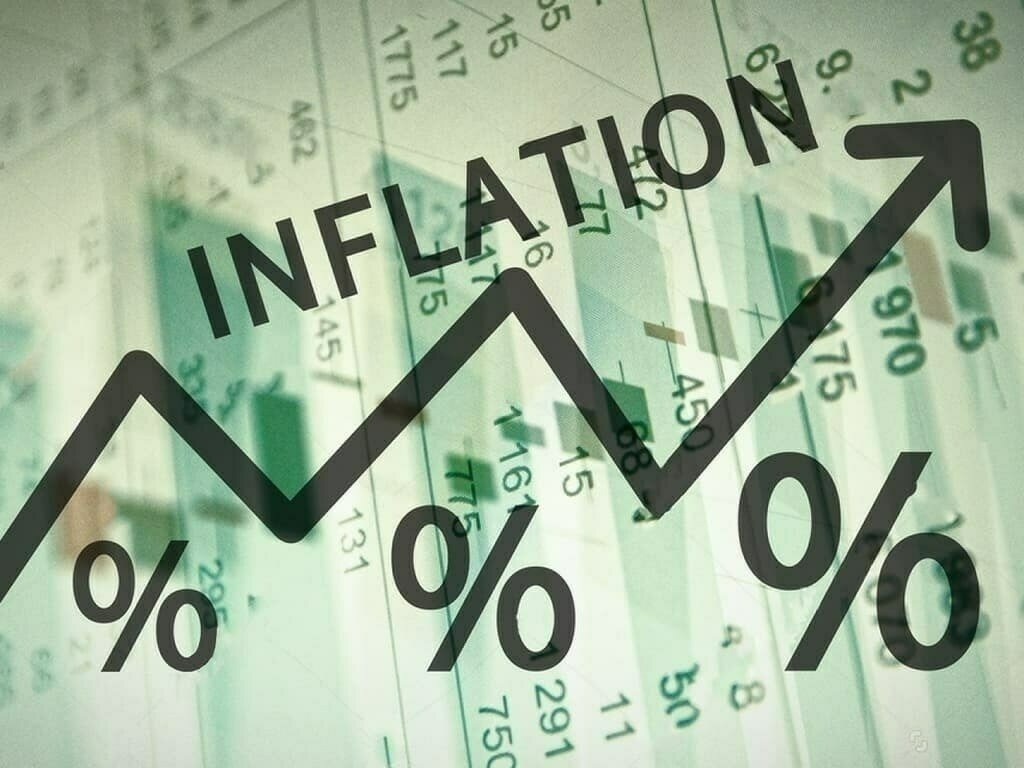
A central bank’s goal is to manage aggregate demand to match the economy’s productive capacity. When inflation is high, they must cool demand. Here’s how they do it, and why the process is so delicate in 2025.
Step 1: The Primary Lever – Setting the Policy Interest Rate
This is the bank’s main tool. By raising its key rate, it makes borrowing more expensive for commercial banks, which then pass those costs to businesses and consumers.
- The Transmission Mechanism:
- Higher Borrowing Costs: Mortgages, car loans, and business credit lines become more expensive.
- Reduced Spending: Consumers and businesses postpone large purchases and investments.
- Cooling Demand: Lower demand for goods, services, and labor eases upward pressure on prices.
- Exchange Rate Impact: Higher rates can attract foreign capital, strengthening the currency, which makes imports cheaper and further dampens inflation.
- The 2025 Twist: Rates have already been raised dramatically. The question is no longer “how high?” but “how long will they stay high?” Premature cuts could restart inflation; holding too long could trigger an unnecessary recession.
Step 2: The Balance Sheet Tool – Quantitative Tightening (QT)
While interest rates get the headlines, QT is the silent partner in the tightening cycle.
- How QT Works: During the pandemic, central banks bought trillions in bonds to inject liquidity (“Quantitative Easing” or QE). QT is the reverse. By allowing bonds to mature off its balance sheet without reinvestment, the central bank reduces the money supply, putting additional, subtle upward pressure on long-term interest rates.
- The 2025 Caution: In mid-2024, the Fed began slowing the pace of its QT, a process dubbed “QT taper.” This reflects a desire to avoid overtightening and causing market stress. Managing the “quantitative” and “rate” policies in tandem is a new and complex art.
Step 3: Forward Guidance – Managing Expectations
Perhaps the most powerful tool is communication. Central banks shape how markets, businesses, and consumers expect the future to unfold.
- The Principle: Inflation expectations are self-fulfilling. If everyone expects 2% inflation, they will set wages and prices accordingly. If they expect 5%, inflation becomes entrenched.
- The 2025 Language: The key phrase is “higher for longer.” By repeatedly stating that rates will stay elevated until they are confident inflation is sustainably returning to 2%, central banks aim to keep expectations anchored, preventing a wage-price spiral. Any shift to a cutting cycle will be telegraphed months in advance.
Step 4: The Data Gauntlet – A “Meeting-by-Meeting” Approach
Gone are the days of predictable rate paths. Decisions are now made one meeting at a time, based on a torrent of data.
- The Dashboard: Governors scrutinize:
- Core Inflation: Strips out volatile food and energy. The true battleground.
- Wage Growth: (e.g., the Employment Cost Index). Must moderate to around 3.5% for 2% inflation to be sustainable.
- Services Inflation: Driven by labor costs (haircuts, healthcare, hospitality). This is the “last mile” challenge.
- Job Market Data: They seek a gentle softening, not a collapse.
- The Dilemma: The data is often conflicting and arrives with a lag. Acting too soon or too late based on imperfect information is the central banker’s perennial risk.
Key Takeaway: The “Last Mile” Analogy
“Think of bringing inflation down from 9% to 3% like running down a steep hill—momentum and gravity (aggressive rate hikes) do most of the work. Getting from 3% to 2% is like the final, flat mile of a marathon. It requires immense, sustained effort (keeping policy restrictive) against mounting fatigue (political and public pressure to cut rates). Every step is harder, and the risk of stopping short of the finish line is high. This is the exhausting position of the Fed and ECB in 2025. The easy work is done; the hard work has just begun.”
Why It’s Important: Your Financial Life in the Crosshairs
The decisions made in central bank boardrooms are not academic. They transmit directly into the economic reality of billions of people.
For Homeowners and Buyers: The era of 3% mortgages is over for the foreseeable future. Mortgage rates are closely tied to long-term bond yields, which are set by market expectations for central bank policy. The “higher for longer” reality means housing affordability will remain strained, reshaping markets and generational wealth building.
For Savers and Investors: The regime shift benefits savers with higher yields on savings accounts and bonds. For investors, it upends the “TINA” (There Is No Alternative) logic that drove money into stocks for a decade. Valuation models are being rewritten as the risk-free rate of return (government bond yields) is no longer near zero.
For Businesses and Entrepreneurs: The cost of capital is structurally higher. This demands more disciplined business models, prioritizes cash flow over growth-at-all-costs, and makes certain investments unviable. It favors incumbents with strong balance sheets over highly leveraged startups.
For Workers and Wages: Central banks are explicitly trying to moderate wage growth to tame services inflation. Their success in engineering a “soft landing” means walking the finest of lines: cooling the labor market just enough to ease price pressures without causing a sharp rise in unemployment.
For Global Stability: Divergence in central bank policies creates volatility. If the Fed is on hold while the ECB cuts, or if the Bank of Japan finally hikes, it triggers massive currency market swings. These affect international trade, emerging market debt burdens, and global capital flows, with profound geopolitical consequences.
Sustainability and the Green Transition: A New Mandate?
Traditionally, central banks had a narrow focus: price stability and employment. Climate change is forcing a reevaluation.
- Climate Risk as Financial Risk: Central banks, as financial system supervisors, now actively assess climate-related financial risks. They stress-test banks against scenarios like a sudden carbon price shock or physical climate disasters.
- The “Green Tilt” Debate: Should central banks favor “green” bonds in their asset purchases (a policy called “green quantitative easing”)? The ECB has begun to incorporate climate criteria into its corporate bond portfolio. Critics argue this oversteps their market-neutral mandate.
- Inflation’s New Drivers: The green transition itself is inflationary in the short term. The massive capital expenditure required for renewables, grid upgrades, and EV infrastructure adds to demand. Conversely, climate disasters (droughts, floods) destroy supply and boost food and insurance prices. Central banks must now analyze these novel, persistent supply-side inflationary shocks.
What I’ve observed is that leading central bankers now see climate stability as a prerequisite for macroeconomic and price stability. They may not set climate policy, but they can no longer ignore its economic effects.
Common Misconceptions
1. “Central banks set mortgage and consumer loan rates directly.”
- Reality: They set only the short-term policy rate for interbank lending. Commercial banks set consumer rates based on this benchmark, plus their costs, risks, and profit margins, and most importantly, on long-term bond market yields, which reflect expectations for future central bank policy.
2. “Lowering interest rates will fix high inflation.”
- Reality: This is precisely backwards. To combat inflation, central banks must raise rates to cool demand. Lowering rates stimulates borrowing and spending, which would make inflation worse. The public’s frequent call for lower rates during high inflation shows a fundamental misunderstanding of the tool.
3. “The 2% inflation target is arbitrary.”
- Reality: While the exact number is a convention, a low, positive, and stable target is crucial. It provides a clear anchor for expectations, allows for real wage adjustments without cutting nominal wages (which is politically and socially difficult), and gives central bank room to cut rates in a recession. Abandoning the target would destroy hard-won credibility.
4. “Central banks are independent and purely technocratic.”
- Reality: They operate under mandates set by politicians and face intense political pressure. In 2025, with high borrowing costs straining governments with large debts (like the U.S., Italy, Japan), the pressure to cut rates for fiscal relief is immense. Their independence is a constant, fragile negotiation.
5. “Inflation is solved when gas and food prices come down.”
- Reality: Headline inflation includes volatile food and energy. Central banks focus on core inflation, which reveals underlying trends. In 2025, while gas prices may be stable, the cost of rent, healthcare, and dining out (“services inflation”) remains stubbornly high, driven by wage growth. This is the true battle.
The Old Regime vs. The New Regime of Central Banking
| Aspect | The Old Regime (Pre-2020) | The New Regime (2025+) |
|---|---|---|
| Primary Concern | Deflationary pressure, insufficient demand. | Inflationary pressure, supply shocks. |
| Interest Rate Stance | Low for long, often near the “effective lower bound” (zero). | Higher for longer, with a uncertain but elevated neutral rate (r*). |
| Dominant Inflation Driver | Demand-side (weak). | Supply-side (geopolitics, climate, deglobalization) and demand. |
| Key Policy Challenge | Stimulating growth and inflation. | Crushing inflation without causing a deep recession (the “soft landing”). |
| Global Context | Synchronized policies, cooperative globalization. | Policy divergence, geopolitical fragmentation complicating coordination. |
| Balance Sheet Role | Active tool for stimulus (QE). | Active tool for restraint (QT), managed carefully to avoid stress. |
| Public & Political Scrutiny | Generally low, technocratic domain. | Extremely high, subject to populist criticism and pressure. |
Recent Developments (2024-2025): The Pivot That Wasn’t
- The “Higher for Longer” Cementing: Market expectations in early 2024 were for 5-6 rate cuts in 2025. By Q1 2025, those expectations had vaporized, with forecasts now pointing to 1-2 cuts starting late in the year, if at all. This repricing reflects acknowledgment of persistent core services inflation and resilient economic data.
- The Bank of Japan’s Historic Shift: In March 2024, the BOJ ended its eight-year experiment with negative interest rates and yield curve control, finally moving away from ultra-loose policy as domestic inflation took hold. This marks the end of an era of global monetary stimulus and adds a new variable to currency markets.
- ECB’s Cautious Cutting Cycle: The European Central Bank, facing a weaker economy, began a tentative rate cut cycle in mid-2024. However, its communications remain exceedingly cautious, pausing after initial moves and emphasizing a “data-dependent” path, wary of being too far ahead of the Fed.
- Emerging Market Vigilance: Central banks in countries like Mexico and Brazil, which hiked rates early and aggressively, are now cutting. However, they remain vigilant against currency depreciation that could re-import inflation, especially if the U.S. dollar strengthens on delayed Fed cuts.
Success Stories: Navigating the Impossible Trinity
The Swiss National Bank’s (SNB) Pragmatic Victory
While others struggled, the SNB stands out for its swift and effective action.
- The Challenge: As a small, open economy, Switzerland faced imported inflation, particularly from energy and the weak Euro.
- The Action: The SNB raised rates decisively but also did something unique: it actively intervened in currency markets to strengthen the Swiss Franc. A stronger currency made imports (like energy) cheaper, directly damping inflation.
- The Outcome: Swiss inflation returned to target faster than in any other advanced economy. The SNB was then able to cut interest rates earlier in 2024 to support growth, demonstrating the benefit of flexible tools beyond just the policy rate. Their success highlights the advantage smaller, nimble institutions can have.
The Reserve Bank of Australia’s (RBA) Communication Overhaul
After criticism for unclear guidance, the RBA undertook a major reform.
- The Problem: Its policy statements were seen as opaque, creating market volatility.
- The Reform: It reduced the number of meetings (allowing more time for data assessment), introduced post-meeting press conferences for the Governor, and published more detailed forecasts and voting records.
- The Outcome: While the inflation fight continues, market understanding and predictability of RBA actions improved significantly. This strengthened the bank’s ability to guide expectations—a crucial tool in the “last mile” fight—and serves as a model for central bank transparency in the new regime.
Real-Life Examples
Example 1: The “Vibecession” and Consumer Sentiment
Despite strong job numbers and falling inflation in 2024, U.S. consumer sentiment remained oddly depressed—a phenomenon dubbed the “vibecession.”
- The Central Bank Link: While aggregate data improved, the experience of inflation lingered. Consumers remembered the price jumps of 2022-23. Even if inflation was now 3%, prices weren’t falling back; they were just rising more slowly from a much higher base. Groceries, rent, and services remained painfully expensive.
- The Policy Impact: This gap between data (“inflation is cooling”) and sentiment (“everything is still too expensive”) created a political nightmare for the Fed. Cutting rates before the public felt the improvement risked appearing out of touch and could unanchor expectations. It forced them to prioritize hard data over soft sentiment, prolonging the “higher for longer” stance.
Example 2: The Commercial Real Estate Time Bomb
A direct consequence of higher rates is the stress in commercial real estate (CRE), particularly office buildings.
- The Mechanism: Many CRE loans are short-term (3-5 years) but were financed at ultra-low pre-2022 rates. As these loans mature in 2024-2026, owners must refinance at rates 4-5 percentage points higher. This crushes property valuations and cash flow.
- The Central Bank Dilemma: Regional banks hold a large share of CRE debt. Widespread defaults could trigger a banking crisis. The Fed is thus caught: keeping rates high to fight inflation exacerbates the CRE crisis. Cutting rates too soon to relieve CRE could let inflation rebound. They must monitor this financial stability risk constantly, a new layer of complexity in their decisions.
Conclusion and Key Takeaways

The age of passive, predictable central banking is over. We have entered a volatile period where these institutions must balance conflicting forces with imperfect tools and under intense scrutiny. The fight against inflation is entering its decisive, most difficult phase.
Essential insights for understanding the path ahead:
- Patience is the New Policy: The market’s desire for a rapid cutting cycle is at odds with central banks’ need for certainty that inflation is dead. Expect fewer cuts, later, and with frequent pauses. The guiding principle is not a calendar, but data.
- Welcome to a Higher-Cost World: The neutral interest rate (r*) is almost certainly higher than in the 2010s due to deglobalization, climate investment, and larger government debts. This means the baseline for mortgages, business loans, and savings rates will be structurally higher for years to come.
- The “Last Mile” is a Global Race: Different economies are at different stages. The ECB may cut before the Fed; the BOJ is just starting to hike. This policy divergence will be a major source of currency and market volatility. Watch relative central bank stances as closely as absolute levels.
- Credibility is Everything: A central bank’s power lies 90% in its perceived commitment and credibility. If markets and the public believe they will do “whatever it takes” to return to 2% inflation, the job is easier. Any whiff of political surrender or mission creep makes the “last mile” infinitely harder.
- Financial Stability Joins the Mandate: The CRE example shows that financial fragility can constrain monetary policy. Central banks now have a three-variable equation: inflation, employment, and financial system risk. Managing all three simultaneously is the supreme challenge of the new regime.
For individuals, the imperative is to adjust expectations and strategies. The free-money era fostered speculation; the new regime rewards savings, cash flow, and resilience. By understanding the pressures and priorities of the world’s most powerful economic institutions, you can make smarter financial decisions in a world where the cost of money matters once again.
FAQs (20-25 Detailed Q&A)
1. Why do central banks target 2% inflation instead of 0%?
A 0% target leaves no buffer against deflation (falling prices), which can be more damaging than mild inflation. Deflation encourages consumers to delay purchases (waiting for lower prices), crushes debtors (as the real value of debt rises), and makes it harder for companies to adjust real wages. A small, positive target like 2% provides a safety buffer, allows for relative price adjustments, and gives central banks room to stimulate the economy by cutting real interest rates below zero if needed.
2. What is the difference between the Federal Reserve, the ECB, and the Bank of Japan?
- Federal Reserve (Fed): The U.S. central bank with a dual mandate from Congress: maximum employment and stable prices (2% inflation). It is highly decentralized with regional banks.
- European Central Bank (ECB): The central bank for the 20 Eurozone countries. Its primary mandate is price stability (2% inflation), with a secondary objective to support general EU economic policies.
- Bank of Japan (BOJ): Japan’s central bank, which has fought deflation for decades. Its current mandate includes 2% price stability, but it has historically been the most aggressive in using unconventional policy (like yield curve control).
3. How do higher interest rates actually lower inflation?
They work through several channels: 1) Demand Channel: Makes borrowing expensive, reducing spending on homes, cars, and business investment. 2) Wealth Effect: Cools asset prices (stocks, houses), making people feel less wealthy and spend less. 3) Exchange Rate Channel: Can strengthen the currency, making imports cheaper. 4) Expectations Channel: Signals serious intent, anchoring future inflation expectations. The combined effect reduces aggregate demand relative to supply, easing price pressures.
4. What is a “soft landing” and is it possible in 2025?
A soft landing occurs when a central bank slows the economy enough to tame inflation without causing a significant rise in unemployment or a recession. It is the stated goal of the Fed and ECB. As of mid-2025, it remains possible but precarious. The resilience of the labor market offers hope, but the risk of “overtightening” or a new external shock (geopolitical, financial) remains high. History shows soft landings are rare and difficult to engineer.
5. Who benefits from high interest rates?
Savers and lenders are the primary beneficiaries. People with significant cash savings in money market funds, CDs, or high-yield savings accounts finally earn a meaningful return. Insurance companies and pension funds, which rely on bond yields to meet long-term liabilities, also see their funding positions improve. Conversely, borrowers and debt-heavy entities (governments, leveraged companies, new homebuyers) are worse off.
6. What is “quantitative tightening” (QT) and how does it differ from rate hikes?
Rate hikes increase the price of money (the interest rate). Quantitative Tightening (QT) reduces the quantity of money. By shrinking its balance sheet, the central bank drains liquidity from the financial system, putting gentle upward pressure on long-term rates. It’s a less precise but complementary tool. In 2025, managing the pace of QT is a key focus to avoid market dysfunction.
7. Why is the “last mile” of inflation so hard?
The final push to 2% often requires cooling the services sector and wage growth. Services inflation (like healthcare, education, hospitality) is tightly linked to domestic labor costs, which are “stickier” than goods prices. Workers resist nominal wage cuts, so slowing wage growth requires a softening in the labor market—a delicate and politically sensitive task that risks going too far and causing job losses.
8. What is the “neutral rate of interest” (r*) and why does it matter now?
The neutral rate (r*) is the theoretical goldilocks rate that keeps the economy at full employment with stable inflation. Its level is unobservable and estimated. Most economists believe *r* has risen* due to factors like higher public debt (increasing demand for capital), the green transition (massive investment needs), and deglobalization (reducing efficient supply). If true, it means policy rates may need to settle at a higher average level than pre-pandemic, even after inflation is tamed.
9. How do central bank policies affect currency exchange rates?
Generally, higher interest rates attract foreign capital seeking better returns, increasing demand for that currency and causing it to appreciate (strengthen). Conversely, lower rates or expectations of cuts can lead to depreciation. In 2025, divergence between the Fed (holding) and ECB (maybe cutting) is a major driver of the EUR/USD exchange rate, with huge implications for European exporters and U.S. importers.
10. Can governments just cancel their debt if central banks own it?
This is a form of debt monetization and is considered a nuclear option that destroys central bank credibility and leads to hyperinflation. While a central bank buying government debt (QE) blurs the lines, outright cancellation would be seen as financing government spending by printing money, abandoning any pretense of price stability. Central banks fiercely guard their operational independence to prevent this.
11. What are the risks of keeping rates “higher for longer”?
The primary risks are: 1) Triggering an unnecessary recession by overtightening, as the full effect of past hikes is still filtering through the economy (policy lag). 2) Causing financial accidents in over-leveraged sectors (commercial real estate, private equity). 3) Exacerbating fiscal pressures on heavily indebted governments, potentially leading to a sovereign debt crisis. 4) Creating social and political unrest from prolonged economic pain.
12. How do emerging market central banks cope with the Fed’s policies?
They often face a trilemma: they can’t have a fixed exchange rate, free capital flows, and independent monetary policy simultaneously. When the Fed hikes, capital often flees emerging markets for higher U.S. yields, forcing their central banks to either: 1) Hike their own rates to defend their currency (but hurt growth), 2) Spend foreign reserves to prop up their currency, or 3) Let their currency depreciate (which imports inflation). It’s a thankless, difficult position.
13. What is “forward guidance” and how is it used now?
Forward guidance is a communication tool where a central bank signals its likely future policy path. In the easing cycle pre-2020, it was used to promise low rates for an extended period. Now, in the tightening cycle, it’s used to promise restrictive policy for as long as needed. The current guidance is intentionally vague—“data-dependent”—to retain maximum flexibility, a shift from the more pre-committed guidance of the past.
14. Why might inflation be stickier in the U.S. than in Europe?
Several factors: 1) Stronger U.S. demand fueled by more resilient fiscal policy. 2) Tighter U.S. labor market with stronger wage growth. 3) Less exposure to the energy shock due to U.S. energy independence. 4) Greater prevalence of long-term fixed mortgages in the U.S. (insulating homeowners from rate hikes), whereas Europe has more variable rates, which cool demand faster. These differences explain why the Fed may have to hold longer than the ECB.
15. What role does the money supply play in inflation now?
The traditional relationship (more money chasing fewer goods = inflation) broke down post-2008, as printed money sat in bank reserves. However, the massive pandemic-era expansion of the M2 money supply did correlate with the later inflation spike. Now, with QT and rate hikes, money supply growth has stalled or turned negative. Central banks watch this, but it is just one indicator among many, with an uncertain and lagged relationship to prices.
16. What is “helicopter money” and is it related?
Helicopter money is a theoretical, direct distribution of central bank-printed money to citizens to stimulate demand (as if dropped from a helicopter). It blurs the line between monetary and fiscal policy. While large pandemic stimulus checks had a similar feel, they were fiscal policy (government debt-funded). True helicopter money remains rare, as it directly risks central bank independence and inflationary expectations.
17. How can an individual protect their finances in this regime?
Strategies include: 1) Paying down high-interest debt (credit cards, variable loans). 2) Locking in high yields on longer-term CDs or government bonds. 3) Building an emergency cash reserve in high-yield savings. 4) For investors, diversifying globally to manage currency and interest rate divergence risks. 5) Avoiding over-leverage in personal or business finances.
18. What is “stagflation” and are we at risk?
Stagflation is the toxic combination of stagnant economic growth + high inflation + high unemployment. It plagued the 1970s. The risk in 2025 is of a “mild stagflation” or “stagflation-lite”—slowing growth with inflation still above target. A true 1970s-style episode would likely require a new, severe supply shock (e.g., a major Middle East war disrupting oil) on top of current pressures.
19. Do central banks care about stock and housing markets?
Not directly, as asset prices are not part of their formal mandates. However, they care deeply about the wealth effect (market crashes hurt spending) and financial stability (a housing crash could cause a banking crisis). They will not cut rates to boost the S&P 500, but they may pause or adjust QT if market dysfunction threatens the broader financial system or credit channels to the real economy.
20. How is AI affecting central bank modeling and decision-making?
Central banks are exploring AI to: 1) Analyze vast, unstructured data sources (news, earnings calls) for real-time economic sentiment. 2) Improve inflation nowcasting models. 3) Simulate complex economic scenarios. However, AI also introduces new uncertainties, such as its potential to boost productivity (disinflationary) or create new demand bubbles (inflationary). It adds another variable to their already complex models.
21. What happens if a central bank loses credibility?
The cost of disinflation multiplies. If people don’t believe the bank will hit 2%, they will set wages and prices based on higher expected inflation, making that higher inflation a reality. To break this cycle, the bank must then engineer a much deeper recession with even higher rates—the Volcker shock of the early 1980s is the classic example. Credibility is their most precious asset.
22. Can fiscal and monetary policy work at cross-purposes?
Absolutely, and this is a key tension in 2025. Central banks are tightening to cool demand, while many governments are still running large expansionary fiscal deficits (e.g., for industrial policy, defense, climate). This “policy mix” makes the central bank’s job harder, as fiscal stimulus adds demand, potentially requiring even higher rates to counteract it. Coordination is often poor.
23. What is the “dot plot” and how should I read it?
The Fed’s dot plot is a chart showing each Fed official’s anonymous forecast for the appropriate path of the policy interest rate. It is not a promise, but a snapshot of individual expectations based on current data. In volatile times like 2025, the dots often show wide dispersion, reflecting high uncertainty. Markets watch for shifts in the median dot, which indicates the committee’s collective leaning.
24. Why is the Bank of Japan’s policy shift so significant?
After decades of deflation fighting, the BOJ’s move away from negative rates and yield curve control signals a belief that Japan’s economy may have finally achieved a sustainable, demand-driven inflation cycle. This could repatriate vast amounts of Japanese capital invested abroad (as domestic yields become attractive), impacting global bond and currency markets. It’s the end of the world’s last major source of ultra-cheap money.
25. What’s the single biggest mistake people make in thinking about central banks?
Assuming they are omnipotent. Central banks have powerful but blunt tools. They cannot fix supply-side problems (broken supply chains, wars, climate disasters, labor shortages) with demand-side tools (interest rates). They can only dampen the resulting inflationary pressure by crushing demand, which is a painful and imprecise process. The new regime is defined by these persistent supply-side shocks, which limit what monetary policy can achieve alone.
About the Author
As a former central bank strategist and current macroeconomic advisor, I have spent my career in the rooms where these critical decisions are debated and on the trading floors where they are instantly dissected. I served for nearly a decade at a major central bank, contributing to monetary policy reports and financial stability assessments, before moving to the private sector to advise asset managers on navigating policy shifts. I hold advanced degrees in monetary economics and political science. What I’ve learned is that central banking is less a precise science and more a perilous art of risk management under intense uncertainty—an art that is being radically redefined in the 2020s.
Free Resources
- Central Bank Policy Tracker Dashboard: A simplified template to track key rates, inflation data, and forward guidance from the Fed, ECB, and BOJ.
- Glossary of Central Bank & Market Jargon: Demystifies terms from “OIS Curve” to “R-star.”
- Guide to Reading a FOMC Statement: An annotated walkthrough of a Federal Reserve policy statement, highlighting the phrases that signal policy shifts.
- Personal Finance Checklist for a High-Rate Environment: Actionable steps for managing debt, savings, and investments.
- Reading List: The History & Future of Central Banking: Essential books and papers on the evolution of monetary policy and the challenges ahead.
Discussion
The tension between fighting inflation and supporting growth is the central economic drama of our time. I’m keen to hear your perspective.
For those living outside major financial centers, how are high interest rates affecting your community, local businesses, and housing market? Do you feel central bank policies are addressing the right problems?
For professionals, how is the “higher for longer” reality changing your industry’s strategy for investment and hiring?
For more details, you can visit our website The daily Explainer, Sherakat Network and World Class Blogs.
About The Author