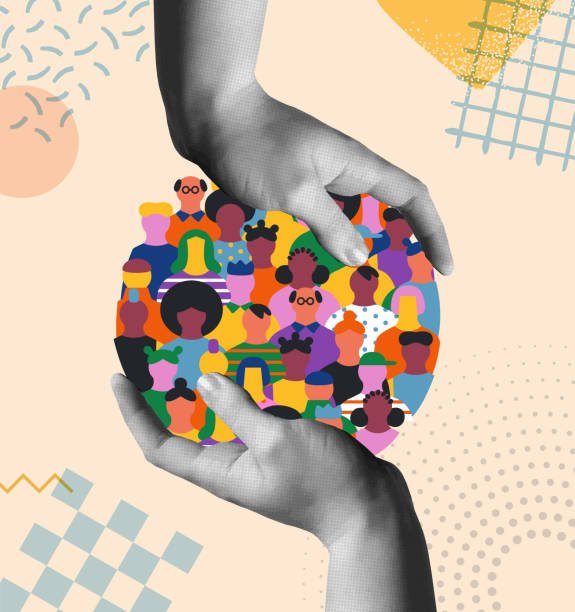
Figure 1: Social movements often manifest as collective public action, uniting individuals around a shared goal for social change.
Introduction: Why This Matters
From the Civil Rights Movement that challenged racial segregation to the global climate strikes led by youth activists, social movements are a fundamental force in shaping our world. They are the collective heartbeat of public conscience, the mechanism through which ordinary people organize to demand extraordinary change. In an era of rapid communication and global interconnection, understanding social movements is no longer a niche academic interest—it is essential for anyone who wants to comprehend the dynamics of modern society, politics, and culture.

These movements can topple governments, establish new human rights, redefine cultural norms, and alter the course of history. They emerge when a significant number of people conclude that existing institutions and power structures have failed to address a pressing social problem. By exploring the mechanics, history, and impact of social movements, we can better understand both the past and the present, and perhaps even glimpse the future of social change. This comprehensive guide from The Daily Explainer’s Culture & Society section will unpack everything you need to know about the powerful phenomenon of social movements.
Part 1: Background and Context – A Brief History of People Power
The history of social movements is intertwined with the history of human society itself, though their character has evolved dramatically over time.
Pre-Industrial Collective Action (Pre-18th Century)
Before the modern era, collective action often took the form of riots, rebellions, and revolts. These were typically localized, reactive, and short-lived, driven by immediate grievances like food shortages or oppressive taxes. They lacked the sustained organization and broad ideological goals that characterize modern social movements.
The Birth of Modern Social Movements (18th – 19th Centuries)
The twin engines of the Enlightenment and the Industrial Revolution created the conditions for modern social movements. The Enlightenment introduced ideas about individual rights, democracy, and popular sovereignty. Simultaneously, the Industrial Revolution concentrated people in cities, creating new social classes (like the industrial working class) and new social problems. This period saw the rise of:
- The Abolitionist Movement, which fought to end the transatlantic slave trade.
- The Labor Movement, which organized workers to demand better wages, conditions, and rights.
- The Women’s Suffrage Movement, which campaigned for women’s right to vote.
The Expansion of Identity and Rights (20th Century)
The 20th century witnessed the proliferation of social movements focused on identity, justice, and peace. The Civil Rights Movement in the United States fought against racial discrimination, while anti-colonial movements swept across Africa and Asia. The latter part of the century saw the emergence of the Feminist Movement, the Environmental Movement, and the LGBTQ+ Rights Movement, each expanding the realm of social and political debate.
The Digital Age and Globalization (21st Century)
Today, social movements are shaped by digital technology and global networks. Platforms like Twitter, Facebook, and Instagram allow for rapid mobilization and the viral spread of ideas. Movements like the Arab Spring, Black Lives Matter, and #MeToo have demonstrated the power of decentralized, digitally-native organizing, while also facing new challenges related to misinformation and digital surveillance.
Part 2: Key Concepts Defined
To analyze social movements, it’s crucial to understand the vocabulary experts use.
Social Movement
A sustained, organized collective effort by a large group of people working outside established institutions to promote or resist social change. It is more structured and long-term than a single protest or riot.
Collective Action
The coordinated activities of a group of people aimed at achieving a common objective. This is the fundamental building block of any social movement.
Framing
The process by which movement leaders and participants define a problem, assign blame, and propose solutions. Successful social movements often “frame” their issue in a way that resonates with broader public values.
Political Opportunity Structure
The external political environment that can either help or hinder a social movement. This includes factors like the openness of the political system, the presence of influential allies, and divisions among elites.
Resource Mobilization
This theory emphasizes that social movements require resources (money, labor, skills, legitimacy) to succeed. It focuses on how movements organize and acquire these resources.
Grassroots Organizing
A bottom-up approach where activism begins at the local, community level. It emphasizes face-to-face contact, building relationships, and empowering local leaders.
Protest Cycle
A period of heightened conflict and contention across numerous social movements, often influencing and reinforcing one another. The 1960s is a classic example of a protest cycle.
Part 3: How It Works: The Anatomy of a Social Movement (Step-by-Step)
While no two movements are identical, they often progress through a common lifecycle, as detailed in our Deep Dive on Movement Theory.
Stage 1: Emergence – The “Agitation” Phase
A social movement begins with a pervasive sense of grievance or injustice.
- Cultural Groundwork: Intellectuals, artists, and community leaders begin to articulate the problem, challenging dominant narratives.
- Triggering Event: A specific, often dramatic event (e.g., a police brutality incident, an environmental disaster) crystallizes the diffuse sense of grievance and sparks public outrage.
- Initial Mobilization: Small groups of “early adopters” begin holding meetings, forming networks, and planning initial actions.
Stage 2: Coalescence – Getting Organized
The movement goes public and begins to build structure.
- Public Declaration: The movement holds its first major rallies, marches, or campaigns to attract wider attention and recruit participants.
- Developing Strategy: Leaders emerge, and the movement develops clear goals and a strategy for achieving them (e.g., lobbying, civil disobedience, public education).
- Building Identity: The movement creates symbols, slogans, and shared narratives to foster a sense of shared identity and purpose among participants.
Stage 3: Bureaucratization – Becoming Institutionalized
The movement develops a formal structure to sustain itself.
- Formal Organizations: Informal groups evolve into formal organizations with staff, budgets, and defined roles (e.g., Greenpeace, NAACP).
- Professionalization: The movement may hire professional organizers, lawyers, and lobbyists.
- Strategic Shift: The focus may shift from disruptive protest to negotiation, lobbying, and working within the system. This stage carries the risk of the movement becoming too mainstream and losing its transformative edge.
Stage 4: Decline – or Transformation
Movements eventually wind down, but their endings vary.
- Success: The movement achieves its goals and disbands (e.g., the movement for same-sex marriage in many countries).
- Co-optation: The movement’s goals are partially adopted by established institutions, defusing its radical potential.
- Repression: The state or powerful opponents successfully crush the movement through force or legal means.
- Failure: The movement runs out of momentum, resources, or public support and fades away.
- Transformation: The movement evolves, shifting its focus to new, related issues.
Part 4: Why It’s Important – The Impact of Social Movements
Social movements are not just noise in the system; they are a critical mechanism for social health and progress.
1. They Drive Progressive Social Change
Most major social advances in modern history are the direct result of social movements. As documented by the Stanford Encyclopedia of Philosophy, movements have been responsible for ending slavery, establishing labor rights, expanding voting rights, and advancing environmental protection. They force societies to confront uncomfortable truths and live up to their professed ideals.
2. They Give Voice to the Marginalized
Social movements provide a platform for groups who are excluded from formal political power. They amplify the voices of the poor, racial minorities, women, and other marginalized communities, ensuring their concerns are heard in the public sphere.
3. They Strengthen Civil Society
By bringing people together around common causes, social movements build social capital, foster civic skills, and create networks of trust and cooperation. This vibrant “civil society” is a cornerstone of a healthy democracy.
4. They Act as a Safety Valve
By providing a channel for dissent and grievance, social movements can prevent social frustrations from boiling over into violence or revolution. They allow for conflict to be expressed and managed constructively.
5. They Shape Culture and Public Discourse
Social movements change how we think and talk about the world. They introduce new concepts (like “sexual harassment” or “climate justice”) into public language and shift cultural norms around what is considered acceptable or just.
Part 5: Common Misconceptions About Social Movements
Several myths can distort our understanding of how change happens.
Misconception 1: “Social Movements Are Always Leaderless”
Reality: While some modern movements appear decentralized, they almost always have leaders—though leadership may be distributed among many people rather than concentrated in a single figure. Effective coordination requires strategy and organization.
Misconception 2: “If a Movement Doesn’t Succeed Immediately, It Has Failed”
Reality: Social change is a long game. Many movements that seemed to fail in their immediate goals (e.g., early labor activism) laid the cultural and political groundwork for victories years or decades later.
Misconception 3: “All Protests Are Social Movements”
Reality: A protest is a single tactic. A social movement is the sustained, organized campaign that may use protests, along with many other tactics like lobbying, litigation, and public education.
Misconception 4: “Social Movements Are Always Force for Good”
Reality: While we often think of progressive movements, social movements can also regressive or reactionary (e.g., white supremacist movements). They are a tool that can be used to promote inclusion or exclusion, democracy or authoritarianism.
Part 6: Recent Developments in Social Movements
The landscape of activism is constantly evolving.
1. The Rise of Digital Activism
Movements like #BlackLivesMatter and #MeToo were born and scaled on social media. This allows for rapid mobilization and global solidarity but also presents challenges like “slacktivism” (low-effort online support) and digital surveillance.
2. The Leaderful (Not Leaderless) Model
Many contemporary movements reject the single charismatic leader model in favor of a “leaderful” structure with distributed leadership, making them more resilient to co-optation or repression.
3. Intersectional Framing
Modern movements increasingly frame issues through an intersectional lens, recognizing how systems of oppression based on race, gender, class, and sexuality overlap. The Climate Justice Movement, for example, explicitly links environmental degradation with social and racial inequality.
4. Transnational Advocacy Networks
Social movements are increasingly operating across borders, forming global networks to tackle issues like climate change, corporate accountability, and refugee rights. Organizations like Amnesty International exemplify this trend.
Conclusion & Key Takeaways
Social movements are a testament to the power of collective human agency. They remind us that history is not just shaped by kings, presidents, and CEOs, but by ordinary people who organize, protest, and refuse to accept the status quo.
Key Takeaways:
- Change is a Process, Not an Event: Successful social movements require sustained effort, strategic organization, and a long-term vision.
- Framing is Crucial: How a movement defines its issue and communicates its message can determine its ability to attract broad support.
- Context Matters: The political and cultural environment can either fuel a movement’s growth or stifle it.
- Diversity of Tactics is a Strength: Movements that can flexibly use a range of tactics—from direct action to institutional lobbying—are often the most successful.
- The Work is Never Truly Done: Even when a movement achieves a major victory, new challenges and related issues often arise, requiring ongoing vigilance and activism.
Understanding social movements equips us to be more engaged and critical citizens, capable of discerning between fleeting trends and genuine forces of historical change. If you’re analyzing a specific movement and need further clarification, feel free to reach out to our research team.
Frequently Asked Questions (FAQs)
Q1: What’s the difference between a social movement and a revolution?
A revolution seeks to overthrow the entire existing political and social system and replace it with a new one. A social movement typically works within the existing system to achieve specific reforms, though its success can sometimes have revolutionary consequences.
Q2: Are social movements only effective in democracies?
While democracies provide more space for movements to operate openly, social movements can and do emerge in authoritarian states. However, they face much greater risks of repression and often must operate underground or use more subtle forms of resistance.
Q3: How can I tell if a social movement is legitimate?
Research its goals, leadership, funding, and track record. Legitimate movements are typically transparent about their aims, have accountable leadership, and use non-violent, democratic methods to achieve their goals.
Q4: What is “slacktivism” and is it harmful?
Slacktivism refers to low-effort forms of support like sharing a post or signing an online petition without deeper engagement. While it can help raise awareness, it can be harmful if it makes people feel they’ve “done their part” and don’t need to engage in more meaningful actions like donating, volunteering, or showing up to rallies.
About The Author





1 thought on “Social Movements: The Engine of Social Change – A Complete Guide”