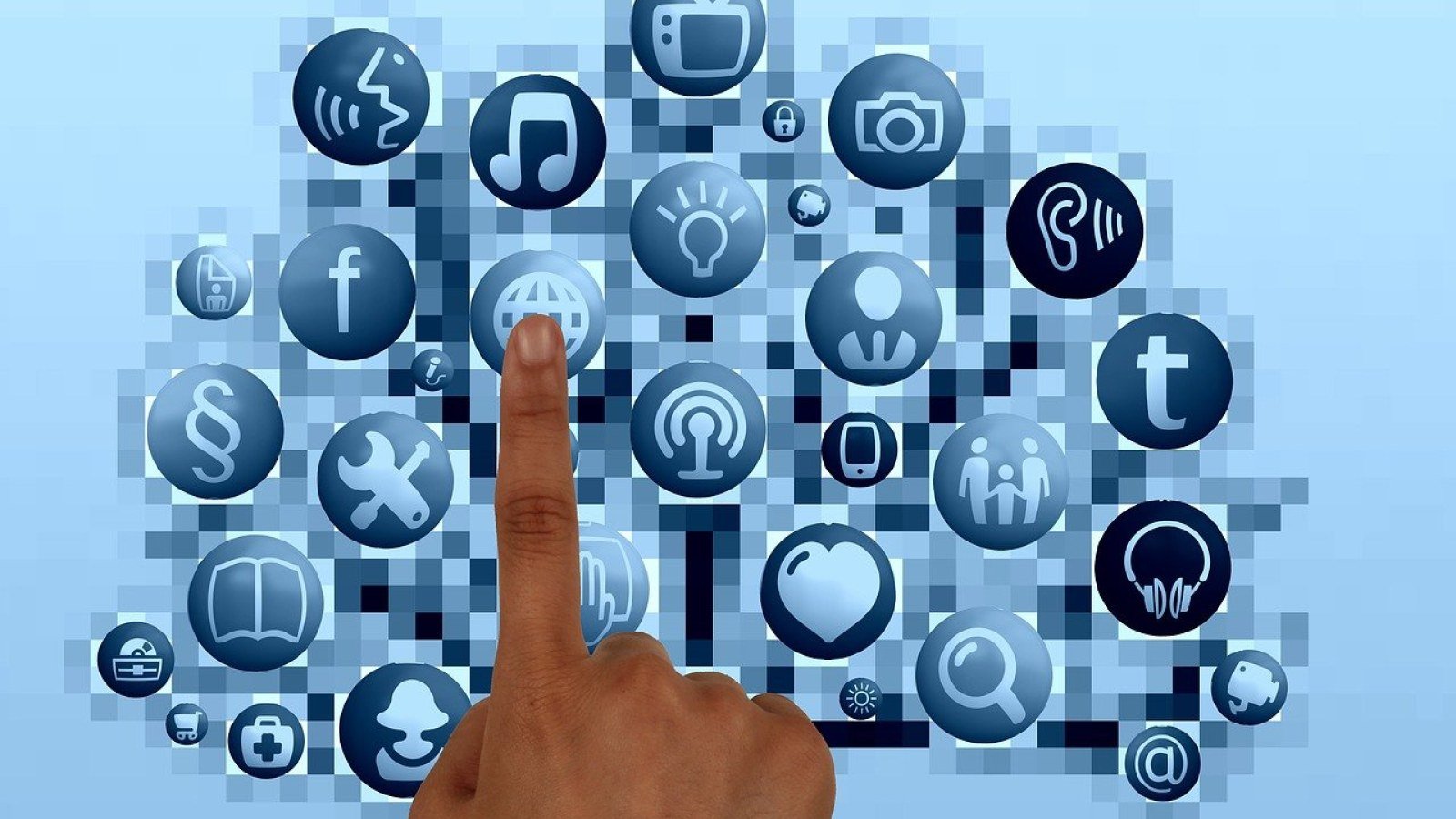
A simplified flowchart of a social media algorithm's decision-making process, from content ingestion to final feed placement.
Introduction: The Unseen Curator of Your Mind
Every day, billions of people open their social media apps to a uniquely curated window on the world. What they see—the news, the memes, the opinions of friends, the viral videos—is not a neutral reflection of reality. It is a carefully engineered selection, dictated by powerful, opaque social media algorithms. These lines of code are the invisible architects of modern media and entertainment, and increasingly, of public discourse itself. They decide what information is amplified and what is suppressed, shaping beliefs, fueling social movements, and influencing elections. Understanding these algorithms is no longer a digital literacy issue; it is a critical necessity for navigating culture and society in the 21st century.
Why does this matter now? Because we have moved beyond simply connecting with friends. These algorithms now mediate our relationship with news, politics, science, and culture. Their power to influence mental health, polarize communities, and manipulate public opinion makes them one of the most significant, yet least understood, forces in our worldwide society today.
Background/Context: From Chronological Feed to Personalized Universe
The shift to algorithmically sorted feeds was a turning point in internet history.
- The Chronological Era (Early 2000s): Platforms like early Facebook and Twitter showed posts in reverse chronological order. It was simple, transparent, but chaotic. Users could easily miss important updates from close friends amidst a flood of content.
- The Inflection Point: Facebook’s News Feed (2009 onward): Faced with an overwhelming amount of content, Facebook introduced its ranking algorithm to show users “what matters most.” The goal was to increase engagement by keeping users on the platform longer.
- The AI Arms Race: The success of Facebook’s model led every major platform (Instagram, Twitter, LinkedIn, YouTube) to adopt similar AI-driven systems. The introduction of TikTok’s “For You Page” took this to its extreme, creating a feed almost entirely divorced from whom you follow, based purely on predictive engagement.
Key Concepts Defined
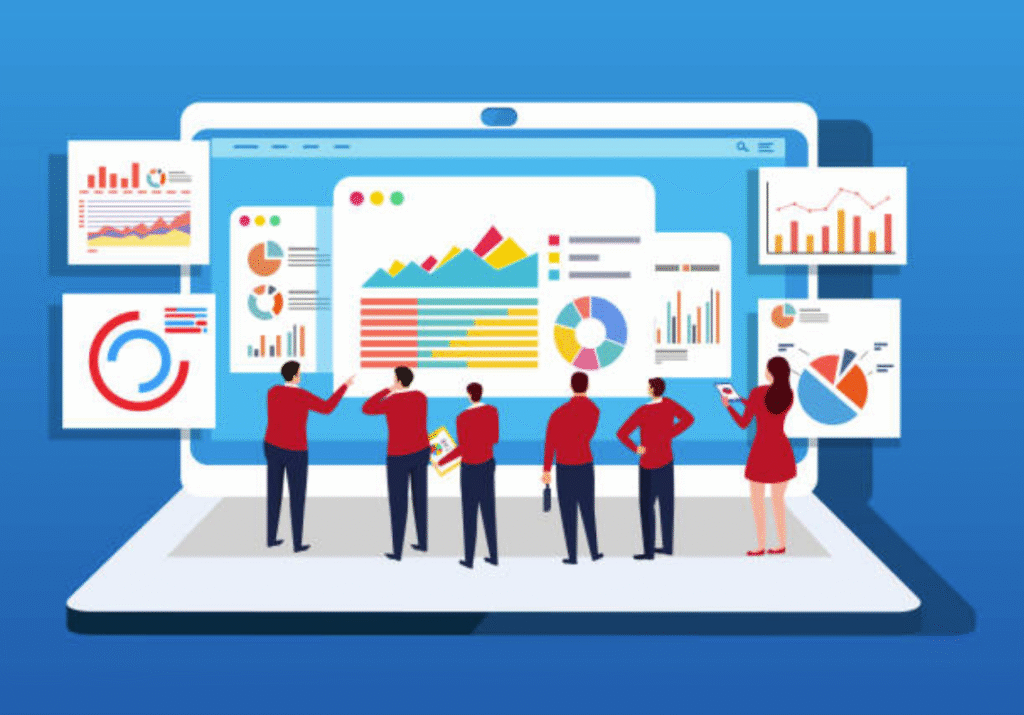
- Social Media Algorithm: A set of rules and machine learning models that rank and personalize the content displayed in a user’s feed based on predicted relevance and engagement.
- Engagement: Any interaction with content (likes, comments, shares, saves, watch time). This is the primary fuel for most algorithms.
- Echo Chamber: A situation in which beliefs are amplified or reinforced by communication and repetition inside a closed system, insulated from rebuttal.
- Filter Bubble: A state of intellectual isolation that can result from personalized algorithms, which show users only what the algorithm predicts they want to see.
- Content Ranking: The process of assigning a score to each piece of content to determine its position in a user’s feed.
- Virality: The rapid circulation of information online, heavily driven by algorithmic amplification of high-engagement content.
How It Works: Deconstructing the Algorithmic Engine (A Step-by-Step Methodology)
While each platform’s algorithm is unique, they generally follow a similar process to decide what you see.
Step 1: Inventory Collection
The algorithm first gathers all possible content that could be shown in your feed—new posts from friends, accounts you follow, suggested accounts, and ads.
Step 2: Signal Analysis
Each piece of content is analyzed against thousands of “signals” (data points) that are categorized into key areas:
- Interest Signals: What have you engaged with in the past? What topics, creators, and content types do you consistently watch or like?
- Post Signals: How popular is this specific post? How many people have liked, commented, shared, or (crucially) watched it for a long time?
- Creator Signals: What is your relationship to the person who posted it? A close friend or a random stranger? Is the creator generally popular?
- Context Signals: What device are you on? What time of day is it? How long is your typical session?
Step 3: Prediction & Scoring
The algorithm uses machine learning to predict your future behavior. It assigns a probability score to questions like:
- “How likely are you to spend 30 seconds watching this video?”
- “How likely are you to share this post?”
- “How likely are you to follow this creator after seeing this?”
Step 4: Final Ranking
All posts are ranked based on their cumulative score. The posts with the highest predicted engagement scores are placed at the top of your feed. This creates a powerful feedback loop: engaging with this content teaches the algorithm to show you more of the same.
Why It’s Important: The Societal Impact of Automated Curation
The consequences of algorithmic curation are profound and wide-ranging.
- Polarization and Divisiveness: Algorithms often profit from outrage. Content that evokes strong emotions (anger, fear, moral indignation) generates high engagement, leading to its amplification. This can deepen societal divides and make civil discourse more difficult. For more on navigating a polarized information environment, our resources on mental wellbeing offer crucial strategies.
- The Spread of Misinformation: False or misleading information is often more novel and emotionally charged than factual reporting, making it highly “engaging” and prone to viral, algorithmic spread.
- Impact on Mental Health: Curated feeds of idealized lives can fuel social comparison and envy. Algorithmic rabbit holes can lead users toward extreme or harmful content, from restrictive diets to radical ideologies.
- The Commercialization of Attention: Your attention is the product being sold. The ultimate goal of these algorithms is not to inform or connect you, but to maximize your time-on-app to serve more advertisements. This aligns with the broader attention economy discussed on business analysis sites like World Class Blogs.
- Shaping Culture and Politics: Algorithms can make or break social movements (#BlackLivesMatter) and influence elections by controlling the visibility of political messages and news sources.
Common Misconceptions and Public Observations

- Misconception: “The algorithm is a single, static piece of code.”
Reality: It is a complex, constantly evolving set of machine learning models that change daily based on new data and corporate objectives. - Observation: “The algorithm is listening to my conversations through my microphone.”
Reality: While a pervasive fear, there is little evidence for this. The algorithm is simply so effective at predicting your interests based on your digital footprint (searches, location, friend networks, etc.) that it can seem clairvoyant. - Misconception: “Algorithms show me what is most important or true.”
Reality: They show you what is most engaging, which is not the same as important or true. - Observation: “I’m stuck in a filter bubble and can’t get out.”
Reality: While powerful, algorithms are not all-powerful. Users can retrain their feed by consciously engaging with diverse content and using platform features to “show less” of certain topics. - Misconception: “All algorithms are evil.”
Reality: They are tools. They also connect people with supportive communities, help them discover new passions, and provide a firehose of worldwide creativity. The problem is not the tool itself, but its opaque nature and the business incentives that drive it.
Recent Developments, Case Studies, and Success Stories
1. The TikTok “For You Page” Revolution: TikTok’s algorithm is arguably the most powerful and influential today. Its success lies in its focus on content, not connections. By prioritizing watch time and completion rate, it can make an unknown user go viral overnight, fundamentally reshaping the creator economy.
2. The Facebook Whistleblower: Frances Haugen: In 2021, former Facebook employee Frances Haugen leaked internal documents showing that the company’s own research knew its algorithms promoted divisive content and harmed teens’ mental health. This case study highlighted the conflict between corporate profit and public good.
3. The YouTube Rabbit Hole Phenomenon:
Academic studies have documented how YouTube’s recommendation algorithm can systematically lead users from mainstream content toward more extreme viewpoints.
- Methodology: The algorithm’s goal is to maximize watch time. If a user watching mild political commentary is likely to click on a more partisan video, the algorithm will recommend it. This process can repeat, leading the user down a “rabbit hole.”
- Observation: This isn’t a deliberate attempt to radicalize people, but a side effect of an engagement-optimization system. Platforms have since made changes to limit this, but it remains a significant concern.
4. Algorithmic Activism and Social Movements: Movements like #MeToo and #BlackLivesMatter leveraged algorithms to achieve global reach. Activists learned to create content that was highly “algorithm-friendly”—using specific visuals, text, and emotional appeals to ensure amplification.
Real-Life Examples and Information Sources
- Instagram’s Shift to Video: In 2022, Instagram openly prioritized Reels in its algorithm, mimicking TikTok. This was a direct response to competitive pressure and user engagement data showing a preference for short-form video.
- The “Momo Challenge” Hoax: A viral moral panic about a non-existent suicide game, spread by concerned parents and news outlets. It demonstrated how algorithms can amplify fear-based misinformation, even when well-intentioned.
- Personalized Advertising: The same core technology powers the micro-targeted ads you see across the web, a key component of modern ecommerce and digital marketing strategies, as detailed on sites like Sherakat Network.
Sustainability Framework for a Healthy Digital Diet
Just as we need a framework for environmental or financial sustainability, we need one for our algorithmic consumption.
- Awareness & Literacy: The first step is understanding that your feed is curated, not neutral. Teach yourself and others how these systems work. Our explained section is dedicated to breaking down such complex topics.
- Conscious Consumption: Actively interrogate your feed. Ask “Why am I being shown this?” and “What emotion is this content designed to provoke?”
- Active Curation: You are not a passive victim. Use platform controls to “unfollow,” “snooze,” and “show less” for content that harms your wellbeing. Deliberately follow accounts with diverse viewpoints.
- Dietary Diversity: Get your information from multiple sources, including those outside of algorithmic feeds (e.g., curated newsletters, direct website visits to reputable news sources).
- Digital Detox: Schedule regular breaks from algorithmically driven platforms to reconnect with the un-curated world and reduce the risk of mental health strain.
Conclusion & Key Takeaways
Social media algorithms are powerful, dual-use technologies. They are engines of connection and creativity, but also of manipulation and division. Their design, driven by the economic imperative of capturing attention, has unintended consequences that ripple through our entire society.
Key Takeaways:
- Your social media feed is a personalized universe, not an objective window to the world.
- Engagement is the core currency; content is optimized to earn it, regardless of truth or value.
- The algorithmic promotion of divisive content is a feature, not a bug, of the current business model.
- Individuals can take steps to retrain their algorithms and protect their mental space.
- Long-term solutions will require greater algorithmic transparency, regulatory oversight, and a public demand for more ethical design.
Navigating this new digital reality is a defining challenge of modern culture and society. For more insights, feel free to reach out via our contact us page.
Frequently Asked Questions (FAQs)
- What is the main goal of a social media algorithm?
To maximize user engagement (time spent, likes, comments, shares) to increase advertising revenue. - How can I “reset” or “retrain” my algorithm?
Massively change your engagement patterns. Mute/unfollow old accounts, consciously like and follow new types of content, and use “Not Interested” or “Show Less” features aggressively. - Which platform has the most powerful algorithm?
Currently, TikTok’s “For You Page” is considered the most effective at content discovery and driving viral trends. - Do algorithms create fake accounts or bots?
No, but they can amplify them. Bot networks are designed to generate high engagement, which tricks the algorithm into treating their content as popular. - Why do I see so many posts from people I don’t follow?
Because platforms prioritize content they predict you will engage with, regardless of the source, to discover new things and keep you hooked. - What is “Shadow Banning”?
A controversial term referring to a practice where a platform limits the reach of a user’s content without notifying them, often for violating community guidelines. - How do I protect my child from harmful algorithms?
Use parental controls, have open conversations about how algorithms work, and encourage a diverse range of offline activities and non-algorithmic media. - Can algorithms be regulated?
Yes, and they are starting to be. The EU’s Digital Services Act, for example, requires large platforms to conduct risk assessments and be more transparent about their algorithms. - What’s the difference between an algorithm and a content moderator?
An algorithm automatically ranks all content. A human content moderator reviews and removes content that violates platform policies, often after the algorithm has already amplified it. - How does the LinkedIn algorithm differ from TikTok’s?
LinkedIn prioritizes professional content and meaningful conversations in niche communities, rewarding posts that generate thoughtful comments rather than just likes. - Why do old posts sometimes resurface in my feed?
The algorithm may determine that a post is “evergreen” and relevant to you now, or it may be getting a new wave of engagement that signals its current popularity. - Do all social media platforms use algorithms?
Almost all major ones do. Some, like the newer platform Bluesky, offer a chronological feed as an option, but the default is usually algorithmic. - How does an algorithm learn my interests?
By tracking every click, hover, pause, and scroll. It builds a detailed profile based on your explicit actions (following) and implicit signals (how long you look at a post). - What is “Engagement Bait”?
Content that explicitly asks for engagement (“LIKE if you agree!”,”COMMENT below!”) to trick the algorithm into ranking it higher. - Can creators “game” the algorithm?
Successful creators don’t “game” it; they understand it. They create high-quality content tailored to the platform’s specific engagement signals (e.g., hooking viewers in the first 3 seconds on TikTok). - How do algorithms handle different languages and cultures?
They are trained on local data. A trending topic in Japan will be prioritized for users in Japan, but the same algorithm will show different trends to users in Brazil. - What is an “algorithmic audit”?
An independent analysis of a platform’s algorithm to check for biases (e.g., racial, political) in its content ranking and distribution. - Why did my feed suddenly change?
The platform likely rolled out a major algorithm update, shifting the weight of certain signals (e.g., putting more emphasis on video over photos). - How do ads fit into the algorithm?
Ads are ranked using the same core system. Advertisers bid for placement, and the algorithm shows the ad with the highest bid * predicted engagement rate. - Is there a way to turn off the algorithm?
On some platforms, like Instagram and Twitter/X, you can switch to a “Following” feed that shows only posts from accounts you follow, in chronological order. It’s often a buried option. - How do algorithms impact local news?
They often disadvantage local news in favor of national, more sensationalist stories that have a broader appeal and higher engagement potential. - What is the future of social media algorithms?
Towards more AI-driven content, predictive feeds based on your biometrics (via wearables), and potentially more transparency due to regulatory pressure.
About The Author