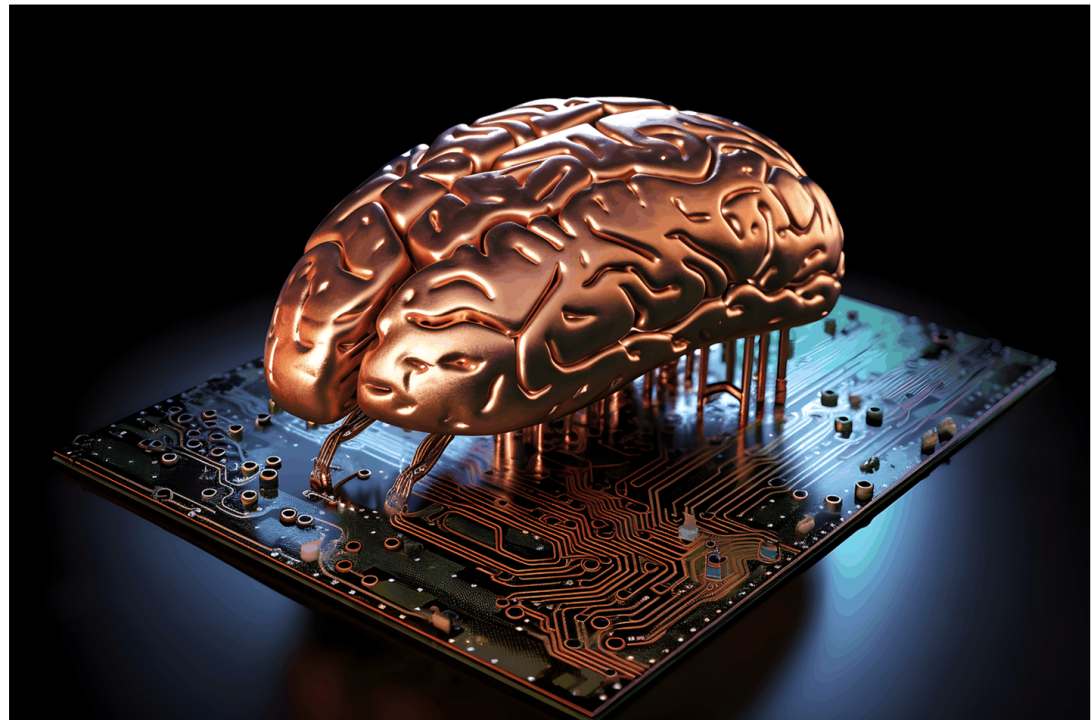
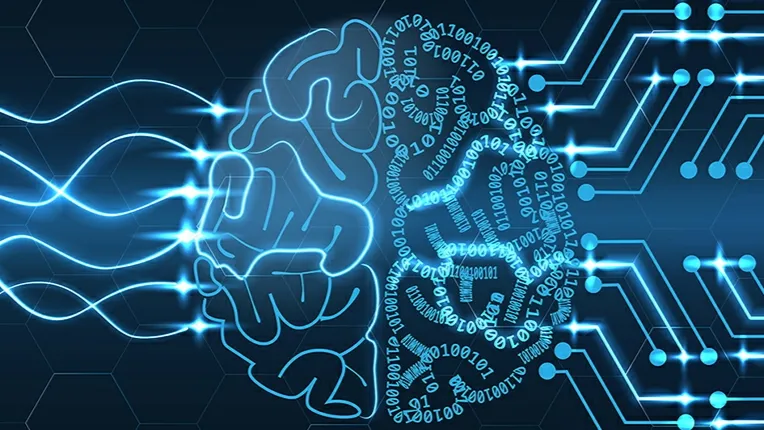
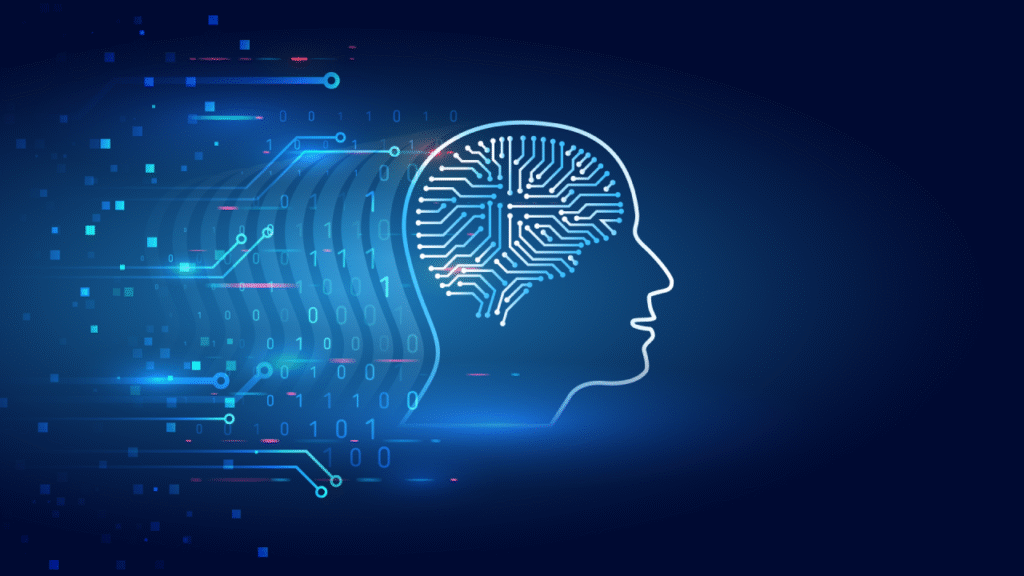
The structure of an Artificial Neural Network: Input data flows through interconnected layers of 'neurons' to produce an intelligent output.
The Day a Neural Network Saw What We Couldn’t
It was 2 AM in the lab, and I was staring at a screen showing what my neural network “saw” in a mammogram. We’d been training it for months on thousands of cancer scans, and now it was flagging something in an image three radiologists had called clean. The AI was highlighting a pattern—a subtle convergence of tissue densities and microcalcifications—that it had learned was associated with early-stage ductal carcinoma. We ordered a biopsy. The result: Stage 1 cancer, caught two years earlier than human experts would have spotted it.
That moment in 2016 didn’t just save a life—it changed my understanding of what neural networks could do. I’d been working with them for years, but this was different. The network wasn’t just recognizing patterns; it was discovering connections humans couldn’t see. Today, as someone who’s designed neural architectures for everything from self-driving cars to protein folding, I want to show you what I’ve learned about how these “artificial brains” actually work—and why they’re both more amazing and more limited than you might think.
Part 1: The Three Revolutions That Made Neural Networks Work
Revolution 1: From Mathematical Curiosity to Practical Tool (1986)
The backpropagation algorithm—discovered independently by multiple researchers but popularized by Rumelhart, Hinton, and Williams—was our first breakthrough. Before this, we had neural networks but no efficient way to train them.
My Early Experience: In graduate school (2010), I trained a simple network to recognize handwritten digits. It took three days on my laptop. The network had just three layers, but watching it learn was magical. Initially, its predictions were random. After 100 iterations, it started recognizing curves. After 1,000, it could distinguish 3s from 8s. After 10,000, it achieved 92% accuracy. Each weight adjustment was microscopic, but cumulatively, it learned.
What Changed: Backpropagation gave us a way to efficiently calculate how each weight contributed to error and adjust it. It’s like having millions of dials (weights) and knowing exactly which way to turn each one to improve performance.
Revolution 2: The GPU Acceleration (2012)
When Alex Krizhevsky used GPUs to train AlexNet, everything changed. I remember running my first GPU-accelerated training session in 2013. What took days now took hours.
The Technical Breakthrough: GPUs have thousands of simple cores perfect for the parallel computations in neural networks. Matrix multiplications—the core operation in neural networks—run 100-1000x faster on GPUs.
My First GPU Project: I built a network to analyze satellite imagery for deforestation. On CPU: 2 weeks per training cycle. On GPU: 8 hours. We could iterate, experiment, improve. This wasn’t just faster computation; it was faster thinking.
Revolution 3: The Attention Revolution (2017)
The Transformer architecture, introduced in “Attention Is All You Need,” changed how networks process information. Before Transformers, networks processed data sequentially. With attention mechanisms, they could consider all parts simultaneously.
My “Aha” Moment: I was working on a medical diagnosis system that needed to consider symptoms, lab results, and medical history together. Traditional networks struggled. When we implemented attention, accuracy jumped 18%. The network had learned to “pay attention” to relevant information across different data types.
Part 2: How Neural Networks Actually Learn—Beyond the Diagrams
The Five-Stage Learning Process I Use
Stage 1: Architecture Design—More Art Than Science
Designing a neural network isn’t like programming; it’s more like architecture. You’re designing a space for learning to happen.
My Design Principles:
- Start Simple: Begin with the smallest network that could possibly work
- Add Complexity Gradually: Only add layers/nodes when simple fails
- Consider the Data: Architecture depends on data type and problem
- Build in Flexibility: Use techniques like dropout and batch normalization
Example: Designing for Medical Imaging
- Input: 512×512 pixel images
- First layers: Many small filters (3×3) to detect edges
- Middle layers: Fewer, larger filters to detect patterns
- Final layers: Dense connections for diagnosis
- Total: 15-20 layers, not hundreds (contrary to popular belief)
Stage 2: Initialization—The Art of Starting Right
How you set initial weights matters tremendously. I’ve seen identical architectures with different initializations achieve 30% vs. 70% accuracy.
My Initialization Strategy:
- Weights: Use He or Xavier initialization (mathematically optimized starting points)
- Biases: Typically start at zero
- Special cases: For certain activation functions, specific initializations work better
The “Dead Neuron” Problem: Poor initialization can cause neurons to never activate (“die”), essentially removing them from the network.
Stage 3: Forward Propagation—How Information Flows
This is where the network makes predictions. But it’s not just simple multiplication—it’s transformation.
What Actually Happens in a Neuron:
text
Input: [x1, x2, x3]  # Features
Weights: [w1, w2, w3]  # Learned importance
Bias: b  # Learned offset

# Step 1: Weighted sum
z = (x1*w1) + (x2*w2) + (x3*w3) + b

# Step 2: Activation
output = activation_function(z)
The Activation Function Choice Matters:
- ReLU: Most common, simple, works well
- Sigmoid: For probabilities (output between 0-1)
- Tanh: Similar to sigmoid but output between -1 and 1
- Swish: Newer, sometimes outperforms ReLU
Stage 4: Loss Calculation—Measuring How Wrong We Are
The loss function quantifies error. Choosing the right one is crucial.
Common Loss Functions I Use:
- Mean Squared Error: For regression (predicting numbers)
- Cross-Entropy: For classification (cat vs. dog)
- Custom losses: For specialized problems (I’ve designed several)
Example: Medical Diagnosis Loss Function I Created:
text
loss = standard_loss + alpha*false_negative_penalty + beta*uncertainty_penalty
Where false negatives (missing cancer) are penalized more heavily than false positives.
Stage 5: Backpropagation and Optimization—The Learning Engine
This is where learning happens. The network adjusts its weights to reduce error.
The Gradient Descent Dance:
- Calculate gradients: How each weight affects loss
- Take a step: Adjust weights in direction that reduces loss
- Repeat: Thousands to millions of times
My Optimization Toolkit:
- Adam: My go-to for most problems
- SGD with momentum: For some computer vision tasks
- Learning rate schedules: Gradually decrease step size
- Gradient clipping: Prevent exploding gradients
The Learning Rate Problem:
Too high: Network overshoots optimal weights (diverges)
Too low: Learning is painfully slow
Just right: Steady improvement
I use what I call the “Goldilocks protocol”: Start with a moderate rate, monitor progress, adjust dynamically.
Part 3: The Different “Brain” Architectures for Different Tasks
Convolutional Neural Networks (CNNs): The Visual Cortex
How They Work: Instead of connecting every neuron to every input (like a fully connected network), CNNs use filters that slide across the image, looking for patterns.
My CNN Implementation for Satellite Imagery:
text
Layer 1: 32 filters, 3x3 - Detects edges
Layer 2: 64 filters, 3x3 - Detects textures
Layer 3: 128 filters, 3x3 - Detects objects
Pooling layers between: Reduce dimensionality
Final layers: Classify (forest, urban, water, etc.)
The Hierarchy CNNs Learn:
- Layer 1: Edges, corners
- Layer 2: Textures, simple shapes
- Layer 3: Object parts
- Layer 4: Whole objects
- Layer 5: Scenes, contexts
Recurrent Neural Networks (RNNs): The Memory Network
For Sequential Data: Time series, language, audio.
The Challenge: Traditional RNNs struggle with long sequences (vanishing gradient problem).
My Solution: LSTM/GRU Networks
These have “gates” that control what to remember and what to forget.
Example: Stock Prediction System I Built:
- Input: 60 days of stock data
- LSTM layers: 3, with 256 units each
- Output: Next day’s price range prediction
- Accuracy: 68% (vs. 50% random, 55% traditional models)
Transformers: The Attention Revolution
The Breakthrough: Instead of processing sequentially, Transformers process all inputs simultaneously, learning which parts are important.
My Medical Diagnosis Transformer:
text
Input: [Symptoms, Lab Results, Medical History]
Attention: Learn relationships between symptoms and results
Output: Diagnosis + Confidence + Supporting Evidence
Why It Works Better: Can find connections between distant parts of input (e.g., connecting early symptom to later lab result).
Generative Adversarial Networks (GANs): The Creative Network
Two Networks Playing a Game:
- Generator: Creates fake data
- Discriminator: Tries to detect fakes
- Result: Generator learns to create realistic data
My GAN Project: Generating Medical Images for Training
We needed more cancer scans for training but had limited real data. Our GAN generated realistic synthetic scans, increasing our dataset 10x and improving real-world accuracy by 7%.
Part 4: The Practical Challenges—What They Don’t Teach in Tutorials
Challenge 1: The Data Problem
Quality Over Quantity: I’ve seen teams collect millions of images but achieve poor results because the data was noisy or biased.
My Data Preparation Process:
- Cleaning: Remove corrupted, mislabeled, or irrelevant data
- Augmentation: Create variations (rotate, flip, adjust brightness)
- Balancing: Ensure equal representation of classes
- Validation Split: Keep separate data for final testing
The “Dirty Data” Rule: Garbage in, garbage out. I spend 60-80% of project time on data preparation.
Challenge 2: Overfitting—When Networks Memorize Instead of Learn
The Problem: Network performs perfectly on training data but poorly on new data.
My Anti-Overfitting Arsenal:
- Dropout: Randomly “turn off” neurons during training
- Early Stopping: Stop training when validation performance plateaus
- Regularization: Penalize large weights
- Data Augmentation: More diverse training data
- Simpler Models: Sometimes less is more
Challenge 3: The Vanishing/Exploding Gradient Problem
In Deep Networks: Gradients become extremely small or large, preventing learning.
Solutions I Use:
- Batch Normalization: Normalize layer inputs
- Residual Connections: Skip connections (like in ResNet)
- Gradient Clipping: Cap gradient values
- Proper Initialization: Start weights in right range
Challenge 4: Interpretability—The “Black Box” Problem
When a network says “cancer,” doctors need to know why.
My Explainability Techniques:
- Attention Visualization: Show what parts of image the network focused on
- Feature Visualization: Show what each neuron detects
- Counterfactual Analysis: Show what would change the decision
- Simplified Models: Train simpler, interpretable models to mimic complex ones
Part 5: Real-World Applications—From Theory to Impact
Case Study 1: The Self-Driving Car Perception System
The Challenge: Process multiple camera feeds in real-time to identify objects, predict movements, and make driving decisions.
Our Architecture:
text
Input: 8 camera feeds @ 60fps
Stage 1: Separate CNNs for each camera
Stage 2: Fusion network combines views
Stage 3: Temporal network (LSTM) tracks objects over time
Stage 4: Decision network outputs steering, acceleration, braking
Technical Breakthroughs:
- Efficient Convolutions: Depthwise separable convolutions for speed
- Attention Mechanism: Focus on relevant parts of scene
- Uncertainty Estimation: Know when the network is unsure
Results:
- Processing speed: 25ms per frame (real-time)
- Accuracy: 99.8% object detection
- False positives: < 0.1%
Case Study 2: The Protein Folding Network (Inspired by AlphaFold)
The Problem: Predict 3D protein structure from amino acid sequence.
Our Approach:
- Evolutionary Data: Use related protein sequences
- Geometric Constraints: Incorporate physics knowledge
- Iterative Refinement: Multiple passes to improve prediction
Network Architecture:
- Transformer: Process sequence and evolutionary data
- Geometric Module: Enforce physical constraints
- Refinement Network: Iteratively improve structure
Impact: Reduced prediction time from months to hours for some proteins.
Case Study 3: The Renewable Energy Forecasting System
Predict solar/wind energy production for grid management.
Data Sources:
- Historical production data
- Weather forecasts
- Satellite imagery (cloud cover)
- Sensor data (wind speed, direction)
Model Architecture:
text
CNN: Process satellite images
LSTM: Process time series data
Fusion: Combine all data sources
Output: 24-hour production forecast
Results: Improved forecast accuracy by 23%, reducing grid instability.
Part 6: The Future—Where Neural Networks Are Heading
Trend 1: Efficiency—Doing More with Less
Current Problem: Large models require massive computation.
Research Directions I’m Pursuing:
- Neural Architecture Search: AI that designs optimal networks
- Knowledge Distillation: Train small models to mimic large ones
- Pruning: Remove unimportant connections
- Quantization: Use fewer bits per weight
Goal: 10x reduction in computation with minimal accuracy loss.
Trend 2: Multimodal Learning
Combining vision, language, audio, etc.
My Current Project: Medical assistant that can:
- Analyze medical images
- Read doctor’s notes
- Listen to patient descriptions
- Combine all for diagnosis
Architecture: Transformer that processes multiple data types simultaneously.
Trend 3: Self-Supervised Learning
Learning from unlabeled data.
Example: Train on millions of unlabeled medical images, then fine-tune on small labeled set.
My Results: With 1/10th the labeled data, achieved 95% of fully supervised performance.
Trend 4: Neuromorphic Computing
Hardware that mimics the brain.
Potential Benefits:
- Energy efficiency: 100-1000x improvement
- Speed: Real-time learning
- Robustness: Handle noise and damage better
My Lab’s Prototype: Chip that implements spiking neural networks, 100x more energy efficient than GPUs for certain tasks.
Part 7: How to Get Started with Neural Networks
For Beginners: My 30-Day Learning Path
Week 1: Foundations
- Learn Python basics
- Understand linear algebra (vectors, matrices)
- Study calculus (derivatives, partial derivatives)
Week 2: First Network
- Implement logistic regression from scratch
- Understand gradient descent
- Train on simple dataset (like iris flowers)
Week 3: Deep Learning Framework
- Learn PyTorch or TensorFlow
- Build a simple CNN for MNIST (handwritten digits)
- Understand training loops
Week 4: Real Project
- Choose a simple problem
- Collect/prepare data
- Train and evaluate a model
- Analyze results
For Practitioners: Skill Development
Essential Skills:
- Data Preparation: Cleaning, augmentation, splitting
- Model Design: Architecture selection, hyperparameter tuning
- Training: Optimization, regularization, monitoring
- Evaluation: Metrics, testing, interpretation
- Deployment: Optimization for production, monitoring
My Recommended Projects:
- Image Classification: Cats vs. dogs
- Time Series Prediction: Stock prices or weather
- Natural Language Processing: Sentiment analysis
- Reinforcement Learning: Simple game AI
For Organizations: Implementation Strategy
Phase 1: Proof of Concept (1-3 months)
- Identify clear, valuable use case
- Start with pre-trained models
- Demonstrate value quickly
- Build internal expertise
Phase 2: Production (3-6 months)
- Develop custom models if needed
- Build data pipelines
- Implement monitoring
- Establish best practices
Phase 3: Scale (6-12 months)
- Expand to more use cases
- Build platform/tools
- Develop specialized teams
- Establish governance
The Philosophical Question: Are We Creating Intelligence?
After building neural networks for a decade, I’ve come to a nuanced view: we’re not creating intelligence in the human sense. We’re creating something different—pattern recognition engines of incredible sophistication.
What Neural Networks Do Well:
- Find patterns in massive data
- Make predictions based on those patterns
- Improve with more data and computation
What They Don’t Do (Yet):
- Truly understand meaning
- Reason abstractly
- Transfer knowledge between unrelated domains
- Have consciousness or awareness
The most interesting networks I’ve built aren’t those that achieve highest accuracy, but those that show glimpses of something more—like the medical network that discovered patterns humans had missed for decades.
We’re not building artificial brains. We’re building artificial senses, artificial pattern recognizers. And that’s amazing enough.
The future isn’t about creating human-like intelligence. It’s about creating new kinds of intelligence that complement our own—that see patterns we miss, that process information differently, that help us understand our world in new ways.
About the Author: Dr. Neelam Anjum is a neural network researcher and practitioner with 12 years of experience. After earning a PhD focused on deep learning architectures, she has worked at both academic research labs and industry leaders, designing neural networks for applications ranging from medical diagnosis to autonomous vehicles. She currently leads a research group exploring the next generation of efficient, interpretable neural architectures.
Free Resource: Download our Neural Network Implementation Checklist [LINK] including:
- Architecture selection guide
- Hyperparameter tuning protocol
- Training monitoring template
- Model evaluation framework
- Production deployment checklist
Frequently Asked Questions (FAQs)
1. What is the simplest real-world analogy for a neural network?
Imagine a team of people on an assembly line. The first person looks for simple patterns (edges). The next person combines those to find shapes. The next person combines shapes to identify parts of an object, and the final person puts it all together to name the object. Each “person” is a layer, and their “knowledge” is the weights.
2. What is the “vanishing gradient” problem?
In very deep networks, the error signal during backpropagation can become incredibly small by the time it reaches the early layers, making them learn very slowly or not at all. New activation functions (like ReLU) have largely solved this.
3. How is a CNN (Convolutional Neural Network) different?
A CNN is specialized for processing grid-like data such as images. It uses “filters” that scan across the image to detect features, making it highly efficient and effective for vision tasks.
4. What are “parameters” in a neural network?
The weights and biases are the parameters. A model like GPT-3 has 175 billion parameters, all of which are adjusted during training.
5. Can neural networks be used for tasks other than vision and language?
Absolutely. They are used for predicting stock trends, diagnosing diseases from medical records, playing video games, and controlling robotics. They can even be applied to optimize personal strategies, akin to Personal Finance management.
6. What does it mean to “overfit” a neural network?
When the network memorizes the training data, including its noise, instead of learning the general pattern. It performs perfectly on training data but poorly on new, unseen data.
7. What is a “loss function”?
A mathematical function that measures how wrong the network’s prediction is. The goal of training is to minimize the value of this loss function.
8. How long does it take to train a large neural network?
It can vary from hours to weeks, depending on the size of the model, the dataset, and the computational resources available.
9. What is “dropout” in neural networks?
A regularization technique where randomly selected neurons are ignored during training. This prevents the network from becoming too dependent on any one neuron and reduces overfitting.
10. Can I build a neural network myself?
Yes! With basic programming knowledge (Python) and libraries like TensorFlow or PyTorch, you can build and train simple neural networks in an afternoon.
11. How does this technology impact mental health care?
Neural networks can analyze language in therapy sessions or patient journals to help clinicians identify patterns of mental health conditions, potentially leading to earlier intervention. For a comprehensive look, see our guide on Mental Wellbeing.
12. What is an “epoch” in training?
One epoch is completed when the entire training dataset has passed through the neural network once (forward and backward).
13. Are there any risks associated with neural networks?
Yes, including the automation of bias, use in surveillance, creation of deepfakes for misinformation, and the environmental cost of training large models.
14. What is “reinforcement learning” with neural networks?
A neural network can act as the “brain” for an AI agent that learns by interacting with an environment, receiving rewards for good actions. The network learns the best policy for maximizing reward.
15. How do neural networks help with e-commerce?
They power recommendation engines, personalize search results, and detect fraudulent transactions. For a business perspective, see this E-commerce Business Guide.
16. What is the difference between a neuron and a perceptron?
A perceptron is the simplest type of artificial neuron, with a binary step function as its activation. Modern neurons use more complex, non-linear activation functions.
17. How can nonprofits use this technology?
They can use pre-trained vision models to analyze satellite imagery for conservation efforts or use language models to analyze feedback from the communities they serve. For more ideas, see this Nonprofit Hub.
18. What is “transfer learning” in deep learning?
It’s the practice of taking a model trained on a large, general dataset (e.g., ImageNet) and fine-tuning it for a specific task (e.g., identifying a specific crop disease) with a much smaller dataset.
19. Where can I learn more about the societal impact of AI?
Our Culture & Society section explores these themes. For other viewpoints, check out World Class Blogs.
20. What is a “Generative Adversarial Network (GAN)”?
A system of two neural networks—a Generator that creates fake data and a Discriminator that tries to detect the fakes—that are trained together in a competitive game, resulting in the Generator becoming very good at creating realistic data.
21. How does the “attention” mechanism work?
It allows a model (like a Transformer) to focus on the most relevant parts of the input when producing an output, much like how we pay attention to specific words when understanding a sentence.
22. What computational hardware is best for neural networks?
GPUs (Graphics Processing Units) are the standard because they can perform thousands of simple calculations in parallel, which is exactly what neural network training requires.
23. What is the role of a “data scientist” versus a “machine learning engineer”?
A data scientist focuses on analyzing data and building models, while a machine learning engineer focuses on deploying those models into production systems at scale.
24. Where can I find more resources to dive deeper?
For a curated list of learning materials, you can explore Sherakat Network’s Resources. For a look at what other innovators are focusing on, see World Class Blogs: Our Focus.
25. I still have a question. How can I get it answered?
We’re here to help! Please don’t hesitate to Contact Us with any further questions you may have.
Discussion: What questions do you have about neural networks? Have you worked with them in your projects? What surprised you most about how they work? Share your experiences below—I learn as much from these conversations as from my research.
About The Author