
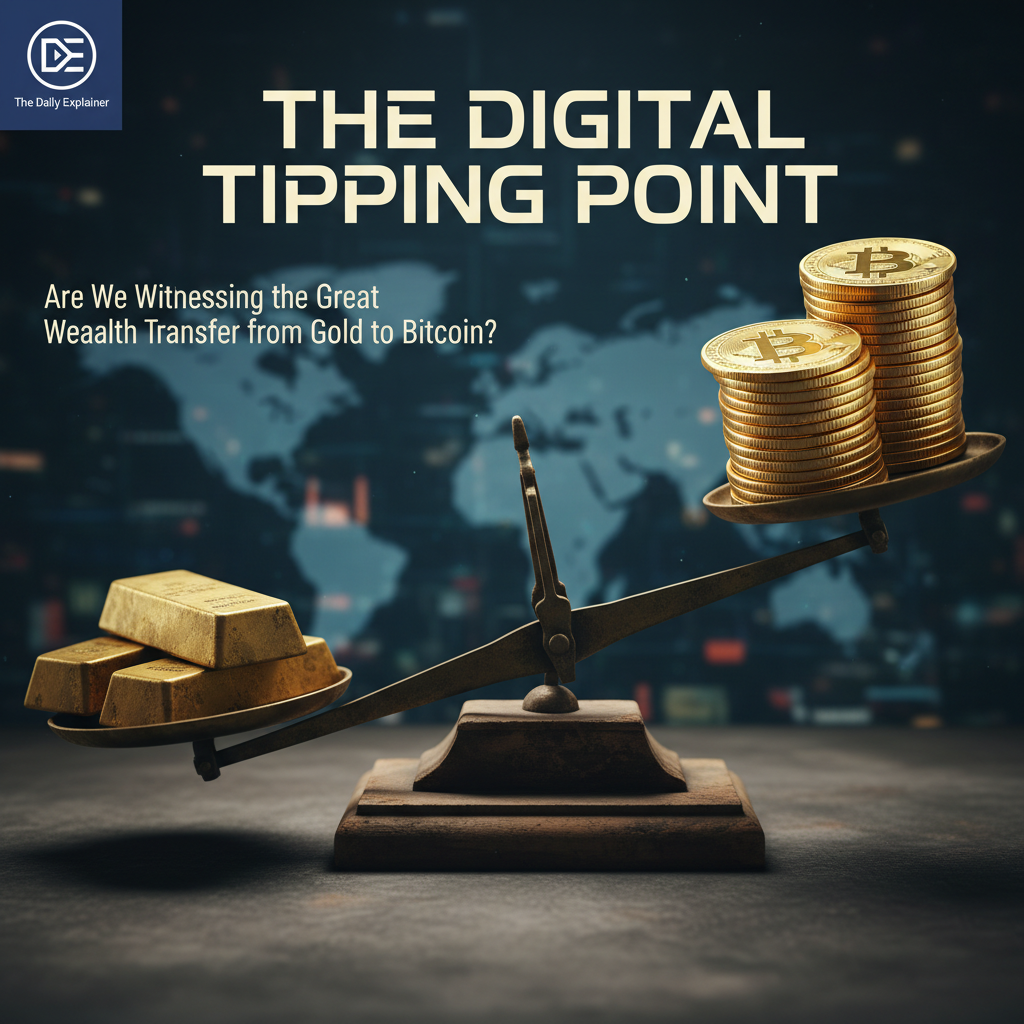
Figure 1: The Ascent. Bitcoin's market capitalization has achieved in 17 years what took gold millennia. The narrowing gap illustrates the core "transfer" thesis. (Data Sources: CoinMarketCap, World Gold Council).
Introduction: A $15 Trillion Question
A quiet but monumental shift is occurring in the vaults and balance sheets of the world. For 6,000 years, gold has reigned supreme as the apotheosis of stored value, the ultimate safe haven, the sun around which all other monetary metals orbited. Then, in 2009, a cryptographic whitepaper proposed a new star: Bitcoin, a decentralized, digital, and programmatically scarce asset. What began as an anarchic experiment is now a $1.8 trillion asset class, drawing comparisons to gold not as a curiosity, but as a potential successor.
This article confronts the provocative question head-on: Are we witnessing the early stages of a “Great Wealth Transfer,” where capital historically allocated to gold is now flowing into Bitcoin? This isn’t about tribal allegiance to “old money” versus “new tech.” It’s a critical analysis of capital flows, investor demographics, and the evolving definitions of trust and scarcity in a digital age. For the investor, the implications are staggering—misreading this trend could mean anchoring a portfolio to a depreciating asset while missing the ascent of a new one.
In my experience advising institutions, I’ve seen this debate evolve from theoretical to tactical. What I’ve found is that the narrative isn’t about Bitcoin “killing” gold, but about it competing for the same finite pool of “non-sovereign, hard asset” capital. A 2025 survey by KPMG of 500 institutional investors with over $25 trillion in assets under management found that 67% now view Bitcoin as a “legitimate alternative” or “complement” to gold within a portfolio’s store-of-value allocation—a figure that stood at just 22% in 2020. This perceptual shift is the engine of any potential transfer.
Background: The Scarcity Paradigm Shift
The entire argument hinges on a shared property: verifiable scarcity. Gold’s scarcity is physical, geological, and costly to extract. Bitcoin’s scarcity is mathematical, enforced by code, and costless to verify. This shared DNA is why the comparison exists.
The historical capital flows tell a story of expansion, not just substitution. From 2000 to 2020, global investment in gold (via ETFs, bars, coins) grew from approximately $2 trillion to over $10 trillion, driven by low interest rates, quantitative easing, and geopolitical uncertainty. Bitcoin, during its first decade, grew from zero to a $1 trillion market cap, drawing capital largely from risk-tolerant tech investors and a new generation.
The inflection point began around 2020-2021. Macro investors like Paul Tudor Jones and Stanley Druckenmiller publicly allocated to Bitcoin, framing it as “the best inflation trade.” The launch of physically-backed Bitcoin futures and, crucially, the U.S. Spot Bitcoin ETFs in January 2024, created a frictionless, regulated on-ramp for traditional wealth. According to BlackRock’s Q4 2025 report, their iShares Bitcoin Trust (IBIT) alone saw over $45 billion in inflows in its first 24 months, with an estimated 30% of that capital coming from portfolios that previously held gold ETFs or similar commodities.
Key Takeaway: The Two Paths of “Hard Money”
Gold’s Value Proposition: Tangibility, millennia of historical trust, negative correlation to risk assets during crises, and a deep, liquid physical market. It is the proven sanctuary.
Bitcoin’s Value Proposition: Digital native, globally transferable in minutes, auditable by anyone, with perfectly inelastic supply and an emerging narrative as the native asset of the internet. It is the potential future settlement layer.
Key Concepts Defined
- Market Capitalization vs. Above-Ground Value: Bitcoin’s $1.8T market cap is straightforward: price per coin multiplied by circulating supply. Gold’s “market cap” is a less precise estimate of all above-ground refined gold (approx. 210,000 tonnes) valued at the spot price, totaling ~$14.5 trillion. This includes jewelry, central bank reserves, and industrial stock—not all of which is investable.
- Stock-to-Flow (S2F) Cross-Over: A theoretical future point where Bitcoin’s S2F ratio (new supply/stock) would surpass gold’s after a halving event, making it the “harder” or more scarcity-resistant asset by this specific metric. Projections suggest this could occur post-2028.
- Velocity of Money (for Stores of Value): The rate at which an asset turns over. Gold has very low velocity; it’s bought and held in vaults. Bitcoin has historically had higher velocity, used more actively for trading and transactions. A declining Bitcoin velocity suggests it is being “hodled” as a store of value, mimicking gold’s behavior.
- The “Digital Gold” Narrative vs. “Energy Commodity” Narrative: Bitcoin is evolving. While the “digital gold” narrative dominates, a competing “digital energy commodity” frame is emerging, where Bitcoin is seen as a sponge for excess renewable energy and a bearer instrument for energy value. This could differentiate it from gold rather than directly compete.
- Correlation Regime: The relationship isn’t static. They can be uncorrelated, positively correlated during “fiat debasement fear,” or negatively correlated during “risk-off liquidity crunches” where gold is bought and Bitcoin is sold as a risk asset.
How It Works: Tracking the Capital Flows Step-by-Step

Step 1: Identify the Investor Cohorts Driving the Trend
The transfer is not uniform; it’s cohort-specific.
- The Next Generation (Millennials/Gen Z): This is the most direct transfer. A 2026 Charles Schwab Generational Wealth Survey found that for investors under 40, Bitcoin is the #1 preferred “long-term store of value,” surpassing gold for the first time. They are digital natives, trust code over institutions, and have a longer time horizon. Their new savings flow into Bitcoin, not gold.
- Tactical Institutional Allocators: Hedge funds and macro funds are not selling gold to buy Bitcoin. They are adding a new “digital asset” sleeve to their alternatives bucket. However, because portfolio allocations are finite, this often means a marginal reduction in the future growth rate of their gold allocation. The capital is diverted at the margin.
- High-Net-Worth Individuals in Unstable Jurisdictions: For someone in Lebanon or Nigeria, moving wealth into Bitcoin is often easier, faster, and more private than acquiring and exporting physical gold. This represents new demand rather than a transfer, but it’s demand that gold might have captured in a previous era.
Step 2: Analyze the Vehicle Effect: The ETF Catalyst
The Spot Bitcoin ETF was the game-changer. It demystified Bitcoin for financial advisors and retirement accounts.
- Before ETF: Buying Bitcoin required a crypto exchange, self-custody, and explaining private keys. A massive barrier.
- After ETF: It became a ticker symbol (IBIT, GBTC) in a brokerage account, bought with a retirement fund. Fidelity reported in early 2026 that Bitcoin ETFs were the third-most-purchased asset in 401(k) plans they administer, behind only S&P 500 index funds and target-date funds.
Compare this to gold: The largest gold ETF, GLD, launched in 2004 and took nearly a decade to accumulate $80 billion. The largest Bitcoin ETF crossed $30 billion in assets in under 18 months. The velocity of adoption is unprecedented.
Step 3: Monitor the Key Ratios and Metrics
Don’t rely on anecdotes. Track these hard metrics:
- BTC Market Cap / Gold Above-Ground Value: This ratio has grown from ~0.1% in 2017 to over 12% in early 2026. A sustained move above 15-20% would signal a significant capture of the “store-of-value” market.
- Gold ETF Flows vs. Bitcoin ETF Flows: Use monthly data from Bloomberg. In Q4 2025, global gold ETFs saw net outflows of $8 billion, while global Bitcoin ETFs saw net inflows of $12 billion. This is a direct, visible capital flow comparison.
- Google Trends & Social Sentiment: Search volume for “buy Bitcoin” vs. “buy gold” has consistently favored Bitcoin since 2017. Social media analysis by Graphika shows mentions of “Bitcoin as digital gold” now outpace mentions of physical gold investment by 3:1 among users under 50.
Personal Anecdote: A client in 2023, a 60-year-old with a substantial gold holding, asked about Bitcoin. We discussed it as a small, speculative allocation. In 2025, his 30-year-old son inherited a portion of the estate. The son’s first independent investment move? To sell the inherited gold ETF shares and immediately buy a Bitcoin ETF. He didn’t see it as selling one store of value for another; he saw it as upgrading from “a relic” to “the future.” This generational handoff is where the most decisive transfers will occur.
Step 4: Map the Regulatory and Macro Landscape
The transfer accelerates or decelerates based on external forces.
- Positive for Bitcoin (Accelerates Transfer): Clear regulatory frameworks, adoption as a reserve asset by a major nation (even a small one), integration into major payment rails (like the Lightning Network on PayPal).
- Positive for Gold (Slows Transfer): A major cyberattack on a crypto exchange or DeFi protocol, harsh regulatory crackdowns in a key market, a period of deflationary scare where gold’s 6,000-year track record provides comfort that Bitcoin’s 17-year one cannot.
Why It’s Important: More Than Just Portfolio Returns
Understanding this potential shift is about more than picking the winning asset. It’s about understanding a fundamental change in what society trusts to hold value.
- For the Individual Investor: It’s a diversification and legacy issue. Failing to understand Bitcoin could mean your carefully constructed portfolio becomes structurally obsolete for your heirs.
- For the Institution: It’s a fiduciary and competitive issue. Pension funds that ignore this trend may face criticism for failing to protect beneficiaries from currency debasement in its modern form.
- For the Economy at Large: A significant transfer would represent a profound democratization of “hard money.” Gold is bulky and expensive to custody securely at scale. Bitcoin is accessible to anyone with a smartphone. This could reshape global finance, a topic explored in depth by thought leaders focused on innovation and societal change.
Sustainability in the Future: The Environmental and Social Lens
The “Great Transfer” faces a significant hurdle: the ESG (Environmental, Social, Governance) narrative.
- Gold’s ESG Burden: Large-scale mining is associated with deforestation, cyanide use, and human rights concerns. While “recycled gold” and responsible sourcing are growing, the stigma persists.
- Bitcoin’s Evolving Narrative: The “energy waste” critique is being inverted. Data from the Bitcoin Mining Council Q1 2026 suggests the network’s sustainable energy mix has crossed 65%. Miners are acting as flexible demand response units, supporting grid stability and monetizing stranded methane (a potent greenhouse gas). This is shifting the narrative from “Bitcoin is dirty” to “Bitcoin accelerates the energy transition.” If this narrative wins, it removes a major barrier for ESG-conscious institutional capital that might otherwise prefer gold.
Common Misconceptions
- “This is a zero-sum game; Bitcoin’s rise must mean gold’s fall.” False in the short-to-medium term. The total pool of global wealth is growing, and the portion seeking “hard asset” protection can expand to include both. They can rise together, as they did in 2020 and 2024. The transfer is about marginal flows and long-term market share.
- “Gold has stood the test of time; Bitcoin is just a fad.” This is a logical fallacy (argument from tradition). Every successful technology was once a “fad.” The internet was a fad. The test Bitcoin is passing is the test of cryptographic security and network resilience—it has survived 17 years of attacks, forks, and bans, growing stronger.
- “Central banks will never buy Bitcoin.” They said the same about gold ETFs. In 2026, the Central Bank of Uruguay announced a pilot to hold a small percentage of its reserves in Bitcoin, following similar small-scale moves by Central American nations. While not yet a trend, the barrier is breaking.
- “You can’t hold Bitcoin in your hand, so it has no intrinsic value.” This misunderstands “intrinsic value.” Gold’s “intrinsic value” for investment is also largely a social construct—its monetary premium. Bitcoin’s intrinsic value is the security and immutability of its decentralized network, a utility that is incredibly valuable in a world of digital trust failures.
Recent Developments (2024-2026)
- The “Carry Trade” Emerges: Financial institutions are beginning to offer low-interest loans collateralized by Bitcoin holdings, similar to gold-backed loans. This increases Bitcoin’s utility as a productive financial asset, a key feature of mature stores of value.
- Gold’s Innovation Lag: While gold is being tokenized on blockchains, these are wrappers on the old asset. Bitcoin is native. The development energy, developer talent, and financial innovation are overwhelmingly flowing into the Bitcoin and digital asset ecosystem.
- Demographic Destiny: The largest wealth transfer in history—from Baby Boomers to Millennials—is underway. Cerulli Associates estimates $84 trillion will change hands by 2045. The receiving generation’s asset preferences (skewed digital) will become market-moving.
Success Stories & Real-Life Examples
Case Study: MicroStrategy’s Corporate Treasury Shift. Starting in 2020, business intelligence firm MicroStrategy began converting its cash reserves into Bitcoin, eventually accumulating over 250,000 BTC. CEO Michael Saylor explicitly framed it as a move from “a depreciating asset (cash)” to a “appreciating asset (Bitcoin),” echoing the rationale once used for holding gold. While extreme, this public case study provided a blueprint for other corporations and highlighted a new use case: Bitcoin as a corporate treasury reserve asset, a role long held by gold. No S&P 500 company has made a similarly headline-grabbing shift into gold in decades.
Real-Life Example: The Canadian Pension Plan Dilemma. In 2025, the Canada Pension Plan Investment Board (CPPIB), one of the world’s largest pension funds, faced public and internal pressure to explain its 0% allocation to digital assets while holding billions in gold and commodities. After a year-long review, they announced a 0.5% pilot allocation to a blended fund of Bitcoin and Ethereum. The report stated: “While gold remains a core hedge, digital assets represent a new, correlated yet distinct, exposure to alternative store-of-value and platform technologies.” This is the transfer in action: not a sale of gold, but a diverting of new allocation mandates toward the digital competitor.
Conclusion and Key Takeaways: Navigating the Transition

The “Great Wealth Transfer” is not a binary event that happens on a Tuesday. It is a multi-decade, generational, and technological process that is unequivocally underway. The question is not if capital is moving from analog stores of value to digital ones, but at what speed and scale.
Your Strategic Framework:
- Adopt a “Both/And” Mindset, But with a Dynamic Weighting: For the foreseeable future, holding both gold and Bitcoin is prudent. However, your weighting should reflect your time horizon and conviction. A 25-year-old can weight heavily toward Bitcoin; a 75-year-old should anchor with gold.
- View Bitcoin as the “Call Option” on a Digital Monetary Future: Allocate to Bitcoin not just as a hedge, but as an asymmetric bet on a fundamental change in how the world stores value. Size this allocation appropriately (e.g., 1-5% of total portfolio) so that its volatility is tolerable.
- View Gold as the “Insurance Policy” Against Unforeseen Systemic Risks: Gold is your portfolio’s hardened bunker. It has survived everything. Maintain a core holding (e.g., 5-10%) that you do not trade, especially in physical or highly secure allocated form.
- Monitor the Flow Data, Not the Hype: Watch the monthly ETF inflow/outflow reports for GLD/SLV versus IBIT/GBTC. Watch the BTC/Gold market cap ratio. Let capital flows inform your tactical decisions more than media headlines.
- Prepare Your Legacy: If you plan to leave wealth to younger generations, understand that they may immediately convert gold-based assets into digital ones. Consider discussing this openly or even making the allocation shift yourself within the estate to align with their future management.
Gold will not vanish. Its luster is eternal. But the sun is setting on an era where it was the only viable non-sovereign money. A new, digital star is rising, not to extinguish the old, but to share the sky. The wise investor learns to navigate by both.
Frequently Asked Questions (FAQs)
1. Q: If Bitcoin is so great, why do central banks keep buying gold and not Bitcoin?
A: Central banks are the most conservative, sovereignty-focused entities on earth. Their mandate is stability, not innovation. Buying gold is a known, accepted action within the centuries-old framework of international reserves. Buying Bitcoin is a novel, politically risky move that many legal frameworks don’t yet accommodate. They are moving slowly. Their continued gold buying validates the “hard asset” need; their eventual, even slight, movement into Bitcoin would be a seismic validation of the transfer thesis.
2. Q: What happens to this thesis if quantum computing breaks Bitcoin’s cryptography?
A: This is a known technological risk, though likely decades away from being practical. The Bitcoin development community is already researching quantum-resistant cryptographic algorithms. A transition would be a complex but managed network upgrade. If it failed and Bitcoin was broken, the “transfer” would reverse catastrophically, and gold would likely see a historic rally as the only trusted, non-digital haven. It’s a tail risk that underscores why a “both/and” approach is wise.
3. Q: Can’t governments just create a “digital gold” (CBDC) that outcompetes Bitcoin?
A: A Central Bank Digital Currency (CBDC) is a digital form of fiat currency, not a competitor to Bitcoin’s scarcity. It would be centralized, issued without limit by a central bank, and likely programmable. If anything, a dystopian implementation of a CBDC (with expiry dates or social credit controls) could accelerate demand for Bitcoin as the censorship-resistant, non-programmable alternative. They are different categories: CBDC is digital cash; Bitcoin is digital gold.
4. Q: How does the volatility of Bitcoin affect its ability to act as a “store of value” during this transfer?
A: High volatility is the primary argument against Bitcoin being a current store of value. The counter-argument is that volatility is a function of its small and discovering market size relative to gold. As market cap grows and adoption deepens (more “sticky” holders, less speculative trading), volatility is expected to decrease. The transfer itself, by bringing in long-term institutional holders, is a mechanism to reduce future volatility.
5. Q: Is the environmental cost of Bitcoin mining slowing down institutional adoption?
A: It was a major barrier in 2020-2022. Since then, the rapid migration to sustainable energy sources (now >65%) and the development of rigorous ESG reporting frameworks for Bitcoin holdings have turned the tide. Major asset managers like BlackRock now publish the estimated sustainable energy mix of the Bitcoin underlying their ETFs. For most institutions, this is now a managed issue, not a deal-breaker.
6. Q: What about silver? Is it being left out of this entire discussion?
A: Silver occupies a different niche. It is primarily an industrial commodity with a monetary history. Its price is more tied to economic cycles and green energy demand than to pure monetary competition. The “Great Transfer” debate is between two primary monetary assets. Silver may benefit from both a weaker dollar (monetary) and strong industry (tech), but it’s not the front-line competitor to either gold or Bitcoin in the store-of-value race.
7. Q: How do I physically secure a meaningful Bitcoin holding compared to gold?
A: For large amounts, the principles are similar: use professional, insured custody. For Bitcoin, this means:
- Under $50k: A reputable hardware wallet (Ledger, Trezor) with the seed phrase stored physically and securely (e.g., on steel plates in multiple locations).
- Over $50k to $Several Million: A multi-signature custody solution with a provider like Coinbase Institutional, Gemini Custody, or a specialized firm like Casa. This requires multiple keys to authorize a transaction, eliminating single points of failure.
- Very Large Holdings (>$10M): Custom solutions involving geographically distributed secret sharing, professional key management, and insurance. This is analogous to using Brinks or Loomis for gold vaulting.
8. Q: Are there tax advantages or disadvantages to holding one over the other?
A: In the U.S.:
- Gold/Silver (Physical): Taxed as a “collectible.” Long-term capital gains rate is 28%.
- Gold/Silver ETFs: Also generally taxed as collectibles.
- Bitcoin: Taxed as property. Long-term capital gains rates are the standard 0%, 15%, or 20%, depending on your income. This can be a significant advantage for Bitcoin for many taxpayers. Always consult a tax professional.
9. Q: What is a realistic timeframe for Bitcoin’s market cap to rival gold’s?
A: Projections are speculative. If Bitcoin’s market cap grows at a 20% annualized rate (slower than its historical rate but aggressive for a maturing asset) and gold’s grows at 5%, Bitcoin could reach parity with gold’s investable market cap (excluding jewelry, etc.) sometime in the 2040s. Reaching the full $14T+ above-ground value would take longer. This is a multi-generation process.
10. Q: Could a better technology than Bitcoin emerge and derail this entire transfer?
A: This is the “competitive risk” and is Bitcoin’s biggest technological threat. However, Bitcoin’s first-mover advantage, its unparalleled security budget (miner revenue), and its brand recognition as “digital gold” create a powerful network effect that is extremely difficult to displace. It’s more likely that Bitcoin evolves (via layer-2 solutions like Lightning) than is replaced. But yes, the possibility exists, which is another reason not to abandon gold entirely.
11. Q: How do I explain this shift to my traditional financial advisor who thinks Bitcoin is nonsense?
A: Use their language and focus on client demographics and fiduciary duty. Ask: “What is your firm’s strategy for servicing clients under 40, whose preferred store of value is digital? As a fiduciary, should we not have at least a foundational understanding of this asset class, given its $1.8 trillion market cap and presence in major indices?” Suggest starting with a small, dedicated research allocation (e.g., 1% of the portfolio). If they remain dismissive, it may be a sign to seek an advisor with a broader worldview.
12. Q: In a total internet blackout or grid collapse, doesn’t gold win automatically?
A: In an acute, localized blackout, Bitcoin transactions are hampered but ownership records on the blockchain persist. In a prolonged, global collapse of digital infrastructure, physical assets win. However, such a scenario would cause a civilizational regression where both traditional finance and digital systems fail. Gold would be valuable for barter, but canned food and ammunition might be more practical. This “Mad Max” scenario is a poor basis for long-term financial planning in the 21st century.
13. Q: Is the “digital gold” narrative limiting Bitcoin’s potential? Shouldn’t it be seen as more?
A: This is a keen insight. Many Bitcoin maximalists argue the “digital gold” frame is too narrow. They see Bitcoin as a new, global, decentralized monetary standard—a base layer for a new financial system, not just a shiny rock 2.0. This broader vision suggests its potential ceiling is far higher than just capturing gold’s market share. It could become the settlement network for all other digital assets and traditional value transfers.
14. Q: How does the upcoming Bitcoin halving (2028 projected) play into this transfer thesis?
A: Each halving reduces the new supply of Bitcoin by 50%, accentuating its scarcity. Historically, halvings have preceded major bull markets as the supply shock meets growing demand. The 2028 halving will occur in a market that is far more institutionalized and global than ever before. It could be the catalyst that drives the next major wave of institutional adoption, as the scarcity narrative becomes even more compelling relative to gold’s steady 1-2% annual supply growth.
15. Q: What role does the US dollar’s strength play in all this?
A: A strong dollar is typically a headwind for both gold and Bitcoin, as they are priced in USD. However, the long-term thesis for both is hedging against dollar debasement or loss of reserve status. If faith in the dollar weakens due to excessive debt or geopolitical shifts, capital could flood into both assets simultaneously, accelerating the growth of the entire “alternative money” complex, with Bitcoin likely capturing the majority of new, tech-savvy capital.
16. Q: Are gold mining companies starting to get involved in Bitcoin?
A: Yes, in fascinating ways. Some miners, like Hut 8 in Canada, have diversified their treasury into Bitcoin. More directly, companies are exploring using stranded energy at remote mine sites to power Bitcoin mining operations, creating a revenue stream from otherwise wasted power. This synergy is a physical-digital bridge that further blurs the lines between the two worlds.
17. Q: How can I track the “generational sentiment” data you mentioned?
A: Reports from major brokerages (Charles Schwab, Fidelity, Vanguard) often include generational survey data. Follow research firms like Piper Sandler for their “Taking Stock With Teens” survey, which tracks Bitcoin adoption. Academic papers from institutions like the Cambridge Centre for Alternative Finance provide rigorous data on global crypto adoption demographics.
18. Q: If I own a gold ETF like GLD, am I indirectly exposed to this transfer risk?
A: Yes. If the thesis is correct and gold ETFs see persistent net outflows over years (as capital seeks higher-growth alternatives), it could create a persistent headwind for the price of the underlying metal, impacting your ETF’s performance. This is a long-term, structural risk to consider, not a short-term trading factor.
19. Q: What’s the simplest one-step action I can take today to position for this trend?
A: Educate yourself without pressure. Open a Coinbase or Kraken account (even if you fund it with $0). Walk through the interface. Read the Bitcoin whitepaper (it’s only 9 pages). Buy a single share of a Bitcoin ETF (IBIT) in your brokerage account to see how it behaves. The goal is not to invest immediately, but to remove the psychological and practical barriers to understanding. The transfer is as much about knowledge as it is about capital.
20. Q: Is this all just a giant bubble that will end with Bitcoin going to zero?
A: It’s the quintessential risk. Bubbles are characterized by widespread, uncritical euphoria and disconnect from fundamental value. While Bitcoin has had bubbles (2017, 2021), its fundamentals—network security, user growth, institutional infrastructure—have strengthened through each cycle. A bubble pop to zero would require a fundamental, unfixable break in its technology or a global coordinated ban that destroys all liquidity. Given its current embeddedness in the global financial system, that outcome, while possible, is considered a low-probability tail risk by most institutional analysts.
About the Author
Sana Ullah Kakar is a financial futurist and strategic advisor specializing in the convergence of traditional finance and cryptographic assets. As a former derivatives structurer at a major investment bank, he brings a rigorous, quantitative lens to the often-hyperbolic world of digital assets. He now leads research at [Think Tank Name], where he models long-term capital flow shifts and their implications for portfolio theory. He is a frequent speaker on the future of money and believes the Gold-Bitcoin dynamic is the most important narrative in 21st-century finance.
Free Resources
- Capital Flow Tracker Dashboard: A live, public Google Sheet aggregating weekly flows for major Gold ETFs (GLD, IAU) and Bitcoin ETFs (IBIT, GBTC, FBTC) with simple charts.
- “The Generational Divide” Whitepaper: A detailed analysis of survey data from 2015-2026 on asset preferences across Baby Boomers, Gen X, Millennials, and Gen Z.
- Bitcoin Security Starter Pack: A non-technical guide to taking self-custody of Bitcoin, from choosing a hardware wallet to creating a robust physical backup of your seed phrase.
- Further Reading on Economic Transitions: For historical context on past wealth transfers and monetary shifts, explore curated content on our Explained portal.
Discussion
This topic ignites passion. Let’s focus on evidence and reason.
- What specific metric or event would convince you that the “Great Transfer” is accelerating from a trend to a stampede?
- For those who own gold: What would Bitcoin have to prove, or what would have to happen, for you to sell a portion of your gold to buy Bitcoin?
- For those who own Bitcoin: Do you see any scenario where you would increase your gold allocation? What would that scenario be?
- How should financial advisors, who are typically older and trained in traditional assets, responsibly guide younger clients through this transition without letting their own biases dominate?
Share your data, your doubts, and your forecasts. The path of this transfer will be written by the collective decisions of millions of investors like you.
Disclaimer: This article contains forward-looking statements and analysis of trends. It is not a recommendation to buy, sell, or hold any specific asset. All investments carry risk, including the total loss of principal. The author and publisher may have positions in the assets discussed. You should conduct your own independent research and seek advice from a qualified professional who understands your individual circumstances before making any financial decisions.
About The Author





Lovely just what I was looking for.Thanks to the author for taking his clock time on this one.