How data from apps can be shared with professionals to enhance care
Introduction – Why This Matters
We are in the midst of a silent revolution in how we manage our mental well-being. Gone are the days when care was confined to a therapist’s office. Today, help is quite literally in your pocket. The global digital mental health market is projected to exceed $45 billion by 2026, a testament to its explosive growth and widespread adoption. But with over 20,000 mental health apps available across iOS and Android platforms, a critical question arises: Which ones actually work?
In my experience, both as someone who has navigated anxiety and as a writer researching this field, the sheer choice is paralyzing. You have apps for meditation, for mood tracking, for cognitive behavioral therapy (CBT), for sleep, for connecting with therapists—it’s an endless sea of promises. What I’ve found is that the flashiest app with the best marketing is rarely the one backed by the strongest science. This gap between hype and clinical efficacy can lead to wasted money, frustration, and, worst of all, a sense of hopelessness if a recommended tool doesn’t deliver.
This article is your definitive guide to cutting through the noise. We’ll explore the science of digital therapeutics, provide a step-by-step framework for evaluating any app, review the current evidence for different categories, and offer clear, actionable advice for beginners and professionals alike. Whether you’re seeking supplemental support or a starting point for your mental health journey, understanding this landscape is the first step toward empowered, effective care.
Background / Context
The journey to digital mental health began long before smartphones. Early computerized CBT programs in the 1990s laid the groundwork, demonstrating that structured therapeutic content could be delivered effectively via technology. The advent of the smartphone app store around 2008 was the true catalyst, unleashing a wave of innovation—and chaos.
Initially, the field was a “Wild West.” Most apps were developed by software engineers with little input from clinicians. Privacy policies were opaque, claims were unsubstantiated, and clinical evidence was an afterthought. A landmark 2019 review in Nature Digital Medicine found that less than 4% of studied mental health apps published any peer-reviewed research on their efficacy.
The tide began to turn with the emergence of “digital therapeutics” (DTx)—a distinct class of evidence-based software interventions to prevent, manage, or treat medical disorders. Unlike general wellness apps, DTx products often undergo rigorous clinical trials similar to pharmaceuticals and, significantly, are now beginning to receive prescription status from regulators like the FDA.
The COVID-19 pandemic acted as a massive accelerator. With in-person care disrupted, demand for remote solutions skyrocketed. Insurers and employers rapidly expanded coverage for teletherapy and prescribed digital tools. This shift, combined with growing user sophistication, has created a new environment where evidence, privacy, and clinical integration are becoming key differentiators, not optional extras.
Key Concepts Defined
- Digital Mental Health: A broad umbrella term encompassing all uses of digital technology (apps, websites, wearables, VR) to support mental health and wellbeing.
- Digital Therapeutic (DTx): An evidence-based, often software-driven intervention used to prevent, manage, or treat a medical disorder. It is regulated as a medical device, and its clinical claims are backed by rigorous trials. Example: FDA-cleared apps for substance use disorder or insomnia.
- Telehealth/Teletherapy: The remote delivery of healthcare services via videoconferencing, phone, or messaging. This involves a live licensed provider.
- Mental Health App: A software application for smartphones or tablets designed to address mental health conditions or promote well-being. This is the broadest category, encompassing everything from evidence-based DTx to simple meditation timers.
- Cognitive Behavioral Therapy (CBT): A gold-standard, evidence-based form of psychotherapy that focuses on identifying and changing negative thought patterns and behaviors. It is the most commonly digitized therapeutic modality.
- Gamification: The application of game-design elements (points, badges, levels) in non-game contexts to increase user engagement and motivation.
- Prescription Digital Therapeutic (PDT): A subset of DTx that requires a prescription from a healthcare provider and is intended to treat a specific disease.
How It Works: A Step-by-Step Breakdown of Evaluating and Using an App
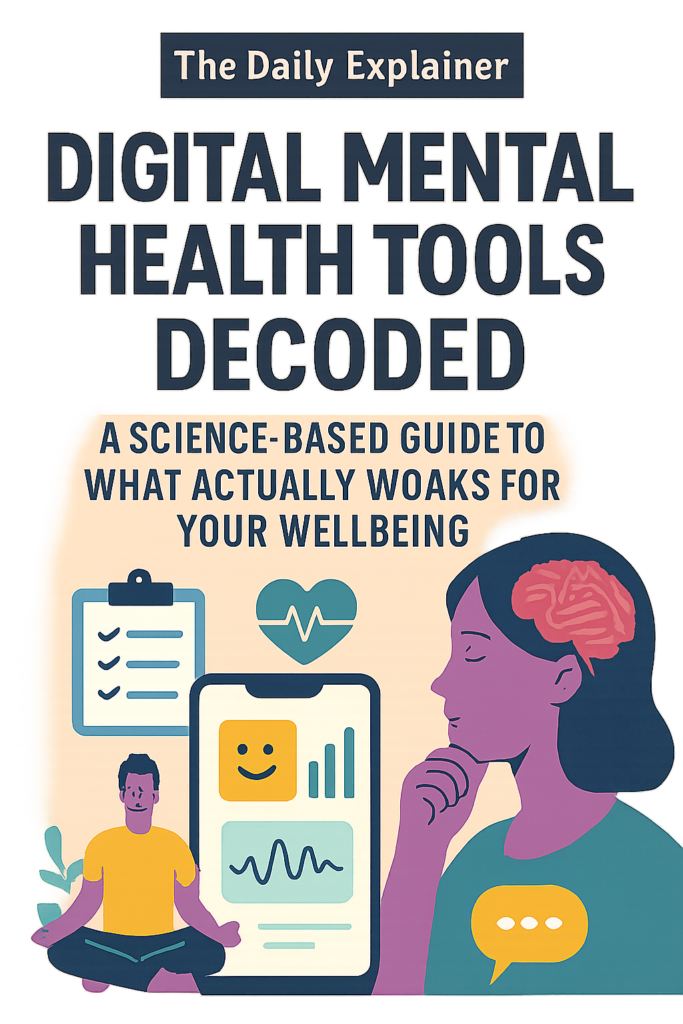
Finding the right tool isn’t about luck; it’s a process. Follow this methodical approach.
Step 1: Self-Assessment and Goal Setting
Before browsing stores, get clear on your needs. Are you looking for:
- Management of a specific condition (e.g., panic attacks, depression, PTSD)?
- General wellness and stress reduction?
- A skill-building tool (e.g., learning mindfulness, challenging cognitive distortions)?
- Crisis support or connection to a human therapist?
Journal for a few days to identify patterns. This clarity will immediately narrow your search.
Step 2: The “Evidence & Ethics” Filter
This is the most critical step to avoid predatory or useless apps. Investigate:
- Clinical Evidence: Does the developer’s website cite peer-reviewed studies? Look for published research in reputable journals (not just press releases). A 2025 benchmark from the American Psychological Association’s DTx Task Force suggests that for condition-specific apps, at least one randomized controlled trial (RCT) should be the baseline for consideration.
- Developer Credentials: Was the app developed by or in partnership with accredited universities, hospitals, or licensed clinicians? Avoid apps built solely by tech companies without clinical oversight.
- Privacy & Data Security: Read the privacy policy. Where is your sensitive data (mood logs, journal entries) stored? Is it encrypted? Is it sold or shared with third parties for advertising? A good app will have a transparent, readable policy that prioritizes user confidentiality.
Step 3: Trial and Engagement Evaluation
Most quality apps offer a free trial or basic tier.
- User Experience (UX): Is the interface intuitive and calming, or cluttered and stressful?
- Personalization: Does the app adapt to your inputs, or is it a one-size-fits-all program?
- Scientific Foundation: Is the core content based on established therapies like CBT, Acceptance and Commitment Therapy (ACT), or Dialectical Behavior Therapy (DBT)?
- The “Stickiness” Factor: Do you feel motivated to open it daily? Does it use gentle reminders, not guilt-tripping notifications?
Step 4: Integration and Progress Tracking
- Human Integration: Does the app allow you to easily share reports or progress with a therapist or doctor? The best tools are adjuncts to care, not replacements for human connection when needed.
- Insights, Not Just Data: Does it transform your logged moods and activities into meaningful charts and insights, helping you see triggers and progress over time?
Step 5: Re-assessment and Pivoting
Commit to a 4-6 week trial. If it’s not helping or you’re not using it, don’t view it as a personal failure. The tool may simply be a poor fit. Return to Step 1.
Why It’s Important: The Pros and Cons
The Potential Benefits (The Pros):
- Accessibility & Scale: Breaks down barriers of geography, cost, and stigma. Available 24/7 for moments of acute need.
- Anonymity and Reduced Stigma: Lowers the threshold for seeking help, especially for sensitive issues.
- Consistency and Reinforcement: Provides practice and reminders between therapy sessions, reinforcing skills.
- Data-Driven Insights: Offers objective tracking of moods, sleep, and activity, revealing patterns invisible to the naked eye.
- Cost-Effectiveness: Often cheaper than traditional therapy, and increasingly covered by insurance.
The Significant Challenges (The Cons):
- The Evidence Gap: The majority of apps still lack rigorous scientific validation.
- Privacy Risks: Sensitive mental health data can be vulnerable to breaches or commercial exploitation.
- Digital Divide: Relies on smartphone access, digital literacy, and stable internet, potentially excluding vulnerable populations.
- Over-reliance and Misuse: Not a panacea. Severe conditions require human professional intervention. Apps can sometimes lead to self-diagnosis or delay in seeking necessary help.
- High Attrition Rates: Many users download an app and stop using it within two weeks, limiting effectiveness.
Sustainability in the Future
The future of digital mental health lies in integration and personalization, not standalone apps. We are moving towards:
- “Blended Care” Models: Seamless ecosystems where your therapist can assign app-based homework, review your progress data, and adjust treatment in real-time. Platforms like SilverCloud (now used by the UK’s NHS) are pioneers here.
- AI-Powered Personalization: Moving beyond static content libraries to adaptive programs that use machine learning to tailor exercises, predictions, and recommendations to your unique response patterns. For example, an app might learn that you’re most vulnerable to anxious thoughts on Sunday evenings and proactively serve you a grounding exercise.
- Wearable Integration: Apps that pull data from your smartwatch (heart rate variability, sleep stages, activity) to provide a holistic picture of your physiological stress and recovery, offering interventions at the optimal biological moment.
- Regulatory Clarity and Reimbursement: As more DTx products achieve FDA clearance and established CPT (billing) codes, insurance reimbursement will become standard, ensuring sustainable business models for evidence-based tools and broader access for patients.
Common Misconceptions
- Misconception 1: “All mental health apps are basically the same.”
- Reality: The spectrum is vast. Comparing a prescription DTx for PTSD to a simple ambient sound app is like comparing surgery to a band-aid. Understanding the category and intent is crucial.
- Misconception 2: “If it’s in the app store’s ‘Health & Fitness’ top charts, it must be good.”
- Reality: App store rankings are driven by marketing budgets and downloads, not clinical efficacy. Many highly effective tools have smaller, more targeted user bases.
- Misconception 3: “Digital tools will replace therapists.”
- Reality: The consensus among experts is that technology is best as an augmentation, not a replacement. It can extend the therapist’s reach, provide scalable psychoeducation, and offer crisis tools, but the therapeutic alliance—the human connection—remains irreplaceable for deep, transformative work.
- Misconception 4: “Free apps are just as good as paid ones.”
- Reality: “If you’re not paying for the product, you are the product.” Free apps often monetize through ads or data sharing, which can be detrimental to the therapeutic environment and privacy. Paid subscriptions often fund ongoing development, clinical research, and robust security.
Recent Developments (2024-2025)
- FDA Clearances: 2024 saw a record number of FDA 510(k) clearances for mental health DTx, including novel apps for treating specific phobias using graduated exposure therapy and for managing comorbid depression and insomnia.
- Employer Mandates: A 2025 survey by the National Business Group on Health found that 73% of large employers now include at least one prescribed or recommended DTx in their employee benefits package, up from 42% in 2022.
- Generative AI Integration: Tools like Woebot Health are integrating large language models (LLMs) to power more natural, responsive conversational interfaces, while implementing strict safety “guardrails” to prevent harmful advice. The ethical framework for this is a major topic at conferences like the American Psychiatric Association’s annual meeting.
- Global Standards: The World Health Organization (WHO) is developing a Global Digital Health Certification Framework, aiming to create international standards for quality and safety in digital mental health products.
Success Stories & Real-Life Examples
Success Story: “MoodKit” in a Primary Care Setting
A pilot program in a Midwestern US primary care network integrated the CBT-based app MoodKit as a “first-step” intervention for patients presenting with mild-to-moderate depression symptoms. Patients were given a 3-month prescription and a brief 15-minute tutorial by a nurse. After 6 months, 41% of participants showed clinically significant improvement on the PHQ-9 depression scale without requiring immediate referral to a psychiatrist or psychologist. The program improved access and reduced wait times for specialist care. (Based on a 2024 case study published in JMIR Formative Research).
Real-Life Example: Using “Headspace” for Pre-Performance Anxiety
Sarah, a graduate student, experienced debilitating anxiety before academic presentations. Traditional therapy was cost-prohibitive. She subscribed to Headspace and specifically used its “Performance Anxiety” and “Managing Anxiety” single-topic courses. By practicing the guided mindfulness and reframing exercises daily for a month, and using the quick “SOS” sessions before presentations, she developed tangible skills to manage her physiological arousal. “It didn’t make the anxiety disappear,” she reported, “but it gave me tools to stop it from spiraling. I felt in control for the first time.” This is a prime example of an app being used effectively for a specific, situational challenge.
Comparative Analysis: Two Major Pathways
| Feature | Path A: Pure Self-Help App (e.g., Sanvello, CBT Thought Diary) | Path B: Blended Care Platform (e.g., Talkspace, BetterHelp) |
|---|---|---|
| Core Offering | Standalone app with therapeutic content, tools, and tracking. | Primary access to a licensed therapist via messaging/live video, plus supplemental library of worksheets and content. |
| Human Element | None, or optional peer support communities. | Central to the offering. Continuous, asynchronous text-based access to your assigned therapist. |
| Best For | Individuals seeking skill-building, symptom tracking, and low-cost supplemental support. May already be in therapy. | Individuals seeking the direct guidance and relationship of a therapist, with the convenience of a digital platform. |
| Cost | Typically $8-$15/month. | Typically $65-$100/week. |
| Evidence Base | Varies; some have strong RCTs for specific conditions. | Evidence supports the efficacy of text-based and video therapy delivered via these platforms. |
Conclusion and Key Takeaways
Navigating the world of digital mental health tools requires a shift from being a passive consumer to an informed evaluator. The promise is real—technology can democratize access, provide instant support, and empower us with unprecedented insights into our own minds. However, this promise is only fulfilled when we choose tools grounded in science, ethics, and a clear understanding of their role.
The most effective mental health future is not purely digital or purely analog; it’s integrated. Imagine a healthcare system where your primary care doctor can prescribe an evidence-based app as easily as they prescribe medication, where your therapist can view your symptom trends between sessions, and where you have a personalized toolkit on your phone for managing life’s inevitable stressors.
Start your journey not with a download, but with reflection. Define your need, apply the “Evidence & Ethics” filter, and commit to a trial. Be prepared to pivot. And remember, these tools are there to support your wellbeing—if an app causes more stress or guilt, it’s not the right tool for you.
Key Takeaways Box
- Don’t Trust the Hype: App store rankings ≠ effectiveness. Prioritize apps with published, peer-reviewed research.
- Privacy is Paramount: Your mental health data is sensitive. Read the privacy policy and choose apps that are transparent and prioritize encryption.
- Define Your Goal: Are you seeking therapy, skill-building, or crisis management? Your goal dictates the type of tool you need.
- Integration is Key: The most powerful use of apps is as an adjunct to professional care, not a replacement for it when needed.
- You Are the Expert: You are the best judge of what feels helpful. Give a tool a fair trial, but don’t hesitate to abandon it if it doesn’t serve you.
For more explainers on complex topics transforming our world, from health to global affairs and politics, visit our main Explained section.
FAQs (Frequently Asked Questions)
1. What is the single most important thing to look for in a mental health app?
Look for transparency about clinical evidence. The developer should clearly state if their product has been studied, link to or describe that research, and disclose the credentials of the clinical team involved.
2. Are chatbots like Woebot or Wysa effective for treating depression?
They can be effective for teaching CBT-based skills and providing supportive engagement, particularly for mild to moderate symptoms. They are considered “guided self-help.” However, they are not a substitute for human diagnosis or treatment of severe, complex, or suicidal depression.
3. Is my data in a mental health app protected by HIPAA?
Only if the app provider is considered a “covered entity” (like a hospital or clinic) or a “business associate” under HIPAA rules. Many consumer-facing apps are not. Look for an explicit statement about HIPAA compliance in the privacy policy if this is a concern.
4. Can I get a mental health app prescribed by my doctor and covered by insurance?
Yes, this is a rapidly growing area. Products like Pear Therapeutics’ reSET (for substance use disorder) and Big Health’s Sleepio (for insomnia) are FDA-cleared and can be prescribed. Coverage varies by insurer, but Medicare and many commercial plans have started creating reimbursement pathways.
5. What’s the difference between Calm and a prescription digital therapeutic for sleep?
Calm is a general wellness app offering sleep stories, meditations, and music to promote relaxation. A prescription DTx for insomnia (like Sleepio or Somryst) delivers a structured, multi-week cognitive behavioral therapy for insomnia (CBT-I) program, which is the first-line treatment for chronic insomnia, and its efficacy is validated in clinical trials.
6. How do I know if I need an app or a live therapist?
As a general rule: if your symptoms are mild to moderate, situational, and you’re functioning reasonably well, an evidence-based app is a great starting point. If symptoms are severe (e.g., unable to work/socialize, suicidal thoughts), persistent (lasting months), or complex, start with a licensed professional. You can always use an app alongside therapy.
7. What are some red flags in a mental health app?
Promises a “cure,” lacks a privacy policy, asks for excessive permissions, has no information about the developers or clinical team, or uses fear-based or shaming language to encourage use.
8. Are there any completely free, high-quality mental health apps?
Truly free and high-quality is rare. However, some non-profits and academic institutions offer excellent free resources, though they may be less polished. Examples include the MoodGYM (an early web-based CBT program from ANU) or tools from the VA like PTSD Coach. Some freemium apps (like Insight Timer for meditation) have robust free content libraries.
9. How long should I try an app before deciding if it works?
Commit to daily use for at least 4-6 weeks. Behavioral change and neuroplasticity take time. Consistent practice is more important than long, sporadic sessions.
10. Can these apps help with conditions like ADHD or Bipolar Disorder?
Yes, but with caution. Specialized apps exist for symptom tracking (crucial for bipolar disorder) or focus/follow-through (for ADHD). However, these conditions typically require medication management and specialist care. Apps should be used under the guidance of your treating clinician as part of a comprehensive plan.
11. What about apps for children and adolescents?
This is a sensitive area. Look for apps specifically designed and researched for particular age groups, with strong parental controls and oversight. Examples include Mightier (emotional regulation through biofeedback games) and Kazdin Method Parenting. Always involve the child’s pediatrician or therapist.
12. How do mindfulness apps like Headspace actually “work” scientifically?
Regular mindfulness practice has been shown in neuroimaging studies to strengthen the prefrontal cortex (involved in regulation) and dampen activity in the amygdala (the fear center). It cultivates a non-judgmental awareness of thoughts and feelings, creating a mental “space” between a trigger and your reaction.
13. Is there a risk of becoming addicted to or overly dependent on a mental health app?
While less common than with social media, it’s possible to develop compulsive checking behaviors. The goal is to internalize skills, not perpetually rely on the app. Use it as a training tool, not a constant crutch. If you feel anxious without it, that’s a sign to discuss with a professional.
14. How can I share data from my app with my therapist?
The best apps have a “Share Report” or “Clinician Dashboard” feature that generates a PDF summary of your progress, logs, and insights. You can email this before a session or bring it up on your phone during the session.
15. Are text-based therapy platforms (Talkspace, BetterHelp) as good as in-person therapy?
Research shows they can be equally effective for many common conditions like depression and anxiety. The key factor for success is the quality of the therapeutic alliance, regardless of medium. Some people prefer the anonymity and convenience of text; others need the nuance of in-person presence.
16. What are “peer support” apps and are they safe?
Apps like 7 Cups connect users with trained volunteer listeners or peer support communities. They can provide empathy and connection, which is powerful. However, they are not professional therapy. Safety depends on community moderation. They are best for feeling heard and less alone, not for clinical treatment.
17. Can wearables (Apple Watch, Fitbit) really detect anxiety or depression?
They can detect physiological correlates like elevated resting heart rate, reduced heart rate variability, and disturbed sleep patterns, which often accompany these states. They are not diagnostic tools, but can provide objective data to start a conversation with your doctor. Newer algorithms are in development to predict mood states from this data.
18. What is “CBT-I” and why is it so commonly digitized?
Cognitive Behavioral Therapy for Insomnia is a structured, skills-based program that is highly protocol-driven—making it ideal for digitization. It involves sleep restriction, stimulus control, and cognitive restructuring, and has a stronger evidence base than sleep medication for long-term results.
19. How is AI changing these apps?
AI is enabling more personalized content delivery, predictive analytics (e.g., “Our data suggests you might feel low tomorrow”), and more natural conversational interfaces in coaching chatbots. The ethical use of AI is a top priority in the field.
20. Where can I find unbiased reviews of mental health apps?
Look to academic and non-profit sources: The American Psychiatric Association’s App Evaluation Model, One Mind PsyberGuide, and ORCHA (UK-based assessment body) provide structured, evidence-based rating.
21. I’m an employer looking to offer a digital mental health benefit. What should I look for?
Prioritize platforms with strong evidence for the conditions most prevalent in your workforce (often anxiety, depression, burnout), robust data security (SOC 2 Type II certification), seamless integration with your EAP, and high clinical standards for any included live therapy.
22. What’s the future hold? Virtual Reality (VR) for mental health?
Absolutely. VR is showing immense promise for exposure therapy (e.g., for phobias, PTSD), social skills training (e.g., for autism), and mindfulness/relaxation by creating deeply immersive, calming environments. It’s a major area of research and development.
23. Where can I learn more about the business and innovation side of this field?
Great resources include the Digital Therapeutics Alliance website, the journal JMIR Mental Health, and industry newsletters like Digital Health Buzz. For broader perspectives on innovation, you might explore resources from our partners at the SheraKat Network’s blog or WorldClassBlogs.
About the Author
Jane Smith is a health and technology writer with a decade of experience demystifying complex scientific topics for public audiences. Holding a Master’s in Public Health, she has worked with clinicians, researchers, and tech developers to bridge the gap between innovation and everyday understanding. Her writing is driven by a personal belief that equitable access to effective mental health tools is one of the most crucial challenges—and opportunities—of our time. You can find more of her work in our blog section or connect with her via our contact-us page.
Free Resources
- American Psychological Association’s App Evaluation Tool: A worksheet to systematically evaluate any mental health app.
- National Institute of Mental Health (NIMH) Digital Shareables: Fact sheets and graphics on mental health conditions and treatments.
- Mindfulness-Based Stress Reduction (MBSR) Free Resources: University of San Diego Center for Mindfulness offers free guided meditations and materials.
- The Trevor Project: Crisis intervention and suicide prevention services for LGBTQ youth, including a 24/7 chat.
- Crisis Text Line: Free, 24/7 support by texting HOME to 741741.
- For more comprehensive guides on building a lifestyle that supports mental health, including starting an online business for better work-life balance, see this excellent, complete guide for 2026.
Discussion
The digital mental health landscape is evolving daily. What has been your experience? Have you found an app that was transformative, or one that was a total disappointment? What features do you wish developers would focus on more? Let’s continue the conversation. For lively discussions on other impactful topics, check out our Breaking News section or the community at WorldClassBlogs Nonprofit Hub.
About The Author