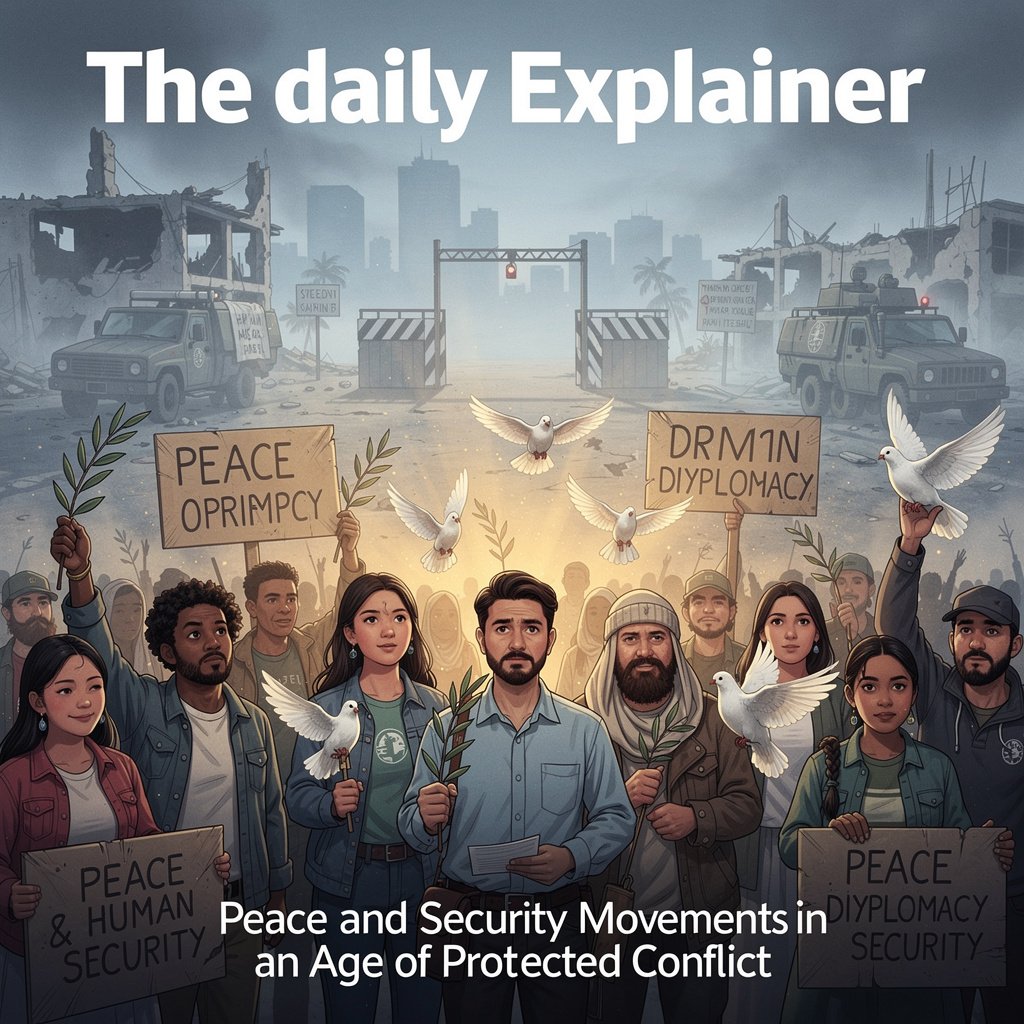
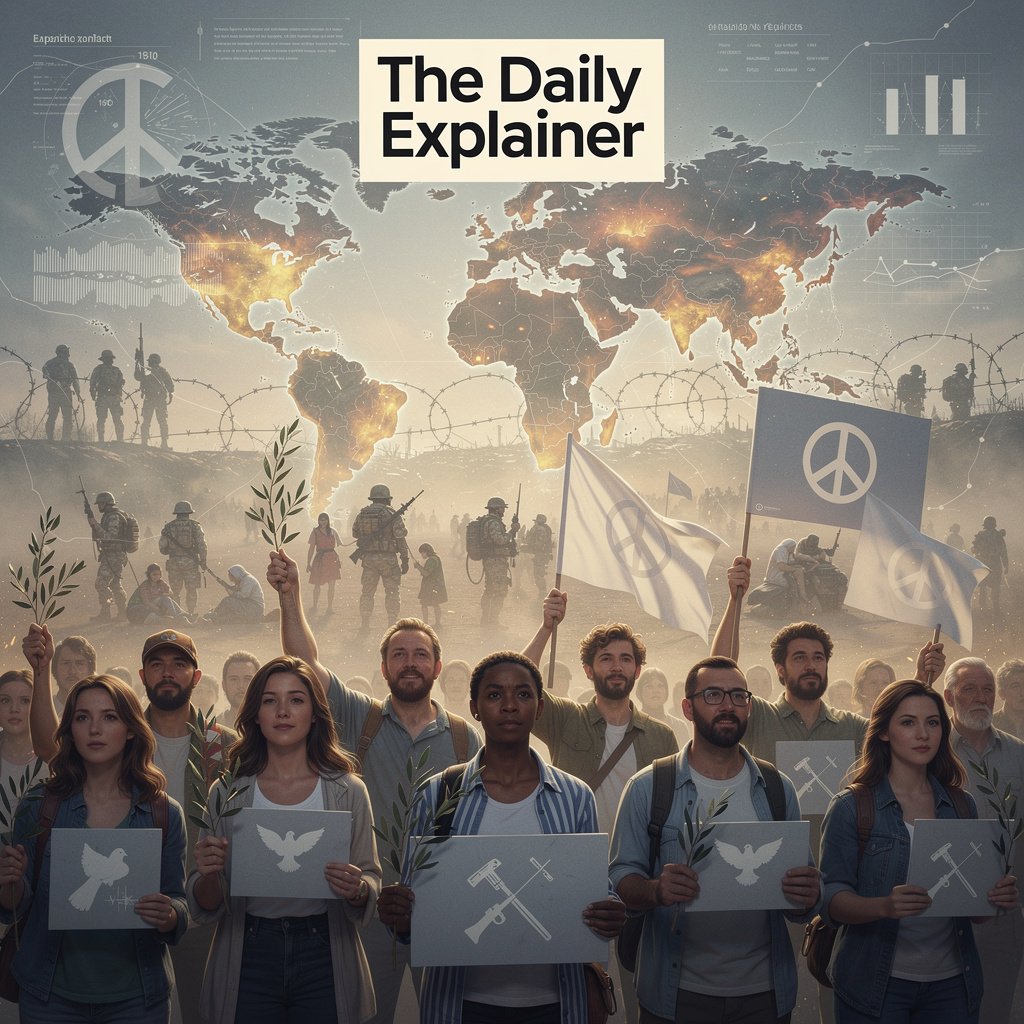
Contemporary peace movements operate in conflicts that average over 20 years duration, requiring long-term strategies and resilience
Introduction: Why Peace Movements Matter in an Era of Endless War
In my two decades of research and fieldwork in conflict zones from Colombia to Kashmir, from Ukraine to the Democratic Republic of Congo, I’ve witnessed a disturbing paradox: while the nature of warfare has transformed dramatically, our political and institutional frameworks for peacemaking remain trapped in 20th-century paradigms. Peace and security movements today matter more than ever because they are pioneering the necessary adaptations to address what the Uppsala Conflict Data Program identifies as a troubling trend: the average armed conflict now lasts more than 20 years, creating generations who know nothing but war.
What most observers miss is that today’s peace movements are radically different from their predecessors. Gone are the simplistic anti-war demonstrations of the Vietnam era; today’s movements are sophisticated ecosystems of resistance, resilience, and reimagining that operate within, alongside, and against protracted conflicts. The key insight I’ve gathered from conversations with peacebuilders in South Sudan, Syria, Myanmar, and beyond is that the most effective movements today understand what scholar Mary Kaldor terms “new wars“—conflicts where political, economic, and social violence intertwine in complex systems that defy traditional peacemaking approaches.
The biggest misconception I encounter? That peace movements are naive or passive. In reality, contemporary peace movements in protracted conflicts represent some of the most courageous, strategic, and innovative forms of civic action in the world today. From Syrian White Helmets rescuing people from rubble to Colombian campesinos protecting their territories from multiple armed groups, from Ukrainian civilians documenting war crimes to Yemeni women negotiating local ceasefires—these movements demonstrate that even in the darkest conflicts, human agency persists and organizes.
Historical Context: The Evolution from Anti-War Protest to Conflict Transformation
To understand contemporary peace movements, we must trace how they’ve evolved alongside changing warfare:
The Traditional Peace Movement (Pre-1990s)
Characterized by:
- Mass demonstrations against specific wars (Vietnam, nuclear weapons)
- Moral and religious frameworks emphasizing pacifism and conscientious objection
- State-centric focus on influencing government policy through protest and lobbying
- Binary peace/war thinking with clear beginnings and endings envisioned
- International solidarity but limited local ownership in conflict zones
I’ve studied archives of the massive 1980s nuclear freeze movements, and what strikes me is how their success in consciousness-raising coexisted with limitations in addressing the complex conflicts that would emerge post-Cold War. Their frameworks assumed states as primary actors and war as exceptional rather than chronic condition.
The “Liberal Peace” Era and Its Discontents (1990s-2000s)
The post-Cold War period saw:
- UN peacekeeping expansion with ambitious multidimensional mandates
- The rise of conflict resolution as profession with standardized mediation approaches
- NGO-ization of peace work with professionalized international organizations
- The “liberal peace” model assuming democracy, free markets, and human rights would naturally follow ceasefires
- Growing critique from local peacebuilders about externally-driven processes
During this period, I worked with peace organizations in Bosnia and Rwanda witnessing firsthand how well-intentioned international interventions often sidelined local peace initiatives that didn’t fit standardized templates. The 1995 Dayton Agreement for Bosnia exemplified both the possibility of ending horrific violence and the limitations of externally-imposed peace that froze rather than transformed conflict.
The Age of Protracted Conflict and Local Resistance (2010s-Present)
Contemporary realities include:
- Longer, more complex conflicts with multiple overlapping violence types
- Local peace initiatives often operating parallel to or in tension with formal processes
- Digital tools enabling new forms of documentation, solidarity, and mobilization
- Feminist peace leadership challenging masculinist security paradigms
- Environmental dimensions of conflict and peace increasingly recognized
- Backlash against international peacebuilding as neocolonial or ineffective
Today’s movements have emerged from the ashes of both failed wars and failed peace processes. They recognize what scholar Roger Mac Ginty calls “everyday peace“—the myriad ways ordinary people navigate conflict and build resilience outside formal frameworks. In Syria, after international diplomacy repeatedly failed, local ceasefires and humanitarian arrangements emerged not from Geneva but from necessity on the ground.
Key Concepts: The Language of Contemporary Peace Praxis
Protracted Conflict: Armed conflicts lasting more than 20 years with no clear military or political resolution in sight. Characterized by cyclical violence, fragmented armed actors, internationalized dimensions, and erosion of distinction between combatants and civilians.
Conflict Transformation vs. Conflict Resolution: While resolution seeks to end specific disputes, transformation addresses the underlying relationships, systems, and structures that produce violence. Emphasizes changing how conflict is expressed rather than merely stopping current violence.
Positive Peace vs. Negative Peace: Negative peace is the absence of direct violence; positive peace addresses structural and cultural violence that may persist even without fighting. Coined by peace scholar Johan Galtung, this distinction guides movements seeking transformative rather than superficial peace.
Everyday Peace: The practices ordinary people develop to navigate conflict and build relationships across conflict lines in daily life. Includes coded language, shared economic arrangements, and subtle signals that enable coexistence amid violence.
Feminist Peace: An approach challenging traditional security paradigms that privilege militarized, statist, and masculine conceptions of security. Emphasizes human security, care work, and the particular impacts of conflict on women and gender minorities.
Environmental Peacebuilding: Recognizing connections between natural resources, environmental change, and conflict while harnessing environmental cooperation to build peace. Addresses how climate change exacerbates conflicts and how shared ecological concerns can bridge divides.
Local Ownership: The principle that peace processes should be led and shaped by those most affected by conflict rather than external actors. In practice, this is often contested between international interveners and local peacebuilders.
Hybrid Peace: Peace processes that combine international and local approaches, formal and informal mechanisms, modern and traditional practices. Recognizes that sustainable peace often emerges from messy combinations rather than pure models.
Civilian Protection: Direct actions by civilians to protect themselves and others from violence, distinct from military protection. Includes early warning systems, protective accompaniment, and community-based protection mechanisms.
Transitional Justice: Approaches to addressing legacies of mass atrocity including criminal prosecutions, truth commissions, reparations, and institutional reform. Contemporary movements increasingly demand transformative rather than transitional justice.
Conflict Sensitivity: The awareness of how interventions (humanitarian, developmental, peacebuilding) may inadvertently exacerbate conflict dynamics. Requires continuous analysis and adaptation.
Peacetime Militarism: The persistence of militarized thinking, budgets, and policies even in absence of active conflict. Many peace movements address how societies remain organized for war even during nominal peace.
In my work training peacebuilders across different conflict contexts, I’ve found that shared understanding of these concepts enables strategic clarity, but their application varies dramatically. What “local ownership” means in Colombia’s complex peace process differs fundamentally from what it means in Afghanistan or Myanmar.
How Contemporary Peace Movements Work: Multi-Level Strategies in Protracted Conflicts
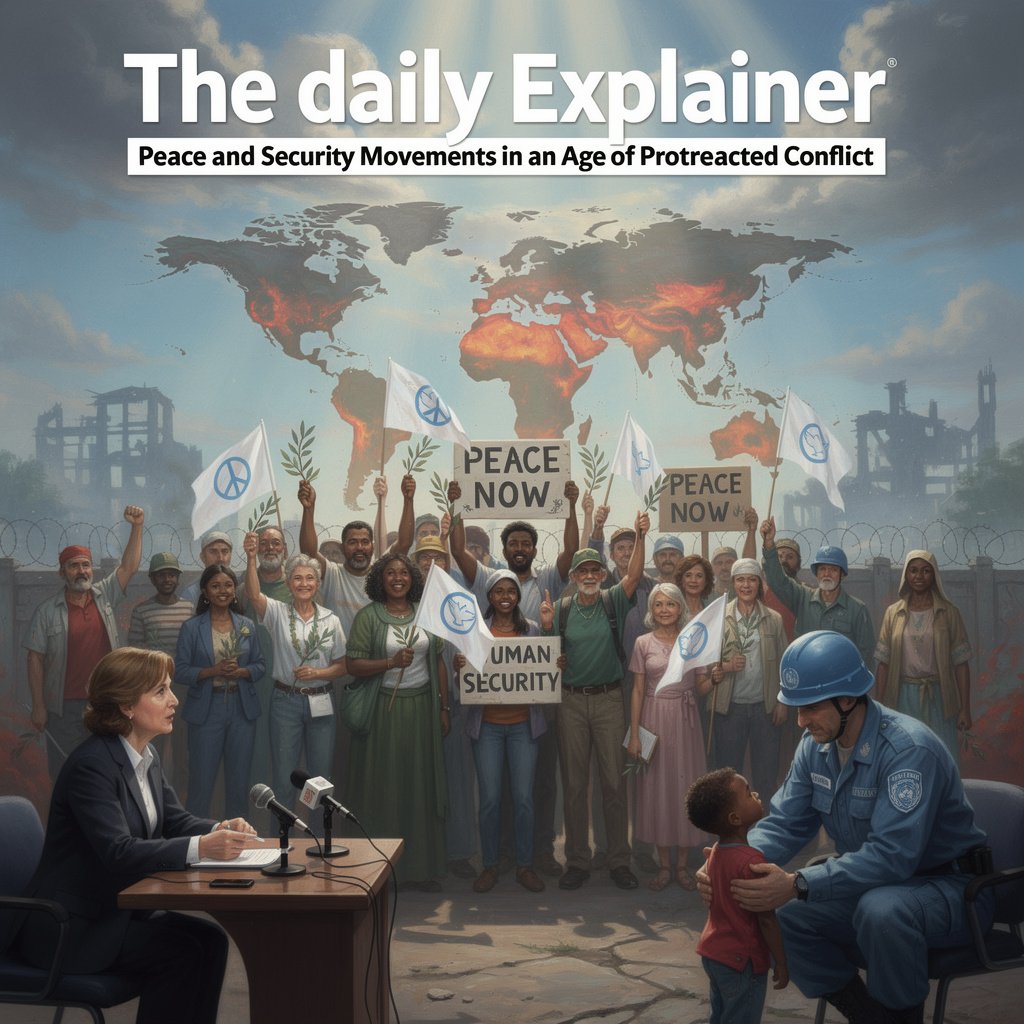
Today’s peace movements employ sophisticated strategies across what I conceptualize as five interconnected domains:
1. Civilian Protection and Direct Action
In active conflict zones, movements develop innovative protection mechanisms:
- Early warning systems: Community networks using everything from cell phones to traditional communication methods to alert about impending attacks
- Protective presence: International or local accompaniers physically placing themselves with threatened communities (Peace Brigades International model)
- Humanitarian corridors: Civil society-negotiated passages for aid and evacuation, often when official channels fail
- Ceasefire monitoring: Community-based verification of truces, increasingly using digital tools for documentation
- Nonviolent interposition: Physically placing unarmed civilians between combatants
I’ve trained Syrian activists in digital documentation techniques that allowed them to verify ceasefire violations in real-time, creating accountability when international monitors were absent or ineffective. Their courage in documenting atrocities while bombs fell represented a new form of civilian protection through evidence collection.
2. Dialogue and Relationship Building
Amid polarization, movements create spaces for encounter:
- Track II and III diplomacy: Unofficial dialogues that complement official negotiations
- Women’s peace tables: Spaces where women across conflict lines develop shared agendas, as seen in Colombia and the Philippines
- Youth peace networks: Connecting young people across divides before identities fully harden
- Economic peacebuilding: Joint business ventures, trade relationships, or resource management that create interdependence
- Arts and sports diplomacy: Cultural exchanges that humanize the “other.”
3. Advocacy and Policy Influence
Working to change systems that perpetuate conflict:
- Arms control campaigns: Targeting weapons flows that fuel protracted conflicts
- Corporate accountability: Challenging businesses that profit from or exacerbate conflicts
- Transitional justice advocacy: Demanding comprehensive approaches to addressing past violence
- Security sector reform: Advocating for demilitarized approaches to security
- Climate-conflict policies: Addressing how environmental changes exacerbate conflicts
4. Memory and Narrative Work
Shaping how conflicts are remembered and understood:
- Documentation projects: Preserving testimonies and evidence for historical memory
- Alternative commemorations: Creating spaces to remember beyond nationalist narratives
- Truth-telling initiatives: Community-based processes when official truth commissions are absent or inadequate
- Educational reform: Developing conflict-sensitive curricula for divided societies
- Media literacy: Countering hate speech and propaganda that fuel conflicts
5. Resilience and Alternative Institution Building
Creating functional systems amid state collapse or dysfunction:
- Community governance: Local administration where state authority has withdrawn
- Parallel service delivery: Education, healthcare, and basic services are organized by communities
- Economic alternatives: Cooperative economies are less dependent on war economies
- Dispute resolution mechanisms: Traditional or hybrid justice systems when courts are inaccessible or biased
- Psychosocial support: Addressing trauma in culturally appropriate ways
The most effective movements I’ve studied strategically integrate across these domains. In Colombia, the Peace Community of San José de Apartadó has, for 25 years, combined nonviolent resistance to armed groups (protection), maintenance of relationships with all sides while refusing to take sides (dialogue), international advocacy against impunity (advocacy), documentation of atrocities (memory), and building a self-sufficient community economy (resilience). Their integrated approach has allowed survival and dignity amid devastating violence when neither the state nor the FARC nor the paramilitaries could guarantee safety.
Why Peace Movements Matter in Protracted Conflicts: Beyond Naive Pacifism
These movements matter not only for reducing immediate violence but for reimagining security and politics in an age of endless war:
They Demonstrate Agency Amid Disempowerment
In conflicts where civilians are typically portrayed as passive victims, peace movements assert what scholar Jenny Pearce calls “the power of the powerless“—the capacity to act meaningfully even under extreme constraint. Syrian civil defense volunteers digging neighbors from rubble with bare hands, Colombian communities declaring themselves neutral territories, Afghan women secretly educating girls under Taliban restrictions—these actions transform victimhood into agency.
They Pioneer Practical Alternatives to Militarized Security
When states respond to conflicts primarily with military means (often exacerbating violence), peace movements develop what feminist scholar Cynthia Cockburn calls “a different kind of power“—protection through solidarity rather than weapons, security through relationship rather than domination. Their approaches offer models for human security that address root causes rather than symptoms.
They Maintain Social Fabric Across Conflict Lines
In divided societies where political and military leaders often benefit from polarization, peace movements maintain what sociologist Marc Howard Ross calls “cultural continuity“—the relationships, shared identities, and practical cooperation that persist beneath political divisions. This social capital becomes crucial when political solutions eventually become possible.
They Generate Knowledge From the Ground Up
Peace movements in protracted conflicts develop what anthropologist Carolyn Nordstrom terms “warzone ethnography“—an intimate understanding of conflict dynamics that often eludes external analysts. Their situated knowledge challenges simplistic narratives and informs more effective interventions.
They Keep Alternative Futures Imaginable
Amid the “temporality of endless war” that makes conflict seem permanent, peace movements enact what political theorist David Scott calls “counter-temporalities“—demonstrating through present action that different futures remain possible. Their very existence contradicts the fatalism that sustains protracted conflict.
They Address Intersectional Vulnerabilities
Women-led peace initiatives particularly demonstrate how different forms of violence interconnect—militarism with patriarchy, political violence with domestic violence, economic warfare with gender-based exploitation. Their intersectional analysis produces more comprehensive peace approaches.
They Build Transnational Solidarity Against Global Conflict Systems
Local peace movements increasingly connect across borders to address what scholar Mark Duffield calls the “global conflict system“—the transnational networks of arms flows, resource extraction, and political interests that fuel and profit from protracted conflicts. Their solidarity challenges the fragmentation that benefits war entrepreneurs.
In my assessment, what makes contemporary peace movements particularly significant is their demonstration of what political theorist James C. Scott might call “the arts of resistance” under conditions of extreme duress. They show that even when military victory is impossible and political solutions distant, meaningful human action persists—not as naive idealism but as sophisticated adaptation to impossible circumstances.
The Future of Peace Movements: Emerging Trends in an Age of Protracted Conflict
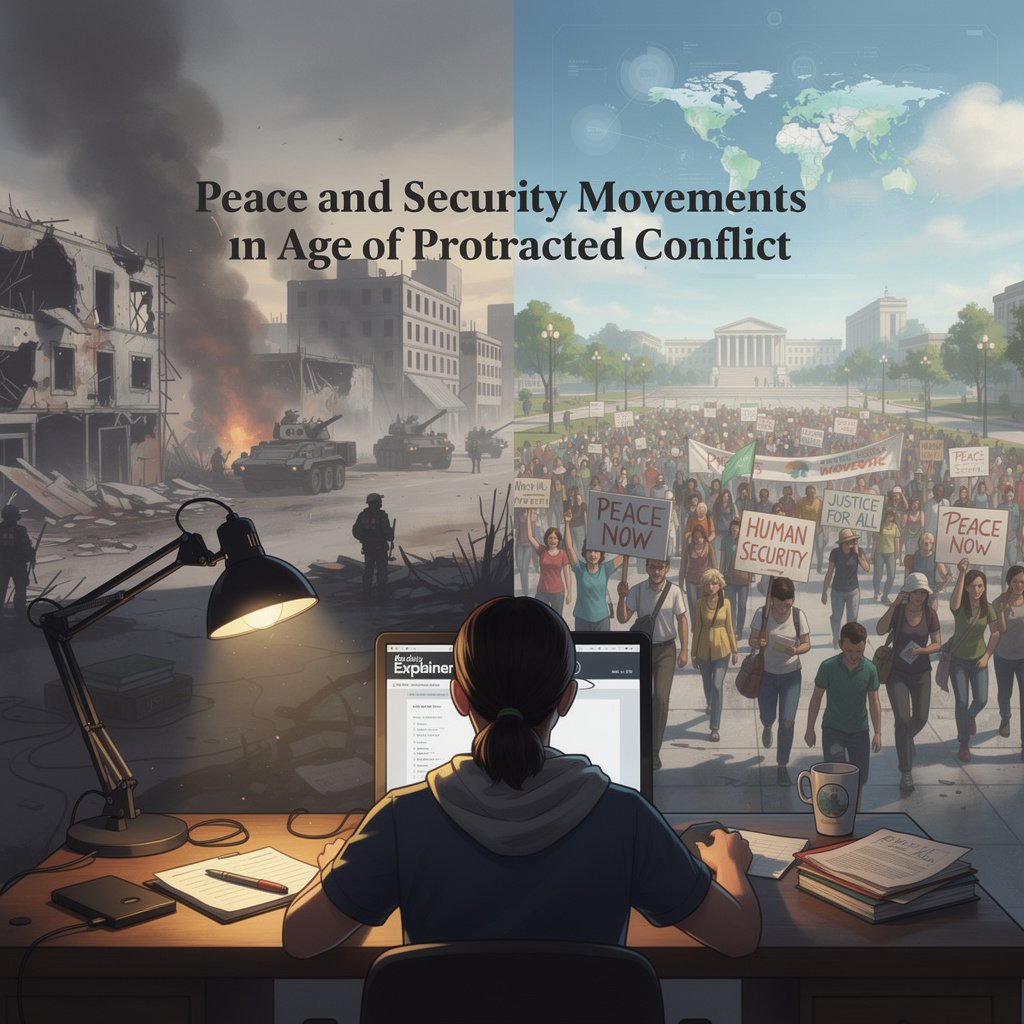
Looking ahead, several trends will likely shape peace movements:
Digital Technologies and New Vulnerabilities
- Digital documentation: Using smartphones, drones, and satellite imagery to document violations
- Online mobilization: Organizing across conflict lines in digital spaces
- Digital threats: Surveillance, hacking, and disinformation targeting peace activists
- Virtual reality for empathy: Immersive experiences to humanize across divides
Movements must develop digital security practices alongside traditional physical protection strategies.
Climate Change as Conflict Multiplier and Peace Opportunity
- Climate-conflict linkages: Addressing how environmental stress exacerbates tensions
- Environmental peacebuilding: Using shared ecological concerns as a bridge across divides
- Climate displacement: Protecting those displaced by climate-conflict interactions
- Green reconstruction: Ensuring post-conflict rebuilding is environmentally sustainable
Feminist Peace Leadership and Backlash
- Women’s leadership: Growing recognition of women’s roles in peace processes
- Gender-sensitive approaches: Addressing conflict’s particular impacts on women and LGBTQ+ people
- Backlash: Resistance to feminist peace agendas from patriarchal forces
- Care-centered security: Framing security around care work rather than military protection
Youth Engagement and Intergenerational Justice
- Youth mobilization: Young people demanding inclusion in peace processes affecting their futures
- Intergenerational trauma: Addressing how violence impacts across generations
- Youth-led innovation: New approaches from digital native generations
- Education for peace: Developing conflict-sensitive education for “conflict legacy” generations
Private Sector Engagement and Corporate Accountability
- Business for peace: Leveraging private sector influence for conflict resolution
- Conflict-sensitive investment: Preventing business activities from exacerbating conflicts
- Corporate accountability: Holding businesses responsible for fueling conflicts
- Alternative economies: Building economic systems less dependent on war economies
Localization Debates and Decolonizing Peace
- Local ownership: Tensions between international interveners and local peacebuilders
- Decolonizing approaches: Challenging Western assumptions in peacebuilding
- Hybrid models: Combining traditional and modern conflict resolution practices
- Resource distribution: Addressing funding imbalances between international and local actors
In my view, the central challenge for peace movements in the coming decades will be navigating what scholar Severine Autesserre calls the “frontlines of peace”—the tension between necessary international solidarity and problematic international intervention, between useful standardization and harmful homogenization, between urgent action and deep contextual understanding. This requires a sophisticated double consciousness that few other movements must maintain.
Common Misconceptions About Peace Movements in Protracted Conflicts
“They’re naive about the realities of violence”: Actually, most peace activists in protracted conflicts have experienced violence firsthand and developed sophisticated analyses of power. Their nonviolence is strategic, not naive—recognizing that violence often begets more violence in complex conflicts.
“They delay military solutions”: This assumes military solutions exist for complex political conflicts. In many protracted conflicts, military approaches have been tried repeatedly without producing sustainable peace. Peace movements offer alternatives when military options have exhausted themselves.
“They’re equally critical of all sides”: While principled in opposing violence, most peace movements make careful distinctions between different actors and forms of violence. Their criticism is nuanced, not equivalizing.
“They ignore security needs”: Actually, peace movements often address security more comprehensively than militarized approaches—emphasizing human security, community protection, and addressing root causes rather than just suppressing symptoms.
“They’re passive or weak”: Peace activism in conflict zones requires extraordinary courage—facing armed actors, documenting atrocities, maintaining neutrality under pressure. Many peace activists have been killed for their work.
“They’re externally-funded puppets”: While some peace NGOs have problematic funding relationships, many grassroots movements maintain independence and critique external interference. The “local ownership” principle specifically addresses this concern.
“They don’t understand the political dimensions”: Actually, most peace movements develop sophisticated political analyses that often exceed official peace processes in complexity. They understand that conflicts are political, not just technical problems.
“Women’s peace activism is soft or apolitical”: Women-led peace initiatives often address the political dimensions other approaches miss—connecting militarism with patriarchy, formal politics with household dynamics, combatant demobilization with community reintegration.
Addressing these misconceptions in my peace education work, I’ve found that personal testimonies from peace activists in conflict zones are most powerful. When people hear from a Colombian campesino who has buried neighbors killed by all armed actors yet still refuses to take up arms, or a Syrian volunteer who continues rescuing people despite losing family members, abstract debates about pacifism versus realism become concrete human choices.
Recent Developments: The Changing Peace Movement Landscape
The past decade has witnessed significant shifts:
Policy and Institutional Changes
- UN Security Council Resolution 1325 (2000) on Women, Peace and Security, with subsequent resolutions creating a framework for women’s participation, though implementation remains weak
- Growing recognition of local peacebuilding in international policy, though often tokenistic
- Climate-security linkages gaining attention in policy circles
- Peace process innovations: Colombia’s comprehensive approach, including transitional justice, Venezuela’s Norway-mediated negotiations, Ethiopia’s ceasefire implementation challenges
Movement Innovations
- Digital peacebuilding: Apps for early warning, online dialogues across conflict lines, virtual reality experiences to build empathy
- Environmental peacebuilding: Cooperation on shared resources (water, forests) amid conflict
- Arts-based approaches: Theater, music, and visual arts to transform narratives and build relationships
- Youth-led initiatives: Young people creating peace approaches distinct from older generations
- Faith-based peacebuilding: Religious communities leveraging moral authority for conflict transformation
Backlash and Challenges
- Shrinking civic space: Restrictions on peace organizations in many conflict-affected countries
- Violence against peace activists: Increasing targeting of those advocating dialogue or documenting violations
- Disinformation campaigns: Portraying peace activists as traitors or foreign agents
- Pandemic impacts: COVID-19 exacerbates conflicts while restricting peace work
Transnational Solidarity Strengthening
- South-South peace learning: Exchange between peace movements in different conflict regions
- Diaspora peacebuilding: Conflict-affected communities abroad supporting peace efforts back home
- International protective accompaniment: Physical presence of internationals to deter violence against local activists
- Global advocacy networks: Coordinated campaigns on arms treaties, corporate accountability, and conflict financing
These developments reveal movements simultaneously innovating and facing increasing restrictions. The most effective responses are those that combine deep local knowledge with strategic international solidarity.
Success Stories: Peace Movements That Made a Difference
Colombia’s Peace Community Movement
For over 25 years, communities in conflict zones have:
- Declared neutrality and refused cooperation with all armed actors
- Developed sophisticated protection strategies including international accompaniment
- Maintained agricultural production as economic alternative to war economies
- Documented thousands of human rights violations despite immense risk
- Inspired similar communities across Colombia and beyond
While suffering devastating losses, these communities have preserved life and dignity in some of Colombia’s most violent regions and influenced national peace processes.
Women of Liberia Mass Action for Peace
During Liberia’s civil war, women led by Leymah Gbowee:
- Organized cross-line protests demanding peace negotiations
- Used strategic nonviolence, including sex strikes and sit-ins at peace talks
- Mobilized Christian and Muslim women across religious divides
- Maintained pressure until the Comprehensive Peace Agreement was signed in 2003
- Transitioned to post-war advocacy for women’s political participation
Their movement demonstrated women’s power to disrupt entrenched conflict systems and demand inclusive peace processes.
The Bougainville Peace Process
Following a devastating civil war in Papua New Guinea:
- Women’s peace groups bridged combatant and community divides
- Traditional reconciliation ceremonies combined with modern mediation
- Community-based weapons disposal programs
- Referendum on independence was conducted peacefully in 2019
- Gradual transition focused on relationship restoration alongside political settlement
Bougainville’s peace process, while imperfect, shows how hybrid approaches combining modern and traditional practices can address complex conflicts.
Anti-Nuclear Movements and Treaty Progress
Global movements have:
- Achieved Treaty on the Prohibition of Nuclear Weapons (2017) despite opposition from nuclear states
- Pushed for nuclear-free zones in multiple regions
- Mobilized hibakusha (atomic bomb survivors) as moral witnesses
- Connected nuclear disarmament with humanitarian concerns
- Maintained pressure despite geopolitical setbacks
These movements demonstrate how sustained transnational advocacy can achieve legal frameworks even against powerful state opposition.
Real-Life Examples: Contemporary Peace Praxis in Protracted Conflicts
Syrian Civil Defense (White Helmets)
In one of this century’s most brutal conflicts:
- 3,000 volunteers risking their lives to rescue civilians from bombings
- Documented attacks on civilian infrastructure provide crucial evidence
- Trained in disaster response despite minimal resources
- Maintained neutrality while operating in opposition areas
- Faced targeted attacks and disinformation campaigns
The White Helmets represent one of the few functional institutions in Syria’s collapsed state, saving over 100,000 lives while demonstrating that humanity persists amid inhuman violence.
Community Protection in South Sudan
Amid recurrent civil war, communities have developed:
- Early warning networks using radios and mobile phones
- Cattle camp peace agreements between pastoralist groups
- Women’s peace huts as spaces for dialogue and protection
- Youth peace committees addressing recruitment into armed groups
- Traditional justice mechanisms, when formal courts are inaccessible
These community systems provide minimal security and conflict management where state institutions have repeatedly failed.
Yemeni Women’s Local Peace Initiatives
Despite internationalized war and humanitarian catastrophe:
- Women-led local ceasefires allowing humanitarian access
- Cross-line trade arrangements maintain economic lifelines
- Community mediation of countless local disputes
- Documentation of violations when international monitors are absent
- Advocacy for an inclusive peace process despite exclusion from official talks
Yemeni women’s peace work continues amid what the UN calls the world’s worst humanitarian crisis, demonstrating peacebuilding under impossible conditions.
Myanmar’s Civil Disobedience Movement
Following the 2021 military coup:
- Mass noncooperation paralyzes state functions
- Parallel governance structures providing basic services
- Ethnic alliance-building across historical divides
- International solidarity advocacy targeting business and military interests
- Cultural resistance through arts, music, and symbols
Despite brutal repression, the movement has sustained resistance for years while articulating a federal democratic vision for Myanmar’s future.
Ukrainian Civil Society in War
Since Russia’s 2014 invasion and 2022 escalation:
- Humanitarian coordination at an extraordinary scale
- Documentation of war crimes for eventual accountability
- Support for displaced populations and host communities
- Maintenance of cultural life amid destruction
- Advocacy for just peace that addresses root causes
Ukrainian civil society demonstrates how peace and human rights work continue even during active defense against aggression, maintaining a vision for post-war justice and reconciliation.
These diverse examples reveal common patterns: extraordinary courage under extreme conditions, innovative adaptation to specific conflict dynamics, maintenance of humanity amid dehumanizing violence, and persistence in imagining alternatives to endless war. They also show the remarkable diversity of peace praxis across different conflict contexts.
Conclusion: Building Peace Amid Endless War
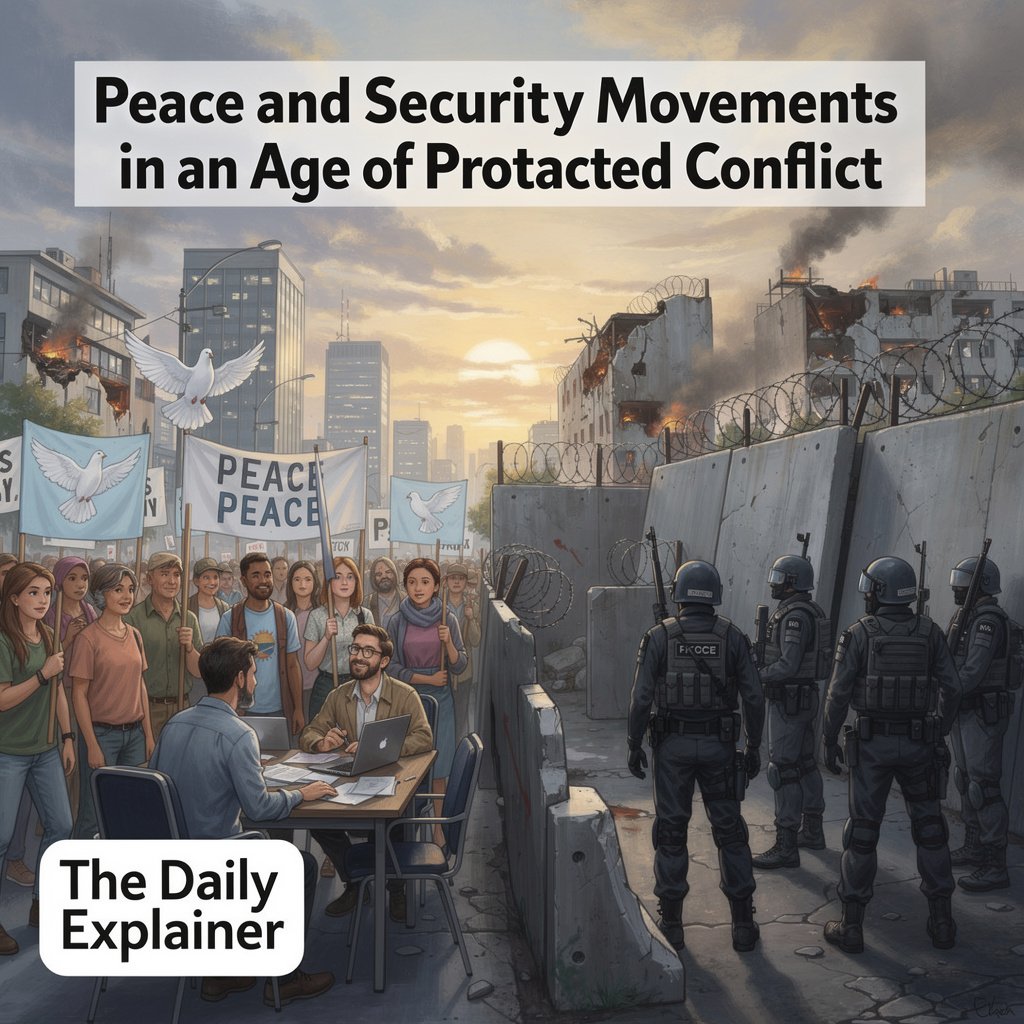
As I reflect on the peace movements I’ve learned from—from the Syrian volunteers digging through rubble with bare hands to the Colombian farmers planting crops on land mines, from the Liberian women facing down warlords to the Yemeni mothers negotiating local truces—what strikes me most is their radical commitment to what philosopher Emmanuel Levinas might call “the face of the other“: the ethical imperative to respond to human suffering despite overwhelming danger and seemingly impossible odds. In conflicts where political solutions appear distant and military approaches repeatedly fail, these movements enact peace as a present practice rather than a distant goal.
The future of peace in an age of protracted conflict likely hinges on several interconnected developments:
The Accountability Imperative: Whether movements can achieve meaningful accountability for atrocities in conflicts where impunity often prevails. This includes not only legal accountability but broader social reckoning with violence.
The Resource Justice Dimension: Addressing how conflicts are fueled by resource extraction and economic interests, and building peace economies that provide alternatives to war economies.
The Generational Transmission: In conflicts lasting decades, passing peace knowledge and commitment to new generations who have known nothing but war, while learning from their fresh perspectives.
The Digital Transformation: Harnessing technology for peace while protecting against digital surveillance, disinformation, and new forms of digital warfare that target peace activists.
The Climate-Conflict Nexus: Developing integrated approaches to conflicts exacerbated by climate change, and harnessing environmental cooperation for peacebuilding.
The Local-International Balance: Navigating the fraught relationship between necessary international solidarity and problematic international intervention, between useful external resources and harmful external agendas.
The Feminist Peace Expansion: Deepening and defending gender-transformative approaches to peace against patriarchal backlash.
The Trauma Integration: Addressing individual and collective trauma not as peripheral issue but as central to sustainable peace.
In my assessment, peace movements in protracted conflicts represent what political theorist James C. Scott might call “infrapolitics” under extreme conditions—the subtle, often invisible forms of resistance and alternative-building that persist beneath the surface of visible power struggles. They demonstrate that even when official politics is monopolized by violence, other forms of political community and action endure.
What gives me hope is not naive optimism but the demonstrated resilience, creativity, and moral courage of those building peace amid war. In the face of what often seems like endless cycles of violence, they continue to plant what poet Seamus Heaney called “the music of what happens“—the stubborn persistence of life, relationship, and care even in death’s shadow. Their work embodies what psychologist Viktor Frankl, reflecting on Nazi concentration camps, identified as the “last of the human freedoms“—the ability to choose one’s attitude in any given set of circumstances.
As climate change, geopolitical tensions, and economic inequalities intensify, the world faces more frequent and complex conflicts. The choices become starker: more militarized approaches that often exacerbate conflicts, or the difficult, patient work of conflict transformation pioneered by peace movements worldwide. Their success is measured not in dramatic victories but in lives saved today, relationships maintained across divides, and alternative futures kept imaginable against all odds.
In the end, peace movements in protracted conflicts are about what kind of world we believe is possible even amid devastation: one where human connection transcends political division, where security comes from solidarity rather than domination, where the future remains open despite a painful past. As the volunteer staring at rubble yet still reaching for a buried hand reminds us with each rescue: peace is not the absence of conflict but the presence of connection even in conflict’s midst.
Frequently Asked Questions (FAQs)
1. Aren’t peace movements unrealistic in the face of determined aggressors?
Peace movements in active conflicts are profoundly realistic—they respond to the actual conditions where military solutions have often failed repeatedly. Their approaches are based on sophisticated analysis of power dynamics, not naive idealism. Many peace activists have experienced violence firsthand and seek alternatives that actually work in their specific contexts.
2. How do peace movements address security needs without military means?
Through comprehensive approaches to human security: community early warning systems, protective accompaniment, creating relationships across conflict lines that deter violence, addressing root causes of conflict, and building alternative dispute resolution mechanisms. These often address security more sustainably than military approaches that may suppress violence temporarily but don’t transform underlying dynamics.
3. Don’t peace movements sometimes prolong conflicts by undermining military efforts?
Research shows that conflicts become protracted precisely when military approaches dominate to the exclusion of political solutions. Peace movements often create political space for solutions when military stalemates emerge. In many conflicts, all sides have tried military options without achieving their aims—peace movements offer alternative pathways.
4. How do peace movements maintain neutrality in asymmetric conflicts?
Principled neutrality doesn’t mean moral equivalence—it means refusing to take up arms for any side while often being highly critical of all violence. Many peace movements make careful distinctions between different forms and sources of violence while maintaining independence from armed actors. This allows them to operate across lines and maintain credibility with all sides.
5. What about “negative peace” that freezes injustices?
Most contemporary peace movements distinguish between negative peace (absence of direct violence) and positive peace (addressing structural and cultural violence). They seek transformative peace that addresses root causes, not just ceasefires that preserve unjust systems. This often puts them in tension with official peace processes focused primarily on stopping fighting.
6. How do peace movements address trauma and psychological dimensions?
Increasingly, through integrated psychosocial approaches: community healing rituals, trauma-informed dialogue processes, support for victims, and addressing intergenerational transmission of trauma. Many recognize that unaddressed trauma fuels cycles of revenge and that psychological recovery is essential for sustainable peace.
7. What about the economic dimensions of peace?
Contemporary peace movements increasingly address war economies—how conflicts are financed through resource extraction, illicit trade, and external support. They build peace economies through cooperative enterprises, alternative livelihoods to combatant recruitment, and addressing economic inequalities that fuel conflicts.
8. How do peace movements operate under authoritarian regimes or terrorist control?
Through careful adaptation: using coded language, building on traditional practices that may be tolerated, maintaining low profiles, leveraging international protective presence when possible, and sometimes operating in exile or diaspora. The strategies vary dramatically by context.
9. What is “everyday peace” and how does it differ from formal peace processes?
The mundane practices ordinary people develop to navigate conflict: shared economic arrangements, subtle signals, avoidance protocols, and small acts of kindness across conflict lines. These often sustain minimal social fabric when formal politics is polarized and official peace processes are stalled or exclusionary.
10. How do peace movements address international dimensions of conflicts?
By advocating for arms embargoes, sanctions against conflict profiteers, corporate accountability, and diplomatic engagement. Many conflicts are sustained by transnational flows of weapons, fighters, and financing—addressing these dimensions requires international solidarity and advocacy.
11. What about peace movements in occupied territories or against invasion?
These face particular ethical dilemmas about resistance versus accommodation. Many develop sophisticated approaches: noncooperation with occupation structures, alternative institution-building, cultural resistance, documentation of violations, and maintaining relationships with “the other side” despite oppression.
12. How do faith communities contribute to peace movements?
By providing moral frameworks for nonviolence, leveraging religious authority for peace advocacy, creating spaces for cross-line dialogue, and sometimes mediating directly. Religious peacebuilding also addresses theological justifications for violence and develops alternative interpretations.
13. What is “environmental peacebuilding”?
Addressing connections between natural resources and conflict while harnessing environmental cooperation for peace: joint water management across conflict lines, cooperation on climate adaptation, addressing resource inequities that fuel conflict, and ensuring post-conflict reconstruction is ecologically sustainable.
14. How do peace movements address gender-based violence in conflict?
By supporting survivors, challenging impunity, addressing connections between militarism and patriarchy, advocating for women’s participation in peace processes, and developing protection mechanisms specifically for women and gender minorities.
15. What about youth in peace movements?
Young people often bring fresh perspectives, digital fluency, and particular stakes as those who will live with conflict legacies longest. Youth peace movements address specific issues like combatant recruitment, education disruption, and intergenerational trauma while advocating for inclusion in peace processes.
16. How do peace movements measure success in seemingly hopeless situations?
Through subtle indicators: lives saved today, relationships maintained across divides, alternative narratives kept alive, small spaces of normality preserved, and demonstration that human agency persists despite overwhelming violence. They often work with longer time horizons than political or military actors.
17. What is “conflict sensitivity” and why does it matter?
The awareness of how interventions may inadvertently exacerbate conflicts. Peace movements practice conflict sensitivity by continuously analyzing how their actions might affect conflict dynamics and adapting accordingly. This distinguishes responsible peace work from well-intentioned but potentially harmful intervention.
18. How do peace movements address historical memory and narratives?
Through documentation projects, alternative commemorations, truth-telling initiatives, educational reform, and arts-based approaches that challenge divisive narratives and create space for more complex understandings of shared history.
19. What about peace movements in democracies at war?
These face particular challenges when publics support military action. Strategies include advocating for diplomatic alternatives, highlighting war’s human and economic costs, building solidarity with affected communities, and maintaining critique of militarism even during popular wars.
20. How do peace movements address disarmament, demobilization, and reintegration (DDR)?
By advocating for comprehensive approaches that address combatants’ psychological and economic needs, community reception and reconciliation, and alternative livelihoods. Many criticize DDR programs that focus narrowly on weapons collection without transforming relationships.
21. What is “hybrid peace” and why does it matter?
Peace processes that combine international and local approaches, formal and informal mechanisms, modern and traditional practices. Many sustainable peace arrangements emerge from such hybridity rather than pure models imposed from outside or inside.
22. How do peace movements address digital dimensions of modern conflict?
By documenting digital violations (surveillance, disinformation), using technology for peace (early warning apps, online dialogues), developing digital security practices, and advocating for regulation of cyber warfare and surveillance tech that targets civilians.
23. What about peace movements and transitional justice?
Many advocate for comprehensive transitional justice including truth, reparations, institutional reform, and guarantees of non-repetition—not just prosecutions. They often emphasize victim-centered approaches and community-based processes alongside formal mechanisms.
24. How do peace movements address refugee and displacement issues?
By supporting displaced communities, maintaining connections across displacement lines, documenting rights violations, advocating for durable solutions, and addressing conflicts that cause displacement in the first place.
25. What is “peace journalism” and how does it differ from regular war reporting?
Reporting that highlights peace initiatives, humanizes all sides, explores solutions, and avoids sensationalism and stereotyping. Peace movements often advocate for and practice peace journalism to counter conflict-escalating media narratives.
26. How do peace movements address corruption and governance issues?
By recognizing how corruption fuels conflicts and undermines peace, advocating for transparent governance in peace processes, and building accountability mechanisms in post-conflict institutions.
27. What about peace movements in ideological or religious conflicts?
By finding shared values across ideological divides, separating political from identity conflicts, building relationships based on shared humanity beyond ideology, and sometimes facilitating theological dialogue about peace within religious traditions.
28. How do peace movements address the psychological impacts on activists themselves?
Through collective care practices, trauma awareness, sabbaticals, peer support, and recognizing that sustainable peace work requires caring for caregivers. Many movements have developed sophisticated self-care and mutual care practices.
29. What is “restorative justice” and how does it apply in conflict settings?
Approaches that emphasize repairing harm, victim healing, offender accountability and reintegration, and community reconciliation rather than purely punitive responses. Many peace movements adapt restorative practices for mass violence contexts.
30. What gives you hope about peace movements in our current world?
The incredible courage of ordinary people maintaining humanity amid inhuman violence, the creativity of communities developing solutions when official approaches fail, the persistence of relationship across seemingly unbridgeable divides, and the growing global solidarity among peace movements learning from each other across different conflicts.
About the Author
This comprehensive analysis draws on twenty years of research, fieldwork, and collaboration with peace movements across multiple protracted conflicts. The author has worked as a researcher, trainer, and occasional accompanier with peace organizations in conflict zones while maintaining critical analytical distance. This article synthesizes academic research, direct experience, and insights from peace activists across different conflict contexts, with particular attention to centering voices from the Global South and marginalized communities within conflicts. The approach recognizes the tension between analytical rigor and engaged solidarity while striving to produce knowledge useful for both understanding and supporting peace praxis in impossible conditions.
Free Resources for Further Learning
- Global Peace Organizations Directory: Movements, networks, and resources by conflict region
- Protracted Conflict Case Studies: Analyses of long-term conflicts and peace initiatives
- Peacebuilding Framework Glossary: Concepts and approaches from different contexts
- Digital Security for Peace Activists: Basic practices for protection in conflict zones
- Trauma-Informed Peacebuilding Guide: Approaches addressing psychological dimensions
- Environmental Peacebuilding Toolkit: Resources connecting ecological and conflict transformation
Join the Discussion
Peace in protracted conflict raises fundamental questions about human agency, ethics, and political possibility. How do we sustain hope and action in seemingly hopeless situations? What responsibilities do those in less conflicted regions have toward peace movements in war zones? How do we build peace in a world increasingly organized for war?
We invite you to explore more of our explanatory content on global affairs, social movements, and transformative justice. Your engagement with these difficult questions contributes to building more informed, ethical responses to one of humanity’s most persistent challenges: ending cycles of violence and building sustainable peace.
About The Author