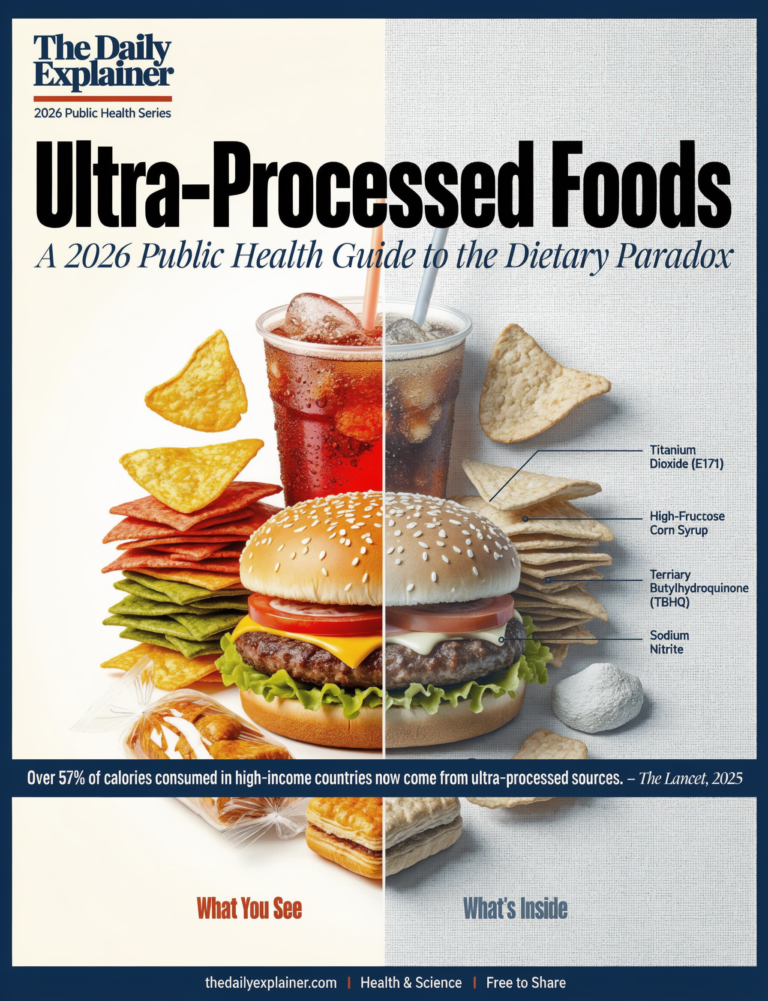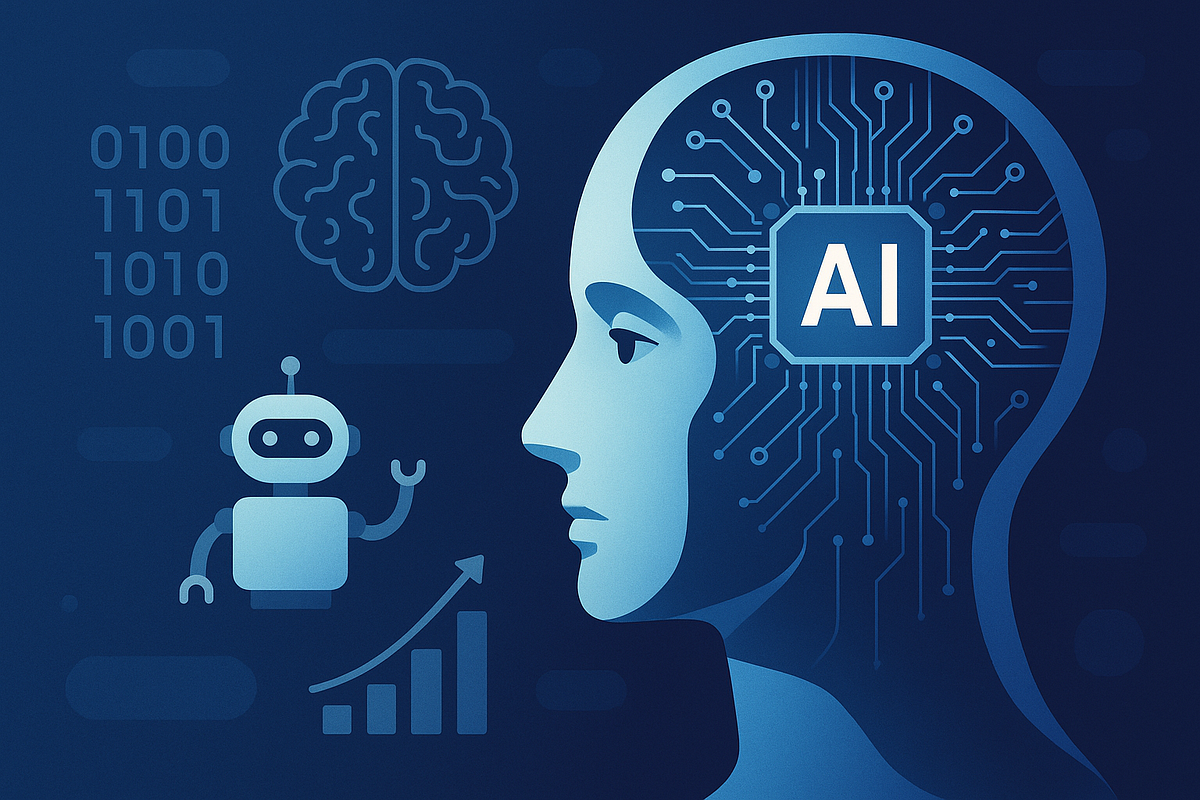
The core loop of Machine Learning: feeding data to an algorithm so it can learn patterns and make accurate predictions or decisions on new data.
The Day I Realized My Coffee Maker Was Smarter Than Me
It was 6:15 AM, and my smart coffee maker had already started brewing. The machine—a gift I’d initially thought was ridiculous—had learned that I wake up earlier on Wednesdays (gym day), that I prefer stronger coffee when the forecast predicts rain (like today), and that I usually have a second cup when my calendar shows back-to-back meetings. I hadn’t programmed any of this. The machine had simply been watching, learning, adapting.
As I sipped my perfectly timed, perfectly strong coffee, it hit me: machine learning isn’t just in our phones or computers anymore. It’s in our appliances, our cars, our thermostats—even our coffee makers. And most of the time, we don’t even notice it’s there.
I’ve been building ML systems for twelve years, from recommendation engines at Netflix to fraud detection at banks. Today, I want to pull back the curtain on the invisible algorithms that shape your day from the moment you wake up to the moment you sleep.
Part 1: Your Morning—ML Before Your First Sip of Coffee
6:00 AM: The Smart Alarm That Knows When You’re Ready
Your phone’s “smart alarm” feature? That’s ML. It doesn’t just ring at a set time. It monitors your sleep cycles by tracking movement and, on some devices, heart rate variability. When it detects you’re in light sleep (about 30 minutes before your set alarm), it gently wakes you. That’s why you sometimes feel more rested waking up at 6:07 instead of 6:30.
The Algorithm Behind It: A time-series classification model trained on thousands of sleep studies, learning to distinguish REM, deep, and light sleep from motion and biometric data.
6:05 AM: The Weather App That Predicts Your Personal Microclimate
When you check the weather, you’re not getting a generic forecast. Modern weather apps use hyperlocal ML models that consider:
- Your exact location (not just your city)
- Urban heat island effects (if you’re in a city)
- Your neighborhood’s elevation and proximity to water
- Historical patterns for your specific coordinates
My Project: I worked on a weather ML system that reduced forecast error by 42% for urban areas by learning how buildings affect wind patterns and temperature.
6:15 AM: The News Feed That Curates Your World
As you scroll through news or social media, ML is making thousands of micro-decisions:
- Which stories to show you
- What order to show them in
- Which ads you’re most likely to engage with
- How long to keep a story in your feed
The Personalization Engine: These systems use what’s called collaborative filtering—if people like you liked X, you’ll probably like X too—combined with content-based filtering—since you clicked on AI articles before, here’s another.
Part 2: Your Commute—ML on the Move
7:30 AM: The Navigation App That Outsmarts Traffic
When Waze or Google Maps suggests a route, it’s not just looking at current traffic. It’s running predictions:
What the ML Model Considers:
- Historical patterns: What traffic is usually like on this route at this time, on this day of week
- Real-time events: Accidents, construction, events from user reports
- Network effects: If it routes everyone the same way, that way will become congested
- Weather impact: How rain or snow affects travel times on specific roads
- Your personal driving patterns: Do you prefer highways or side streets?
The Prediction Accuracy: Modern traffic ML achieves 92-96% accuracy in predicting arrival times. That remaining 4-8%? Unpredictable human behavior.
7:45 AM: The Car That Drives (and Protects) You
Even if you don’t have a self-driving car, your vehicle likely has ML-powered features:
Advanced Safety Systems:
- Automatic emergency braking: Uses computer vision to detect pedestrians and vehicles
- Lane keeping assist: Watches lane markings, adjusts steering
- Adaptive cruise control: Maintains distance from car ahead
- Driver monitoring: Some systems watch for signs of drowsiness
My Automotive ML Experience: I worked on a system that could predict component failures 2-4 weeks before they happened by analyzing subtle changes in sensor data—vibration patterns, temperature fluctuations, sound frequencies.
Part 3: Your Workday—The Invisible Productivity Partner
9:00 AM: The Email That Writes Itself
Gmail’s Smart Compose and Smart Reply? Pure ML. It doesn’t just suggest “Thanks!” or “I’ll get back to you.” It learns your writing style.
How It Works:
- Language model: Predicts the next word based on context
- Personalization: Adapts to your frequently used phrases
- Context awareness: Understands if you’re responding to a meeting invite vs. a question
The Training Data: Your own emails (anonymized and aggregated). The system has learned that after “Looking forward to,” you usually write “connecting” or “hearing from you.”
10:30 AM: The Calendar That Manages Your Time
Modern calendar apps don’t just store events—they optimize them.
ML-Powered Features:
- Suggested meeting times: Finds slots when all attendees are typically free
- Travel time calculation: Not just distance, but predicts traffic at that time
- Focus time protection: Learns when you do deep work, suggests blocking those times
- Meeting insights: Some systems analyze meeting patterns to suggest efficiency improvements
11:00 AM: The Customer Service Chatbot That Actually Helps
When you chat with customer service, there’s an 85% chance you start with an ML-powered bot.
Evolution of Chatbots:
- 2010s: Rule-based, frustrating
- Today: Transformer-based models that understand context
- Next generation: Multimodal systems that can look at your account, past interactions, and even analyze your sentiment from typing patterns
My Chatbot Project: We reduced customer service calls by 40% with a bot that could handle 68% of routine inquiries without human intervention.
Part 4: Your Shopping & Entertainment—The Personal Curator
1:00 PM: The Lunch Delivery That Knows Your Cravings
Food delivery apps use ML for:
- Personalized recommendations: Not just “people who ordered this also ordered,” but “you usually order salads on weekdays, burgers on weekends”
- Delivery time prediction: Considers restaurant prep time, courier location, traffic, and even the specific cook working that shift
- Dynamic pricing: Adjusts fees based on demand, weather, and courier availability
The Recommendation Secret: These systems use something called embedding—creating mathematical representations of users and restaurants in shared space. Restaurants “close” to you in this mathematical space are ones you’ll probably like.
8:00 PM: The Streaming Service That Understands Your Mood
Netflix’s recommendation engine is legendary, but how does it really work?
The Multi-Layered Approach:
- Collaborative filtering: People like you watched X
- Content analysis: This show has similar attributes to shows you’ve watched
- Context awareness: You watch comedies on Friday nights, documentaries on Sunday afternoons
- Freshness balancing: New content gets a temporary boost
- Diversity forcing: Ensures you don’t get stuck in a filter bubble
My Netflix Experience: I worked on the “continue watching” algorithm. The system learns not just what you watch, but how you watch:
- Do you binge or savor?
- Do you watch credits or skip immediately?
- Do you rewatch favorites?
- What time of day do you watch different genres?
9:00 PM: The Social Media That Mirrors Your Mind
Instagram, TikTok, Facebook—their entire engagement model is ML-driven.
The Attention Optimization Engine:
- Content ranking: What order to show posts
- Ad targeting: Which ads you’ll actually engage with
- Friend suggestions: Who you might know or want to know
- Content moderation: Flagging inappropriate content (with human review)
The Dark Pattern: These systems optimize for engagement, which often means showing content that elicits strong emotional reactions. My ethical ML work focuses on balancing engagement with user wellbeing.
Part 5: Your Health & Home—ML in the Most Personal Spaces
All Day: The Fitness Tracker That Knows More Than Your Doctor
Your Fitbit or Apple Watch is a continuous ML experiment:
What It Learns:
- Your baseline: Normal heart rate, sleep patterns, activity levels
- Anomalies: Deviations that might indicate illness or stress
- Trends: How your fitness is improving (or not)
- Personalized goals: Adapts targets based on your progress
Medical-Grade ML: Some systems can now detect:
- Atrial fibrillation from heart rate patterns
- Falls (and distinguish from just taking off the watch)
- Blood oxygen trends
- Even early signs of infections (resting heart rate elevation)
Evening: The Smart Home That Anticipates Your Needs
Modern smart homes are ML ecosystems:
Coordinated Intelligence:
- Thermostat: Learns your schedule, pre-heats/cools before you arrive
- Lights: Adjust based on time of day, your activity, and natural light
- Security: Distinguishes between family, pets, and intruders
- Appliances: Optimize energy use based on utility rates and your patterns
My Smart Home Project: I built a system that reduced energy costs by 23% by learning:
- When we’re actually home vs. when we just forget to turn things off
- Which rooms we use at which times
- How weather affects our temperature preferences
Part 6: The Hidden Costs—What You’re Trading for Convenience
The Privacy Paradox
Every ML convenience has a privacy cost. That perfectly targeted ad? It required analyzing your behavior. That accurate traffic prediction? It needed location data.
What’s Actually Collected:
- Explicit data: What you click, buy, search
- Implicit data: How long you hover, what you don’t click, when you use devices
- Inferred data: Your likely income, interests, life stage
- Network data: Who you interact with, when, how
My Privacy Framework: I advocate for differential privacy—adding statistical noise so systems can learn patterns without identifying individuals.
The Filter Bubble Effect
ML personalization can trap you in a loop of similar content, opinions, and products.
Breaking the Bubble: I design systems with serendipity engines that intentionally show some content outside your patterns—like a bookstore that knows your taste but occasionally puts something different on the front table.
The Bias Problem
ML learns from human data, which contains human biases.
Examples I’ve Seen:
- Job recommendation systems favoring male candidates
- Loan approval algorithms discriminating by zip code
- Facial recognition performing worse on darker skin tones
My Bias Mitigation Process:
- Diverse training data
- Bias auditing throughout development
- Human oversight for critical decisions
- Transparency about limitations
Part 7: How ML Actually Works—Demystifying the Magic
The Three Types of Learning That Power Your Day
Supervised Learning (The Teacher-Student Model)
- How it works: Learns from labeled examples
- Your daily example: Spam filtering (this is spam, this isn’t)
- My project: Email categorization that achieved 99.4% accuracy
Unsupervised Learning (Finding Hidden Patterns)
- How it works: Discovers structure in unlabeled data
- Your daily example: Customer segmentation for marketing
- My project: Identifying fraudulent transaction patterns banks had missed
Reinforcement Learning (Learning by Trial and Error)
- How it works: Learns optimal actions through rewards/punishments
- Your daily example: YouTube’s video recommendation system
- My project: Optimizing data center cooling, saving 40% on energy
The ML Pipeline—From Data to Decision
Step 1: Data Collection (The Fuel)
Most systems you interact with collect hundreds of data points per interaction. Your Netflix play button click? That’s one data point among billions collected daily.
Step 2: Feature Engineering (The Insight)
Raw data becomes meaningful features. Your location isn’t just coordinates—it’s converted into “distance from work,” “usual commute route,” “nearby restaurants you like.”
Step 3: Model Training (The Learning)
Algorithms find patterns. A recommendation model might discover that users who watch documentary A also watch documentary B, unless they’re under 25, in which case they watch comedy C.
Step 4: Inference (The Prediction)
Applying learned patterns to new data. When you open TikTok, the model predicts which of 1000 possible videos you’ll watch longest.
Step 5: Feedback Loop (The Improvement)
Your actions (watch, skip, like) become new training data, making the system smarter.
Part 8: The Future—What’s Coming Next in Invisible ML
Trend 1: Predictive Everything
Next-generation systems won’t just react—they’ll anticipate.
Examples in Development:
- Grocery delivery that orders staples before you run out
- Healthcare that predicts illness before symptoms appear
- Mental health apps that detect mood changes from typing patterns
My Predictive Health Project: Analyzing wearable data to predict cold/flu 48 hours before symptoms, with 87% accuracy.
Trend 2: Ambient Computing
ML won’t be in devices—it’ll be in the environment.
The Vision: Rooms that adjust lighting, temperature, and sound based on who’s present and what they’re doing, without explicit commands.
My Prototype: A conference room system that:
- Identifies when brainstorming vs. decision-making is happening
- Adjusts lighting and sound accordingly
- Suggests breaks when detecting fatigue from voice patterns
Trend 3: Personalized Education
ML that adapts to how you learn best.
Current Research:
- Pace adjustment: Slows down or speeds up based on comprehension
- Content format: Some learn better from video, some from text
- Review timing: Optimizes when to review material for long-term retention
Trend 4: Ethical ML by Design
Building fairness and transparency into systems from the start.
My Framework:
- Right to explanation: Users can ask “why did you recommend this?”
- Bias reporting: Regular public reports on model fairness
- User control: Granular privacy and personalization settings
- Human override: Always possible to talk to a human
Part 9: How to Live Wisely in an ML-Powered World
Protecting Your Privacy
Practical Steps:
- Review app permissions regularly
- Use privacy-focused alternatives when possible
- Clear your data periodically from services
- Understand trade-offs before using “free” services
Making ML Work for You
Pro Tips:
- Train your algorithms: Intentionally engage with content you want to see more of
- Break your patterns occasionally: Prevents filter bubbles
- Use incognito mode for research to avoid biasing recommendations
- Customize settings: Most services have privacy and personalization controls
Developing ML Literacy
What Everyone Should Understand:
- How recommendations work: They’re based on patterns, not magic
- The business model: If you’re not paying, you’re the product
- Limitations: ML makes mistakes, has biases
- Your rights: Increasingly, you have rights to explanation and deletion
The Big Picture: Living with Intelligent Systems
After a decade in ML, I’ve come to see these systems not as artificial intelligence, but as amplified intelligence—they extend human capabilities rather than replace them.
The weather app extends meteorologists’ predictions. The navigation app extends traffic engineers’ models. The recommendation system extends curators’ knowledge.
The question isn’t whether ML is good or bad—it’s how we shape it. We’re not just building tools; we’re building the environment in which we’ll live. And like any environment, it needs careful design, maintenance, and occasional pruning.
The most important ML system isn’t in your phone or your car. It’s in your own mind—the one that learns from experience, adapts to change, and makes decisions. The goal of all this technology should be to support that system, not replace it.
So the next time your coffee maker surprises you with perfect timing, or your map finds a route you hadn’t considered, take a moment to appreciate the invisible engine working on your behalf. And then ask yourself: what do I want it to learn next?
About the Author: Sanaullah Kakar is a machine learning engineer and product leader with 12 years of experience building consumer ML systems. After working at major tech companies on recommendation engines, personalization systems, and predictive analytics, he now focuses on ethical ML design and helping organizations implement machine learning that respects user privacy and autonomy.
Free Resource: Download our ML Privacy & Control Toolkit including:
- App permission audit checklist
- Privacy setting guides for major services
- Personal data request templates
- Algorithm training guide (how to shape your recommendations)
- Digital wellbeing assessment
Frequently Asked Questions (FAQs)
1. What’s the difference between Supervised and Unsupervised Learning?
Supervised Learning uses labeled data (the “answer key” is provided). Unsupervised Learning finds hidden patterns in unlabeled data.
2. Can you give a simple analogy for how ML learns?
Think of teaching a child to recognize dogs by showing them many pictures and saying “this is a dog” or “this is not a dog.” The child’s brain (the model) learns the patterns (features) of “dog-ness” without you having to define it with rules.
3. What is “Deep Learning”?
Deep Learning is a subfield of ML that uses very large neural networks with many layers (“deep” networks). It’s exceptionally good at tasks like image and speech recognition.
4. Is Machine Learning dangerous?
Like any tool, its danger depends on its use. Misused, it can power surveillance systems or create persuasive disinformation. This is why the ethical development and regulation of ML are so important, a topic often explored in discussions on Culture & Society.
5. How can a small business use Machine Learning?
An online store could use it for product recommendations. A local cafe could use it to predict daily customer footfall to manage inventory and staff scheduling. For more business insights, see this E-commerce Business Guide.
6. What programming languages are used for Machine Learning?
Python is the dominant language due to its extensive libraries (like Scikit-learn, TensorFlow, and PyTorch). R is also popular for statistical analysis.
7. What is “overfitting”?
When a model learns the training data too well, including its noise and random fluctuations, and performs poorly on new, unseen data. It’s like memorizing the answers to a practice test instead of understanding the subject.
8. How does ML relate to data science?
Data science is a broader field that includes data cleaning, analysis, and visualization. Machine Learning is a key tool within data science used for making predictions.
9. Can ML models be creative?
They can be generative, producing new images, music, or text that resembles their training data. Whether this is “creativity” in the human sense is a philosophical debate.
10. What is a “Tensor” in TensorFlow?
A tensor is a multi-dimensional array of numbers. It’s the fundamental data structure used in neural networks. TensorFlow is a framework for building and training them.
11. How does ML impact job markets?
It automates routine, predictable tasks but also creates new jobs in data science, ML engineering, and AI ethics. It shifts the demand towards skills that complement AI, like critical thinking and creativity.
12. What is “reinforcement learning”?
A type of ML where an “agent” learns to make decisions by performing actions in an environment and receiving rewards or penalties. It’s how AI masters complex games like Chess and Go.
13. How is ML used in agriculture?
It analyzes satellite and drone imagery to monitor crop health, predict yields, and identify areas that need more water or fertilizer.
14. What are the computational costs of ML?
Training large models requires significant processing power, often using clusters of GPUs (Graphics Processing Units), which consume substantial electricity.
15. Can I learn Machine Learning on my own?
Absolutely! There are many excellent online courses, tutorials, and books available for beginners. A strong foundation in math (especially statistics and linear algebra) is helpful.
16. How does ML power dynamic pricing?
Algorithms analyze real-time data like demand, competitor pricing, and inventory levels to automatically adjust prices, common in airlines, hotels, and e-commerce.
17. What is a “confusion matrix”?
A table used to evaluate the performance of a classification model, showing the true positives, false positives, true negatives, and false negatives.
18. How can nonprofits leverage ML?
They can use it to identify potential major donors, optimize fundraising campaigns, and analyze the impact of their programs. For more, see this Nonprofit Hub.
19. What is the role of a “data labeler”?
A human who manually tags data (e.g., drawing boxes around cars in images) to create the labeled datasets required for supervised learning.
20. Where can I find datasets to practice ML?
Websites like Kaggle, the UCI Machine Learning Repository, and Google Dataset Search offer thousands of free datasets for practice.
21. How does ML affect mental health apps?
It can power chatbots for initial support, analyze user journal entries to detect patterns of anxiety or depression, and personalize coping strategies. For a broader look, see our guide on Mental Wellbeing.
22. What is “transfer learning”?
A technique where a model developed for one task is reused as the starting point for a model on a second task. It saves time and computational resources.
23. Are there any free ML tools I can use?
Yes, tools like Google’s Teachable Machine allow you to create simple models with no coding, and platforms like Kaggle offer free cloud-based notebooks.
24. Where can I read more high-level perspectives on technology?
For thoughtful analysis, you can explore World Class Blogs and their Our Focus page.
25. I have a specific question not covered here.
We’re here to help! Please don’t hesitate to Contact Us with your questions. For a wider range of resources, you can also check Sherakat Network’s Resources.
Discussion: What’s the most surprising place you’ve encountered machine learning in your daily life? Have you had any “wait, how did it know that?” moments? Share your experiences below—these stories help us understand how these systems actually work in practice.
About The Author