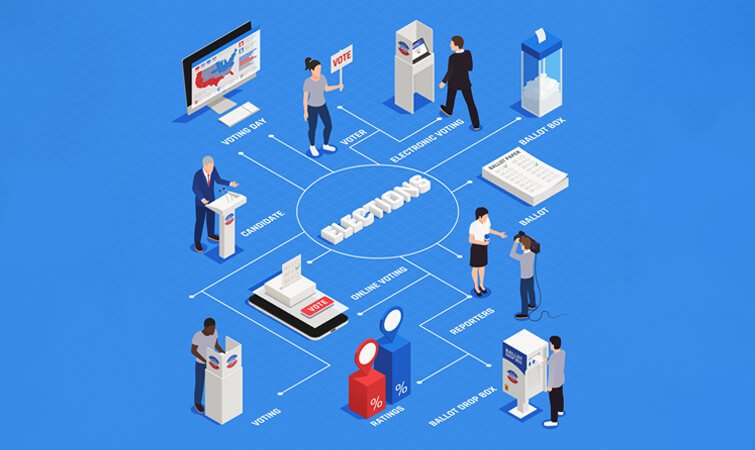
The Digital Democracy Ecosystem: From voter registration to results transmission and everything in between.
Introduction: The Digital Revolution in Democratic Processes
The intersection of technology and democracy represents one of the most significant transformations in electoral politics since the introduction of the secret ballot. Digital democracy encompasses the comprehensive integration of technology into every aspect of electoral processes—from voter registration and digital campaigning to electronic voting and result transmission. This technological revolution promises greater accessibility, efficiency, and engagement but also introduces unprecedented challenges for election integrity, cybersecurity, and democratic fairness.
As we navigate this digital transformation, understanding how technology is reshaping elections becomes crucial for citizens, policymakers, and democracy advocates worldwide. The shift from paper-based systems to digital platforms affects not only how we vote but fundamentally alters the relationship between citizens, candidates, and democratic institutions. This comprehensive examination explores both the transformative potential and significant risks of digital technologies in electoral democracy, drawing on global experiences and emerging best practices. For more insights into how systems shape our modern world, visit our Explained section.
Background/Context: The Evolution of Election Technology
The Pre-Digital Era: Mechanical Innovations
The history of election technology reveals a continuous pursuit of more efficient and secure voting methods. The 19th century saw the transition from voice voting to paper ballots, while the late 19th and early 20th centuries introduced mechanical lever voting machines. These innovations aimed to standardize voting processes, reduce fraud, and accelerate vote counting.
The mid-20th century witnessed the introduction of punch-card voting systems, famously used in the controversial 2000 US presidential election. Optical scan systems emerged as a more reliable alternative, combining the verifiability of paper records with automated counting. Each technological advancement sought to address the limitations of previous systems while maintaining public confidence in electoral outcomes.
The Digital Dawn: Early Electronic Systems
The 1980s and 1990s marked the beginning of true digital election technology with the development of Direct Recording Electronic (DRE) voting machines. These systems promised greater accessibility for voters with disabilities and the potential for immediate, accurate results. However, early implementations often suffered from technical limitations, usability issues, and security concerns that would only become fully apparent in subsequent decades.
This period also saw the emergence of the first serious discussions about internet voting, with proponents envisioning a future where citizens could vote from home with the same convenience as online banking. Early experiments in countries like Estonia and Switzerland would pave the way for broader digital voting initiatives.
The Internet Era: Comprehensive Digital Transformation
The 21st century has witnessed an acceleration of digital integration across all aspects of elections. The rise of digital campaigning through social media platforms, online voter registration systems, electronic poll books, and sophisticated results management platforms has created a comprehensive digital election infrastructure. This transformation has occurred alongside growing concerns about cybersecurity, disinformation, and the digital divide’s impact on electoral participation.
Key Concepts Defined: The Lexicon of Digital Democracy

Core Technological Systems
- Direct Recording Electronic (DRE) Systems: Standalone voting machines that record votes directly into computer memory, often with a Voter Verified Paper Audit Trail (VVPAT) for verification.
- Online Voting Platforms: Internet-based systems that allow voters to cast ballots remotely, utilizing various authentication and encryption methods.
- Electronic Poll Books: Digital replacements for paper voter rolls, enabling real-time voter check-in and status updates across multiple polling locations.
- Results Transmission Systems: Secure networks for transmitting election results from polling places to central counting facilities, increasingly using encrypted cellular or satellite connections.
Digital Campaign Infrastructure
- Digital Microtargeting: The use of data analytics and algorithms to deliver customized political messages to specific voter segments based on demographic, behavioral, or psychographic data.
- Social Media Political Advertising: Targeted political messaging on platforms like Facebook, Twitter, and YouTube, often operating under different regulatory frameworks than traditional media.
- Campaign Technology Stacks: Integrated suites of digital tools used by political campaigns for voter contact, fundraising, volunteer management, and data analytics.
Security and Integrity Frameworks
- Election Cybersecurity: Protective measures to secure election infrastructure against cyber threats, including voter registration databases, voting systems, and results reporting platforms.
- Digital Forensics for Elections: Technical processes for investigating potential election interference, verifying system integrity, and auditing digital election components.
- Blockchain Voting Systems: Distributed ledger technology applications for creating transparent, tamper-resistant voting records, though still largely experimental in governmental elections.
How It Works (Step-by-Step): The Digital Election Ecosystem
Phase 1: Pre-Election Digital Infrastructure
Step 1: Digital Voter Registration
Modern voter registration has largely transitioned to online platforms that interface with government databases. These systems:
- Verify voter eligibility through integration with citizenship and vital records databases
- Provide real-time registration status updates
- Enable address changes and party affiliation updates
- Generate digital voter rolls for election administration
Implementation Example: In the United Kingdom, the online voter registration system processed over 46 million applications between 2014 and 2023, significantly increasing registration rates, particularly among young voters.
Step 2: Digital Voter Education
Election authorities utilize multiple digital channels to educate voters:
- Official election websites with personalized ballot information
- Mobile applications providing polling place locations and wait times
- Social media campaigns explaining voting procedures
- SMS and email reminders about registration deadlines and election dates
Step 3: Digital Campaign Infrastructure Setup
Political campaigns deploy comprehensive technology stacks:
- Voter database integration with commercial data brokers
- Digital advertising accounts across multiple platforms
- Custom software for volunteer coordination and voter contact
- Cybersecurity measures to protect campaign data and communications
Phase 2: Election Administration and Voting
Step 4: Electronic Poll Book Deployment
Digital voter check-in systems have replaced paper-based rolls in many jurisdictions:
- Pre-loaded voter databases with registration information and eligibility status
- Real-time synchronization across polling locations to prevent duplicate voting
- Digital signature capture replacing paper sign-in sheets
- Accessibility features for voters with disabilities
Case Study: Maricopa County, Arizona
The implementation of electronic poll books reduced average voter check-in time from 3-5 minutes to under 30 seconds, significantly decreasing polling place lines and improving the voter experience.
Step 5: Electronic Voting Implementation
Different technological approaches to voting:
DRE Systems with VVPAT:
- Voters make selections on touchscreen interfaces
- Machines store digital records of each vote
- Printed paper records allow voters to verify their selections
- Paper trails enable post-election audits and recounts
Internet Voting Systems:
- Voters authenticate through multi-factor verification
- Encrypted ballots transmitted to election servers
- Digital signatures verify ballot integrity
- Separate systems track voter participation without linking to ballot choices
Real-World Implementation: Estonia
Estonia’s internet voting system has been used in national elections since 2005, with 44% of votes cast online in the 2023 parliamentary elections. The system uses:
- National ID cards with digital certificates for authentication
- Multiple encryption layers for ballot security
- Voter ability to change electronic votes multiple times before election day
- Post-election statistical audits to detect anomalies
Step 6: Digital Ballot Tabulation
Modern counting processes incorporate multiple technological components:
- High-speed optical scanners process paper ballots
- Digital adjudication systems handle ambiguous marks or write-in candidates
- Automated logic and accuracy testing ensures counting equipment calibration
- Real-time results reporting to central election offices
Phase 3: Post-Election Processes and Verification
Step 7: Digital Results Transmission and Reporting
Secure networks transmit results from polling places to central facilities:
- Encrypted data transmission via multiple channels (cellular, satellite, wired)
- Digital signature verification to authenticate results sources
- Real-time results publishing on official election websites
- Public APIs allowing media and observers to access structured results data
Step 8: Electronic Audit Systems
Post-election verification has been transformed by digital tools:
- Risk-Limiting Audits (RLAs) use statistical sampling and digital comparison of paper records to electronic totals
- Digital forensic tools analyze voting system logs for evidence of manipulation
- Blockchain-based verification systems create tamper-evident records of election results
- Automated reconciliation systems ensure all ballots are properly accounted for
Why It’s Important: The Transformative Impact of Election Technology

Enhanced Accessibility and Participation
Digital election technologies have dramatically expanded voting access for numerous populations:
Voters with Disabilities: DRE machines with audio interfaces, sip-and-puff devices, and other adaptive technologies have made secret, independent voting possible for many voters with physical or visual impairments that previously required assistance.
Overseas and Military Voters: Electronic ballot delivery and return systems have significantly improved participation rates for citizens abroad. The U.S. Federal Voting Assistance Program reports that electronic transmission options have reduced ballot return times from weeks to days.
Young and Mobile Populations: Online voter registration and digital election information have particularly increased engagement among younger voters, with studies showing 5-10 percentage point higher registration rates in states with online systems.
Improved Efficiency and Cost Reduction
The digitization of election administration has yielded significant operational benefits:
Reduced Administrative Burden: Electronic poll books have eliminated the massive paperwork previously associated with voter check-in and list maintenance. Los Angeles County’s transition to digital systems reduced election administration staffing requirements by 30% while improving accuracy.
Faster Results Reporting: Digital results transmission and tabulation have dramatically accelerated election night reporting. In Brazil, electronic voting enables near-complete results within hours of polls closing for a country of 150 million voters.
Cost Savings: While initial technology investments can be substantial, long-term operational savings are significant. India’s Election Commission estimates that electronic voting has reduced election costs by 40-50% compared to paper-based systems.
Enhanced Security and Integrity Potential
Properly implemented digital systems can strengthen election security:
Audit Capabilities: Digital systems enable sophisticated post-election audits that were impractical with purely paper-based processes. Risk-limiting audits provide statistical certainty about election outcomes while examining only a sample of ballots.
Chain of Custody Tracking: Digital monitoring systems can create comprehensive records of election material handling, from ballot printing through storage of voted ballots.
Rapid Anomaly Detection: Automated monitoring systems can identify unusual patterns that might indicate malfunctions or manipulation, enabling rapid response.
Common Misconceptions and Analytical Challenges
Misconception 1: “Digital Voting is Inherently Less Secure”
The security of digital voting systems depends entirely on implementation quality rather than the mere fact of digitization. Well-designed systems with proper safeguards can exceed the security of poorly administered paper-based elections. The challenge lies in ensuring all components—from software development to operational procedures—meet high security standards.
Misconception 2: “Technology Will Solve All Election Problems”
Technological solutions must be understood as tools that operate within broader administrative and political contexts. Even the most sophisticated systems cannot compensate for inadequate funding, poor training, or malicious actors within the election ecosystem. Technology should augment rather than replace sound election administration principles.
Misconception 3: “Internet Voting is Technologically Impossible to Secure”
While internet voting presents significant security challenges, describing it as inherently impossible overstates the case. Systems like Estonia’s demonstrate that internet voting can be implemented with reasonable security for lower-stakes elections, though questions remain about suitability for high-stakes national contests in politically polarized environments.
Misconception 4: “Paper-Based Systems are Completely Secure”
Paper voting has its own vulnerabilities, including ballot box stuffing, improper rejection of valid ballots, and transcription errors in manual counting. The key is designing systems with appropriate safeguards regardless of the technological approach.
Recent Developments: Emerging Trends and Innovations
Artificial Intelligence in Election Administration
AI applications are emerging across the election ecosystem:
Predictive Analytics for Resource Allocation: Election officials use machine learning to forecast turnout patterns and optimize polling place resources, reducing wait times and improving voter experience.
Natural Language Processing for Voter Services: Chatbots and virtual assistants handle routine voter inquiries, freeing human staff for complex issues.
Computer Vision for Ballot Processing: Advanced image recognition systems can process damaged or unusually marked ballots more accurately than human counters.
Blockchain Experimentation
While still largely experimental, blockchain technology shows promise for specific election applications:
Transparent Results Ledgers: Cryptographically secured result databases that anyone can verify while maintaining voter privacy.
Supply Chain Management: Tracking the movement and custody of election materials from production through storage.
Digital Identity Verification: Secure, privacy-preserving voter authentication systems.
Mobile Voting Advancements
Several jurisdictions are exploring mobile voting solutions:
Pilots for Overseas and Military Voters: Limited deployments aim to serve voters with particularly challenging circumstances.
Accessibility-Focused Applications: Mobile systems designed specifically for voters with disabilities.
Hybrid Approaches: Combining mobile convenience with in-person verification for critical security steps.
Case Studies: Digital Democracy in Action
Estonia: The Comprehensive Digital Democracy Model
Estonia represents the most extensive implementation of digital democracy, with 99% of public services available online, including voting. Key components include:
National Digital Identity Infrastructure:
- Mandatory ID cards with digital certificates
- Mobile ID alternative using SIM-based authentication
- Secure digital signature capability with legal equivalence to handwritten signatures
Internet Voting System Evolution:
- Progressive implementation since 2005
- Continuous security improvements based on expert review
- Transparent procedures and open-source components
- High public acceptance and usage rates
Lessons Learned:
- Digital democracy requires comprehensive infrastructure, not just voting systems
- Public trust develops through demonstrated reliability over multiple election cycles
- Security requires continuous investment and adaptation to emerging threats
India: Scaling Electronic Voting to unprecedented Levels
India’s implementation of electronic voting machines (EVMs) across a nation of 900 million voters represents the largest-scale digital voting deployment in history. The Indian approach features:
Purpose-Built Hardware:
- Custom-designed machines without networking capability
- Simple interface supporting multiple languages
- Battery operation for areas with unreliable electricity
- Robust physical construction for challenging environmental conditions
Administrative Safeguards:
- Extensive pre-election testing and mock polls
- Strict chain of custody protocols
- Randomized allocation of machines to polling stations
- Comprehensive election observer access
Outcomes and Controversies:
- Dramatic reduction in election-related violence
- Faster results with fewer counting disputes
- Ongoing debates about system transparency and verification
- Continuous evolution in response to technical and political challenges
Brazil: Fully Digital National Elections
Brazil’s complete transition to electronic voting offers another large-scale implementation model:
Nationwide Deployment:
- Uniform system across all elections from local to presidential
- Integrated voter identification and voting machines
- Rapid results transmission network
- Extensive pre-election testing and verification
Security Measures:
- Air-gapped systems with no internet connectivity
- Multiple layers of encryption and authentication
- Comprehensive audit trail generation
- Post-election statistical sampling
Conclusion: Key Takeaways and Future Directions
Synthesized Insights
The digital transformation of elections presents both extraordinary opportunities and significant challenges:
Technology as Amplifier: Digital systems tend to amplify existing strengths and weaknesses in election administration. Well-run elections become more efficient with technology, while poorly administered elections may see their problems exacerbated.
No One-Size-Fits-All: Different technological approaches suit different contexts. National internet voting may work in Estonia but be inappropriate for the United States given current technical and political realities.
Security-Usability Trade-offs: Every technological choice involves balancing security, accessibility, cost, and public confidence. Transparent decision-making about these trade-offs is essential for maintaining trust.
Continuous Evolution Required: Election technology cannot be static. Continuous improvement, regular security updates, and adaptation to emerging threats are essential components of responsible implementation.
Future Challenges and Opportunities
Looking forward, several critical issues will shape the evolution of digital democracy:
Artificial Intelligence Integration: AI will increasingly be used both to enhance election administration and potentially to manipulate electoral processes, requiring sophisticated countermeasures.
Quantum Computing Preparedness: Future quantum computers may break current encryption standards, necessitating the development of quantum-resistant election security systems.
Global Standards Development: International cooperation on election technology standards could help prevent a “race to the bottom” where jurisdictions compete by lowering security requirements.
Digital Literacy and Inclusion: Ensuring all citizens can participate meaningfully in increasingly digital electoral processes requires attention to digital literacy and access.
The future of digital democracy will be shaped by our collective ability to harness technology’s benefits while mitigating its risks through thoughtful design, transparent processes, and ongoing public engagement. For more analysis of how technological systems intersect with mental wellbeing in our rapidly changing world, explore our guide on Mental Health in the Modern World.
Frequently Asked Questions (FAQs)
1. Which countries use internet voting for national elections?
Estonia, Switzerland (in some cantons), Canada (for overseas voters), and limited pilots in the United States (for military and overseas voters) are the primary examples. Most countries remain cautious about internet voting for high-stakes national elections.
2. How secure are electronic voting machines from hacking?
Security varies significantly by system design and implementation. Well-designed systems with paper audit trails, air-gapped operation, and comprehensive physical security can be highly secure, while poorly designed systems may be vulnerable.
3. Can technology help reduce election costs?
Yes, technology can significantly reduce long-term election administration costs, though initial investments can be substantial. India estimates 40-50% cost savings since implementing electronic voting.
4. What is a Voter Verified Paper Audit Trail (VVPAT)?
A VVPAT is a paper record printed by DRE machines that allows voters to verify their selections before the paper is stored for potential auditing. This provides a verifiable paper record while maintaining the accessibility benefits of electronic interfaces.
5. How does digital campaigning differ from traditional campaigning?
Digital campaigning enables microtargeting of messages, real-time performance measurement, rapid response capabilities, and lower-cost voter contact methods compared to traditional media advertising.
6. What are risk-limiting audits and how do they work?
Risk-limiting audits use statistical sampling to provide high confidence in election outcomes while examining only a fraction of ballots. They efficiently detect whether full recounts are necessary.
7. Can blockchain technology secure elections?
Blockchain shows promise for specific applications like transparent results publishing and supply chain tracking, but most experts believe it doesn’t solve the fundamental security challenges of internet voting.
8. How does technology affect voter turnout?
The evidence is mixed. Online registration consistently increases registration rates, particularly among young voters, but the impact of voting technology itself on turnout is less clear.
9. What cybersecurity measures protect election systems?
Modern election cybersecurity includes air-gapping critical systems, multi-factor authentication, intrusion detection systems, penetration testing, and comprehensive security training for election staff.
10. How are election technologies certified and tested?
In the United States, the Election Assistance Commission sets voluntary voting system guidelines, while independent testing laboratories certify compliance. States have additional certification requirements.
11. What happens if electronic voting systems fail during an election?
Well-prepared election authorities have contingency plans including emergency paper ballots, backup machines, and extended voting hours in case of significant failures.
12. How accessible are digital voting systems for elderly voters?
Accessibility varies significantly. Well-designed systems with simple interfaces, large text, and audio options can be highly accessible, while poorly designed systems may disadvantage elderly voters.
13. Can technology help prevent foreign election interference?
Technology can help through improved detection systems, secure communication platforms, and rapid response capabilities, but human vigilance and international cooperation remain essential.
14. What role does artificial intelligence play in modern elections?
AI is used for turnout prediction, resource allocation, natural language processing for voter inquiries, and increasingly for detecting disinformation campaigns.
15. Where can I find reliable information about election technology security?
The Cybersecurity and Infrastructure Security Agency (CISA), National Institute of Standards and Technology (NIST), and academic institutions like the MIT Election Data and Science Lab provide authoritative information.
About The Author





1 thought on “Digital Democracy: How Technology is Transforming Elections Worldwide”