The 24-Hour Human Circadian Cycle: From hormone release and body temperature to sleep and alertness, your master clock dictates it all.
Introduction: The Internal Metronome Governing Your Life
Life on Earth has evolved under the consistent rhythm of a 24-hour cycle of light and darkness. To survive, nearly every organism, from bacteria to humans, has developed an internal timekeeping system known as circadian rhythms (from the Latin circa diem, meaning “approximately a day”). This isn’t just about feeling sleepy at night; it’s a master biological clock that orchestrates the intricate timing of your hormone release, body temperature, metabolism, immune function, and even gene expression. When your lifestyle is in sync with this innate rhythm, you experience vitality, mental clarity, and robust health. When it’s out of sync, you invite a host of modern ailments. Understanding and respecting your circadian biology is one of the most powerful yet overlooked levers for optimizing your well-being. For more insights into the biological systems that shape your life, explore our Explained section.
Background/Context: From Sun Dials to the Nobel Prize
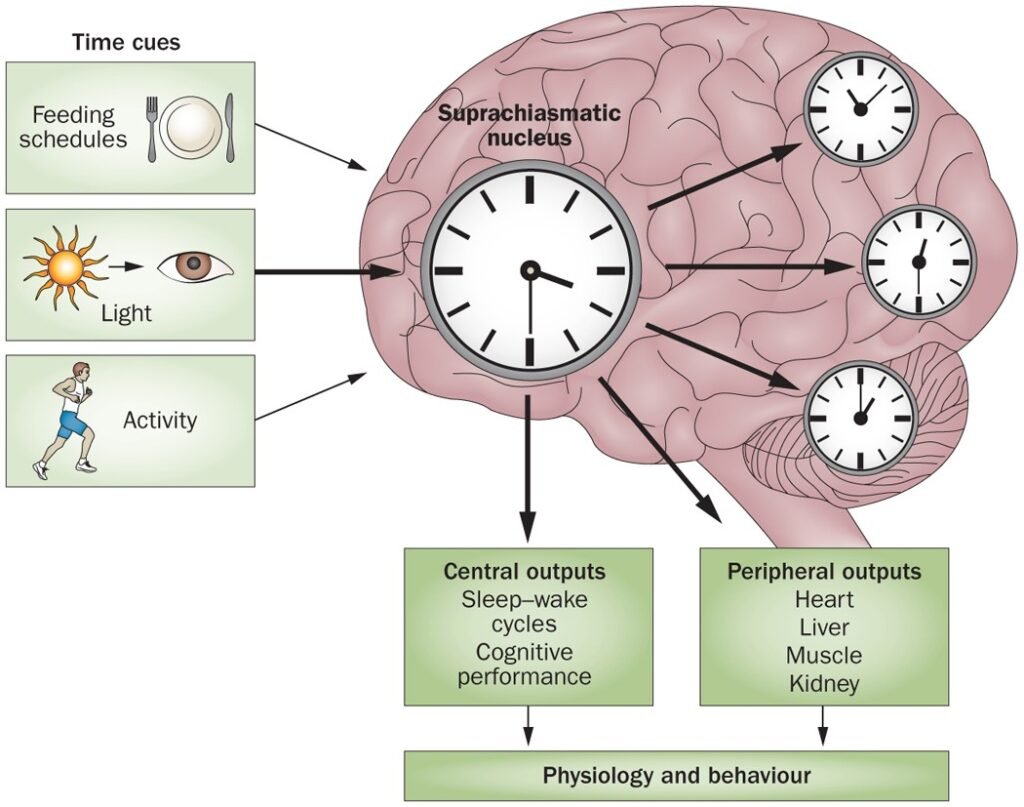
The observation of daily rhythms in plants and animals dates back centuries, but the formal science of chronobiology took off in the 20th century. The foundational discovery was made in the 1970s by scientists who isolated the Suprachiasmatic Nucleus (SCN), a tiny region in the brain’s hypothalamus, as the body’s “master clock.” This cluster of about 20,000 nerve cells receives direct input from the eyes, synchronizing itself with the external light-dark cycle.
The field’s crowning achievement came in 2017 when the Nobel Prize in Physiology or Medicine was awarded to Jeffrey Hall, Michael Rosbash, and Michael Young for their discoveries of the molecular mechanisms that control the circadian rhythm. They identified specific “clock genes” that create a feedback loop, producing proteins that accumulate during the night and break down during the day, driving 24-hour cycles in cells throughout the body. This confirmed that our tick of life is embedded in our very DNA. This internal timing is as crucial for personal health as precise timing is for a Global Supply Chain.
Key Concepts Defined: The Lexicon of Biological Time
- Circadian Rhythm: The physical, mental, and behavioral changes that follow a 24-hour cycle, primarily responding to light and darkness in an organism’s environment.
- Suprachiasmatic Nucleus (SCN): The master clock in the brain that coordinates all the body’s peripheral clocks, keeping them in sync with the solar day.
- Melatonin: The “hormone of darkness” produced by the pineal gland in response to signals from the SCN. Its release in the evening promotes sleepiness and is strongly suppressed by blue light.
- Cortisol: The “stress and alertness” hormone that follows a diurnal pattern, peaking in the morning to help you wake up and gradually declining throughout the day.
- Peripheral Clocks: Clocks located in organs and tissues throughout the body (e.g., liver, heart, fat cells). While the SCN is the conductor, these peripheral clocks control local timing of processes like metabolism.
- Zeitgeber: A German word for “time giver.” These are external cues that reset the circadian clock, the most powerful being light. Others include food intake, temperature, and social activity.
How It Works (Step-by-Step): A Day in the Life of Your Body Clock
Your body’s daily cycle is a perfectly choreographed dance:
Step 1: Morning (6-8 AM) – The Cortisol Awakening Response
As dawn approaches, even before your alarm goes off, your SCN signals your adrenal glands to release cortisol. This hormone increases blood sugar and blood pressure, providing the energy and alertness you need to start the day. Exposure to morning sunlight, especially its blue wavelengths, reinforces this signal and firmly sets your master clock.
Step 2: Mid-Day (10 AM – 2 PM) – Peak Alertness and Performance
Core body temperature rises and cortisol levels remain high, leading to a window of peak alertness, focus, and coordination. This is the ideal time for demanding cognitive tasks and physical activity.
Step 3: Afternoon (3-5 PM) – The Second Wind
A slight dip in core temperature and alertness may occur (the “post-lunch slump”), but this is often followed by a second, smaller peak in energy and reaction time.
Step 4: Evening (6-9 PM) – The Wind-Down
As the sun sets, the reduced light exposure signals the SCN to trigger the pineal gland to start producing melatonin. Core body temperature begins to drop. This is the time for relaxation, not intense work or exercise, which can delay sleep.
Step 5: Night (10 PM – 4 AM) – Repair and Restoration
Melatonin peaks, promoting deep, restorative sleep. During this time, the brain clears out metabolic waste, cells undergo repair, growth hormone is released, and the immune system is highly active. Your liver performs its detoxification cycles, all guided by peripheral clocks.
Why It’s Important: The Consequences of Being In Sync or Out of Sync
Aligning with your circadian rhythm is not a wellness fad; it’s a biological necessity.
- Metabolic Health: Your body is primed to process food during the day. Eating late at night, when your pancreas is less responsive to insulin, can lead to weight gain and increase the risk of type 2 diabetes.
- Mental Performance & Mood: A stable sleep-wake cycle is fundamental for memory consolidation, learning, and emotional regulation. Circadian disruption is a key feature of mood disorders like depression and bipolar disorder.
- Immune Function: Nearly all immune cells exhibit circadian rhythms. Proper sleep timing ensures a robust immune response to pathogens, while chronic disruption can lead to persistent, low-grade inflammation.
- Cardiovascular Health: Blood pressure and heart rate naturally dip at night. Disruption of this pattern, common in shift workers, is linked to a higher risk of hypertension and cardiovascular events.
- Cancer Risk: The World Health Organization has classified shift work that involves circadian disruption as a “probable carcinogen,” as it can impair the DNA repair processes that occur during sleep.
Common Misconceptions
- “I can catch up on sleep on the weekends.” This “social jet lag” creates a metabolic whiplash, confusing your internal clocks. While better than nothing, it does not fully reverse the damage of chronic sleep deprivation during the week.
- “Blue light from screens is the only problem.” While a major disruptor, it’s not the only one. The timing of meals, especially late-night eating, and a lack of bright light exposure in the morning are equally powerful disruptors of peripheral clocks.
- “I’m just a night owl by nature.” While chronotypes (early birds vs. night owls) have a genetic basis, extreme night owl tendencies are often exacerbated by modern lifestyle habits, like late-night screen use, which can delay your natural rhythm.
- “The brain’s master clock is the only one that matters.” We now know that peripheral clocks in your liver, gut, and other organs are critically important. You can have a misaligned liver clock (from late eating) even if your SCN is synced to the light cycle, leading to metabolic problems.
Recent Developments & Real-Life Examples
Recent Development: Time-Restricted Eating (TRE)
A major area of research is Time-Restricted Eating (TRE), a form of intermittent fasting where all daily calories are consumed within a consistent window of 8-12 hours. This practice aligns food intake with the body’s daily metabolic rhythms. Studies show that TRE, even without changing what you eat, can improve insulin sensitivity, lower blood pressure, and support weight loss by giving your digestive system and metabolic organs a prolonged, daily rest period. This approach to health is as strategic as a well-planned E-commerce Business strategy, where timing is everything.
Real-Life Example: The Danish Night Shift Worker Study
A powerful real-world example comes from a study of Danish female shift workers. The research found that those who worked night shifts for 20+ years had a significantly higher risk of developing breast cancer. However, the study also revealed a fascinating protective factor: women who identified as “morning people” and consistently maintained early sleep schedules on their days off had a lower risk than “night owl” shift workers. This suggests that honoring your innate chronotype, even within a disruptive schedule, can offer some protection, highlighting the complex interplay between genetics, environment, and behavior.
Conclusion & Key Takeaways
Your circadian rhythm is the foundational rhythm of your biology. In our modern, 24/7 world, we have declared war on this ancient, life-sustaining cycle. The result is an epidemic of sleep disorders, metabolic syndrome, and mood disturbances.
Key Takeaways:
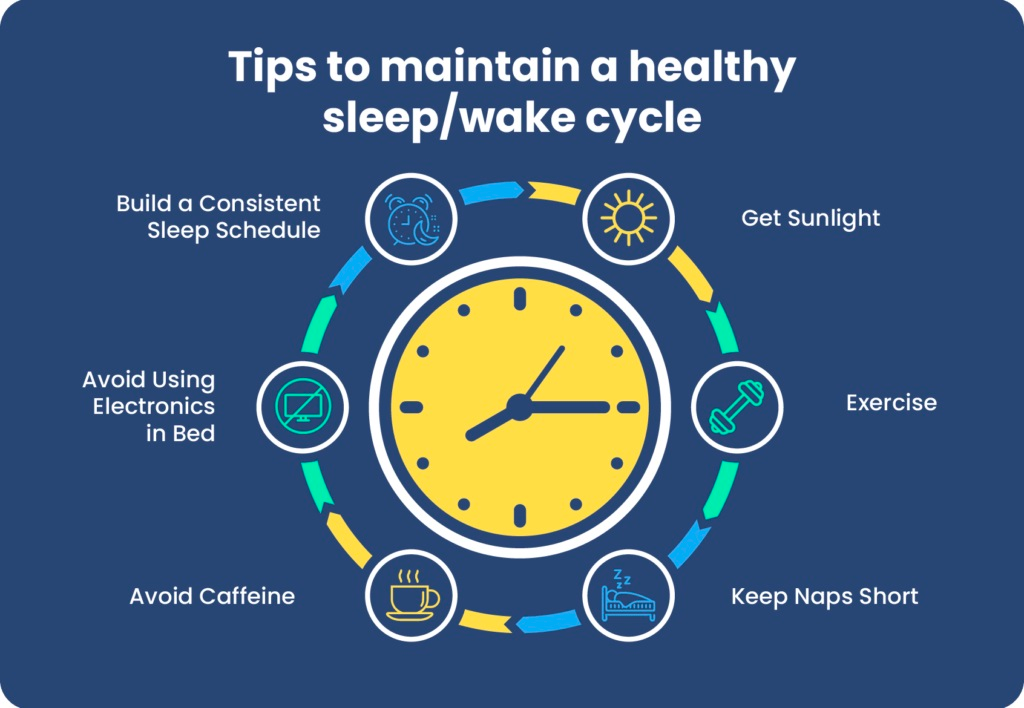
- Light is Your #1 Tool: Get bright, natural light exposure first thing in the morning and minimize blue light from screens after sunset.
- Consistency is King: Go to bed and wake up at roughly the same time every day, even on weekends. This is the single most important habit for circadian health.
- Eat with the Sun: Confine your eating to a daytime window (e.g., 8 AM to 6 PM) to align your metabolic clocks. Avoid late-night meals.
- Create a Dark, Cool Cave for Sleep: Make your bedroom completely dark, quiet, and cool to support the natural drop in body temperature and melatonin production.
- Listen to Your Body: Pay attention to your energy peaks and slumps. Schedule demanding work for your high-alertness windows and respect your body’s need for wind-down time in the evening.
By syncing your life with your biology, you don’t just sleep better—you unlock a higher state of health, performance, and vitality.
Frequently Asked Questions (FAQs)
1. Can you permanently change your circadian rhythm?
You can shift it, but your underlying chronotype has a strong genetic component. You can’t turn a true night owl into a morning lark, but you can use light and behavior to adjust your schedule within a range.
2. How long does it take to reset a disrupted circadian clock?
It typically takes about one day per hour of shift for your body to fully synchronize. For significant jet lag (e.g., a 6-hour time difference), it may take up to a week.
3. Are melatonin supplements safe and effective?
They can be effective for short-term use, like managing jet lag or occasional insomnia, but they are not a long-term solution for circadian misalignment. It’s always best to consult a doctor, as they are a hormone.
4. What is “social jet lag”?
The difference between your sleep schedule on workdays and free days. Even a one- or two-hour difference can create a state of chronic jet lag, associated with obesity and metabolic issues.
5. Why is night shift work so unhealthy?
It forces you to be active and eat when your body is primed for sleep and repair, creating a profound mismatch between your lifestyle and your internal clocks, disrupting nearly every physiological process.
6. How does aging affect circadian rhythms?
As we age, the SCN often becomes less robust, and melatonin production decreases. This leads to earlier sleep times, more fragmented sleep, and a decreased amplitude of the daily rhythm.
7. Can exercise help regulate circadian rhythms?
Yes. Morning exercise, in particular, can help advance your clock (make you wake up earlier), while evening exercise can delay it. However, intense exercise too close to bedtime can be overstimulating for some.
8. What’s the best time to drink coffee for my circadian rhythm?
Wait 60-90 minutes after waking. Your cortisol levels are naturally high upon waking, and adding caffeine immediately can blunt this natural response and lead to an afternoon crash.
9. How does the circadian rhythm affect my gut health?
Your gut microbiome has its own daily rhythms! The composition and function of your gut bacteria fluctuate throughout the day, influenced by your feeding schedule. Disrupting this can contribute to digestive issues.
10. Is there a best time to take medication?
Yes, the field of chronotherapy studies this. The effectiveness and side effects of many drugs, from blood pressure medications to chemotherapy, can vary dramatically depending on the time of day they are administered.
11. Can plants and animals have circadian rhythms?
Absolutely. Plants open and close their flowers, and animals have defined activity periods. It’s a universal biological phenomenon for life on Earth.
12. What is Non-24-Hour Sleep-Wake Disorder?
A rare condition, most common in totally blind individuals, where the circadian clock is not entrained to the 24-hour day, leading to a steady drift of sleep times later each day.
13. How does artificial light at night affect wildlife?
It’s a major environmental disruptor, affecting bird migration, predator-prey relationships, and the reproductive cycles of many species, demonstrating how our internal health is tied to the health of our planet.
14. Can I use a light therapy lamp to help?
Yes, light therapy boxes that emit bright, full-spectrum light are very effective for resetting the clock, especially for treating Seasonal Affective Disorder (SAD) or for shifting to an earlier schedule.
15. What’s the single most important thing I can do tonight?
Stop using all screens 1-2 hours before bed. Read a physical book or practice relaxation techniques in dim light instead. This one change can dramatically improve your sleep quality and circadian alignment, positively impacting your Mental Health.
About The Author