The Conscious Consumption Hierarchy. Use this flowchart before any purchase to make the most sustainable choice, starting with asking if you can Forgo the item entirely.
Why Your Closet is a Microcosm of the Planet’s Health
What I’ve found is that the journey to a sustainable life often begins not in the kitchen or the garage, but in the bedroom—specifically, staring into an overstuffed closet while lamenting, “I have nothing to wear.” This paradox is the heartbeat of the fast fashion crisis. In my own experience, I once owned over 120 items of clothing, yet I wore the same 20 on rotation. The rest were ghosts of past trends, impulse buys, and garments that didn’t quite fit, but I kept them “just in case.” The turning point came when I did a closet inventory and found tags still on items I’d owned for two years. That wasn’t a wardrobe; it was a landfill waiting to happen.
This matters profoundly because the fashion industry is one of the world’s largest polluters, responsible for an estimated 10% of global carbon emissions and nearly 20% of global wastewater, according to 2025 United Nations Environment Programme data. For the curious beginner, building a sustainable wardrobe is the most tangible way to engage with global supply chains, labor ethics, and personal consumption psychology. For the professional, it’s a critical case study in systems thinking. It’s not just about buying “better” clothes; it’s about redefining your relationship with style, value, and identity. The goal isn’t aesthetic perfection but a functional, joyful collection of clothes that reflects your values and serves you for years. The resources available at SheraKat Network’s blog often discuss aligning personal values with consumption, a principle at the core of this journey.
The Context: Unraveling the Fast Fashion Thread
We live in an era of “micro-seasons.” Where the fashion industry once operated on four seasons, fast-fashion giants like Shein and Zara now introduce thousands of new styles weekly. This hyper-acceleration, powered by social media “hauls,” has trained us to see clothing as disposable, chasing a dopamine hit of newness at an unimaginable human and environmental cost.
The true cost of a $5 t-shirt is externalized: it’s paid by garment workers in unsafe conditions earning poverty wages, by rivers in Bangladesh turned black with dye chemicals, and by our own closets becoming cluttered graveyards of poor-quality synthetics that will shed microplastics for centuries in a landfill. This linear model—take (oil for polyester), make (in exploitative conditions), dispose (within a year)—is fundamentally broken. Building a sustainable wardrobe is your personal act of rebellion against this system, a shift towards a circular model of cherish, care, mend, and pass on. Understanding these broader economic systems is part of the mission we embrace in our “Explained” series at The Daily Explainer, where we break down complex global issues.
Key Concepts Defined: The Language of Conscious Style
- Fast Fashion: Mass-produced, trend-driven clothing made rapidly and cheaply with little regard for environmental or social impact. Characterized by high volume, low quality, and short lifespans.
- Slow Fashion: The antithesis. It prioritizes quality, timeless design, ethical production, and fair wages. It’s about buying less but better.
- Capsule Wardrobe: A curated collection of a limited number (e.g., 30-40) of versatile, high-quality items that mix and match cohesively. It eliminates decision fatigue and emphasizes wearability.
- Garment Worker Rights: The fair treatment, safe working conditions, and living wages for the people who make our clothes. This is the social pillar of sustainability.
- Greenwashing: Misleading marketing that portrays a brand or product as more environmentally friendly than it is. (e.g., a “conscious” collection making up 1% of a brand’s output).
- Circular Fashion: Designing clothes with their next life in mind—using durable, recyclable materials, and creating systems for repair, resale, and responsible recycling.
- Fibers & Fabrics: The building blocks. Natural (cotton, linen, wool, silk), Synthetic (polyester, nylon, acrylic from fossil fuels), and Regenerated/Cellulosic (Tencel/Lyocell, Modal, Viscose/Rayon, made from plant pulp).
- Transparency: A brand’s willingness to disclose its supply chain, from farm to factory to finished product. It’s a prerequisite for accountability.
How It Works: A Phased, Compassionate Roadmap
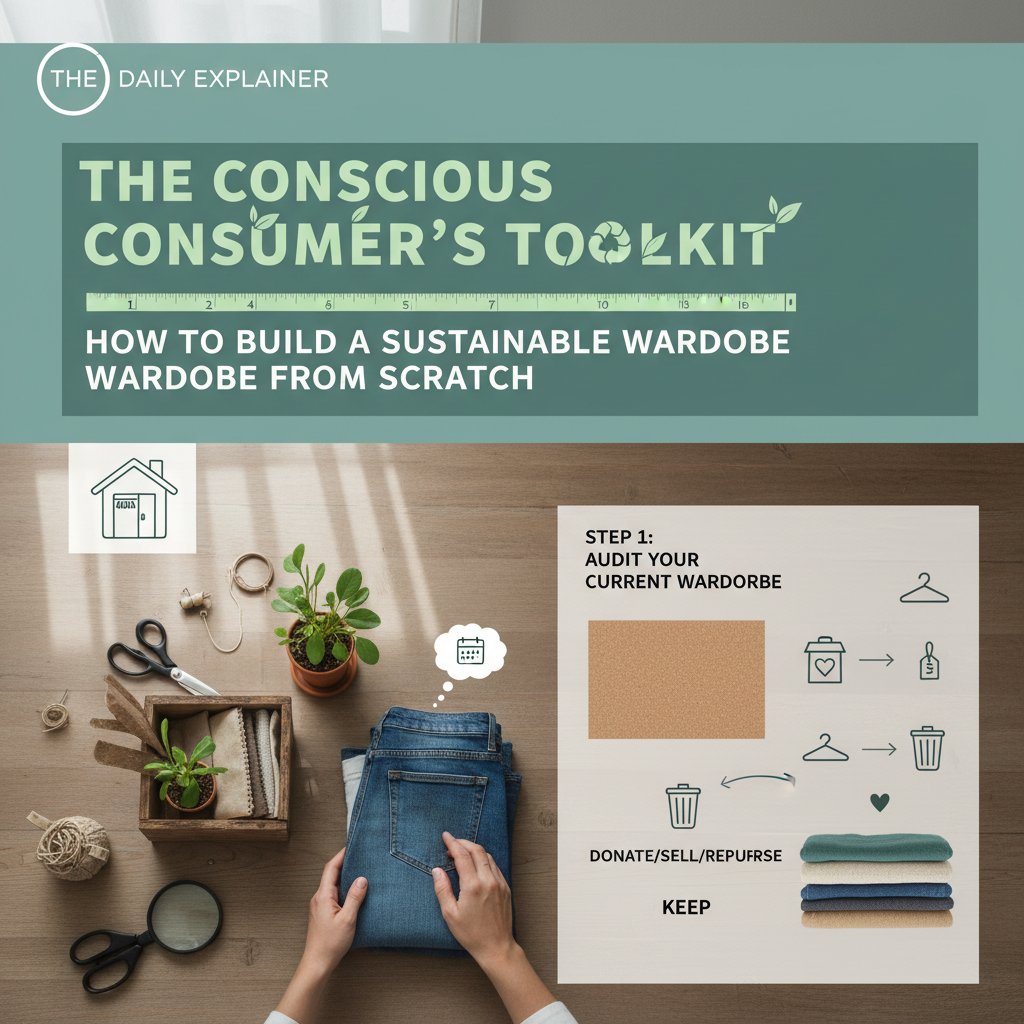
This is a marathon, not a sprint. Be kind to yourself and your budget.
Phase 1: The Great Reckoning (Closet Detox)
- Step 1: The Empty & Sort. Take everything out. Every sock, every scarf. Create four piles: Love/Wear, Maybe, Donate/Sell, Textile Recycling. Be ruthless. For the “Maybe” pile, use the hanger trick: hang all items with the hanger hook facing backwards. After you wear and wash something, return it with the hook facing the right way. After 6 months, any item still facing backwards is likely a “Donate.”
- Step 2: The Analysis. Lay out your “Love” pile. What colors dominate? What silhouettes do you feel best in? What’s missing? (e.g., “I have 10 party tops but no comfortable, smart-casual trousers.”). Take a photo of this pile—this is your style foundation.
Phase 2: Building Your Framework (The Capsule Mindset)
- Step 3: Define Your Palette & Style Words. Choose a core color palette of 3-4 neutrals (black, navy, beige, white) and 2-3 accents. Then, pick 3 style adjectives (e.g., “minimalist, tailored, cozy” or “creative, relaxed, textured”). Every future purchase must fit this palette and vibe.
- Step 4: The Mindful Shopping List. Based on your analysis, create a list of specific items needed to make your existing clothes more versatile. This is your anti-impulse shield. My list once read: “1. Mid-rise, straight-leg, stone-colored linen trousers. 2. A heavyweight, 100% cotton, cream-colored crewneck sweater.”
Phase 3: Mastering the Buy (The Sustainable Acquisition Framework)
Before any purchase, run through this hierarchy—the “Five F’s of Conscious Consumption”:
- Forgo: Do I truly need this? Can I wait 30 days?
- Find Secondhand: Check ThredUp, The RealReal, local consignment, eBay, or Depop first. This is the single most sustainable way to acquire clothing.
- Fix: Can I mend or alter something I already own to serve this need?
- Favor Ethical: If buying new, research brands that align with your values on transparency, materials, and ethics. Use tools like Good On You.
- Fractional: Could I rent this for a special occasion (via Rent the Runway, Nuuly) instead of owning it?
Why This Process is a Lifeline, Not a Limitation
Beyond the staggering environmental stats, a sustainable wardrobe delivers profound personal benefits:
- Financial Freedom: You stop the constant drip of $30-50 “meh” purchases. You save for investment pieces that last. I calculated that my annual clothing spend dropped by 60% after the initial transition year, as I was no longer constantly replacing cheap items.
- Mental Clarity & Time Savings: The “closet chaos” mental load disappears. Getting dressed becomes a 2-minute joy, not a 20-minute frustration.
- Authentic Self-Expression: When you remove trend noise, you discover what you genuinely love to wear. Your style becomes a signature, not a copy.
- Supporting a New Economy: Every purchase from a transparent, ethical brand or a secondhand seller is a vote for the world you want. You become part of the demand driving systemic change. This principle of voting with your wallet applies broadly, a topic often explored in discussions on global affairs and politics.
The Future of Fashion: Tech, Traceability, and Transformation
The future wardrobe is digital, durable, and data-driven.
- Digital Product Passports (DPPs): By 2026, EU regulations will begin mandating DPPs—QR codes on garments detailing materials, supply chain, care, and recycling instructions. This will make transparency non-negotiable.
- AI-Powered Personal Styling & Closet Apps: AI will analyze your existing capsule, suggest optimal outfit combinations you haven’t tried, and precisely identify gaps, making secondhand searches hyper-efficient.
- Advanced Recycling (Textile-to-Textile): Breakthroughs in chemical recycling are promising to turn old polyester garments back into new, high-quality polyester, moving us toward a true closed-loop for synthetics.
- Biofabrication: Lab-grown leather (like Modern Meadow’s) and spider silk (like Bolt Threads’) will offer animal-free, low-impact alternatives to conventional materials.
Common Misconceptions: Separating Style from Stereotype
- “Sustainable fashion is all beige linen sacks.” False. Sustainability is a production ethic, not an aesthetic. Brands like Patagonia, Girlfriend Collective, and even more stylish lines like Reformation or Sheep Inc. prove you can have color, fit, and flair.
- “It’s too expensive.” This conflates cost with price. A $200 wool sweater worn 100 times costs $2 per wear. A $20 acrylic sweater worn twice costs $10 per wear. Secondhand markets also make quality affordable.
- “My size isn’t available in ethical brands.” This is a valid and improving critique. However, the secondhand market is the great equalizer, offering an incredible range of sizes. Also, more brands like Universal Standard and Big Bud Press are leading the way in inclusive, ethical sizing.
- “Natural fibers are always better.” Context matters. Conventional cotton is a thirsty, pesticide-heavy crop. Organic cotton or recycled polyester can sometimes have a lower impact. The key is durability: a durable polyester coat worn for 10 years is better than a cotton one discarded in 2.
- “Donating clothes fixes the problem.” Only about 20% of donated clothing is resold locally. The rest is downcycled, shipped overseas (often disrupting local markets), or landfilled. Buying less is the primary solution.
Recent Developments (2025-2026): The Industry Shifts
- EU’s Strategy for Sustainable and Circular Textiles: This sweeping 2026 policy framework sets binding targets for textile waste collection, recycled content in new garments, and a ban on the destruction of unsold textiles. It’s a global game-changer.
- The Rise of “Recommerce”: ThredUp’s 2025 report shows the secondhand market growing 5x faster than traditional retail. Luxury brands like Gucci and Balenciaga are now launching their own official resale platforms.
- Supply Chain Transparency Tech: Blockchain is being used by pioneers like Eon to give each garment a digital identity, allowing you to track its journey from field to hanger with your phone.
- Legislation Against Greenwashing: The UK’s CMA and the FTC in the US have issued stricter 2025 guidelines, cracking down on vague terms like “eco-friendly” and demanding proof for sustainability claims.
A Success Story: From Fast-Fashion Addict to Intentional Curator
Sarah, a 32-year-old marketing manager, described her old shopping habit as “therapy.” She’d buy trendy pieces weekly, wear them once or twice for Instagram, and feel empty afterward. Her closet was a chaotic, stressful monument to fast fashion.
Her Transformation:
- The Detox: She committed to a “No New Clothes” year for 2024, with exceptions only for underwear and socks. The first three months were hard.
- The Rediscovery: She used an app to catalog her existing items and created over 50 “new” outfits she’d never tried by remixing. She learned basic sewing to repair seams and hem pants.
- The Mindful Return: In 2025, with a clear list, she bought three investment pieces: a perfectly tailored blazer from a B-Corp brand, a pair of high-quality denim from a repair-inclusive company, and a silk dress from The RealReal. Each purchase felt like a celebration, not a compulsion.
- The Result: Her style is now recognized by colleagues as “effortlessly Sarah.” She spends 80% less on clothing, has a closet that sparks joy, and feels her values are aligned with her appearance. The constant anxiety of “keeping up” has vanished. Her journey mirrors the entrepreneurial mindset of building something valuable from the ground up, a theme central to the guides found on platforms like SheraKat Network.
Real-Life Examples and Actionable Swaps
- Instead of buying a new party dress: Host a clothing swap with friends. I’ve obtained three of my favorite statement pieces this way. It’s social, free, and circular.
- Instead of tossing a shirt with a loose button: Learn to sew a button. It’s a 5-minute skill that extends a garment’s life by years. A small, curated sewing kit is a sustainable wardrobe essential.
- Instead of buying cheap “vegan leather” (PVC): Look for secondhand genuine leather (a durable by-product of the meat industry) or invest in new innovative materials like cactus (Desserto) or apple leather.
- For wardrobe gaps: Before buying, search “item + secondhand” on Instagram. Many small, curated vintage shops operate there. I found my ideal vintage Levi’s 501s this way.
- Care as Activism: Wash clothes in cold water, air dry when possible, and use a Guppyfriend bag to catch microplastics from synthetics. Proper care can double or triple a garment’s lifespan.
Conclusion and Key Takeaways: Wear Your Values
Building a sustainable wardrobe is an ongoing practice of mindfulness. It’s about falling in love with the clothes you have, respecting the resources and labor that created them, and making future choices with intention and joy. It’s the most personal form of environmental and social activism.
Key Takeaways:
- Start With What You Have: The most sustainable garment is the one already in your closet. Detox and rediscover before you buy a single new thing.
- Embrace Secondhand First: Make it a rule. It saves money, resources, and unearths unique finds.
- Cost Per Wear is Your North Star: Evaluate every potential purchase through this lens, not the sticker price.
- Materials & Care Matter: Prioritize natural, durable fibers or high-quality recycled synthetics. Care for them meticulously.
- Progress Over Perfection: One ethical replacement for a worn-out basic is a win. This is a marathon of mindful steps.
Your wardrobe is a story you tell the world every day. Make it a story of thoughtfulness, quality, and respect—for people, for the planet, and for yourself. For more discussions on building intentional systems in all areas of life, the community and resources at WorldClassBlogs offer a wealth of perspectives, particularly in their nonprofit hub which often highlights advocacy in ethical supply chains.
Frequently Asked Questions (FAQs)
- What are the most trustworthy certifications to look for?
- Global Organic Textile Standard (GOTS) for organic fibers. Fair Trade Certified for worker welfare. Bluesign for chemical management. B Corp Certification for overall social/environmental performance.
- Is shopping at large “green” collections from H&M or Zara okay?
- This is tricky. While it’s better than their conventional lines, these collections are often drops in a polluting ocean and can be greenwashing. Prioritize brands where sustainability is the core mission, not a side project.
- How do I handle underwear, socks, and tights sustainably?
- This is the hard part. For basics, look for durable brands using organic cotton or recycled materials (e.g., Pact, Boody, Girlfriend Collective). Buy fewer, higher-quality pairs and care for them well. Recycle worn-out items through programs like Knickey’s or For Days.
- What do I do with clothes that are truly worn out?
- Textile Recycling. Do not put them in the regular donation bin. Find a specific textile recycling drop-off (often at stores like H&M or North Face) or mail-in program (like For Days). They can be turned into insulation or industrial rags.
- How can I be sustainable with kids’ clothes they outgrow so fast?
- This is the perfect arena for the circular economy! Utilize buy-nothing groups, clothing swaps with other parents, and secondhand platforms like Kidizen. Buy durable, size-adjustable items when new.
- Are rental services like Rent the Runway actually sustainable?
- For occasional wear (weddings, galas), yes—it prevents a single-use purchase. For everyday wear, the carbon footprint of constant cleaning and shipping can be high. It’s best for low-frequency, high-formality needs.
- What’s one simple question to ask a brand to gauge transparency?
- “Can you tell me which factory this was made in?” If they can’t or won’t answer directly, their transparency is likely superficial.
- How do I find my personal style during this process?
- Create a private Pinterest board or Instagram folder. Save images not of outfits you want to buy, but of people whose vibe you admire. Look for commonalities in color, fit, and feeling over time.
- What are “investment pieces” and what should they be?
- Items that form the backbone of your wardrobe: a great coat, perfect-fitting jeans, a quality blazer, a versatile dress, and excellent shoes. They should be in your core colors, made of the best materials you can afford, and impeccably constructed.
- How do I resist sales and marketing triggers?
- Unsubscribe from all brand newsletters. Mute triggering influencers on social media. Implement the 30-day rule. Remember, a sale only saves you money if you were already planning to buy that exact, needed item.
- Is vintage always sustainable?
- Generally, yes—it’s the ultimate reuse. Be mindful of dry-cleaning chemicals on very old items. Also, be respectful of cultural artifacts and sacred items that should not be treated as fashion.
- What about shoes?
- The same principles apply. Prioritize resolving and repairing (find a local cobbler!). Look for brands like Nisolo, Veja, or Allbirds that prioritize materials and ethics. Buy secondhand—high-quality leather shoes break in beautifully to your feet.
- How do I talk to family about sustainable gifting?
- Be proactive. Share your wishlist of specific, sustainable items or experiences. Say, “I’m really focusing on quality over quantity this year. I’d love a gift card to [ethical brand] or your help mending my favorite jacket.”
- What’s the environmental impact of shipping for online secondhand?
- It’s a trade-off. Studies show the carbon footprint of shipping is far outweighed by the savings of extending a garment’s life. Opt for consolidated shipping when possible.
- Can I ever shop fast fashion again?
- The goal isn’t lifelong abstinence but a fundamental shift in behavior. If you need black socks for a job starting tomorrow, buy them. But 95% of your acquisitions should flow through your new, conscious framework.
- How do I care for delicate natural fibers like wool and silk?
- Hand wash in cool water with a gentle detergent like The Laundress or Woolite. Never wring. Lay flat to dry on a towel. For wool, airing out between wears often eliminates the need for frequent washing.
- What are some good “gateway” ethical brands for beginners?
- For basics: Pact, Organic Basics, Kotn. For activewear: Girlfriend Collective, Patagonia. For denim: Outerknown, Boyish. For a bit of everything: Everlane (though scrutinize their transparency claims yearly).
- How do I build a work-appropriate, sustainable wardrobe?
- Focus on a uniform. 2-3 pairs of excellent trousers, 2-3 blazers or cardigans, and a selection of simple tops in your palette. A capsule wardrobe is inherently professional.
- What role does social media play now?
- Use it as a tool for education, not aspiration. Follow activists like Aja Barber, brands doing real work, and stylists who focus on creativity with existing clothes. Curate your feed to support your journey.
- I feel guilty about my past purchases. How do I move forward?
- Guilt is not a useful tool. Thank your past self for the lessons that brought you here. Donate, sell, or responsibly recycle what you can. Then, commit to making your next choice a better one. Every single conscious purchase is a step forward.
About the Author
Sana Ullah Kakar is a writer and sustainable style advocate who once believed a new outfit could fix a bad day. After a decade in the fashion industry, they became disillusioned by its waste and turned their focus toward educating consumers on building intentional, joyful wardrobes that don’t cost the earth. They believe getting dressed should be an act of self-respect, not stress, and that the most radical style statement you can make is wearing a garment for the tenth year in a row. They share practical, non-judgmental guidance to help others find freedom in less clutter and more meaning. For more from our team of explainers, feel free to reach out through our contact page.
Free Resources
- The “Good On You” Directory & App: Brand ratings based on people, planet, and animals.
- Project Cece: A search engine aggregator for sustainable fashion brands across Europe.
- The Ethical Consumer Guide: Detailed reports and brand breakdowns.
- Fashion Revolution’s “Who Made My Clothes?” Toolkit: Resources for demanding brand transparency.
- Your Local Tailor or Cobbler: The most valuable sustainable fashion resource is the person who can make your clothes last. Building a relationship with them is key.
- “The Conscious Closet” by Elizabeth L. Cline: The definitive book on building a sustainable wardrobe.
Discussion
What’s the oldest item in your closet and why have you kept it? What has been your biggest hurdle in building a more conscious wardrobe? Have you had a successful clothing swap or repair victory? Share your stories, questions, and favorite secondhand finds below. Let’s build a community that celebrates style with substance. For further in-depth discussions on consumer culture and systemic change, the conversations happening within the nonprofit community featured on WorldClassBlogs offer deep and meaningful insights.
About The Author