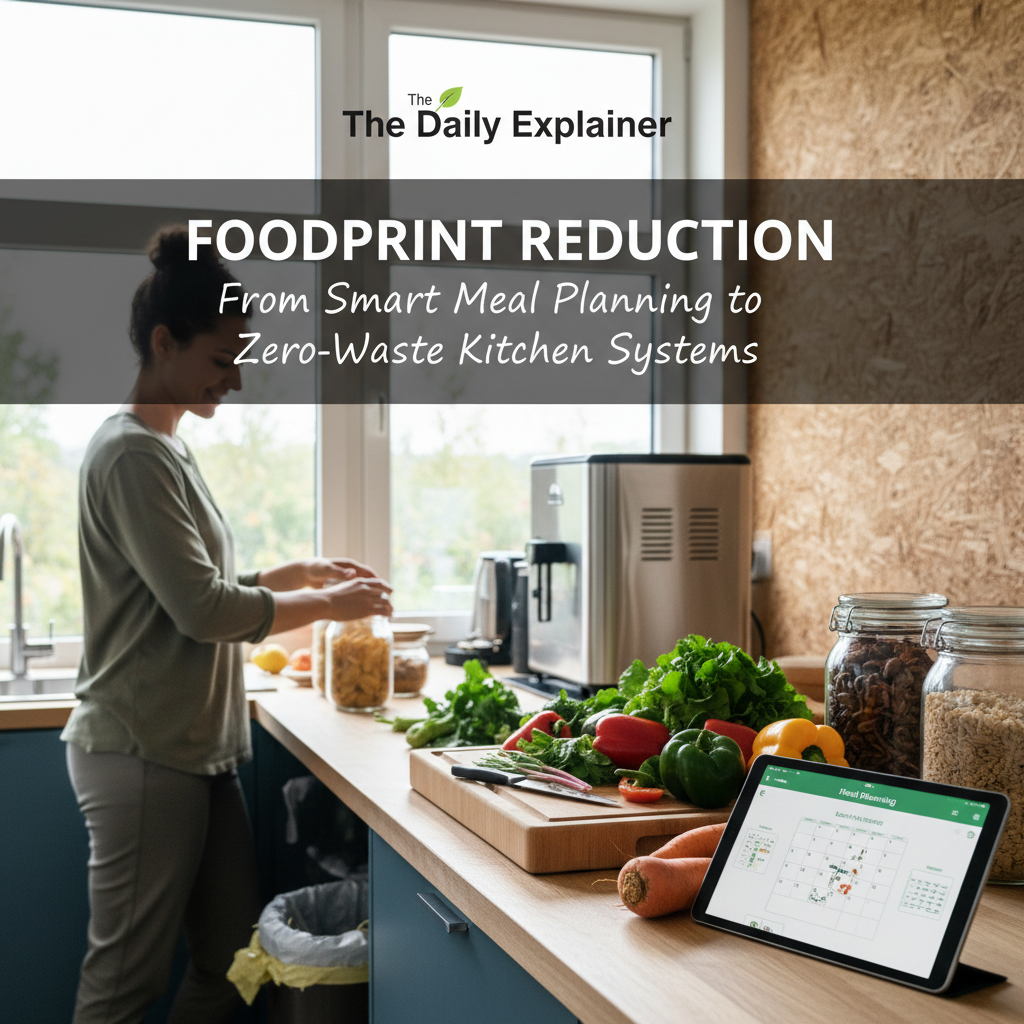
The Complete Foodprint Reduction System. Follow this visual guide to build your efficient, waste-free kitchen ecosystem from audit to compost.
Why What’s On Your Plate Determines Our Planetary Future
In my experience, there is no more intimate or daily connection to the environmental crisis than the food we eat. I’ll never forget the moment I opened my refrigerator to a familiar scene: wilted cilantro, a half-used jar of tomato sauce growing a science experiment, and chicken breasts that had passed their prime. As I bagged it all for the trash, the weight of it hit me—this wasn’t just wasted food or money; it was wasted water, fuel, labor, and soil fertility, all ending in a landfill to produce methane, a greenhouse gas 80 times more potent than CO2 in the short term. That weekly ritual of shame was my personal “foodprint”—the total environmental impact of my eating habits—and it was enormous.
This matters because the global food system is responsible for approximately one-third of all human-caused greenhouse gas emissions, a figure underscored by the 2025 IPCC Special Report on Climate Change and Land. For the curious beginner, the kitchen is the most powerful place to start making a difference. For the sustainability professional, food waste represents a shocking inefficiency in our carbon and resource budgets. Reducing your foodprint isn’t about restrictive diets or perfect zero-waste jars; it’s about building intelligent, resilient systems that save you money, time, and stress while radically cutting your environmental impact. It’s practical sustainability at its most delicious. For more foundational explanations of complex systems like our global food chain, a visit to The Daily Explainer’s Explained section can provide excellent background.
The Context: A Broken System from Farm to Fridge to Landfill
Our modern food system is a masterpiece of complexity and a catastrophe of waste. It’s estimated that a staggering 40% of all food produced in the United States is never eaten. This waste occurs at every stage: on farms due to cosmetic standards, in transport and storage, at retailers, and most significantly, in our own homes, where over 40% of that total waste occurs.
Simultaneously, our diets have become disconnected from seasonality and locality, relying on global supply chains that burn fossil fuels to bring us berries in winter. The environmental cost is measured in deforested land for cattle grazing, depleted aquifers for thirsty crops, and nutrient runoff creating dead zones in our oceans. The term “foodprint” encompasses all of this: the carbon emissions (from transport and methane), the water footprint (over 1,800 gallons to produce a single pound of beef), and the land use tied to your weekly grocery haul. The good news? Household-level solutions are immediate, impactful, and deeply satisfying. Understanding these global interconnections is part of a broader literacy in global affairs, a topic we often explore in our dedicated Global Affairs & Politics coverage.
Key Concepts Defined: The Language of a Mindful Kitchen
- Foodprint: The total environmental impact of producing, transporting, storing, and disposing of the food you consume. It includes carbon emissions, water use, land use, and pollution.
- Food Waste vs. Food Loss: Food Loss occurs upstream (at farms, during processing, in transport). Food Waste occurs at the retail and consumer levels—the food that is edible but discarded.
- Meal Planning: The strategic process of planning meals for a set period, creating a corresponding shopping list, and prepping components to reduce decision fatigue and impulse buys.
- Food Preservation: Methods to extend the life of food, including refrigeration, freezing, canning, fermenting, dehydrating, and pickling.
- Circular Kitchen: A system where food scraps and byproducts are recirculated—via composting, broths, regrowing, or animal feed—rather than treated as waste.
- Seasonal & Local Eating: Choosing foods that are grown in your geographic region during their natural harvest time, minimizing transportation and storage emissions.
- Plant-Forward Diet: A dietary pattern that emphasizes plant-based foods (fruits, vegetables, whole grains, legumes, nuts) while reducing meat and dairy consumption, not necessarily eliminating them entirely.
- “First In, First Out” (FIFO): An inventory management system where older food items are used before newer ones to prevent spoilage.
How It Works: Building Your Zero-Waste Kitchen Ecosystem, Step-by-Step
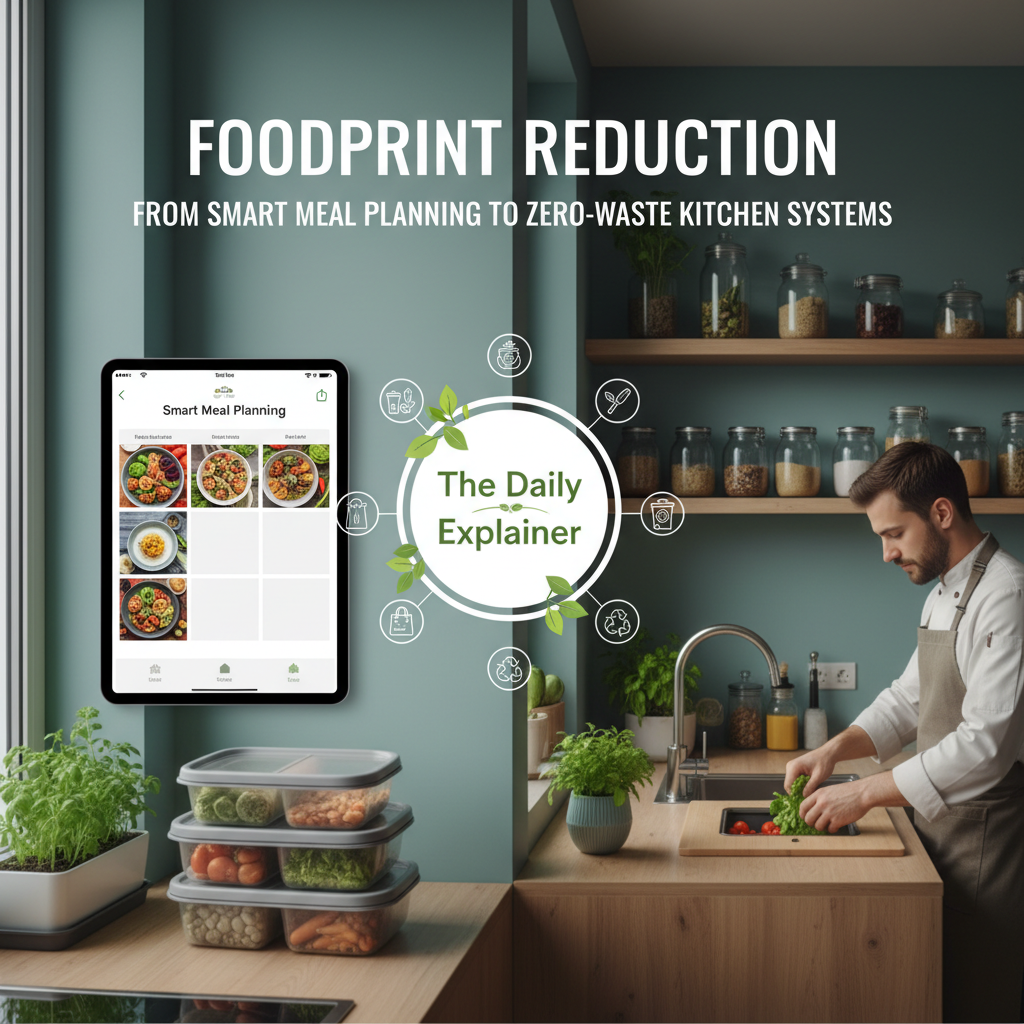
This is a system, not a single action. Implement these phases progressively.
Phase 1: The Audit & Mindset Shift (Week 1)
- Step 1: The Trash Audit. For one week, keep a log or take photos of every food item you throw away. Note why (spoiled, leftovers forgotten, peels/scraps). This data is your baseline. My audit revealed I was constantly wasting fresh herbs and bread—a clue to my system’s flaws.
- Step 2: The Fridge & Pantry “Shop.” Before your next grocery trip, take inventory. What needs to be used first? I started placing a small “EAT ME FIRST” bin in my fridge for items nearing expiration.
Phase 2: The Mastery of Planning & Procurement (Ongoing)
- Step 3: The 30-Minute Meal Plan. Dedicate time each week. I plan 3-4 dinner recipes that share ingredients (e.g., a roast chicken one night, chicken tacos the next, and a carcass for stock). I use a simple template: list recipes, note needed ingredients, check against my inventory, and generate a strict shopping list. This single habit cut my grocery bill by 25% and my food waste by over half.
- Step 4: Strategic Shopping. Shop with your list, but be flexible for markdowns on ripe produce you can use immediately or freeze. Choose loose produce over packaged. Consider bulk bins for staples using your own containers. For insights on building efficient systems in business and life, the resources at SheraKat Network’s blog often emphasize the same principles of planning and inventory management.
Phase 3: The Art of Storage & Preservation (The Defense)
- Step 5: Optimize Storage. Not everything goes in the fridge. Store potatoes, onions, and garlic in a cool, dark place. Keep tomatoes on the counter. Use produce bags (like silicone or mesh) to regulate humidity. Learn your fridge’s zones: coldest for meat, crispers for veggies.
- Step 6: Embrace Preservation. My freezer is my secret weapon. I freeze leftover wine in ice cube trays for cooking, blend overripe bananas for smoothie bags, and chop and freeze herbs in olive oil. Learning to make quick pickles with extra vegetables was a game-changer.
Phase 4: The Circular Kitchen in Action (Closing the Loop)
- Step 7: “Root-to-Stem” & “Nose-to-Tail” Cooking. Use broccoli stems in slaws, beet greens in sautés, and vegetable peels to make stock. A potato peel broth, seasoned well, forms an incredible base for soups.
- Step 8: Composting is Non-Negotiable. This is where your final scraps return to the earth. If you have a yard, a simple bin works. For apartments, electric countertop composters (like Lomi) or worm bins are revolutionary, or find a community drop-off. My small balcony compost tumbler provides soil for my herb garden—the perfect circle.
Why This Systematic Approach is a Lifeline for Your Wallet and the Planet
The benefits cascade:
- Dramatic Financial Savings: The average American family of four throws away about $1,800 worth of food annually. Strategic planning and use can save hundreds, if not thousands, per year.
- Improved Health & Nutrition: Meal planning leads to more home-cooked meals, less reliance on processed foods and takeout, and a more diverse, vegetable-rich diet.
- Reduced Climate Impact: If global food waste were a country, it would be the third-largest emitter of greenhouse gases after the US and China. Your reduction directly lowers methane emissions and the resource intensity of your diet.
- Resilience & Food Security: These skills—preservation, cooking from scraps, understanding storage—make you less dependent on fragile supply chains and more self-reliant.
- Mental Peace: The “what’s for dinner?” panic disappears. A well-organized kitchen and plan reduce daily decision fatigue significantly.
The Future of Food: Tech, Transparency, and Hyper-Local Loops
The future kitchen is smart, connected, and circular.
- AI-Powered Food Management: Apps like NoWaste and Fridgely will evolve to use camera recognition to track your fridge inventory, suggest recipes based on what’s about to expire, and automatically generate shopping lists.
- Smart Packaging & Labels: Time-temperature indicators and RFID tags will tell you exactly when food is truly unsafe, moving beyond arbitrary “best-by” dates and preventing premature disposal.
- Home Bioreactors & Cellular Agriculture: Emerging tech may allow for brewing proteins or growing specific food components (like vanilla or collagen) at home with minimal inputs.
- Community-Scale Circular Systems: Urban “agrihoods” will integrate shared composting, tool libraries for preservation equipment, and neighborhood food exchanges, creating hyper-local resilience. Exploring how communities and nonprofits are building these models can be inspiring, as seen in the projects featured in the WorldClassBlogs Nonprofit Hub.
Common Misconceptions: Cutting Through the Clutter
- “Zero-waste means I can never throw anything away.” False. It’s about systems that minimize waste, not achieve perfection. One landfill bag a month versus three is a massive victory.
- “Meal planning is too rigid and time-consuming.” It takes 30 minutes a week to save hours of stress and multiple trips to the store. It can be flexible—plan for 4 meals and leave 3 nights for leftovers or improvisation.
- “Composting is smelly and attracts pests.” Done correctly, it is odorless. A balanced bin (right mix of “greens” and “browns”) and proper aeration prevent smells. Indoor systems are fully sealed.
- “Plant-based eating is the only sustainable diet.” While reducing meat (especially beef and lamb) is highly impactful, an omnivore who eats everything they buy has a lower foodprint than a vegan who wastes half their produce. Waste is often the bigger sin.
- “Frozen and canned produce is inferior.” Nutritionally and environmentally, this is often wrong. Frozen produce is picked and flash-frozen at peak ripeness, retaining nutrients. It has a longer shelf life, preventing waste. The energy footprint is often lower than out-of-season fresh imports.
Recent Developments (2025-2026): Policy and Innovation Converge
- National Food Waste Mandates: Following the EPA’s 2030 food waste reduction goal, several U.S. states have enacted laws in 2025 requiring large food generators (supermarkets, restaurants) to separate organic waste for composting or anaerobic digestion, creating new infrastructure.
- Dynamic Pricing for Freshness: More retailers are adopting digital price tags that automatically discount items as they near their sell-by date, reducing retail waste and saving consumers money.
- “Upcycled Food” Certification Boom: The Upcycled Food Association’s certification is gaining mainstream traction, identifying products made from ingredients that would otherwise be wasted (e.g., juice pulp crackers, spent grain flour). This creates economic value for food scraps.
- Home Food Scrap Processors: The market for countertop electric composters and dehydrators (like Vitamix’s FoodCycler) has exploded, offering clean, odorless solutions for urban dwellers to process scraps into soil amendment in hours.
A Success Story: The Johnson Family’s Kitchen Transformation
The Johnsons, with two young kids, were overwhelmed. They relied on last-minute takeout, made multiple weekly grocery runs, and constantly threw out spoiled food and unfinished meals. Their weekly food spend was high, and mealtimes were stressful.
Their Action Plan:
- The Sunday Session: They instituted a 30-minute family meal planning meeting over breakfast. The kids helped choose one meal. They planned 5 dinners, noting 2 “leftover nights.”
- The Power of the Freezer: They invested in a chest freezer. They now batch-cook and freeze staples: lentil soup, tomato sauce, marinated chicken. They also freeze leftover portions of cooked meals as “instant dinners” for busy nights.
- The “Use-It-Up” Lunch: Friday lunch became a fridge clean-out smorgasbord—a fun challenge to combine leftover bits into wraps, salads, or grain bowls.
- Composting & Chickens: They started a backyard compost bin and got three backyard chickens (where local ordinances allow). The chickens devour vegetable scraps and provide eggs.
The Result: Their grocery bill dropped by 35%. Their food waste shrank to one small compost bin per week (no landfill waste). They saved 5+ hours weekly on shopping and “what’s for dinner?” debates. The kids are more engaged with food, and they feel a profound sense of competence and sustainability. For anyone looking to systematize other areas of their life or business with similar transformative results, the comprehensive guide on starting an online business in 2026 at SheraKat Network demonstrates the same principles of process and planning.
Real-Life Examples and Actionable Systems
- Herb Preservation Hack: Instead of letting cilantro rot, wash, dry, chop it, and pack it into an ice cube tray covered with water or oil. Freeze. Pop out cubes directly into cooking pots.
- Bread End Solution: Collect stale bread ends and crusts in a bag in the freezer. When full, pulse into breadcrumbs in a food processor. Store in a jar for toppings or coatings.
- “Scrap” Vegetable Stock: Keep a gallon bag in your freezer. Add onion skins, carrot peels, celery ends, mushroom stems, herb stalks. When full, simmer with water for 1-2 hours. Strain. You have free, flavorful stock.
- The “FIFO” Fridge: When unpacking groceries, move older items to the front and place new items behind them. This simple visual cue prevents things from getting lost and spoiled.
- Regrow from Scraps: Place the root end of green onions in a glass of water on a windowsill. They will regrow multiple times. You can do the same with lettuce bottoms and celery.
Conclusion and Key Takeaways: Your Kitchen as a Hub of Regeneration
Reducing your foodprint transforms your kitchen from a site of consumption and waste into a center of creativity, conservation, and nourishment. It reconnects you to the journey of your food and empowers you to be a steward of immense resources.
Key Takeaways:
- Audit First: You can’t manage what you don’t measure. Understand your waste patterns before trying to fix them.
- Plan with Purpose: Meal planning is the single most effective tool to save money and reduce waste. Let your plan dictate your list, and your list dictate your shopping.
- Your Freezer is a Time Machine: Use it aggressively to preserve food at its peak and save future-you from cooking.
- There is No “Away”: Close the loop by composting. It completes the biological cycle and keeps nutrients out of methane-producing landfills.
- Progress, Not Perfection: Celebrate using that last limp carrot in a stock. Each small victory builds a more resilient system.
Start with one phase, one new habit. Perhaps it’s the “EAT ME FIRST” bin. Maybe it’s a dedicated meal planning hour. Each step builds a kitchen that works for you and the planet. For more practical guides and discussions on implementing sustainable systems, our main Blog at The Daily Explainer is regularly updated with actionable content.
Frequently Asked Questions (FAQs)
- What are the most commonly wasted foods, and how can I save them?
- Lettuce/Bagged Greens: Store in a container lined with a dry paper towel to absorb moisture. Bananas: Freeze when spotted for smoothies or banana bread. Milk: Freeze it if you won’t use it in time (shake well after thawing). Cooked Rice/Pasta: Refrigerate and use within 3 days, or freeze.
- Are “best-by,” “sell-by,” and “use-by” dates the same?
- No. Except for infant formula, these are manufacturer suggestions for peak quality, not safety mandates. “Sell-by” is for store stock rotation. “Best-by” is for quality. “Use-by” is the last date for peak quality. Use your senses (smell, sight) to determine safety.
- How can I reduce waste if I live alone?
- The freezer is your best friend. Portion and freeze meat, bread, and cooked meals immediately. Shop at stores with bulk bins to buy exact amounts. Choose smaller, more frequent shopping trips for fresh produce.
- Is it safe to eat food past its expiration date?
- For shelf-stable, canned, and dry goods, often yes if the package is intact. For dairy and meat, be more cautious and rely on smell and appearance. When in doubt, throw it out for safety, but work on buying less next time.
- What’s the most impactful dietary change I can make?
- Reduce beef and lamb consumption. Then, focus on reducing all waste. A wasted steak has a higher footprint than an eaten lentil.
- How do I start composting in an apartment without a balcony?
- Look for community garden drop-offs. Use a sealed countertop collector (like a stainless steel bin with a filter lid) and empty it every few days. Explore electric composters (Lomi, Vitamix FoodCycler) that process scraps into dry, odorless “soil” in hours.
- What kitchen tools are worth investing in for waste reduction?
- A chest freezer, quality food storage containers (glass preferred), a set of mesh produce bags, a good knife for proper prep, and a pressure canner or dehydrator if you get serious about preservation.
- How do I handle food waste from parties or big meals?
- Plan for it. Have containers ready for guests to take leftovers home. Turn turkey carcasses into stock. Blend leftover roasted vegetables into soup. Freeze individual portions.
- Are meal kit delivery services (HelloFresh, Blue Apron) sustainable?
- They are a mixed bag. They can reduce household food waste by providing exact portions, but their carbon footprint from packaging and shipping is high. They are a useful tool for learning to cook but not the most sustainable long-term system.
- What do I do with used cooking oil?
- Never pour it down the drain. For small amounts, soak it up in paper towel and compost it. For larger amounts, let it cool, pour into a sealed non-recyclable container (like a milk carton), and trash it. Some municipalities have recycling drop-offs.
- How can I get my family on board?
- Make it a game or a challenge. Have a “clean-out-the-fridge” pizza night. Show them the money saved and allocate it for a fun family experience. Involve kids in meal planning and composting.
- Is buying in bulk always better?
- Only if you will use it all before it spoils, a 10-pound bag of rice is great; a gallon of olive oil that goes rancid is not. Know your consumption rates.
- What are “imperfect” or “ugly” produce services, and are they worth it?
- Services like Misfits Market or Imperfect Foods deliver produce that doesn’t meet cosmetic retail standards. They can be excellent for reducing farm-level loss and saving money, but assess the packaging and shipping to your location.
- How do I store herbs to make them last?
- Treat them like flowers: trim stems, place in a jar with an inch of water, loosely cover with a plastic bag, and refrigerate. Change water every few days. For hardy herbs like rosemary and thyme, wrap in a slightly damp paper towel and store in a container.
- Can I compost cooked food, meat, or dairy?
- In a standard backyard bin, avoid meat, dairy, and oily cooked foods as they attract pests. In a hot, well-managed compost system or a Bokashi bin (fermentation system), you can compost these items.
- What’s the environmental impact of a dishwasher vs. hand washing?
- A modern, efficient dishwasher run with a full load uses significantly less water and energy than hand washing. Scrape, don’t rinse, plates before loading to save more water.
- How do I reduce plastic packaging from groceries?
- Use reusable produce and shopping bags. Choose glass or cardboard packaging over plastic when possible. Shop farmers’ markets where you can use your own containers. Advocate for store bulk sections.
- What is a “plant-forward” plate?
- The 2025 USDA Dietary Guidelines emphasize a “plant-forward” approach: Fill half your plate with fruits and vegetables, a quarter with whole grains, and a quarter with protein, often prioritizing plant-based proteins like beans and lentils.
- I have a tiny kitchen. How can I make this work?
- Prioritize vertical storage (shelves, hanging racks). Use your freezer strategically as a “pantry.” Own fewer, multi-purpose tools. A slow cooker or Instant Pot can be a space-efficient powerhouse for cooking from scratch.
- Where can I find recipes for food scraps?
- Search for “root-to-stem cooking,” “scrap recipes,” or “nose-to-tail.” Websites like EatingWell and BBC Good Food have dedicated sections. The book “The Zero-Waste Chef” by Anne-Marie Bonneau is fantastic.
About the Author
Sana Ullah Kakar is a home cook, systems thinker, and former professional kitchen manager who became obsessed with solving the puzzle of household food waste. After seeing tons of waste in restaurants and then confronting the same issue at home, they dedicated themselves to developing practical, non-preachy systems for the everyday cook. They believe a well-run kitchen is the heart of a sustainable home and that the most powerful climate action happens over the cutting board. They love turning potato peels into broth and finding the perfect container for everything. For more information or to get in touch with our editorial team, you can always visit our Contact Us page.
Free Resources
- EPA’s Food: Too Good to Waste Toolkit: A comprehensive guide with meal planning templates and tracking sheets.
- Savethefood.com: A phenomenal resource from the Natural Resources Defense Council (NRDC) with storage guides, recipes, and portion planners.
- Plan to Eat App: A popular meal planning service that pulls recipes from blogs and generates shopping lists.
- LocalHarvest.org: Find farmers’ markets, CSAs (Community Supported Agriculture), and farms near you to source local, seasonal food.
- Composting Guide from your County/Municipality: Search “[Your County] composting guide” for local rules, workshops, and drop-off locations.
Discussion
What’s your #1 most-wasted food item, and what’s one trick you’ve learned to save it? Have you tried a meal planning system that worked (or failed)? What’s your biggest barrier to reducing kitchen waste—time, knowledge, or family habits? Share your kitchen hacks, struggles, and success stories below. Let’s build a community of efficient, creative cooks. For further exploration of how communities are mobilizing around food security and sustainability, the initiatives featured on WorldClassBlogs in their Our Focus section often highlight impactful models.
About The Author