Not all factors are created equal. Focus your energy on Payment History and Credit Utilization to move your credit score the most, the fastest.
Introduction – Why This Matters
A credit card is one of the most potent and misunderstood tools in personal finance. For some, it’s a lifeline during a tough month; for others, it’s a trapdoor into a cycle of high-interest debt. But what if you could approach it as neither a crutch nor a curse, but as a strategic financial instrument? What I’ve found, both in my own finances and advising others, is that the difference between a credit card costing you money and making you money isn’t luck—it’s a system. It’s playing a game of chess, where every swipe is a calculated move toward building an impeccable credit score, earning significant rewards, and enhancing your financial flexibility, all while avoiding the pitfalls of debt.
Recent consumer data paints a clear picture of the stakes. A significant portion of credit card users carry a balance from month to month, incurring interest at rates that can exceed 20%, which swiftly erodes any potential rewards. Simultaneously, your credit score—a three-digit number shaped largely by your card habits—dictates the interest rates on mortgages, auto loans, and even impacts rental applications and insurance premiums. This article is your playbook. For the curious beginner, it’s a guide to transforming a piece of plastic from a liability into an asset. For the professional, it’s a deep dive into advanced optimization strategies and the 2025 landscape of rewards and fintech tools. We will move beyond fear and frugality to mastery.
Background / Context: The Dual Nature of Credit
The modern credit card is a story of two competing legacies. On one side, it’s a convenience product born in the mid-20th century, evolving from charge cards for elites to a ubiquitous payment tool. On the other, it’s a sophisticated lending product, where issuers profit from interchange fees paid by merchants and, crucially, from interest and fees paid by consumers who revolve balances.
This dual nature creates a psychological and financial tightrope. The banking system is engineered to encourage borrowing through minimum payments, teaser rates, and sophisticated risk models. Meanwhile, the consumer benefits—purchase protection, fraud liability limits, rewards points, and credit history building—are most powerful for those who use the system without letting the system use them. Your credit score, a snapshot of your reliability as a borrower, is the scorecard for this relationship.
The context in 2025 is defined by digital integration, hyper-personalized offers, and a competitive rewards landscape. With the rise of Buy Now, Pay Later (BNPL) services and embedded finance, understanding traditional credit is more important than ever to navigate a complex ecosystem. Furthermore, as explored in our analysis of broader global affairs, economic shifts can influence credit markets and lending standards, making a strong personal credit profile a key form of financial resilience.
Key Concepts Defined
- Credit Score (FICO/VantageScore): A numerical representation (typically 300-850) of your creditworthiness, based on your credit report history. Key factors include payment history, credit utilization, length of history, credit mix, and new credit.
- Credit Utilization Ratio: The percentage of your total available credit you’re using at any given time. Calculated as (Total Card Balances) / (Total Credit Limits). Keeping this below 30% (ideally below 10%) is crucial for a high score.
- Annual Percentage Rate (APR): The annualized cost of borrowing on the card, including interest and certain fees. This is the cost you pay if you carry a balance.
- Statement Balance vs. Current Balance: The statement balance is the total amount owed on your card’s closing date, which is reported to credit bureaus. The current balance includes all charges up to the present day. To avoid interest and maximize your score, you must pay the statement balance in full by the payment due date.
- Rewards Structure: The system by which a card earns benefits, typically: Cash Back (a percentage returned on purchases), Points (flexible currency for travel, gift cards, etc.), or Miles (for airline tickets). Understanding the earning categories and redemption options is key.
- Sign-Up Bonus (SUB): A large lump sum of points, miles, or cash back offered for spending a certain amount within the first few months of account opening. Often the most lucrative aspect of a rewards card.
- Authorized User: A secondary person added to a primary cardholder’s account. They receive a card, can make charges, and the account’s history can be added to their credit report (boosting or harming it).
- Soft Pull vs. Hard Pull: A soft inquiry occurs when you check your own credit or a company pre-approves you; it does not affect your score. A hard inquiry happens when you formally apply for credit; it causes a small, temporary score dip.
How It Works: The Strategic Credit Framework (Step-by-Step)
This is not a single tactic, but an integrated system with sequential phases.
Phase 1: The Foundation – Credit Building for Beginners
If you have no credit or poor credit, start here.
- Secured Credit Card: Your entry move. You provide a cash deposit (e.g., $200) that becomes your credit limit. Use it for one small, recurring bill (like a streaming service), set up autopay for the full statement balance, and let the positive payment history build your score over 6-12 months.
- Credit-Builder Loan: Offered by some credit unions and community banks, this is a small loan where the money is held in an account while you make payments, building history. It diversifies your “credit mix.”
- Become an Authorized User: Ask a trusted family member with a long-standing, perfectly managed credit card to add you as an authorized user. Their positive history can boost your score, but ensure they never miss a payment.
- The Golden Rule: Pay the statement balance in full, every single month, without exception. This habit is non-negotiable.
Phase 2: The Credit Optimization Engine – Maximizing Your Score
Once you have a score, optimize it for the best future rates.
- Master Utilization: This is the biggest lever you can pull monthly. Aim to have a low balance (ideally 1-10% of your limit) reported on your statement closing date. You can pay down your balance before the statement closes, even if you’ve already made purchases. This is called “credit cycling” or balance micromanagement.
- Request Credit Limit Increases: Every 6-12 months, contact your card issuer and request a credit limit increase (often a soft pull). A higher limit automatically lowers your utilization ratio if your spending stays the same.
- Never Close Your Oldest Card: The “average age of accounts” is a scoring factor. Keep your oldest card open, even if you only put a tiny annual charge on it to avoid inactivity closure.
- Monitor Your Reports: Use AnnualCreditReport.com to check your three major reports for free annually. Dispute any inaccuracies immediately. For ongoing monitoring, many free services from banks or apps provide credit score updates.
Phase 3: The Rewards Game – Playing to Win
*With a good score (typically 670+), you can access lucrative rewards cards. Strategy is key.*
- Identify Your Spending Profile: Are you a frequent traveler, a grocery & gas spender, or do you have broad, uncategorized expenses? Your largest spending categories should dictate your card choices. Don’t chase rewards you won’t use.
- The Card Arsenal Strategy: Consider a multi-card approach:
- Primary Card: A high flat-rate cash-back card (e.g., 2% on everything) for all non-category spending.
- Category Cards: Cards that offer bonus rewards (e.g., 5%) on your top 2-3 spending categories (e.g., groceries, dining, gas).
- Rotating Category Card: A card with 5% cash back in categories that change quarterly (e.g., Amazon, PayPal, home improvement).
- The Sign-Up Bonus Calculus: The fastest way to earn big rewards is through sign-up bonuses. Plan applications strategically—don’t apply for multiple cards at once (spreads out hard inquiries). Ensure you can organically meet the spending requirement without buying things you don’t need.
- Understand Redemption Value: A point is not a point. 1 cent per point (cpp) is a baseline. For travel cards, aim to redeem points for outsized value (e.g., 2+ cpp by transferring to airline partners for international business class flights). Cash back is simple but often lower value.
Phase 4: The Defense & Automation Protocol
Protect your gains and remove human error.
- Full Autopay for Statement Balance: Set this up immediately on every card. This is your ultimate defense against interest and late payments.
- Wallet Strategy: Only carry the cards you plan to use that day/week. This minimizes fraud risk and simplifies tracking.
- Leverage Card Benefits: Activate and use your card’s built-in benefits: extended warranties, price protection, rental car insurance, cell phone protection. These can save you hundreds.
- Fraud Alerts & Digital Hygiene: Enable transaction notifications for every purchase. Use virtual card numbers for online shopping where available. Never save card details on less-secure sites.
Phase 5: The Advanced Plays – For the Financially Disciplined
These tactics require precision and discipline.
- Balance Transfer Cards: If you have existing high-interest credit card debt, you can transfer it to a card offering a 0% introductory APR on balance transfers (often for 12-21 months). This allows you to pay down the principal interest-free. Crucial: Have a payoff plan before the intro period ends, and do not make new purchases on this card.
- Manufactured Spending (Caution): A complex, risky strategy of using credit cards to purchase assets that can be converted back to cash at par or a minimal fee (e.g., buying certain gift cards, money orders). It’s used to hit sign-up bonuses quickly. It violates many card terms of service and can lead to account closure. Not recommended for beginners.
- Travel Hacking & Loyalty Programs: Deep integration with airline and hotel programs, leveraging transfer partners, and understanding award charts to book high-value trips. This is a dedicated hobby in itself.
Why It’s Important: The Tangible and Intangible ROI
Mastering credit strategy delivers a powerful, multidimensional return on investment.
- Direct Monetary Gain: Strategic cash-back and travel rewards can easily put $500-$2,000+ annually back in your pocket for spending you were going to do anyway. A well-executed sign-up bonus can be worth a free international flight.
- Interest Savings: A top-tier credit score (760+) can save you tens of thousands of dollars over a lifetime on mortgage and auto loan interest. It’s the difference between a 6.5% and a 5.5% mortgage rate on a home.
- Financial Flexibility & Security: A high credit limit (used responsibly) acts as a massive, interest-free buffer in a true cash-flow emergency, far superior to a payday loan. Card benefits like purchase protection and fraud liability offer consumer security cash cannot.
- Psychological Empowerment: Moving from fearing credit to commanding it transforms your relationship with money. You stop seeing banks as adversaries and start using their systems to your advantage. This confidence is foundational for all other financial pursuits, much like the strategic mindset needed for a successful business partnership.
Sustainability in the Future
The credit card of 2030 will be more integrated, intelligent, and interactive.
- Hyper-Personalized Rewards in Real-Time: Using AI and spending data, cards will offer dynamic, personalized bonus categories that adjust to your life events (e.g., “Earn 10% back on baby supplies for the next 3 months” after a birth is registered).
- Seamless Integration with Budgeting & Investing: Your card app will natively categorize spending, suggest optimizations, and automatically sweep cash rewards into a linked investment or high-yield savings account.
- The Rise of “Deferred Debit” / Charge Card Hybrids: Products that require full payment each month (avoiding interest traps) but offer robust rewards and credit-building features will become more mainstream, appealing to a generation wary of debt.
- Blockchain & Tokenization for Enhanced Security: Every transaction may use a single-use digital token, rendering stolen card numbers useless and massively reducing fraud.
- ESG-Linked Rewards: Cards may offer bonus points for spending at sustainable merchants, on public transit, or for electric vehicle charging, aligning rewards with personal values.
Common Misconceptions
- Misconception 1: “You need to carry a balance to build credit.”
- Reality: This is false and costly. Carrying a balance and paying interest does not help your score. What matters is that a balance is reported (showing usage) and then paid on time. You can pay in full every month and build a perfect score.
- Misconception 2: “Having too many cards hurts your score.”
- Reality: Multiple cards, managed well, help your score. They increase your total available credit (lowering utilization) and add to your mix of accounts. The initial hard inquiry causes a small, temporary dip, but the long-term effect is positive.
- Misconception 3: “Rewards cards are only for rich people or big spenders.”
- Reality: A no-annual-fee cash-back card is beneficial for almost anyone. If you pay for groceries, gas, or utilities, you’re leaving money on the table without one. The key is to always pay the balance.
- Misconception 4: “Closing a card I don’t use will help my credit.”
- Reality: Closing a card reduces your total available credit, which can spike your utilization ratio and hurt your score. It also may shorten your average account age. It’s often better to keep it open with minimal use.
- Misconception 5: “Checking my own credit score will lower it.”
- Reality: Checking your own score is a soft inquiry and has no impact. You should monitor your score regularly.
Recent Developments (2024/2025)
- The “Devaluation” Trend: Major banks, particularly in travel rewards, are increasingly devaluing their points/miles (requiring more for the same redemption) and tightening elite status benefits. This makes understanding redemption flexibility more critical than ever.
- Crackdown on “Churning” and Bonus Abuse: Issuers are enforcing stricter rules, like one sign-up bonus per card product per lifetime (e.g., Chase’s 5/24 rule, Amex’s “once per lifetime” language). Strategic application timing is paramount.
- Rise of “Card-Linked Offers” and Merchant-Specific Rewards: Platforms like Rakuten and individual card apps offer bonus points/cash back for shopping at specific retailers, often stackable with your card’s base rewards.
- BNPL Reporting to Credit Bureaus: Some Buy Now, Pay Later services are now reporting payment history to credit bureaus, making on-time payments here another factor in building credit, but also adding complexity.
- Increased Focus on “Subscription Management”: Card issuers are building tools to help you identify and cancel unused subscriptions billed to the card, addressing a major pain point and potential source of overspending.
Success Stories & Real-Life Examples
The “Everyday Spender’s” Windfall:
Sarah, a public school teacher, focused on maximizing her everyday spending. She got a card offering 3% back on groceries and 2% on gas. She put all her household bills and regular spending on a flat 2% cash-back card. She never carried a balance. In one year, her organic spending (nothing extraordinary) generated over $600 in cash back, which she automatically transferred to her Roth IRA. Her credit score, by keeping utilization low, climbed to 780.
The “Strategic Travel Hack” (Advanced):
David and Maria, a couple with a good credit history, planned a honeymoon to Japan. Two years out, they each applied for a premium travel card with a sign-up bonus of 80,000 points after meeting a spending requirement. They put all wedding-related deposits and expenses on the cards (carefully staying within budget). They met the bonuses, earning 160,000 points. By transferring those points to an airline partner during a promotion, they booked two round-trip business class tickets from New York to Tokyo, a flight that would have cost over $15,000, for just the points and minimal taxes. The annual fee on the cards was easily offset by the travel credits and lounge access they used.
My Own “Systemization” Journey:
Early in my career, I had one card I used for everything and often carried a small balance, thinking it was fine. I earned minimal rewards and paid needless interest. I then systematized: I got a card for my highest category (dining), set up full autopay, and began paying attention to statement dates. Within a year, my rewards income tripled, my credit score jumped 40 points, and I never paid a cent in interest again. The system, not willpower, made it effortless.
Conclusion and Key Takeaways
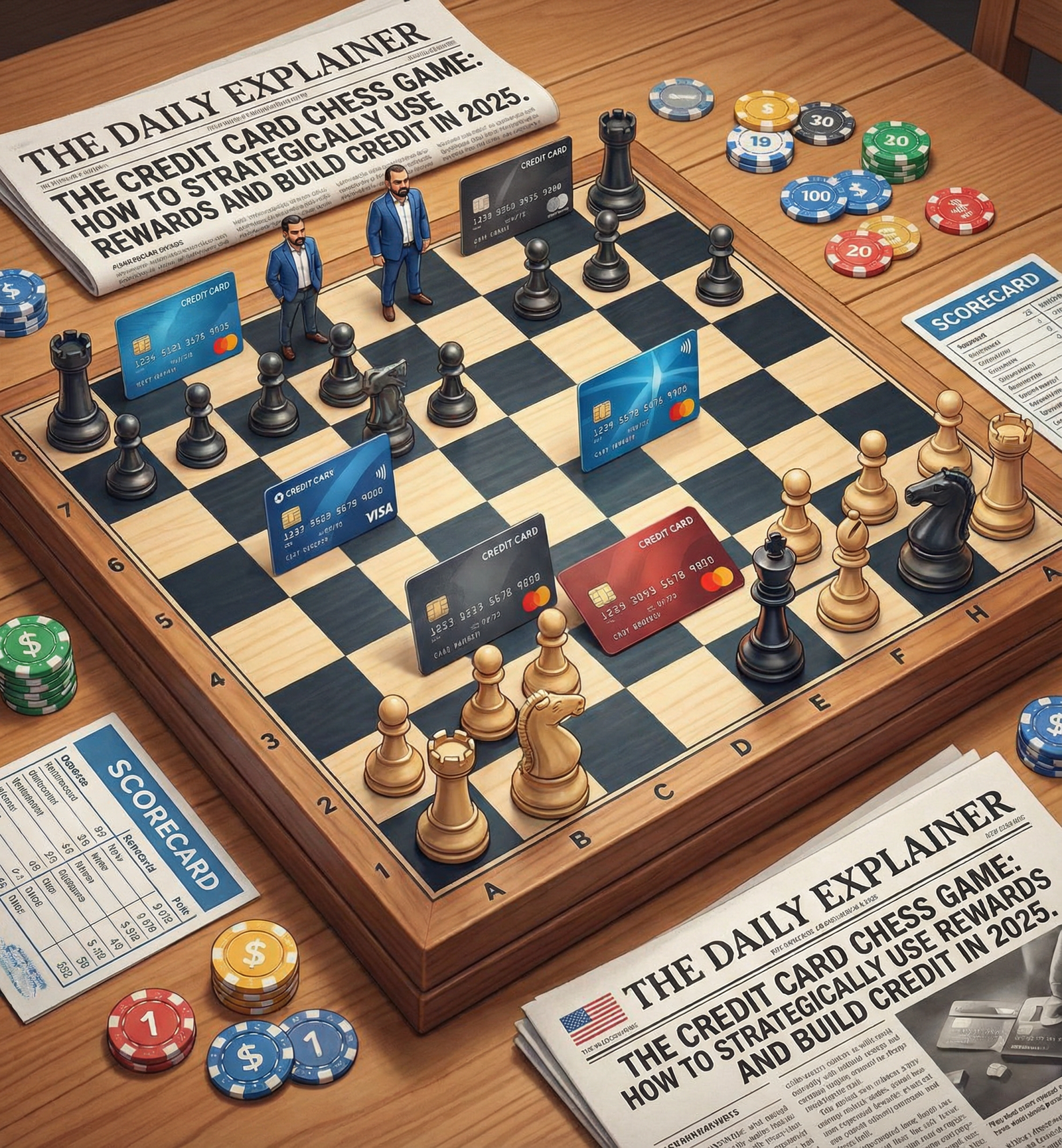
Winning the credit card chess game is about replacing anxiety with analytics and fear with a framework. The card is a tool; you are the strategist.
Final Takeaways:
- The Foundation is Non-Negotiable: Pay your statement balance in full, every month. Without this discipline, no rewards strategy is sustainable.
- Your Credit Score is an Asset: Actively manage utilization (aim for <10% reported), keep old accounts open, and monitor your reports. This score will save you far more money than any rewards program.
- Align Rewards with Reality: Choose cards that match your actual spending, not an aspirational lifestyle. A simple cash-back card is often the most profitable and least stressful.
- Automate to Eliminate Error: Set up autopay for the statement balance. Use tools for monitoring. Let the system protect you from yourself.
- Think in Systems, Not Swipes: Have a reason for each card in your wallet. Know what it’s for, how you’ll use it, and how you’ll pay it. This intentionality is the core of strategic credit use.
Begin by auditing your current cards. What are their rewards? What’s the APR? Is autopay on? From that baseline, you can start to build your own winning strategy. For more on building robust financial systems, resources like those from the Sherakat Network can provide valuable complementary knowledge.
FAQs (Frequently Asked Questions)
1. What’s the single fastest way to improve my credit score?
Focus on credit utilization. If you have high balances, paying them down to below 10% of your limits can yield a dramatic score increase in just one billing cycle, as this factor has no memory month-to-month.
2. Is it bad to apply for multiple credit cards?
Applying for several cards in a short period (e.g., 3 in 3 months) triggers multiple hard inquiries and lowers your average account age, which can hurt your score temporarily. For building credit, space out applications by 6-12 months. For advanced rewards strategies, there are specific rules (like Chase’s 5/24) to follow.
3. Should I get a card with an annual fee?
Do the math. If the card’s benefits (e.g., a $300 travel credit, lounge access, higher rewards rates) exceed the annual fee for your specific spending, it can be worth it. For example, a $95 fee card that gets you $500+ in value is a win. For beginners, no-annual-fee cards are a safer start.
4. How does a balance transfer work, and when should I use one?
You move existing debt from a high-APR card to a new card offering a 0% introductory APR on balance transfers (often for 12-21 months). You then aggressively pay down the debt during the intro period. Only use this if you have a concrete payoff plan and stop using the old card.
5. What should I do if I’m denied for a credit card?
The issuer is required to send you an “adverse action notice” with the reasons (e.g., insufficient income, too many recent inquiries). Address those issues—pay down debt, wait 6 months—before applying again. In the meantime, use a secured card to build history.
6. Can using a debit card help build credit?
No. Debit card activity is not reported to credit bureaus. Credit building requires a credit product (loan, credit card) where you demonstrate responsible repayment.
7. What’s the difference between a charge card and a credit card?
A charge card (like the legacy American Express Green, Gold, Platinum cards) typically requires you to pay the full balance every month; you cannot revolve a balance. A credit card gives you the option to pay a minimum payment and carry a balance, incurring interest.
8. How do I negotiate a lower APR on my existing card?
You can call your card issuer’s customer service and politely ask if they can lower your interest rate, citing your history as a good customer. Success isn’t guaranteed, but it costs nothing to try. The better your score, the more leverage you have.
9. What happens to my credit score when I pay off a card completely?
Paying off a card is excellent for your score, as it brings your utilization to 0% for that card. However, do not close the account afterward, as that would reduce your total available credit and could hurt your score.
10. Are store credit cards a good idea?
Generally, no. They often have high APRs and low credit limits, which can hurt your utilization. The discounts they offer can lure you into overspending. The only exception might be if you are a very frequent, disciplined shopper at one store and the card offers strong, usable benefits with no annual fee.
11. What is a “grace period” on a credit card?
The time between the end of a billing cycle and your payment due date. If you pay your statement balance in full by the due date, you are not charged interest on new purchases during this period. Carrying a balance usually eliminates the grace period.
12. How do travel rewards cards actually work?
You earn points/miles per dollar spent. You can redeem them through the issuer’s portal for travel (often at a fixed value, e.g., 1 cent per point) or, more valuably, by transferring them to airline/hotel loyalty programs to book award travel, where point value can vary widely.
13. What is “travel hacking” and is it for beginners?
Travel hacking is the advanced optimization of credit card rewards and loyalty programs to travel for minimal out-of-pocket cost. It involves managing multiple cards, understanding transfer partners, and navigating complex rules. It is not for beginners; master the basics of credit first.
14. Should I use my credit card for everything?
If you have the discipline to pay it off monthly and are using a rewards card, yes. It maximizes rewards, simplifies budgeting (one statement), and offers superior fraud protection and benefits over cash/debit. But this strategy is 100% dependent on that monthly payoff discipline.
15. What is the “5/24 rule” I keep hearing about?
A famous rule from Chase Bank: if you’ve opened 5 or more new credit card accounts (across all banks, not just Chase) in the last 24 months, you will almost certainly be denied for most Chase cards. This makes planning the order of card applications crucial for rewards strategists.
16. How do I handle credit card fraud?
Immediately call the number on the back of your card. Federal law limits your liability to $50 for unauthorized charges, and most issuers offer $0 liability guarantees. They will close the old card and issue a new one with a new number.
17. Can I have too much available credit?
From a credit scoring perspective, no. Lenders may look at your total available credit relative to your income during a manual review for a large loan (like a mortgage), but a high total limit is beneficial for your score. The concern is your own temptation to spend.
18. What’s the best way to track multiple credit cards and due dates?
Use a budgeting app that aggregates all accounts (like Mint or YNAB). Set up autopay for the statement balance on every card. This combination means you can monitor spending in one place and never have to manually worry about due dates.
19. Do authorized users build credit as fast as primary users?
They can build credit quickly because the entire history of the account is added to their report. However, if the primary user misses a payment or runs up a high balance, it damages the authorized user’s score just as severely. Choose the primary user wisely.
20. Where can I learn more about specific card offers and strategies?
Reputable websites like NerdWallet, The Points Guy, and Doctor of Credit offer updated reviews, comparisons, and strategy guides. Always read the terms and conditions on the issuer’s official website before applying. For a broader perspective on financial ecosystems, you can also explore insights from World Class Blogs.
About the Author
Sana Ullah Kakar is a certified financial education instructor and credit strategy consultant. With a background in data analytics and consumer banking, Riley specializes in creating systematic approaches to credit optimization that help individuals leverage financial products to build wealth, not debt. They are passionate about demystifying the fine print.
Free Resources
- Credit Card Audit Worksheet: A PDF to evaluate your current cards’ fees, rewards, APRs, and benefits to identify what to keep, ditch, or add.
- Credit Utilization Calculator & Calendar Tracker: A spreadsheet to help you plan payments around statement closing dates to optimize your reported utilization.
- Beginner’s Card Recommendation Matrix: A flowchart to help you choose your first or next card based on your credit score, spending habits, and goals (travel vs. cash back).
- Credit Dispute Letter Template: A guide and template for disputing errors on your credit report with the three major bureaus.
(Note: These resources are available to our readers. Please visit our Explained section or contact us to request access.)
Discussion
We want to hear from you!
- What was your biggest “aha!” moment when you started using credit strategically?
- What’s the most valuable credit card benefit or perk you’ve actually used (e.g., extended warranty, travel insurance)?
- For those who have escaped high-interest debt: what was the key tactic that finally worked?
- What other “fine print” financial topics would you like us to decode?
Share your experiences, questions, and tips below. Let’s build a community of savvy credit users. For ongoing consumer news and alerts that could impact your credit decisions, follow our Breaking News feed.
About The Author