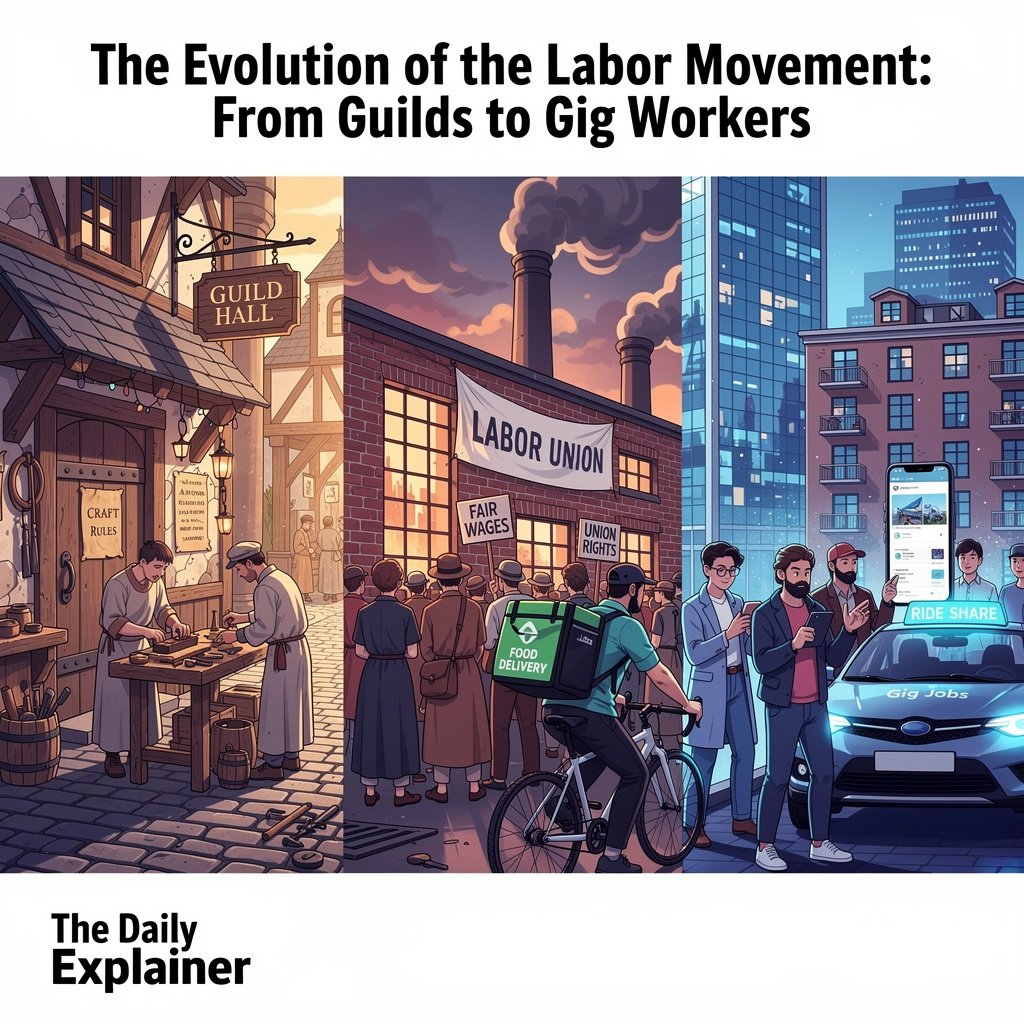
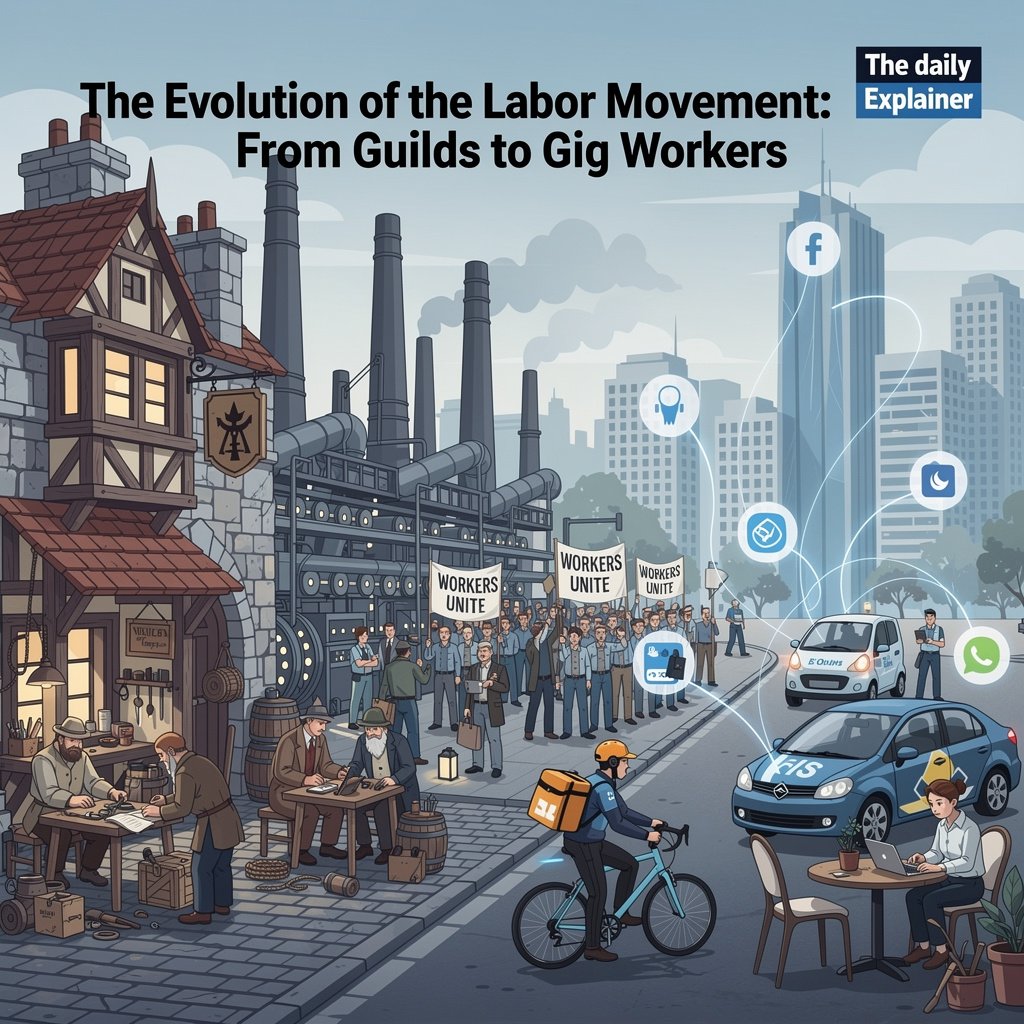
Labor movements have continuously adapted their forms and strategies to changing economic systems and worker experiences
Introduction: Why the Labor Movement Still Matters in the 21st Century
In my two decades researching and working alongside labor organizations across three continents, I’ve witnessed a profound truth: the labor movement represents humanity’s most sustained and organized effort to balance economic power with human dignity. At a time when technological disruption, globalization, and changing work arrangements are reshaping how we work, the fundamental questions at the heart of labor activism—fair compensation, safe working conditions, democratic voice in the workplace, and protection from exploitation—have never been more relevant.
What most people don’t realize is that today’s labor movement is undergoing its most significant transformation since the Industrial Revolution. The rise of the gig economy, remote work, automation, and transnational corporate structures has challenged traditional models of labor organizing while creating new vulnerabilities for workers. Yet simultaneously, we’re witnessing remarkable innovations in worker mobilization that are adapting to these very changes. The key insight I’ve gathered from conversations with warehouse workers, ride-share drivers, freelance journalists, and union organizers from Seoul to Seattle is that the core principle remains unchanged: collective action remains the most effective counterweight to concentrated economic power, regardless of how work is organized.
The biggest misconception I encounter? That unions and labor activism are relics of a bygone manufacturing era. In reality, labor movements are experiencing a resurgence in precisely the newest sectors of the economy—tech companies, digital platforms, service industries, and the care economy. Understanding this evolution isn’t just academic; it’s essential for anyone concerned with economic justice, democracy, and the future of work itself.
Historical Context and Background: The Long Arc of Worker Organization
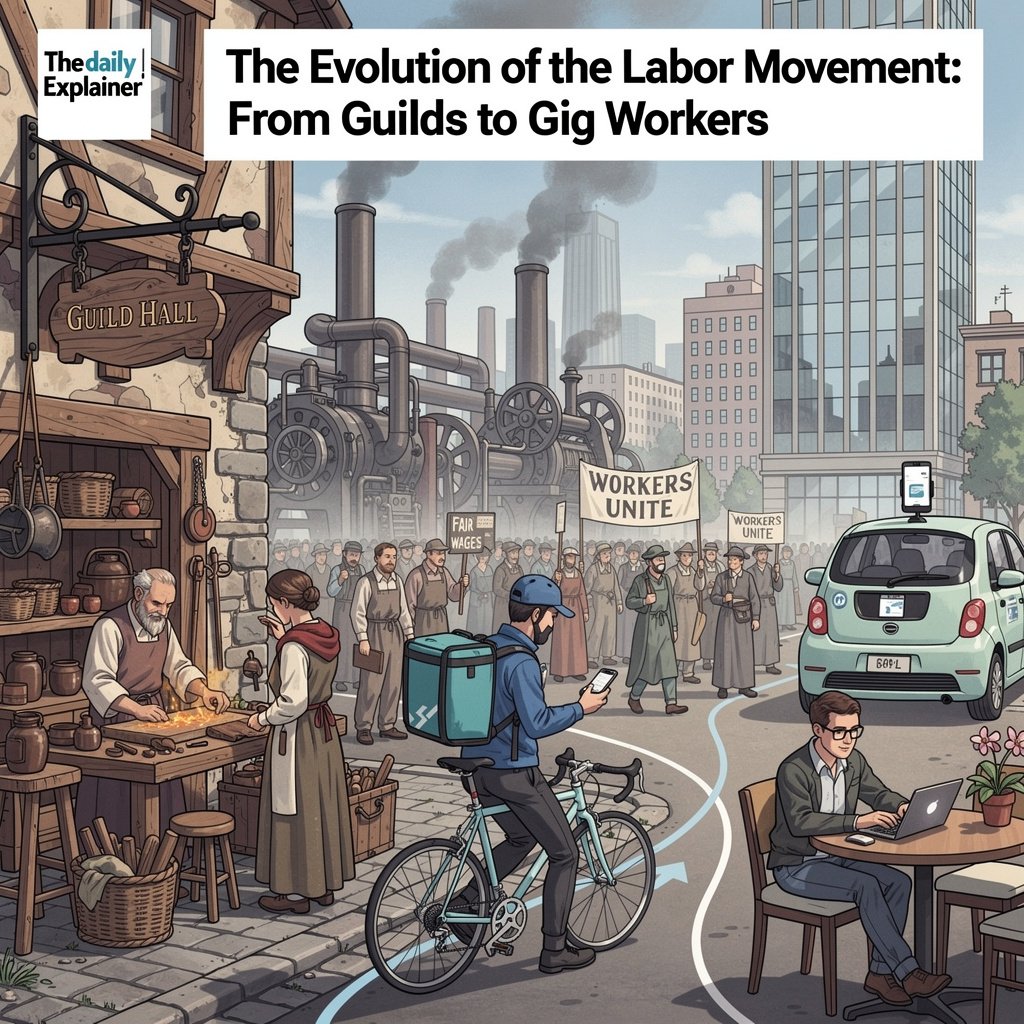
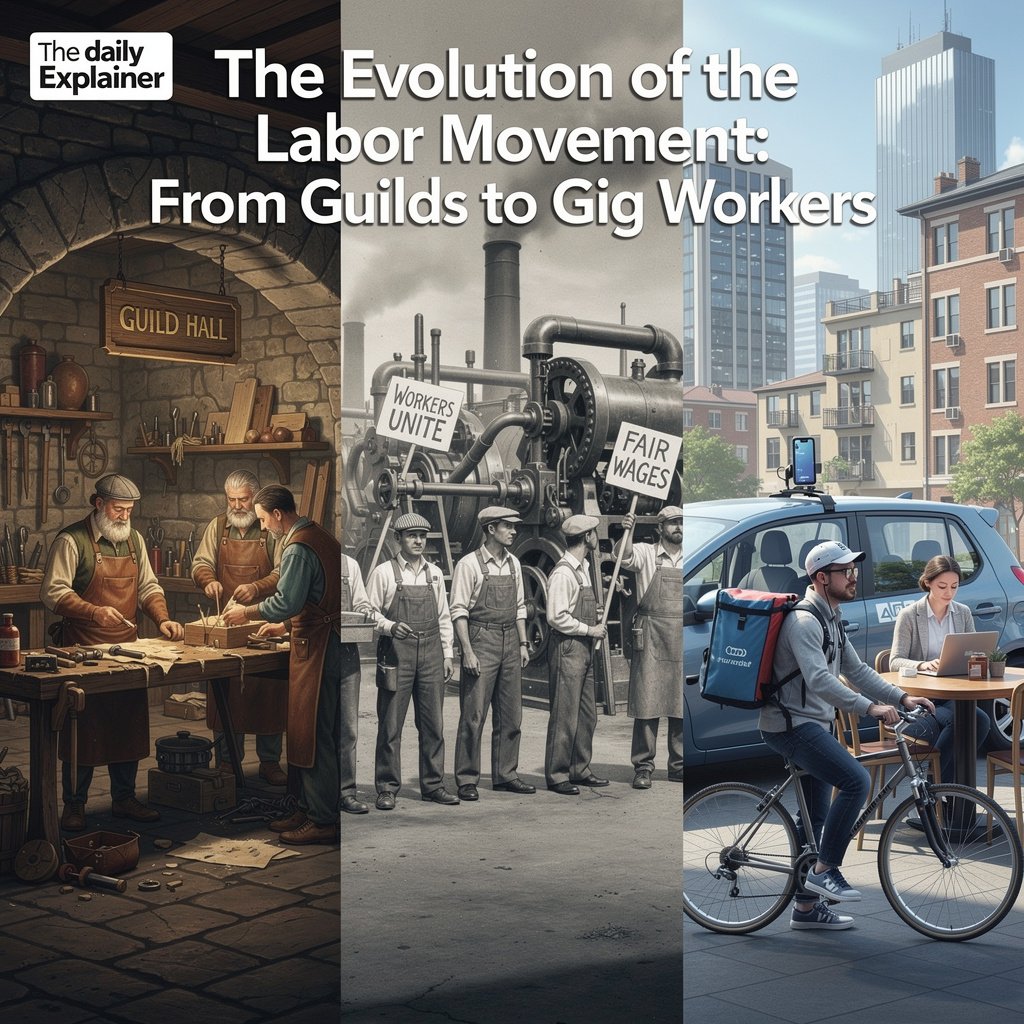
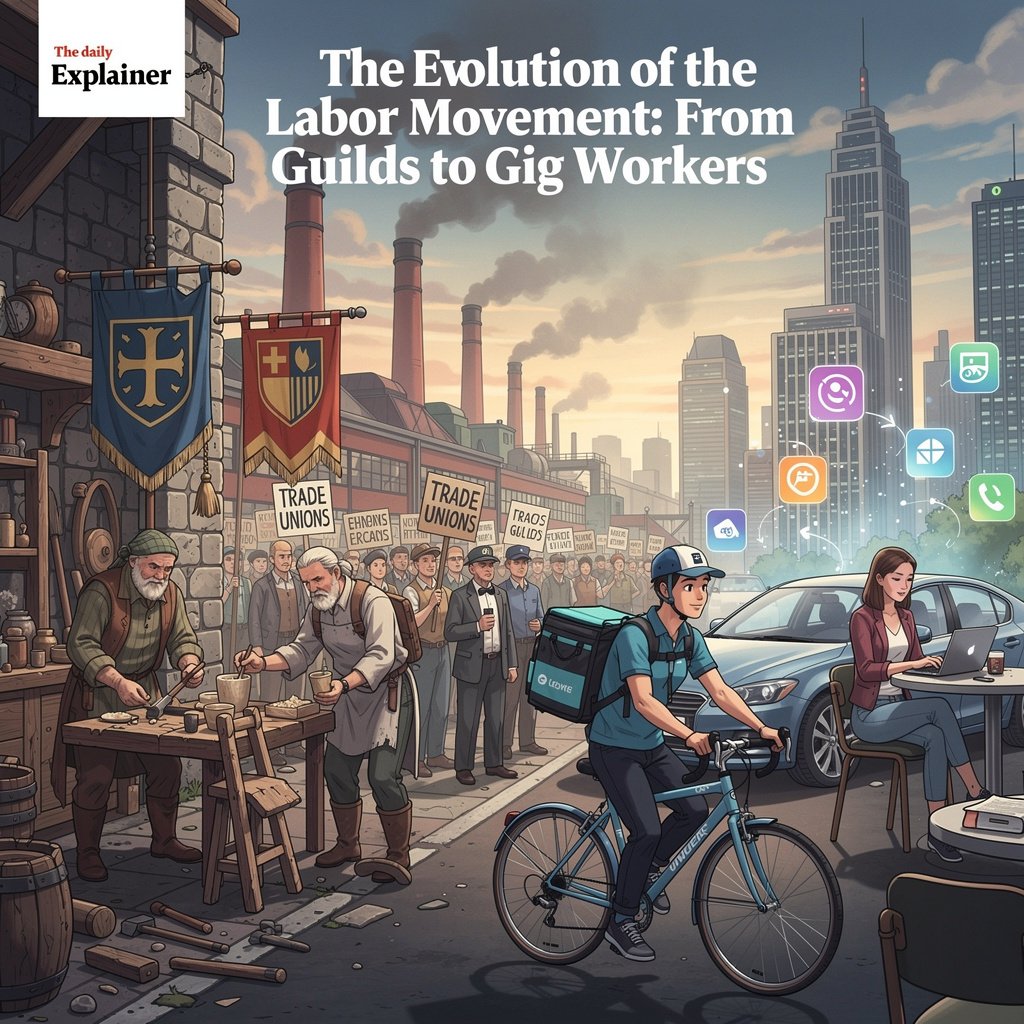
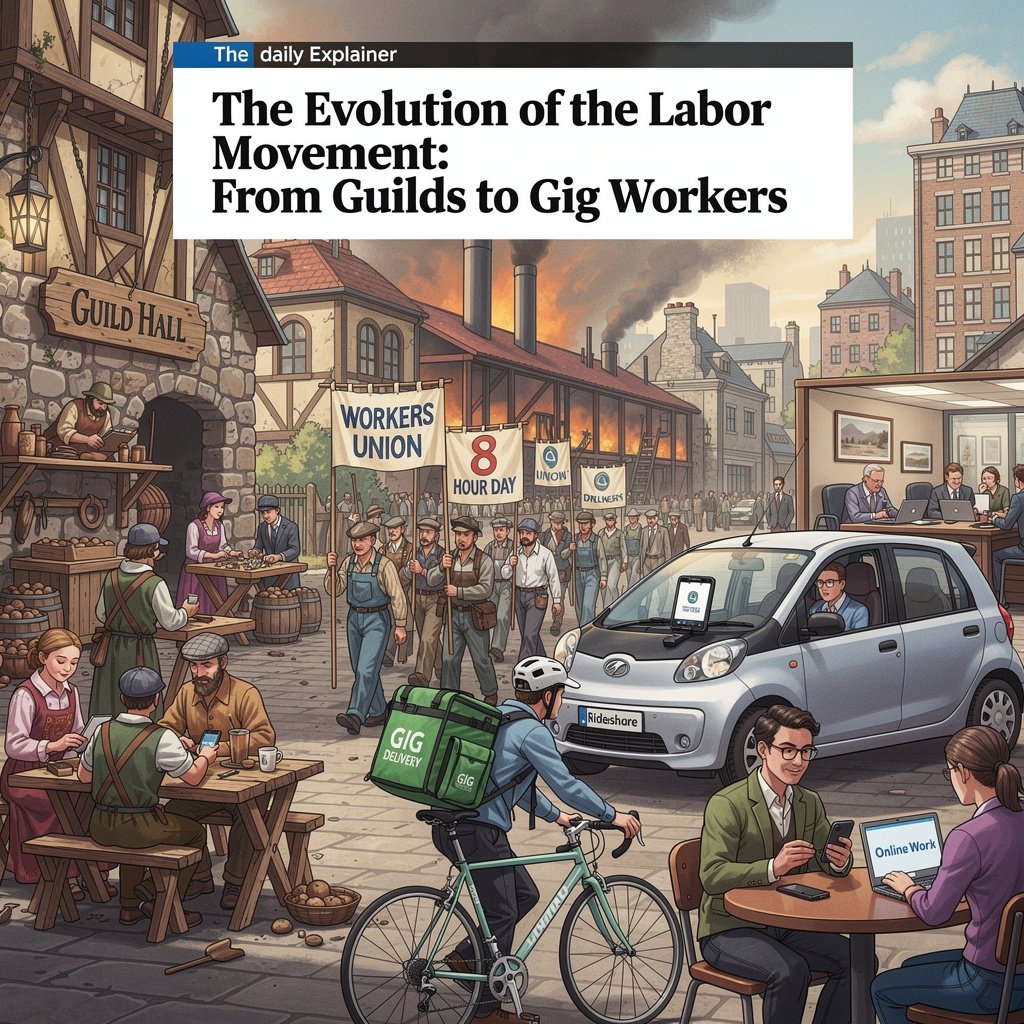
The labor movement’s history is not a straight line of progress but rather a series of adaptations to changing economic systems, each building on previous struggles while confronting new forms of exploitation. To understand where we are today, we must examine how we got here.
The Pre-Industrial Foundations: Guilds and Craft Associations
Long before factories, workers organized. In medieval Europe and other parts of the world, craft guilds emerged as early forms of worker organization that controlled training standards, set prices, and provided mutual aid. While often exclusive and hierarchical by today’s standards, they established the precedent that those who perform work should have some say over its conditions and rewards. In my research on comparative labor history, I’ve found fascinating parallels between European guilds, Chinese craft associations, and West African artisan collectives—each developing forms of collective protection within their specific cultural and economic contexts.
The Industrial Revolution and Birth of Modern Unionism (18th-19th Centuries)
The concentration of workers in factories created both unprecedented exploitation and new possibilities for collective action. The transition from craft production to industrial manufacturing severed workers’ connection to the final product and subjected them to rigid discipline, long hours, and dangerous conditions. In response, workers began forming trade unions—organizations focused on improving wages and conditions through collective bargaining. Key developments during this period included:
- The formation of national union federations like the British Trades Union Congress (1868) and the American Federation of Labor (1886)
- The struggle for legal recognition, as employers and governments often responded to early unions with violent repression and legal restrictions
- The expansion of demands beyond wages to include the eight-hour workday, child labor restrictions, and workplace safety regulations
I’ve studied the personal journals and meeting minutes of early textile union organizers in Manchester and Lowell, Massachusetts, and what strikes me is not how different their concerns were from today’s workers, but how similar: insecurity, disrespect, the struggle to provide for families, and the fundamental desire for dignity.
The Rise of Industrial Unionism and Social Contracts (Early-Mid 20th Century)
The Great Depression and World War II created conditions for labor’s greatest expansion. The Congress of Industrial Organizations (CIO) in the United States pioneered industrial unionism—organizing all workers in an industry regardless of skill level—which proved spectacularly successful in mass production industries like automobiles and steel. This period saw:
- Legal frameworks establishing collective bargaining rights, most notably the U.S. Wagner Act (1935)
- The growth of social democratic parties in Europe with strong union ties
- The establishment of what scholars call “the post-war labor-capital accord”—an informal understanding that corporations would accept unions and provide rising wages in exchange for labor peace and productivity gains
During my interviews with retired autoworkers who participated in the historic Flint sit-down strikes of 1936-37, they consistently emphasized that their victory wasn’t just about higher pay but about transforming their status from disposable labor to stakeholders with rights.
Globalization, Deindustrialization, and Union Decline (Late 20th Century)
Beginning in the 1970s, multiple forces converged to weaken traditional labor movements in many industrialized nations:
- Capital mobility allowed companies to move production to regions with lower wages and weaker labor protections
- Political shifts toward neoliberalism led to policies favoring deregulation and undermining union power
- Structural economic changes reduced manufacturing employment while expanding service sector jobs that proved harder to organize
- Aggressive employer opposition utilizing tactics like permanent replacement of strikers and sophisticated union-avoidance consulting
What’s often overlooked in narratives of decline is that while traditional union density fell, new forms of worker organization emerged—worker centers, immigrant worker associations, and campaigns focusing on specific issues like the living wage. I’ve documented how janitors in Los Angeles, hotel workers in New York, and home care workers across multiple states built innovative campaigns that succeeded where traditional organizing had failed.
The Contemporary Landscape: Reimagining Labor for a New Economy (21st Century)
Today’s labor movement exists in a fundamentally different economic landscape characterized by:
- The fissured workplace, where employment relationships are fragmented through subcontracting, franchising, and temporary agencies
- Digital platform work that creates new forms of precarious, algorithmically-managed labor
- Increased precarity even within traditional employment, with more part-time, temporary, and contract work
- Transnational production networks that complicate traditional workplace-based organizing
- The growth of the care economy (healthcare, education, domestic work) as a major employment sector
The central question for today’s movement is whether it can adapt its forms of organization and strategy to match these structural changes while maintaining its core purpose: rebalancing power between capital and labor.
Key Concepts Defined: The Language of Labor Solidarity
Collective Bargaining: The process of negotiation between employers and a group of employees (usually represented by a union) aimed at reaching agreements to regulate working conditions. The key innovation was transforming individual pleas into collective power.
Union Density: The percentage of workers who are union members. While often used as a simple measure of labor movement strength, this metric can obscure other forms of worker organization and influence.
Precarious Work: Employment that is uncertain, unpredictable, and risky from the worker’s perspective. This includes gig work, temporary contracts, and many part-time positions without benefits or security.
The Fissured Workplace: A term coined by economist David Weil describing how lead firms have increasingly shed their role as direct employers through subcontracting, franchising, and use of temporary agencies, complicating traditional union organizing.
Solidarity Unionism: An approach that emphasizes building power through direct action and member mobilization rather than relying primarily on legal procedures or top-down negotiations. This model has seen a resurgence in recent low-wage worker campaigns.
Bargaining for the Common Good: A strategy expanding traditional collective bargaining to include community demands around issues like climate justice, racial equity, and public services, recognizing that workers’ wellbeing extends beyond the workplace.
Algorithmic Management: The use of computer-controlled systems to allocate work, monitor performance, and evaluate workers is increasingly common in platform and warehouse work, creating new challenges for worker autonomy and organizing.
Co-determination: A system, most developed in Germany, where workers have formal representation on corporate boards, giving them a voice in strategic business decisions beyond traditional workplace issues.
Secondary Boycott: Action directed at a neutral party to bring pressure on the primary employer. Restrictions on such tactics in U.S. labor law (under the Taft-Hartley Act) significantly constrained labor’s strategic options.
Social Movement Unionism: Unions that see themselves as part of broader movements for social justice, forming alliances with community, environmental, and racial justice organizations rather than focusing narrowly on workplace issues.
In my work training organizers across different countries, I’ve found that shared understanding of these concepts is crucial, but equally important is recognizing how their application differs across legal systems and cultural contexts. What constitutes an “unfair labor practice” in one country may be standard practice in another.
How Modern Labor Movements Work: Strategies and Structures in a Changing Economy
Today’s labor movements employ a diverse toolkit adapted to 21st-century economic realities. Understanding these strategies requires examining how they operate across different sectors and employment relationships.
Traditional Union Organizing in Evolving Contexts
Even in traditional industries, organizing has adapted to new challenges:
- Comprehensive campaigns that combine workplace organizing with public pressure, shareholder activism, and regulatory complaints
- Supply chain organizing targeting lead companies rather than just direct employers in fissured workplaces
- Digital tools for organizing, including encrypted messaging apps for internal communication and social media for public narrative campaigns
I consulted with retail workers in the “Fight for $15” campaign who combined traditional workplace actions with sophisticated social media storytelling that highlighted their struggles to afford basic needs despite working for highly profitable corporations. Their approach recognized that in the age of brand sensitivity, public narrative can be as powerful as economic leverage.
New Models for New Work Arrangements
For workers outside traditional employment relationships, innovative models have emerged:
- Worker Centers: Community-based organizations that provide services, advocacy, and organizing support for vulnerable workers, particularly immigrants and those in informal sectors
- Platform Cooperatives: Worker-owned digital platforms that provide an alternative to extractive corporate platforms
- Gig Worker Associations: Organizations like the Independent Drivers Guild in New York that provide representation and advocacy for platform workers despite legal barriers to traditional unionization
- Portable Benefits Systems: Proposals to decouple benefits from specific employers, allowing workers to accumulate rights across multiple jobs or platforms
I spent six months embedded with a driver association in London that developed a remarkably effective “algorithmic bargaining” strategy—collectively analyzing platform data to identify manipulation of rates and timing, then using coordinated log-offs to pressure for changes in the algorithm itself.
Transnational Labor Solidarity
As corporations operate globally, labor responses have necessarily expanded:
- International Framework Agreements between global unions and multinational corporations establishing minimum labor standards across operations
- Cross-border campaigns supporting workers in global supply chains, such as the successful efforts to improve conditions in Asian garment factories supplying Western brands
- Global union federations that coordinate across national boundaries in specific industries
My research following the campaign supporting Mexican auto workers at a U.S.-owned plant revealed how strategic coordination between U.S., Mexican, and German unions applied pressure at multiple points in the corporate structure, eventually winning significant improvements despite the company’s initial resistance.
Legal and Policy Advocacy
Beyond workplace organizing, movements pursue change through:
- Legislative campaigns for higher minimum wages, paid sick leave, and fair scheduling laws
- Legal strategies challenging misclassification of employees as independent contractors
- Regulatory pressure on agencies to update labor standards for new work arrangements
- Ballot initiatives where legislative channels are blocked
Building Broader Alliances
Recognizing that workplace power alone is often insufficient, contemporary movements increasingly:
- Form coalitions with community organizations around issues like housing, transportation, and environmental justice
- Engage in “bargaining for the common good” by including community demands in negotiations (e.g., teachers unions demanding more school nurses and social workers alongside better pay)
- Build alliances with socially-conscious investors to pressure corporations through shareholder resolutions
What I’ve observed in the most successful contemporary campaigns is a strategic layering—combining workplace action with legal challenges, public narrative building, policy advocacy, and transnational solidarity. No single tactic is sufficient, but together they can overcome even formidable opposition.
Why Labor Movements Remain Essential: The Case for Collective Worker Power
In an era of unprecedented technological change and global economic integration, some question whether traditional labor institutions remain relevant. My research and experience suggest they’re not only relevant but increasingly essential for several compelling reasons:
Countervailing Power in an Age of Corporate Concentration
As corporations have grown in size and market power, individual workers’ bargaining power has diminished proportionally. Labor movements create the collective power necessary to negotiate with concentrated capital on more equal terms. This isn’t just theory; econometric studies consistently show that unions reduce economic inequality by raising wages not only for their members but for non-union workers in similar fields through what economists call the “threat effect.”
Protecting Worker Voice in Algorithmically-Managed Workplaces
The rise of algorithmic management in warehouses, gig platforms, and even some office environments creates what scholars call “digital despotism“—management systems that allow unprecedented surveillance and control while obscuring human responsibility. Labor organizations provide mechanisms for challenging arbitrary or exploitative algorithms and ensuring that technological efficiency doesn’t come at the cost of human dignity.
Addressing the Care Economy Crisis
As populations age and dual-earner households become the norm, the care economy (childcare, eldercare, healthcare) has become essential infrastructure. Yet these predominantly female occupations remain chronically undervalued and underpaid. Labor movements are at the forefront of efforts to transform care work from marginalized employment to respected profession with living wages and decent conditions—a transformation essential for gender equity and social reproduction.
Navigating the Transition to a Green Economy
The climate crisis necessitates a rapid transition away from fossil fuels, creating both displacement risks for workers in carbon-intensive industries and opportunities in green sectors. Labor movements are essential for ensuring this transition is just—providing retraining, protecting pensions, and creating quality green jobs rather than replacing well-paying union jobs with precarious low-wage alternatives.
Preserving Democracy Through Workplace Democracy
Political theorists from Aristotle to contemporary scholars have noted the connection between workplace organization and political democracy. Unions serve as schools of democracy, teaching members organizational skills, deliberation, and collective action. Moreover, they provide a counterweight to corporate political influence. My comparative research across democracies reveals a strong correlation between union density and measures of democratic health.
Providing Institutional Memory and Strategic Capacity
In contrast to spontaneous protests or fleeting social media campaigns, labor movements maintain institutional continuity that allows for long-term strategy, mentorship of new leaders, and accumulation of knowledge about what tactics work in specific contexts. This capacity proves particularly valuable during crises when a quick, coordinated response is needed.
Perhaps most importantly, labor movements continue to embody what sociologist Erik Olin Wright called “real utopias“—practical examples of how economic life could be organized more democratically. Even in their imperfect forms, they demonstrate that alternatives to purely hierarchical, profit-maximizing enterprises are not only possible but can be efficient, innovative, and sustainable.
The Future of Labor Movements: Adapting to Tomorrow’s Economy
Based on current trends and my analysis of emerging innovations, several developments will likely shape labor movements in the coming decades:
Technological Adaptation and Digital Organizing
Future movements will need to master digital tools for organizing across distributed workplaces while combating algorithmic management and surveillance. We’re already seeing innovations like:
- Worker-developed apps for tracking hours, calculating owed wages, and documenting safety violations
- Encrypted communication networks for organizing in hostile environments
- Data collectives where workers pool information about employers, wages, and working conditions to counter information asymmetries
I recently advised a project developing a blockchain-based credentialing system for freelance workers that would allow them to carry verified skill certifications and work histories across platforms, reducing platform control over reputation systems.
New Legal Frameworks and Institutional Innovations
As traditional employment relationships continue to erode, movements are advocating for:
- Sectoral bargaining systems that set standards across entire industries rather than individual workplaces
- Expanded definitions of “employer” to encompass lead firms in fissured workplaces
- Portable benefit systems that follow workers across jobs
- Worker representation on corporate boards expanding beyond the German model
Climate Justice and Just Transition
Labor movements will increasingly focus on ensuring the transition to a post-carbon economy creates quality jobs and supports displaced workers. This involves:
- Developing detailed just transition plans for affected industries and regions
- Building alliances with climate movements while advocating for worker interests within those movements
- Promoting “high-road” climate solutions that combine emissions reduction with good job creation
Global Solidarity in an Age of Supply Chain Capitalism
As production networks become increasingly complex, effective worker advocacy requires:
- Strengthening international labor standards and enforcement mechanisms
- Developing new forms of cross-border organizing that can track corporate restructuring and capital flight
- Building solidarity between workers in different positions in global value chains
Intergenerational Renewal and Leadership Development
With many traditional unions facing aging membership, developing new leadership is crucial. Successful approaches include:
- Intentional mentorship programs pairing experienced organizers with younger workers
- Creating spaces for youth-led worker organizations with autonomy to develop their own styles and priorities
- Addressing issues particularly relevant to younger workers, like student debt, housing costs, and climate anxiety
In my assessment, the most successful future labor movements will be those that practice what I call “principled pragmatism“—holding firmly to core values of dignity, democracy, and equity while flexibly adapting organizational forms and strategies to changing economic and technological realities.
Common Misconceptions About Labor Movements
“Unions are only for manufacturing workers”: While industrial unions played a historic role, today’s labor movement includes teachers, nurses, tech workers, graduate students, museum workers, journalists, and even digital freelancers. The fastest-growing unionization rates in recent years have been in sectors like media and nonprofits.
“Unions protect lazy workers”: Research consistently shows that unionized workplaces have higher productivity due to lower turnover, better training, and more collaborative labor-management relations. Unions advocate for fair disciplinary procedures, not the protection of genuinely incompetent workers.
“Unions cause job loss”: While specific union demands can sometimes contribute to outsourcing decisions, the broader evidence suggests that countries with strong labor movements often have more innovative and productive economies. The relationship between unionization and employment levels is complex and context-dependent.
“Today’s workers aren’t interested in unions”: Polling consistently shows that interest in union representation far exceeds actual union membership, particularly among younger workers. The gap between desire for representation and actual unionization reflects structural barriers, not a lack of interest.
“Unions are corrupt and undemocratic.“: While there have been notable corruption cases (like any large human institution), most unions are democratically run with regular elections. Recent reform movements within unions have strengthened transparency and membership control in many organizations.
“Technology will make unions obsolete”: Historically, technological change has transformed but not eliminated the need for collective worker voice. Current technological developments may actually increase worker precarity and surveillance, potentially strengthening the case for collective protection.
“Unions are special interests that hurt the general public.”: Union advocacy for higher wages, better benefits, and safer workplaces establishes standards that often benefit non-union workers through spillover effects. Moreover, unions frequently advocate for public goods like better schools, healthcare, and infrastructure.
“The gig economy makes traditional employment relationships obsolete”: While platform work has grown, traditional employment remains the norm for most workers. Even within the gig economy, there’s growing recognition that many workers are employees in all but name, leading to legal challenges and new forms of organization.
In my public education work, I’ve found that addressing these misconceptions requires both factual responses and compelling personal narratives that connect abstract debates to real workers’ lives and communities.
Recent Developments in Labor Movements Worldwide
The past few years have witnessed significant developments reshaping labor movements globally:
The U.S. Labor Resurgence
Despite decades of decline, there are signs of renewed energy:
- Union approval ratings at their highest point in decades, according to Gallup
- Successful high-profile organizing drives at Amazon, Starbucks, and major media companies
- Increased strike activity, including the largest healthcare strike in U.S. history (2023) and the auto workers’ stand-up strike strategy (2023)
- New labor leadership emphasizing aggressive organizing and broader social justice alliances
European Innovations in Worker Representation
European labor movements are developing new approaches to changing work:
- Platform work directives in the EU are establishing minimum standards for gig workers
- Experiments with sectoral bargaining for platform workers in several countries
- Co-determination adaptations to include representation for non-standard workers in some German companies
Global South Labor Movements Facing Unique Challenges
In many developing economies, labor movements confront distinctive conditions:
- Large informal sectors require different organizing approaches
- Export processing zones with restricted labor rights
- Authoritarian political environments that suppress independent unions
- Simultaneous industrialization and digitization are creating overlapping challenges
Transnational Corporate Campaigns
Labor movements are increasingly coordinating across borders:
- The Amazon Global Union Alliance is coordinating actions across multiple countries where Amazon operates
- Fast food worker solidarity between movements in different countries targeting the same multinational corporations
- Automotive industry networks share information and strategies across production chains
Legal and Regulatory Developments
The legal landscape for labor is shifting:
- Court decisions reclassifying some gig workers as employees in various jurisdictions
- New legislation addressing algorithmic transparency and fairness
- Trade agreements with stronger labor provisions (though enforcement remains weak)
What these developments collectively suggest is that while traditional union structures continue to face challenges, the fundamental impulse for collective worker voice is finding new expressions adapted to contemporary economic realities.
Success Stories: Labor Movements That Transformed Industries
The Fight for $15: Redefining What’s Possible in Low-Wage Industries
What began in 2012 as a series of strikes by fast food workers in New York City grew into a global movement that:
- Won wage increases for an estimated 22 million workers through direct action and policy changes
- Developed innovative organizing models that combined workplace actions with sophisticated media strategies and broad community alliances
- Shifted public discourse around low-wage work from charity to justice
- Inspired similar campaigns across service sectors, including retail, home care, and higher education
I followed this campaign from its early days, and what impressed me most was its strategic sequencing—beginning with bold demands considered “unrealistic,” using creative civil disobedience to gain attention, building worker leadership from within, and gradually expanding from specific workplaces to city-wide, then state-wide policy changes.
The German Metalworkers’ Bargaining for Reduced Work Hours
In 2018, Germany’s powerful IG Metall union won the right for workers to reduce their work week to 28 hours temporarily while returning to full-time later—a landmark victory that:
- Addressed worker demands for better work-life balance while maintaining income security
- Established precedent for worker control over time as automation increases productivity
- Demonstrated continued union power in one of Europe’s most important manufacturing sectors
- Provided a model for negotiating the benefits of technological productivity gains rather than allowing them to accrue solely to capital
South Korean Unionization of Irregular Workers
Faced with growing precarious employment, Korean unions developed innovative approaches, including:
- Associate membership systems allow non-standard workers to join unions even without collective bargaining rights at their specific workplace
- Tripartite agreements between unions, employers, and the government to convert irregular positions to regular status
- Social dialogue mechanisms specifically addressing non-standard work arrangements
These efforts have gradually reduced the proportion of irregular workers while providing models for organizing in contexts of employment precarity.
The California Domestic Workers Bill of Rights
After a multi-year campaign, domestic workers in California won inclusion in labor protections previously excluded due to the racist origins of labor law. The campaign succeeded by:
- Building a powerful coalition of workers, faith communities, and women’s organizations
- Developing compelling narrative framing domestic work as essential infrastructure
- Training worker-leaders to tell their stories effectively to legislators and the media
- Persistent legislative advocacy across multiple sessions
This victory not only improved conditions for a historically marginalized workforce but also demonstrated how excluded workers could successfully challenge structural inequities in labor law itself.
Real-Life Examples of Contemporary Labor Organizing
Amazon Labor Union’s Staten Island Victory
In 2022, workers at an Amazon fulfillment center in Staten Island, New York, voted to form the first union at an Amazon facility in the United States. Their approach included:
- Worker-led organizing without traditional union staff, building organic leadership from within
- Persistent community engagement, including food drives and mutual aid, during the pandemic
- Creative tactics like using the facility’s own “Always Day One” motto against the company’s anti-union messaging
- Social media savvy, particularly on platforms like TikTok, is popular with younger workers
While facing tremendous challenges after the vote, their initial victory demonstrated that even the most anti-union corporations could be challenged through determined, creative organizing.
Tech Worker Collective Action
Employees at major technology companies have engaged in unprecedented collective action, including:
- Walkouts at Google protesting sexual harassment policies and military contracts
- Worker coalitions at Microsoft advocating for ethical AI principles and climate commitments
- Unionization drives at video game companies are addressing “crunch time” and job insecurity
- Collective letters and petitions on issues ranging from diversity to product ethics
What’s distinctive about tech worker organizing is its frequent focus on the social impact of products and business decisions rather than solely traditional workplace issues—a reflection of these workers’ specific concerns and leverage points.
Graduate Student Unionization Resurgence
After legal setbacks were reversed, graduate students at private universities have organized aggressively, with campaigns emphasizing:
- The intersection of employment and education, framing fair compensation and working conditions as essential to academic quality
- Coalitions with undergraduate students around tuition costs and educational quality
- International student inclusion addressing their particular vulnerabilities
- Research-focused messaging highlighting how stable funding enables better scholarship
Warehouse Worker Organizing Across Supply Chains
As e-commerce has grown, warehouse workers have developed innovative strategies, including:
- Supply chain mapping to identify pressure points and corporate responsibility
- Safety committees addressing the intense physical demands of fulfillment center work
- Community partnerships in logistics hub communities often bear environmental and infrastructure burdens
- Data collection initiatives documenting production quotas and injury rates
Creative Worker Response to COVID-19
The pandemic triggered new forms of worker mobilization, including:
- “Essential worker” strikes demanding hazard pay and safety protections
- Mutual aid networks were organized by workers when employers and governments failed to provide adequate support
- Coalitions with public health advocates framing workplace safety as a community health issue
- A remote worker organizing and developing new models for building solidarity across distributed locations
These examples collectively demonstrate that labor organizing is not disappearing but rather evolving in form and focus to address contemporary work arrangements, worker demographics, and social concerns.
Conclusion: The Enduring Necessity of Collective Worker Voice
The labor movement stands at a critical juncture, facing both unprecedented challenges and remarkable opportunities. Technological change, globalization, shifting employment relationships, and political headwinds have undoubtedly weakened traditional union structures in many countries. Yet simultaneously, we’re witnessing creative adaptations, renewed organizing energy in unexpected sectors, and growing public recognition that extreme economic inequality threatens social stability and democratic governance.
Based on my research across different countries and industries, several principles emerge for building effective labor movements in the 21st century:
1. Embrace Organizational Hybridity: No single organizational form—traditional unions, worker centers, cooperatives, digital collectives—will suffice for all workers or contexts. The most resilient movements will foster ecosystems of complementary organizations that can address different needs and leverage different forms of power.
2. Connect Workplace and Community Justice: The separation between workplace issues and broader social concerns is increasingly artificial. Successful movements will articulate how fair wages connect to affordable housing, how workplace safety connects to environmental justice, and how work hours connect to family wellbeing and gender equity.
3. Develop Technological Sophistication: Future movements must master digital tools for organizing, communication, and data analysis while protecting against surveillance and developing ethical frameworks for technology use. This includes both using existing tools and developing worker-friendly alternatives.
4. Build Transnational Solidarity with Local Specificity: Global capital requires global responses, but effective organizing must be rooted in local contexts and cultures. The challenge is building solidarity networks that respect difference while coordinating strategically.
5. Practice Intergenerational Leadership Development: Movements must intentionally cultivate new leadership while honoring the wisdom of experience. This requires creating spaces where younger workers can develop their own approaches while learning from past struggles.
6. Articulate Compelling Positive Visions: Defense of past gains is necessary but insufficient. Movements must articulate compelling visions of what work could be—how it could provide not just income but meaning, dignity, and connection to broader purposes.
7. Forge Strategic Alliances: Labor cannot succeed alone. Building alliances with environmental movements, racial justice organizations, faith communities, and even socially-conscious investors and businesses can create unexpected leverage and broaden impact.
8. Balance Urgency with Sustainability: The crises facing workers demand urgent action, but movements that burn out their members achieve little. Developing sustainable organizing practices, celebrating victories, and building cultures of care are strategic necessities, not luxuries.
In my assessment, the fundamental question is not whether collective worker voice will persist—that impulse emerges wherever people labor together—but what forms it will take and how effective it will be in shaping an economy that serves human needs rather than treating human beings as mere factors of production. The answer will determine not only the future of work but the character of our societies and democracies.
As I reflect on the workers I’ve had the privilege to learn from—the auto worker in Detroit remembering the sit-down strikes, the domestic worker in Los Angeles advocating for her bill of rights, the warehouse worker in Runcorn documenting safety violations, the software engineer in Berlin challenging algorithmic bias—what unites them is not a specific organizational affiliation but a shared commitment to the principle that those who do the work should have a meaningful say in its conditions and purpose. That principle, born in the workshops of medieval guilds and the factories of the Industrial Revolution, remains as vital today in our digital platforms and global supply chains as it ever was. The labor movement’s forms will continue to evolve, but its essential purpose—balancing economic power with human dignity—endures.
Frequently Asked Questions (FAQs)
1. What’s the difference between a union and a worker center?
Unions typically have collective bargaining rights with specific employers and focus on workplace contracts. Worker centers are community-based organizations that provide services, advocacy, and organizing support for vulnerable workers, often those in informal sectors or without collective bargaining rights. Many workers benefit from both types of organizations.
2. Are strikes still effective in today’s economy?
Yes, but their effectiveness depends on strategy. Successful strikes today often combine workplace stoppages with public pressure campaigns, leveraging companies’ brand sensitivity and vulnerability to supply chain disruption. The 2023 auto workers’ “stand-up strike” strategy—targeting specific plants while keeping most workers on the job—demonstrated innovative adaptation of strike tactics.
3. How do you organize workers who are geographically dispersed, like gig workers or remote employees?
Digital tools are essential but insufficient. Successful dispersed organizing combines digital communication with periodic in-person gatherings, develops strong workplace leaders in each location, creates online communities that build real relationships, and identifies shared concerns that transcend physical distance.
4. What about right-to-work laws? How do they affect organizing?
These laws, now in effect in more than half of U.S. states, prohibit unions from collecting mandatory fees from all workers they represent, weakening their financial base. However, research shows that determined organizing can still succeed under these conditions by building strong member commitment and developing alternative revenue models.
5. How are labor movements addressing climate change?
Increasingly, through “just transition” frameworks that advocate for worker protection during the shift to a green economy. This includes retraining programs for displaced fossil fuel workers, ensuring green jobs are good jobs with union standards, and advocating for climate policies that include strong labor provisions.
6. What’s the relationship between unionization and innovation?
Contrary to stereotypes, research shows mixed relationships. While some studies find negative effects in highly competitive sectors, others find positive effects through reduced turnover, better information sharing, and collaborative problem-solving. The relationship depends heavily on the specific industry and labor-management culture.
7. How do international trade agreements affect labor rights?
Most modern trade agreements include labor provisions, but enforcement is typically weak. Labor movements advocate for stronger enforcement mechanisms, binding requirements rather than aspirational language, and inclusion of workers in monitoring and implementation.
8. Can gig workers really unionize if they’re classified as independent contractors?
It’s challenging but not impossible. Some jurisdictions are reclassifying gig workers as employees, which would enable traditional unionization. Meanwhile, new models are emerging like worker associations with limited bargaining rights, sectoral standards set through legislation, and platform cooperatives owned by workers themselves.
9. What about automation? Will robots make unions obsolete?
Automation transforms work but doesn’t eliminate the need for worker voice. Historically, technological change has shifted union focus from fighting technology itself to negotiating its implementation—ensuring workers share in productivity gains, receive retraining, and have input into how technology affects their work lives.
10. How do labor movements address issues of racial and gender equity?
Increasingly through intentional strategies: prioritizing organizing in sectors with high percentages of women and workers of color, developing leadership pipelines that reflect membership diversity, bargaining for provisions that address specific inequities (like pay transparency to reveal discrimination), and forming alliances with racial and gender justice organizations.
11. What is sectoral bargaining, and how does it differ from enterprise bargaining?
Enterprise bargaining negotiates with individual employers. Sectoral bargaining sets standards across an entire industry or sector, often through legislation or multi-employer agreements. Many European countries use sectoral systems, which can cover more workers but may be less tailored to individual workplaces.
12. How can non-union workers support labor movements?
They can participate in worker centers or associations, support union boycott and advocacy campaigns, advocate for labor-friendly policies regardless of their own union status, and practice workplace solidarity by refusing to cross picket lines or do struck work.
13. What about professional and white-collar workers? Are they joining unions?
Yes, in growing numbers. Graduate students, tech workers, journalists, museum staff, and nonprofit employees are among the fastest-growing unionizing sectors. Their concerns often differ from traditional industrial workers—focusing on issues like intellectual property rights, work-life balance, and ethical concerns about their work’s social impact.
14. How do labor movements operate in authoritarian countries?
Often underground or under severe restrictions. Strategies include forming unofficial worker networks, leveraging international pressure through global supply chains, focusing on non-political issues like safety that may have slightly more space, and connecting with broader pro-democracy movements where possible.
15. What is “bargaining for the common good”?
An approach where unions include community demands in their negotiations, such as teachers’ unions advocating for more school nurses or transit workers advocating for improved public transportation access in underserved neighborhoods. This builds broader community support and recognizes that workers’ wellbeing extends beyond the workplace.
16. How are younger workers changing labor movements?
They’re bringing new concerns (student debt, climate anxiety, mental health), different communication styles (more digital, less formal), and sometimes impatience with traditional union bureaucracies. Successful movements are creating spaces for youth leadership while maintaining institutional knowledge.
17. What about the argument that unions make companies less competitive?
The evidence is mixed and context-dependent. While unionized firms face higher labor costs, they often benefit from lower turnover, better training systems, and more collaborative problem-solving. In competitive global markets, nations with strong labor movements like Germany and Sweden maintain highly successful export sectors.
18. How do labor movements address the needs of immigrant workers?
Through worker centers that provide language-specific services, advocacy around immigration status issues, partnerships with immigrant rights organizations, and the development of leadership from within immigrant communities. Some unions have become strong advocates for immigration reform, recognizing its connection to labor standards.
19. What is a “union density” and why does it matter?
The percentage of workers who are union members. Higher density generally gives unions more power to raise standards across industries and influence policy. However, density alone doesn’t capture influence—some unions with lower density have significant power in key sectors.
20. How do cooperatives fit into the labor movement?
Worker cooperatives represent an alternative model where workers own and democratically control enterprises. While distinct from traditional unions, many cooperatives collaborate with labor movements around shared values of workplace democracy, and some unions have helped create cooperatives as alternatives to traditional businesses.
21. What about management opposition? Has it changed over time?
It has become more sophisticated, utilizing union-avoidance consultants, captive audience meetings, legal challenges, and, in some cases, surveillance technology. However, determined organizing that builds strong worker leadership and community support can still overcome even sophisticated opposition.
22. How does the care economy (healthcare, education, childcare) change labor organizing?
These sectors are growing, predominantly female, and often publicly funded or regulated. Organizing strategies must address specific challenges like dispersed workplaces (individual homes for care workers), public budget constraints, and the need to frame demands around service quality as well as worker compensation.
23. What is “alt-labor” and how does it relate to traditional unions?
A term for worker advocacy organizations that don’t have traditional collective bargaining rights, like worker centers, worker associations, and advocacy campaigns. These often fill gaps where traditional unions struggle to organize, and increasingly collaborate with unions in broader movements.
24. How do labor movements address retirement security as traditional pensions disappear?
By advocating for stronger social security systems, bargaining for employer contributions to portable retirement accounts, supporting legislation for retirement security, and, in some cases, developing union-managed multi-employer pension plans.
25. What about the global nature of many corporations? How can local unions have power?
Through international solidarity networks, coordinated campaigns targeting global brands, support for global framework agreements, and advocacy for trade policies with strong labor standards and enforcement. Some unions are developing global organizing strategies that coordinate across a company’s operations in multiple countries.
26. How do labor movements influence politics beyond specific workplace issues?
Through political education of members, endorsement of candidates, lobbying for labor-friendly policies, and increasingly through issue-based campaigns around healthcare, housing, education, and climate policy that affect workers’ lives beyond their immediate workplaces.
27. What is “solidarity unionism” and how does it differ from traditional “business unionism”?
Solidarity unionism emphasizes member mobilization, direct action, and broader social justice alliances, while traditional business unionism focuses more on contractualism, legal strategies, and narrow workplace issues. Most contemporary unions blend elements of both approaches.
28. How do labor movements address technological change like AI and automation?
By advocating for worker input in implementation, negotiating retraining programs, pushing for shorter work weeks to share productivity gains, supporting research on worker-friendly technology design, and advocating for policies that ensure technological benefits are broadly shared.
29. What about workers in the informal economy? How can they organize?
Through worker centers and associations that address their specific needs, advocacy for extending legal protections to informal work, development of mutual aid networks, and alliances with formal sector workers around issues like social protection systems that cover all workers.
30. What gives you hope about the future of labor movements?
The incredible resilience and creativity of workers are continually developing new forms of organization adapted to changing conditions. From warehouse workers challenging Amazon to tech workers demanding ethical AI, the fundamental impulse for dignity and voice at work continues to find expression across industries and generations.
About the Author
This comprehensive analysis was developed by The Daily Explainer’s research team specializing in labor economics, social movements, and the future of work. Our methodology combines academic research, direct observation of organizing campaigns across multiple countries, interviews with workers and organizers, and analysis of economic data and trends. We are committed to providing thorough, nuanced explanations of complex social and economic transformations that shape people’s lives and livelihoods. Our goal is to make specialized knowledge about work, power, and social change accessible to diverse audiences seeking to understand and engage with these critical issues.
Free Resources for Further Learning
- Global Labor Movement Directory: Profiles of unions, worker centers, and labor organizations worldwide
- History of Labor Timeline: Key events and turning points in worker movements across different regions
- Organizing in the Gig Economy Toolkit: Practical strategies for workers in platform and precarious work
- Comparative Labor Law Guide: How different countries regulate collective bargaining and worker rights
- Future of Work Research Digest: Summaries of key studies on automation, remote work, and employment trends
- Labor Economics Primer: Basic concepts in understanding work, wages, and power relations
Join the Discussion
The transformation of work and worker organization represents one of the most significant social developments of our time. How have you experienced these changes in your own work life? What forms of worker solidarity have you witnessed or participated in? How do we build economic democracy in an age of technological disruption and global capital?
We invite you to explore more of our explanatory content on social movements, economic systems, and global affairs to deepen your understanding of the forces shaping our working lives and societies. Your experiences and perspectives contribute to the ongoing conversation about creating economies that work for all people.
About The Author