A visual guide to the critical differences between these two states of exhaustion.
Introduction – Why This Distinction is a Matter of Urgency
You wake up exhausted, dreading the day ahead. The passion you once had for your work has curdled into cynicism. Your brain feels foggy, tasks that were once simple now feel insurmountable, and a deep sense of inefficacy gnaws at you. You’re irritable with colleagues, detached from friends, and feel a profound emptiness. In our achievement-oriented, always-on culture, this state is so common it has become a badge of honor—”hustle culture” taken to its breaking point. But when does “just being burned out” cross the threshold into clinical depression? This is not an academic question; it is a critical diagnostic crossroads with life-altering implications for treatment, recovery, and personal identity.
We are navigating a global epidemic of workplace distress. A 2025 report by the World Health Organization (WHO) and the International Labour Organization (ILO) estimates that work-related depression and anxiety result in the loss of 12 billion workdays and $1.2 trillion annually in lost productivity. Burnout itself was officially recognized as an “occupational phenomenon” in the WHO’s ICD-11 (International Classification of Diseases), a pivotal move that shifted it from a personal failing to a systemic workplace hazard.
In my experience, both as a consultant helping organizations build resilient cultures and from personal brushes with both states, the conflation of burnout and depression is one of the most dangerous and prevalent errors in modern mental health discourse. What I’ve found is that individuals will often self-diagnose as “just burned out,” delaying critical treatment for a depressive episode, while others may pathologize a situational burnout reaction, leading to unnecessary medication when systemic change is the core need. This conflation also lets employers off the hook, allowing them to frame a toxic work environment as an individual employee’s “mental health issue.”
This definitive guide, drawing on the latest diagnostic frameworks (DSM-5-TR, ICD-11), neuroscientific research from 2024-2025, and hundreds of clinical and organizational case studies, will provide you with an unparalleled deep dive. We will dissect the subtle and not-so-subtle differences, provide actionable self-assessment tools, chart distinct recovery roadmaps, and offer a bold vision for how workplaces must evolve. This is essential reading for any professional feeling the strain, any leader responsible for a team, and anyone who cares about the future of sustainable work in an age of AI and constant connectivity.
Background / Context: The Historical Emergence of Two Epidemics
To understand the present, we must look at the parallel histories of these conditions.
The Story of Depression (Melancholia):
The concept of deep, pathological sadness is ancient. “Melancholia” was one of the four bodily humors in Greek medicine. Throughout history, it was viewed through religious (sin, acedia), philosophical, and eventually medical lenses. The 20th century saw the rise of psychoanalytic theories (Freud’s “Mourning and Melancholia”) and, crucially, the biological revolution with the advent of antidepressants (MAOIs in the 1950s, SSRIs in the 1980s). The Diagnostic and Statistical Manual of Mental Disorders (DSM), first published in 1952, provided evolving criteria, solidifying Major Depressive Disorder (MDD) as a medical diagnosis distinct from everyday sadness. Depression was framed as an internal disorder of the individual—a chemical imbalance, faulty cognition, or unresolved psychic conflict.
The Story of Burnout: A Modern Malady:
Burnout is a child of the late industrial and post-industrial age. The term was coined in 1974 by psychologist Herbert Freudenberger to describe the severe exhaustion and diminished performance he observed in staff at free clinics. Simultaneously, social psychologist Christina Maslach began her seminal research, developing the Maslach Burnout Inventory (MBI), which defined burnout by three core dimensions: Exhaustion, Cynicism (Depersonalization), and Reduced Professional Efficacy. For decades, burnout lived in the realm of occupational psychology—a work-related syndrome, not a medical diagnosis.
The 21st-century workplace became the perfect incubator: the erosion of the 9-to-5 boundary by email and smartphones, the rise of precarious “gig” work, constant restructuring, and cultures that glorify overwork. The 2019 WHO inclusion of burnout in the ICD-11 was a watershed moment, defining it explicitly as a syndrome “conceptualized as resulting from chronic workplace stress that has not been successfully managed.” This placed the onus squarely on the interface between the worker and their work environment.
Thus, we arrive at today’s confusion: two epidemics—one framed as an internal medical condition (depression), the other as an external occupational syndrome (burnout)—producing strikingly similar human suffering. The tension between these frameworks is at the heart of our diagnostic challenge.
Key Concepts Defined
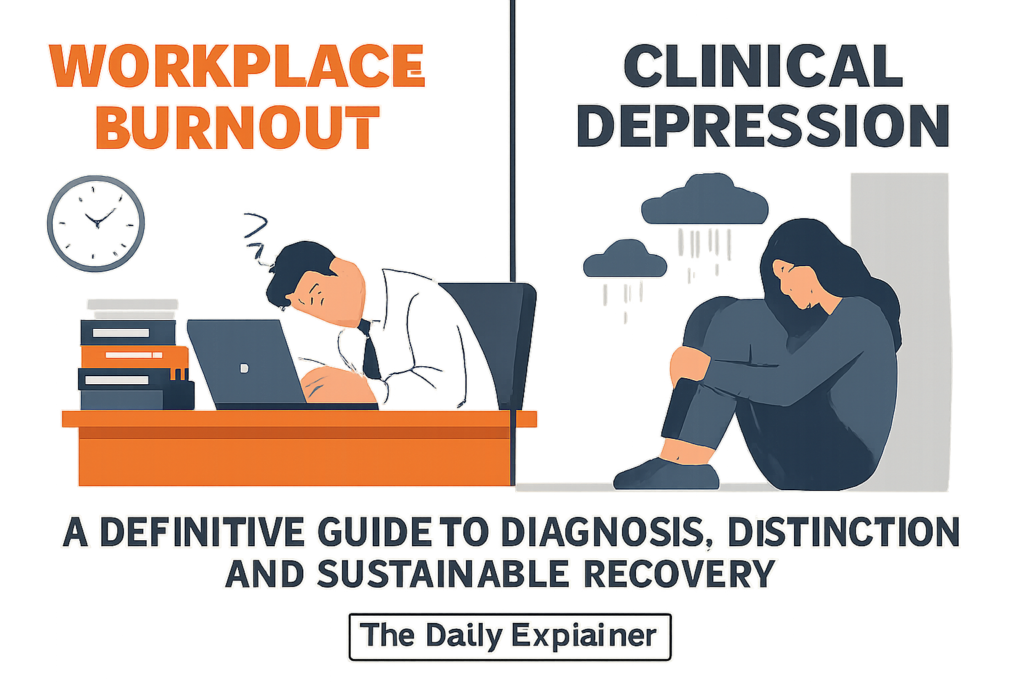
- Burnout (ICD-11 Definition): A syndrome conceptualized as resulting from chronic workplace stress that has not been successfully managed. It is characterized by three dimensions: 1) feelings of energy depletion or exhaustion; 2) increased mental distance from one’s job, or feelings of negativism or cynicism related to one’s job; and 3) reduced professional efficacy. Burnout refers specifically to phenomena in the occupational context and should not be applied to describe experiences in other areas of life.
- Clinical Depression (Major Depressive Disorder – MDD) – DSM-5-TR Criteria: A mental disorder characterized by a pervasive and persistent low mood that is accompanied by low self-esteem and a loss of interest or pleasure in normally enjoyable activities (anhedonia). For a diagnosis, five or more of the following symptoms must be present during the same 2-week period (and represent a change from previous functioning), with at least one of the symptoms being either (1) depressed mood or (2) loss of interest or pleasure:
- Depressed mood most of the day, nearly every day.
- Markedly diminished interest or pleasure in all, or almost all, activities most of the day, nearly every day.
- Significant weight loss/gain or decrease/increase in appetite.
- Insomnia or hypersomnia.
- Psychomotor agitation or retardation (observable by others).
- Fatigue or loss of energy.
- Feelings of worthlessness or excessive/inappropriate guilt.
- Diminished ability to think/concentrate, or indecisiveness.
- Recurrent thoughts of death, suicidal ideation, or a suicide attempt.
- Anhedonia: The inability to feel pleasure in normally pleasurable activities. A core feature of depression that may be present but is less central in burnout (where pleasure may still be found outside of work).
- Psychosocial Hazards: Aspects of work design, management, and social context that have the potential to cause psychological or physical harm. These are the root causes of burnout (e.g., excessive workload, low job control, lack of support, role ambiguity, unfairness).
- Presenteeism: The act of attending work while unwell and being unable to function at full capacity. A hallmark of both burnout and depression, far more than absenteeism.
- Adjustment Disorder with Depressed Mood: A clinically significant emotional or behavioral reaction to an identifiable stressor (like a toxic job) occurring within 3 months of the stressor. Symptoms are disproportionate to the severity of the stressor and cause significant impairment. This diagnosis often sits in the middle ground between situational distress and full MDD.
- Moral Injury: A trauma response to witnessing or participating in events that violate one’s deeply held moral beliefs and values. In healthcare, education, and social work, moral injury is a potent driver of burnout that can tip into depression.
- Locus of the Problem: A critical distinguishing heuristic. In burnout, the locus is often perceived as “The job is killing me.” In depression, the locus shifts inward: “I am broken. I am killing myself.”
The Great Unpacking: A Multi-Dimensional Comparison
While overlap exists, key distinctions emerge when we examine them across several dimensions. The following table provides a high-level summary, which we will then explore in exhaustive detail in subsequent sections.
Comparative Analysis: Burnout vs. Clinical Depression
| Dimension | Workplace Burnout | Clinical Depression (MDD) |
|---|---|---|
| Primary Context & Scope | Occupational. Symptoms are primarily tied to the work domain. The person may feel fine on vacation or weekends (initially). | Pervasive. Symptoms affect all life domains—work, home, hobbies, relationships. The sadness/absence follows you everywhere. |
| Core Emotional Tone | Exhaustion, cynicism, detachment, irritability. A feeling of being “drained,” “used up,” and “over it.” Anger is often closer to the surface. | Profound sadness, emptiness, anhedonia, hopelessness. A deep, pervasive low mood. Loss of the capacity for joy or anticipation. |
| Self-Concept & Guilt | “I am a bad/ineffective worker.” Guilt and inadequacy are often tied to professional performance. Self-worth may be preserved in other roles (parent, friend). | “I am a bad/worthless person.” Guilt is global, excessive, and often irrational. Core self-esteem is eroded across all identities. |
| Anhedonia (Loss of Pleasure) | Selective. Loss of pleasure and interest is primarily related to work or work-related tasks. You can still enjoy your hobbies, time with family, or a good meal. | Generalized. Loss of interest or pleasure in almost all activities, including those previously loved. The world loses its color. |
| Suicidal Ideation | Rare and passive. Thoughts may center on escape (e.g., “I wish I could get hit by a bus so I don’t have to go to work”) but are typically not active plans for self-harm. | Common and can be active. Recurrent thoughts of death, suicidal ideation with or without a specific plan, or suicide attempts are a key diagnostic criterion. |
| Physical Symptoms | Chronic stress physiology: Muscle tension, headaches, GI issues, frequent illness due to a suppressed immune system. Fatigue is profound and linked to effort. | Neurovegetative symptoms: Significant changes in sleep (insomnia or sleeping all day), appetite/weight, and psychomotor activity (agitation or slowing). Fatigue is constant and unrelenting, not tied to effort. |
| Onset & Course | Gradual, situational. Builds over time in response to chronic workplace stressors. Often improves with removal from the stressor (e.g., a vacation, changing jobs). | Can be acute or gradual, can be endogenous. May appear “out of the blue” or in response to non-work stressors. Persists even in the absence of the original stressor. |
| Locus of the Problem | Perceived as external: “This job/company/manager is unsustainable.” | Perceived as internal: “There is something wrong with me.” |
| Primary Treatment Approach | Systemic & Behavioral. 1) Remove/modify workplace stressors. 2) Restore balance (work-life boundaries). 3) Build recovery skills (stress management, detachment). | Clinical & Biological. 1) Psychotherapy (CBT, IPT). 2) Pharmacotherapy (antidepressants). 3) Lifestyle modifications. Addressing work may be part of, but not the entirety of, treatment. |
| Prognosis with Intervention | Good with environmental change. Recovery is often possible with significant rest, boundary setting, and a change in work conditions. | Requires clinical treatment. Recovery typically requires professional intervention; remission is likely with treatment, but the risk of recurrence exists. |
Part I: Deep Dive into Burnout – The Anatomy of Workplace Erosion
Burnout is not a single event but a process of erosion. Let’s dissect it using the ICD-11’s three dimensions, expanding with the latest 2025 research on precipitating factors.
1. Exhaustion: The Erosion of Energy
This is the foundational dimension. It’s not just “tired”; it’s a profound depletion of physical, emotional, and cognitive resources that sleep does not fix.
- Physical: Chronic fatigue, feeling physically drained, lowered immunity, frequent headaches, or muscle pain.
- Emotional: Feeling emotionally “dried up,” have no emotional reserves to give to others, is irritable, and has a low frustration tolerance.
- Cognitive (The New Frontier): Often called “brain fog” or “cognitive burnout.” This includes:
- Impaired Executive Function: Difficulty planning, organizing, initiating tasks, and managing time.
- Working Memory Deficits: Forgetfulness, losing your train of thought, missing details.
- Reduced Cognitive Flexibility: Inability to shift perspective or adapt to new information; mental rigidity.
- A 2024 neuroimaging study in NeuroImage found that individuals with high burnout scores showed reduced connectivity in the frontoparietal network, a brain system critical for executive control and focused attention, providing a biological basis for the “fog.”
2. Cynicism & Detachment: The Erosion of Connection
This is a psychological defense mechanism. When you’re exhausted, you distance yourself emotionally and cognitively from work to protect yourself.
- Cynicism: Developing a negative, callous, or excessively detached response to various aspects of the job. Sarcasm becomes a shield. You stop believing in the mission or value of your work.
- Depersonalization (in human-service roles): Treating clients, customers, or students as objects or numbers rather than human beings.
- Mental Detachment: “Quiet quitting” is a behavioral manifestation—doing the bare minimum, mentally checking out, and refusing to engage beyond contractual obligations.
3. Reduced Professional Efficacy: The Erosion of Accomplishment
This is the crushing feeling of incompetence. You perceive a decline in your ability to perform, and you feel your work is no longer meaningful or impactful.
- Reduced Productivity: Tasks take longer, quality suffers, and mistakes increase.
- Feelings of Inadequacy: A persistent sense of being a fraud or not being “good enough” for the job.
- Loss of Meaning: The work that once provided a sense of purpose now feels pointless or absurd.
The Burnout Crucible: Key Psychosocial Hazards (The Causes)
Burnout doesn’t happen in a vacuum. Research consistently points to six mismatches between the person and the job (the Areas of Worklife model by Maslach & Leiter):
- Workload Overload: Quantitative (too much work) and qualitative (work that is too complex or emotionally taxing).
- Lack of Control: Micromanagement, inability to make decisions about your work, lack of autonomy.
- Insufficient Reward: Not just financial, but lack of social recognition, prestige, or intrinsic satisfaction.
- Breakdown of Community: Isolation, chronic conflict, incivility, lack of support from colleagues and supervisors.
- Absence of Fairness: Perceived inequity in workload, pay, or promotion. Arbitrary decisions, favoritism.
- Value Conflict: A mismatch between personal values and the organization’s actions or demands (the root of moral injury).
Part II: Deep Dive into Clinical Depression – The Anatomy of a Pervasive Disorder
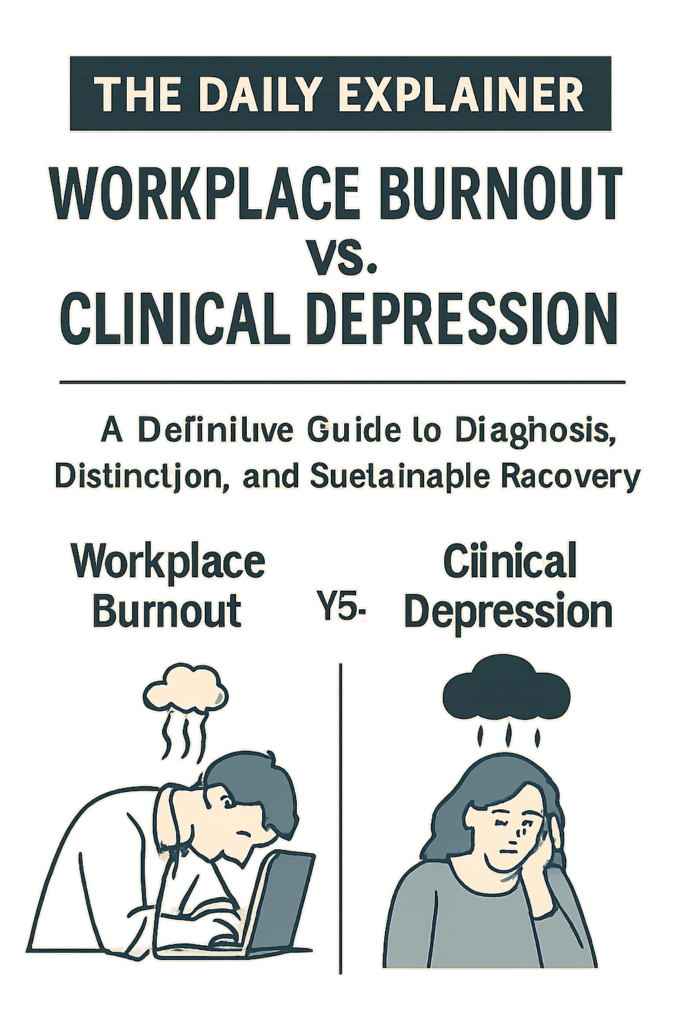
Depression is a whole-body illness. We will go beyond the DSM criteria to explore its neurobiology and lived experience.
The Core Symptom Clusters of MDD:
- Emotional Symptoms: Pervasive sadness, emptiness, or irritability (in some, especially adolescents and men). Anhedonia is the cardinal symptom—a true inability to anticipate or experience pleasure. A parent with depression may not feel joy from their child’s laugh; a foodie may find their favorite meal tastes like ash.
- Cognitive Symptoms: Often called “cognitive distortions” but are experienced as absolute truths.
- The Negative Cognitive Triad (Beck): Negative views of the self (“I am worthless”), the world (“Everything is terrible”), and the future (“It will never get better”).
- Impaired Concentration & Indecisiveness: Difficulty reading, following conversations, or making trivial choices.
- Rumination: Repetitive, intrusive focus on negative thoughts and feelings.
- Physical (Neurovegetative) Symptoms: These are crucial for differential diagnosis.
- Sleep Disturbance: Insomnia (especially early morning awakening, waking at 3-4 AM unable to fall back asleep) or hypersomnia (sleeping 10-12+ hours and still feeling unrefreshed).
- Appetite/Weight Change: Significant loss of appetite and unintentional weight loss OR increase in appetite/weight gain, often craving carbohydrates.
- Psychomotor Changes: Agitation (pacing, hand-wringing, inability to sit still) or retardation (slowed speech, thinking, and body movements).
- Fatigue: A profound, paralyzing loss of energy. Simply taking a shower can feel like a monumental task.
- Guilt & Worthlessness: Feelings are global and excessive (“I am a burden to everyone who knows me”).
- Suicidality: Thoughts of death or suicide range from passive (“I wish I wouldn’t wake up”) to active with a plan. This is a psychiatric emergency.
The Neurobiology of Depression (2025 Update):
The old “chemical imbalance” (low serotonin) theory is now seen as overly simplistic. Current models involve:
- Network Dysfunction: Dysregulation of large-scale brain networks, particularly hyperactivity of the Default Mode Network (DMN) (responsible for self-referential thought, leading to rumination) and hypoactivity of the Central Executive Network (responsible for focus and planning).
- Neuroinflammation: Elevated inflammatory markers (cytokines like IL-6) are found in many with depression, which can cause fatigue, anhedonia, and social withdrawal—the “sickness behavior” response.
- HPA Axis Dysregulation: Chronic overactivation of the stress-response system (hypothalamic-pituitary-adrenal axis), leading to elevated cortisol, which can damage the hippocampus (a brain region for memory) and further disrupt mood regulation.
- Neuroplasticity & BDNF: Reduced levels of Brain-Derived Neurotrophic Factor (BDNF), a protein that supports neuron growth and survival, particularly in the prefrontal cortex and hippocampus.
Part III: The Gray Zone – Comorbidity, Differential Diagnosis, and Self-Assessment
This is where it gets clinically complex. Burnout and depression are not mutually exclusive; they can be comorbid. Chronic, unmanaged burnout is a significant risk factor for developing MDD. The perpetual stress can trigger the neurobiological changes that underpin a depressive episode.
The Diagnostic Conundrum: Questions for Professionals (and Self-Reflection)
A skilled clinician will ask targeted questions to differentiate:
- The “Vacation Test”: “If you were on a two-week, all-expenses-paid vacation on a tropical island with no work email, how would you feel?” A person with burnout will often say, “I’d recover and feel great.” A person with depression will say, “The sadness would come with me. I wouldn’t be able to enjoy it.”
- The “Pleasure Probe”: “Tell me about something you used to enjoy outside of work—a hobby, seeing friends, a favorite show. Have you done it lately? If so, did you feel any pleasure or anticipation?” Burnout may preserve out-of-work pleasure; depression extinguishes it.
- The “Locus” Inquiry: “Where do you place the primary source of your suffering?” This explores the internal vs. external attribution.
- Assessment of Neurovegetative Signs: Specific, detailed questions about sleep patterns, appetite changes, and psychomotor activity over the last two weeks are critical.
- Suicide Risk Assessment: A direct, non-judgmental question about thoughts of self-harm is mandatory for anyone presenting with severe exhaustion or low mood.
Self-Assessment Tools (With Caveats)
- For Burnout: The Maslach Burnout Inventory (MBI) is the gold standard but is proprietary. Public alternatives include the Oldenburg Burnout Inventory (OLBI) or the WHO’s Well-Being Index. They measure exhaustion and disengagement.
- For Depression: The Patient Health Questionnaire-9 (PHQ-9) is a valid, widely used 9-item screener based on DSM criteria. A score of 10+ suggests moderate depression and warrants professional evaluation.
- Important: These are screening tools, not diagnostic instruments. A high score is a signal to seek a professional opinion from a psychologist or psychiatrist.
Part IV: The Recovery Roadmaps – Two Distinct Paths to Healing
Here, the distinction becomes utterly practical. Applying the wrong recovery strategy can lead to failure and deepened despair.
Recovery from Burnout: A Systemic and Behavioral Approach
Burnout recovery is a three-legged stool: Rest, Reconnection, and Recalibration. It often requires a temporary step back to move forward sustainably.
Phase 1: Crisis Management & Detox (Weeks 1-4)
- Immediate Medical Leave: If possible, a complete break from work (short-term disability/medical leave) is non-negotiable for moderate-to-severe burnout. The goal is to break the chronic stress cycle. This is not a vacation; it is a prescribed medical intervention.
- Radical Rest: This means true physiological and psychological rest. Not “productive” rest like starting a new project, but passive rest: sleeping, gentle walking in nature, reading for pleasure, mindfulness. The nervous system needs to down-regulate from constant “fight-or-flight.”
- Digital Detox: Strict boundaries on work communication. Auto-replies on, work apps deleted from personal phone.
- Basic Self-Care Foundation: Re-establishing routines for sleep, nutrition, and gentle movement. The focus is on “being” not “doing.”
Phase 2: Reflection & Root Cause Analysis (Weeks 4-8)
- Therapeutic Support: Work with a therapist or coach specializing in burnout to process the experience without judgment.
- The “Burnout Autopsy”: Objectively analyze the workplace using the six Areas of Worklife. What were the primary hazards? Was it workload, lack of control, or values conflict?
- Values & Boundary Clarification: What are your non-negotiable values for work and life? What boundaries must be established to protect them (e.g., “I do not answer emails after 6 PM”)?
Phase 3: Re-engagement & Recalibration (Months 2-6 and Beyond)
- Negotiated Return-to-Work Plan: Do not simply return to the same conditions. Negotiate changes with HR/your manager: phased return, reduced hours, modified responsibilities, clearer expectations, increased autonomy. Get accommodations in writing.
- Skill Building: Learn and practice concrete skills: psychological detachment (mentally switching off from work), time-blocking, delegation, saying “no,” and mindfulness to manage stress in real-time.
- Cultivate Life Outside Work: Intentionally rebuild identity pillars unrelated to your job: relationships, hobbies, community involvement.
- The Ultimate Question: “Can this job be sustainably modified to fit a healthy me, or do I need to plan an exit?” Sometimes, recovery requires a new environment.
Recovery from Clinical Depression: A Clinical and Holistic Approach
Depression recovery is managed under the guidance of healthcare professionals and is typically multi-modal.
Pillar 1: Psychotherapy
- Cognitive Behavioral Therapy (CBT): The most evidence-based approach for depression. Helps identify and change negative thought patterns and behaviors that perpetuate the mood disorder.
- Interpersonal Therapy (IPT): Focuses on improving interpersonal relationships and social functioning to reduce depressive symptoms.
- Behavioral Activation (BA): A core component of CBT that involves scheduling pleasant activities and combating avoidance, directly targeting anhedonia and inertia.
- Mindfulness-Based Cognitive Therapy (MBCT): Shown to be particularly effective in preventing relapse of depression.
Pillar 2: Pharmacotherapy (Medication)
- Antidepressants: SSRIs (e.g., sertraline, escitalopram), SNRIs (e.g., venlafaxine, duloxetine) are first-line. They modulate neurotransmitter systems (serotonin, norepinephrine) and over time promote neuroplasticity (increased BDNF). It can take 4-8 weeks to feel full effects.
- Treatment-Resistant Options: If first-line medications fail, options include atypical antipsychotics (as adjuncts), ketamine/esketamine (rapid-acting), or TMS/ECT (Transcranial Magnetic Stimulation/Electroconvulsive Therapy) for severe cases.
- Crucial Point: Medication addresses the biological substrate, making a person more receptive to the psychological work of therapy and lifestyle change. It is not a “happy pill” but a stabilizer.
Pillar 3: Lifestyle Medicine & Social Support
- Sleep Hygiene: Rigorous routine is critical, given sleep’s role in mood regulation.
- Physical Activity: Regular aerobic exercise has an antidepressant effect comparable to medication for mild-to-moderate depression, increasing BDNF and endorphins.
- Nutrition: An anti-inflammatory, whole-foods diet (similar to a Mediterranean diet) can support brain health and mitigate neuroinflammation.
- Social Connection: Combating isolation, even when it feels unbearable. Joining a support group (like those from the Depression and Bipolar Support Alliance – DBSA) can reduce shame and provide hope.
- Sunlight & Nature: Exposure to natural light regulates circadian rhythms; time in nature reduces rumination.
The Recovery Trajectory: Expect a course of 6-12 months of active treatment for a major depressive episode. The goal is remission (virtual absence of symptoms), not just response. Maintenance therapy (continued medication and/or therapy) is often recommended to prevent relapse.
Part V: The Organizational Imperative – Preventing Burnout and Supporting Mental Health
The systemic nature of burnout demands a systemic response. Organizations are not just morally responsible; they are financially liable. In 2024, several precedent-setting legal rulings in the EU and Australia found employers negligent for failing to address known psychosocial hazards that led to employee psychiatric injury.
A Blueprint for a Mentally Healthy Workplace (2025 Standards):
- Psychosocial Risk Assessments: Mandatory, anonymous organization-wide surveys to measure burnout risk factors (workload, control, fairness, etc.). Results must be acted upon with transparent action plans.
- Train Leaders in Psychological Safety: Managers must be trained to recognize signs of distress, have supportive conversations, and model healthy boundaries. They are the linchpin of prevention.
- Redesign Work for Sustainability:
- Realistic Workloads & Staffing: Use data, not guesswork, to set achievable goals.
- Autonomy & Control: Empower employees with flexibility in how, when, and where work gets done (where possible).
- Clear Roles & Expectations: Reduce ambiguity and role conflict.
- Fairness in Processes: Transparent criteria for promotion, pay, and recognition.
- Destigmatize Mental Health & Provide Robust Resources:
- Leader Vulnerability: Senior leaders sharing their own mental health challenges normalizes help-seeking.
- Comprehensive EAP: An Employee Assistance Program that offers short-term therapy sessions (not just referrals) and crisis support.
- Mental Health Benefits: Insurance that covers therapy and psychiatry with low co-pays and a wide network.
- Mental Health Leave Policies: Clear, stigma-free short-term disability policies for burnout and depression, with a supportive return-to-work process.
- Foster Connection & Community: Create spaces (virtual and physical) for social connection unrelated to task performance. Mentorship programs, employee resource groups.
- Measure What Matters: Move beyond productivity metrics. Track employee well-being scores, burnout risk, turnover intention, and presenteeism as key performance indicators for leadership.
Part VI: The Future of Work and Mental Health – An Integrated Vision
Looking ahead to 2026 and beyond, the convergence of several trends will force a redefinition of work and health:
- The AI Co-Pilot & Job Redesign: Generative AI will automate the most repetitive, mind-numbing tasks. The opportunity is to re-humanize work—focusing human effort on creativity, strategy, empathy, and complex problem-solving, which are more engaging and less burnout-inducing. The risk is increased surveillance and an even faster pace.
- The Four-Day Workweek as a Burnout Antidote: Large-scale, multinational trials (UK, Iceland, US) throughout 2023-2025 have consistently shown that a 4-day, 32-hour workweek (with no loss in pay) leads to dramatic reductions in burnout and stress, with maintained or improved productivity. This is no longer a radical idea but an evidence-based business strategy for retention and well-being.
- Personalized Mental Health Tech: Just as we have fitness trackers, we will have validated “stress trackers” using HRV (Heart Rate Variability) and other biomarkers to provide individuals with real-time feedback on their nervous system state and personalized micro-interventions (breathing exercises, break prompts). These tools will empower employees to self-regulate and provide organizations with aggregated, anonymized data on team stress levels.
- The Right to Disconnect: Following France’s 2017 law, more countries (Ireland, Portugal, Canada) are enacting “right to disconnect” legislation, giving employees the legal right to ignore work communications outside of working hours. This is a fundamental legal boundary to prevent chronic work encroachment.
- Holistic Health as a Shareholder Value: Investors are increasingly using ESG (Environmental, Social, Governance) metrics that include employee mental well-being. Companies with poor psychological safety records will face capital allocation disadvantages.
Conclusion and Key Takeaways: Navigating the Crossroads with Clarity
The journey through burnout and depression is a deeply personal one, yet it is shaped by powerful societal and biological forces. Distinguishing between them is not about winning a diagnostic label but about finding the correct path out of suffering. Burnout points a finger at the structure of our working lives and demands change there. Depression points a finger at the structure of our brains and minds and demands clinical care.
For the individual drowning in exhaustion, the first step is compassionate self-inquiry, using the frameworks in this guide. Then, seek appropriate help: an occupational health professional or organizational consultant for burnout rooted in workplace analysis; a psychologist or psychiatrist for pervasive depression. There is no shame in either path, only the courage to seek relief.
For leaders and organizations, the mandate is clear. Creating a thriving, productive workforce is inseparable from creating a psychologically safe and sustainable work environment. The old model of extracting human capital until it breaks is not only cruel but economically stupid in an era of transparency and worker mobility.
The future of mental health at work is integrative. It is about designing jobs that energize rather than deplete, providing clinical support when needed without stigma, and recognizing that a healthy employee is not a cog in a machine but a whole human being whose well-being is the ultimate foundation of any enterprise’s success.
Key Takeaways Box
- Context is Key: Burnout is work-related; Clinical Depression is pervasive across all life domains. The “Vacation Test” and “Pleasure Probe” are simple but powerful differentiators.
- Anhedonia vs. Exhaustion: The inability to feel pleasure (anhedonia) is a hallmark of depression. Profound exhaustion tied to work effort is central to burnout.
- Internal vs. External Locus: Burnout often feels externally caused (“this job”); depression feels internally caused (“I am broken”).
- Neurovegetative Signs Are Diagnostic: Significant, persistent changes in sleep, appetite/weight, and psychomotor activity strongly suggest clinical depression, not just burnout.
- Suicidal Thoughts are an Emergency: Any thought of self-harm requires immediate professional intervention. Call a crisis line (988 in the US) or go to an emergency room.
- Recovery Paths Diverge: Burnout requires systemic change and rest (often involving leave and job modification). Depression requires clinical treatment (therapy and/or medication).
- Comorbidity is Common: Severe, chronic burnout can trigger a depressive episode. It is possible to have both, requiring a dual approach to treatment.
- Organizations are Responsible: Burnout is an occupational syndrome caused by poorly managed psychosocial hazards. Employers have a legal and ethical duty of care to prevent it.
- The Future is Integration: The sustainable workplace of the future will seamlessly integrate productivity with human well-being, using technology, policy, and culture to support mental health.
FAQs (Frequently Asked Questions)
1. Can burnout turn into clinical depression?
Yes, absolutely. Chronic, unmanaged burnout is a significant risk factor for developing Major Depressive Disorder. The persistent stress dysregulates the HPA axis, promotes inflammation, and depletes psychological resources, creating the biological and psychological conditions for depression to take hold.
2. I think I have burnout, but my doctor prescribed an antidepressant. Is that wrong?
Not necessarily. If your symptoms meet the diagnostic criteria for MDD (especially pervasive anhedonia, neurovegetative signs, or suicidal thoughts), an antidepressant may be clinically appropriate, even if work stress was the initial trigger. The medication can help stabilize your mood enough to then make the necessary life/work changes. It’s crucial to have an open dialogue with your doctor about the diagnosis.
3. How long does it take to recover from burnout?
There is no fixed timeline. For mild burnout with immediate intervention (boundaries, time off), improvement can be seen in weeks. For severe burnout requiring medical leave, full recovery often takes 3-6 months of dedicated rest and systemic change. Returning to the same toxic environment will likely cause rapid relapse.
4. Is “quiet quitting” a sign of burnout?
It is a common behavioral manifestation of the cynicism/detachment dimension of burnout. It’s a form of self-protection—withdrawing discretionary effort to match the perceived lack of care from the employer. It’s a symptom of the problem, not the problem itself.
5. What’s the difference between stress and burnout?
Stress involves too many demands and the feeling of being overwhelmed. Burnout is the endpoint of chronic, unmanaged stress—it’s characterized by emptiness, detachment, and a sense of ineffectiveness. You’re not just drowning in stress; you feel dried up and depleted.
6. Can you be burned out and still love your job?
This is a painful paradox many experience. You can love the mission, the craft, or the subject matter (the work itself) but be burned out by the conditions of work—the unsustainable pace, toxic culture, poor management, or lack of resources. This dissonance can accelerate the burnout process.
7. Do I need to quit my job to recover from burnout?
Not always, but it is often necessary. Recovery requires removing or significantly modifying the stressors. If the organization is willing and able to make profound changes to your role, workload, and environment, recovery in situ is possible. Often, however, the culture is too entrenched, making a departure the healthiest option.
8. How do I ask for a mental health leave for burnout?
Frame it as a medical necessity. Go to your doctor (GP or psychiatrist), explain your symptoms (use the language of chronic stress, exhaustion, cognitive impairment). Request a note for short-term disability/medical leave. With HR, you can be straightforward: “My doctor has placed me on medical leave to address a health condition. I will provide the necessary documentation.” You are not required to disclose the specific diagnosis.
9. Is burnout covered under the Americans with Disabilities Act (ADA)?
It’s a gray area. Burnout itself is not typically listed. However, if burnout triggers or is comorbid with a diagnosed condition like Generalized Anxiety Disorder, Adjustment Disorder, or Major Depressive Disorder, those conditions may be protected under the ADA, requiring your employer to provide reasonable accommodations (e.g., modified schedule, reduced workload, quiet workspace).
10. What is “boreout” and how is it different?
Boreout is chronic under-stimulation at work—profound boredom, lack of challenge, and a feeling of uselessness. It can also lead to exhaustion and depression-like symptoms but stems from a lack of meaningful engagement rather than overload. It’s on the opposite end of the poor-job-design spectrum.
11. Are some personalities more prone to burnout?
While anyone can experience burnout, those with high conscientiousness, perfectionistic tendencies, and an over-identification with work (making it their core identity) are at greater risk. They are more likely to take on excessive workloads and neglect their own needs.
12. What role does trauma play in burnout vs. depression?
A history of trauma (childhood or adult) is a major risk factor for developing both MDD and a heightened vulnerability to burnout. In helping professions, vicarious trauma and moral injury (e.g., a nurse forced to provide substandard care due to understaffing) are potent, specific drivers of burnout that can have a traumatic quality.
13. How does menopause or andropause factor in?
Hormonal shifts during perimenopause/menopause and decreasing testosterone in men (andropause) can cause symptoms that mimic or exacerbate both burnout and depression: fatigue, brain fog, irritability, sleep disturbance. It’s critical to have a healthcare provider evaluate hormonal status when these symptoms appear in mid-life, as the treatment may be different.
14. What about burnout in remote/hybrid work?
Remote work can alleviate some stressors (commute, office politics) but introduce others: blurred boundaries (always being “on”), social isolation, lack of visibility leading to overwork to “prove” you’re working, and poor home ergonomics. Preventing remote burnout requires explicit boundary-setting rituals, dedicated workspaces, and intentional efforts for social connection.
15. Can meditation and mindfulness cure burnout?
They are powerful tools for managing stress and building resilience, but they are not a cure for a toxic work environment. It’s unethical to promote mindfulness as the sole solution to systemic problems. It’s like teaching someone to breathe cleanly in a room filling with smoke—helpful, but you must also address the fire.
16. What is the single most effective organizational intervention for reducing burnout?
Evidence points to increasing employee autonomy and control. When people have a say in how, when, and where they do their work, they experience less stress and higher engagement. This is more impactful than superficial perks.
17. How do I support a colleague I think is burned out or depressed?
Express concern privately and compassionately. Use “I” statements: “I’ve noticed you seem really exhausted lately, and I’m concerned about you.” Listen without judgment. Avoid giving advice. Encourage them to use available resources (EAP, HR) or see a doctor. For depression, asking directly, “Are you having thoughts of harming yourself?” is safe and can be life-saving.
18. What if my employer retaliates against me for taking mental health leave?
This is illegal in most jurisdictions under disability and employment laws. Document everything. If you experience retaliation (demotion, negative reviews, exclusion), consult with an employment lawyer immediately. Reporting to your state’s labor board is also an option.
19. Are there any new treatments for burnout on the horizon?
Beyond organizational change, digital therapeutics (DTx) are being developed specifically for burnout. These are evidence-based app programs that deliver cognitive and behavioral interventions for stress management, detachment, and resilience-building, sometimes prescribed by a doctor. Research into the use of psychedelic-assisted therapy for existential aspects of burnout (loss of meaning) is also in very early stages.
20. Where can I find more resources and community support?
- For Burnout: The Burnout Project, Mightier Works, and the National Institute for Occupational Safety and Health (NIOSH) have resources.
- For Depression: National Alliance on Mental Illness (NAMI), Depression and Bipolar Support Alliance (DBSA), Crisis Text Line (text HOME to 741741), and the 988 Suicide & Crisis Lifeline.
- For Workplace Advocacy: Mind Share Partners’ reports and toolkits for employers.
- For broader perspectives on health, policy, and creating impactful work, explore resources at Shera Kat Network’s blog and WorldClassBlogs.
About the Author
Sana Ullah Kakar is an organizational psychologist and licensed therapist with over 15 years of experience at the intersection of workplace culture and clinical mental health. She advises Fortune 500 companies on designing psychologically safe systems and maintains a clinical practice specializing in treating high-achievers with burnout and mood disorders. Her work is grounded in the belief that individual well-being and organizational health are two sides of the same coin. She is a frequent contributor to The Daily Explainer, and you can find more of her insights on our blog or contact her for speaking engagements via our contact-us page.
Free Resources
- Burnout Self-Assessment Tool: Based on the Oldenburg Burnout Inventory, available for download on our site.
- PHQ-9 Depression Screener: A printable version of the validated depression questionnaire.
- Sample Scripts & Templates: For requesting a mental health leave, negotiating workplace accommodations, and setting boundaries with your manager.
- Psychosocial Risk Assessment Guide for Employees: A toolkit to help you and your team anonymously assess your own work environment.
- “The Recovery Plan” Workbook: A step-by-step guide to building your personal burnout recovery or depression management plan.
- For entrepreneurs and leaders looking to build sustainable, healthy businesses from the ground up, this complete guide to starting an online business in 2026 integrates mental well-being principles.
Discussion
The line between burnout and depression is where our personal struggles meet the structures of the modern economy. What has been your experience? Have you navigated this confusing terrain? Do you believe your workplace takes psychological safety seriously? What single change would most reduce burnout in your industry? Let’s have an honest, supportive conversation. For discussions on the broader policy and economic implications of this crisis, explore our Global Affairs & Politics section and the forums at WorldClassBlogs Nonprofit Hub.
Disclaimer: This article is for informational and educational purposes only. It is not a substitute for professional medical advice, diagnosis, or treatment. Always seek the advice of your physician, qualified mental health provider, or other qualified health provider with any questions you may have regarding a medical or psychological condition. If you are experiencing a mental health emergency, please call your local emergency number or a crisis hotline immediately (e.g., 988 in the U.S. and Canada). The external links provided are for additional resources and do not constitute an endorsement. Please review our Terms of Service.
About The Author




Sweet web site, super pattern, real clean and use friendly.