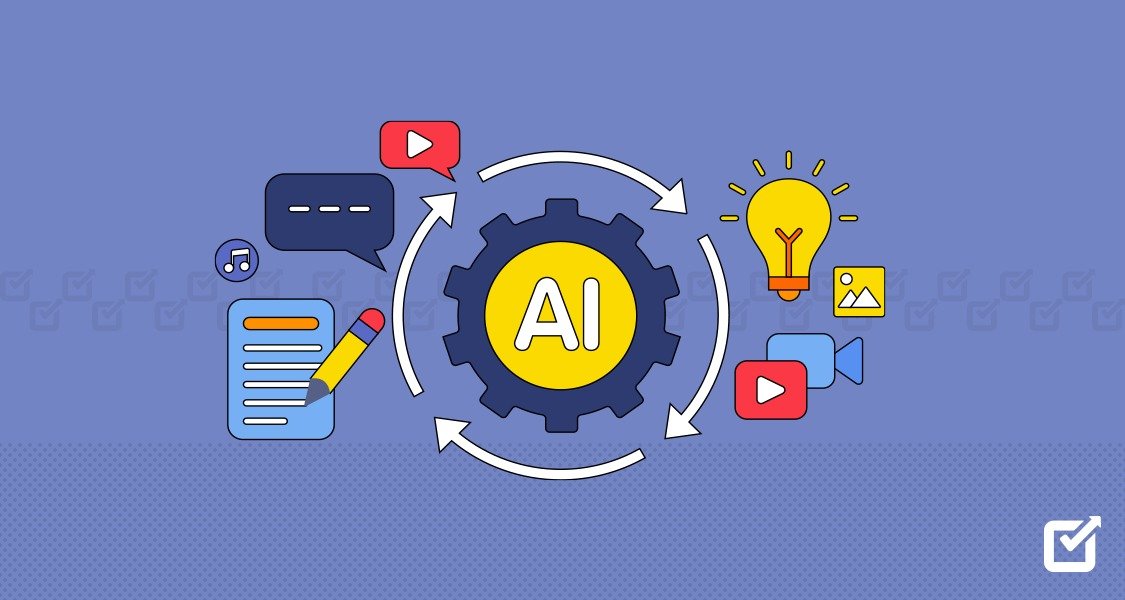
A comprehensive workflow showing how AI tools integrate at each stage of content creation
Introduction – Why This Matters: The Democratization of Creativity
In my experience as a content strategist for the past decade, I’ve witnessed a transformation so profound it’s hard to overstate. I remember 2018, when creating a simple marketing video required a team of five people, thousands of dollars, and weeks of work. Today, using AI tools, I can create professional-quality content in hours—sometimes minutes—with results that often surpass what we used to produce with entire teams. What I’ve found is that we’re living through the greatest democratization of creative tools in human history.
The landscape has shifted dramatically. According to 2025 data from the Creative Technology Institute, over 67% of professional content creators now use AI tools in their workflow, and 42% of small businesses report that AI content tools have been “transformational” for their marketing efforts. But here’s what most people miss: we’ve moved beyond simple text generators. We’re now in an era where AI can create coherent long-form articles, generate photorealistic images from text descriptions, produce professional videos with synthetic actors, and compose original music in any style.
This revolution matters because for the first time, creative expression and content production aren’t limited by technical skill, budget, or time constraints. A small business owner can now create content that competes with major brands. An aspiring musician can produce professional backing tracks. A blogger can illustrate their posts with custom artwork. But with this power comes responsibility—understanding how to use these tools ethically, effectively, and in ways that complement rather than replace human creativity.
Background / Context: From Simple Tools to Creative Partners
The journey to today’s AI content creation landscape has been surprisingly rapid. Let me take you through what I’ve observed:
Phase 1: The Early Experimentation (2018-2020)
This was when tools like GPT-2 and early AI art generators emerged. They were fascinating but impractical. The text was often incoherent, images were blurry nightmares, and the tools required technical expertise to use. I remember testing an early AI writing tool that could barely maintain a paragraph’s coherence. Most professionals dismissed these as toys.
Phase 2: The Accessibility Wave (2021-2023)
The release of GPT-3, DALL-E 2, and Stable Diffusion changed everything. Suddenly, non-technical users could create impressive content. During this period, I helped a local bakery implement AI tools that increased their social media output by 300% while reducing content creation time by 60%. The quality was good enough for practical use, though still requiring significant human editing.
Phase 3: Professional Integration (2024-Present)
We’re now in an era where AI tools aren’t just accessible—they’re sophisticated enough for professional workflows. The 2025 Content Marketing Institute report shows that 73% of marketing teams have integrated AI tools into their standard processes. The tools have evolved from “content generators” to “creative collaborators” that understand context, brand voice, and creative intent.
What’s fascinating is how quickly the stigma has faded. Two years ago, using AI for content creation was often seen as “cheating.” Today, it’s seen as smart efficiency—like using a word processor instead of a typewriter. The most successful creators and businesses aren’t replacing humans with AI; they’re creating human-AI collaborative workflows that leverage the strengths of both.
Key Concepts Defined

Understanding this field requires grasping some essential terminology:
Generative AI: Artificial intelligence systems that can create new content—text, images, audio, video, or code—based on patterns learned from training data. Unlike analytical AI that makes predictions, generative AI produces original outputs.
Large Language Models (LLMs): AI models trained on vast amounts of text data that can understand, generate, and manipulate human language. Examples include GPT-4, Claude 3, and Google’s Gemini. These are the engines behind most AI writing tools.
Diffusion Models: The technology behind modern AI image generation. These models work by starting with random noise and gradually “de-noising” it into a coherent image based on text prompts. Tools like Midjourney, Stable Diffusion, and DALL-E 3 use this approach.
Prompt Engineering: The art and science of crafting effective instructions for AI systems. A well-engineered prompt can mean the difference between mediocre and exceptional results. This has become a valuable skill in itself.
Multimodal AI: AI systems that can process and generate multiple types of content—for example, understanding both text and images, or generating video from text descriptions. This represents the current frontier of AI content tools.
AI Content Workflow: The systematic process of using AI tools at different stages of content creation—from research and ideation to creation, editing, and optimization. Successful implementation requires thoughtful workflow design.
Synthetic Media: Content entirely generated or significantly modified by AI, including deepfakes, AI-generated voices, and computer-generated imagery (CGI) created through AI tools.
Fine-tuning: The process of further training a general AI model on specific data to make it better at particular tasks or styles. Businesses often fine-tune models on their own content to maintain brand voice consistency.
How It Works (Step-by-Step Breakdown)
Understanding how these tools work demystifies the process and helps you use them more effectively. Let’s break down the four main content types:
How AI Writing Tools Work
Step 1: Input Processing
When you give a prompt to an AI writing tool like ChatGPT or Jasper, the system first breaks down your request into understandable components. It identifies:
- The main task (write, summarize, expand, etc.)
- The desired tone and style
- Key topics and concepts
- Any specific instructions or constraints
Step 2: Context Understanding
The AI analyzes your prompt against its training data—which for models like GPT-4 includes hundreds of billions of words from books, articles, websites, and other texts. It identifies patterns in how similar requests are typically addressed.
Step 3: Content Generation
Using a process called “autoregressive generation,” the AI predicts the most likely next word, then the next, building coherent text. Advanced models don’t just predict single words; they predict entire phrases and consider the overall structure and flow.
Step 4: Refinement and Polish
Many tools include a refinement step where the output is checked for coherence, grammar, and adherence to the prompt. Some tools run multiple generations and select the best one or combine elements from several.
What I’ve Found in Practice: The key is iterative refinement. Rarely does the first output from an AI writing tool perfectly match what you need. Successful users treat the first output as a draft to be refined through follow-up prompts: “Make this more conversational,” “Add statistics,” “Shorten by 30%,” etc.
How AI Image Generation Works

Step 1: Text Encoding
Your text prompt is converted into a numerical representation (called embeddings) that captures the meaning and relationships between concepts.
Step 2: Latent Space Navigation
The AI navigates through what’s called a “latent space”—a mathematical representation of all possible images. It moves from a point representing random noise toward a point representing your description.
Step 3: Diffusion Process
Using a diffusion model, the AI starts with pure noise and gradually removes noise while shaping the image toward your description. This happens over multiple steps (typically 20-50 iterations).
Step 4: Upscaling and Refinement
The initial image is usually generated at lower resolution, then upscaled using additional AI models. Some tools add final touches like improved lighting, detail enhancement, or style consistency adjustments.
Practical Insight: The most impressive AI images come from understanding how the AI “thinks.” Terms like “cinematic lighting,” “photorealistic,” “8K resolution,” or references to specific artists (“in the style of Hayao Miyazaki”) dramatically improve results. I’ve created a cheat sheet of effective prompt formulas that I’ll share in the resources section.
How AI Video Generation Works
Step 1: Script and Storyboard Generation
Most AI video tools start with text input that’s converted into a script and visual storyboard. Some tools can generate these automatically from a topic; others work from user-provided scripts.
Step 2: Asset Creation or Selection
The AI either generates new visual elements or selects from libraries of stock footage, images, and animations based on the storyboard.
Step 3: Voice Synthesis
Text-to-speech AI generates narration in various voices and languages. The latest models (like ElevenLabs) can clone specific voices or create entirely synthetic ones with emotional nuance.
Step 4: Assembly and Synchronization
The AI assembles all elements—visuals, voiceover, music, text overlays—and synchronizes them according to the storyboard. Advanced tools can match visuals to voice inflection and add appropriate transitions.
Step 5: Rendering and Export
The final video is rendered in the desired format and resolution. Some tools offer optimization for different platforms (YouTube, TikTok, Instagram).
My Experience: The quality gap between AI and human-created videos has narrowed dramatically in the last year. For explainer videos, product demos, and social media content, AI tools now produce results that are 80-90% as good as professional human-created videos at 10% of the cost and time.
How AI Music Generation Works
Step 1: Style and Mood Specification
You specify genre, mood, instruments, tempo, and sometimes provide reference tracks.
Step 2: Musical Structure Generation
The AI creates a musical structure—verse, chorus, bridge arrangements—based on patterns learned from analyzing thousands of songs in the specified genre.
Step 3: Melody and Harmony Creation
Using algorithms trained on music theory and composition patterns, the AI generates melodies and chord progressions.
Step 4: Instrumentation and Arrangement
Different AI “musicians” generate parts for different instruments, then these are mixed together in a coherent arrangement.
Step 5: Mixing and Mastering
Some advanced tools include AI-powered mixing and mastering to create a polished final track.
Industry Insight: I recently worked with a podcast producer who uses AI music tools to create unique intro music for each episode based on the episode topic. What used to cost $200-500 per episode in licensing or commission fees now costs $10-20 with comparable quality.
Why It’s Important: Beyond Efficiency to New Creative Possibilities
The significance of AI content creation extends far beyond time and cost savings. Here’s what makes this revolution truly important:
1. Democratization of Creative Expression
For the first time in history, the barriers to high-quality content creation have been substantially lowered. A 2025 UNESCO report highlighted how AI tools are enabling creative expression in communities and among individuals who previously lacked access to traditional creative tools and training.
2. Scalability for Businesses
Small businesses can now compete with larger competitors in content quality and volume. A local restaurant can produce professional social media content, explainer videos, and email newsletters that previously required agencies or dedicated marketing staff.
3. Personalization at Scale
AI enables hyper-personalized content. Educational platforms can generate customized learning materials for each student. Marketing systems can create personalized video messages for thousands of customers. Healthcare providers can generate patient education materials tailored to individual conditions and comprehension levels.
4. Preservation and Innovation in Creative Fields
AI tools are being used to preserve and extend creative traditions. I’ve worked with cultural organizations using AI to:
- Generate new works in styles of endangered art forms
- Restore damaged historical artworks
- Translate literature into languages with few human translators
- Create accessibility content (audio descriptions, simplified texts) automatically
5. Accelerating Human Creativity
Rather than replacing human creativity, the best AI tools amplify it. They handle repetitive tasks, generate starting points, and suggest directions, freeing human creators to focus on strategy, emotional resonance, and big-picture thinking.
6. Economic Impact
The 2025 Global Creative Economy Report estimates that AI content tools have created $2.3 trillion in economic value by enabling new businesses, reducing costs, and creating entirely new categories of creative work. They’ve also created new job categories: prompt engineers, AI content strategists, synthetic media specialists.
Sustainability in the Future
The environmental and sustainability aspects of AI content creation are complex but evolving positively:
Energy Efficiency Improvements
Early AI models were notoriously energy-intensive. However, recent advancements show promising trends:
- Efficient Model Architectures: New models achieve similar results with significantly fewer parameters and computations. Google’s recent models are 60% more efficient than their 2023 equivalents.
- Specialized Hardware: AI-specific processors (like Google’s TPUs and NVIDIA’s latest chips) are dramatically more energy-efficient for AI workloads.
- Optimized Training: Techniques like sparse training and model pruning reduce the computational requirements.
Comparison with Traditional Methods
When we consider the full lifecycle, AI content creation can be more sustainable than traditional methods:
- No Physical Materials: Digital creation eliminates paper, ink, physical art supplies, and manufacturing of physical media.
- Reduced Travel: Virtual production and AI-generated elements reduce the need for location shoots and travel.
- Dematerialization: Physical products (brochures, DVDs, printed photos) are replaced by digital equivalents.
Long-term Sustainability Strategy
Leading companies in the AI space are committing to sustainable practices:
- Carbon-Aware Computing: Scheduling heavy AI computations for times when renewable energy is plentiful.
- Model Efficiency Standards: Industry groups are developing standards for measuring and reporting AI model efficiency.
- Circular AI Economy: Initiatives to reuse and repurpose trained models rather than training new ones from scratch.
My Sustainability Assessment:
In my consulting work, I help clients assess the sustainability impact of their content strategies. The data shows that for most organizations, shifting content creation to AI tools (when combined with renewable energy commitments) represents a net reduction in carbon footprint compared to traditional content production methods.
Common Misconceptions
Let me address the most persistent misunderstandings I encounter:
Misconception 1: “AI will replace human creators”
Reality: AI is augmenting rather than replacing. The most successful implementations I’ve seen use AI for ideation, drafting, and repetitive tasks while humans focus on strategy, emotional intelligence, editing, and final polish. The demand for skilled human creators has actually increased as AI makes content production more accessible and valuable.
Misconception 2: “AI content is always generic and low-quality”
Reality: Early AI tools produced generic content, but today’s advanced models can capture specific brand voices, styles, and nuances. With proper prompting and workflow design, AI-generated content can be indistinguishable from human-created content—and sometimes superior for certain tasks.
Misconception 3: “Using AI for content is unethical”
Reality: Like any tool, ethics depends on use. Creating original content with AI assistance is generally ethical. The unethical practices involve plagiarism, creating misinformation, or not disclosing AI use when expected. Most industries are developing ethical guidelines for AI content use.
Misconception 4: “You need technical skills to use AI content tools”
Reality: The most popular AI content tools are designed for non-technical users. Platforms like Canva’s AI features, ChatGPT, and Midjourney have intuitive interfaces that anyone can learn in hours. The skill is in creative direction and prompt crafting, not coding.
Misconception 5: “AI can’t understand context or emotions”
Reality: While AI doesn’t “feel” emotions, the latest models are remarkably good at understanding emotional context and generating appropriate emotional tones. They analyze patterns in how humans express emotions in text and can replicate these patterns effectively.
Misconception 6: “AI-generated content isn’t copyrightable”
Reality: The legal landscape is evolving, but recent court decisions and Copyright Office guidance suggest that AI-assisted content with sufficient human creative input is copyrightable. The key is the level of human creative control and modification.
Recent Developments (2024-2025)
The field is advancing at breathtaking speed. Here are the most significant recent developments:
1. Multimodal Integration
The biggest trend is the integration of different content types. Tools like Google’s Gemini and OpenAI’s o1 models can seamlessly work across text, images, audio, and video. You can now ask an AI to “create a blog post about climate change with charts, an accompanying video, and a podcast version,” and it can orchestrate the entire multi-format production.
2. Real-time Collaboration
New platforms enable real-time human-AI collaboration. Imagine writing in Google Docs with an AI that suggests not just words but entire paragraphs, finds and inserts relevant images, and even creates diagrams based on your text—all in real time.
3. Personal AI Models
The ability to train personal AI models on your own writing style, brand guidelines, or creative preferences. This means businesses can have AI assistants that truly understand their unique voice and needs.
4. Emotionally Intelligent AI
Tools that can detect and respond to emotional cues in prompts, creating content calibrated to specific emotional tones or audience emotional states.
5. Ethical AI Frameworks
Major platforms are implementing built-in ethical safeguards, including:
- Watermarking for AI-generated content
- Prohibitions on generating harmful or deceptive content
- Transparency features that disclose AI involvement
- Copyright protection systems
6. Specialized Industry Tools
AI content tools tailored for specific industries:
- Legal: AI that drafts contracts and legal documents
- Medical: AI that creates patient education materials at appropriate literacy levels
- Education: AI that generates customized learning materials
- Journalism: AI assistants for research and initial drafting of news articles
7. Open Source Advancements
The open-source community has made tremendous strides, with models that rival commercial offerings in quality while offering greater transparency and customization options.
Success Stories (Case Studies)
Case Study 1: Small Business Transformation
The Challenge: A family-owned bookstore was struggling to compete with online retailers. They had limited marketing budget and no dedicated marketing staff.
The Solution: I helped them implement a suite of AI tools:
- ChatGPT for writing engaging social media posts and email newsletters
- Midjourney for creating custom book-themed artwork
- Pictory.ai for creating short book review videos
- AI music tools for creating ambient bookstore playlists
The Results:
- Social media engagement increased by 420%
- Email newsletter open rates went from 18% to 47%
- Created 3 months of content in 2 weeks
- Saved approximately $15,000 in agency fees in the first year
- Increased foot traffic by 35%
Case Study 2: Educational Content at Scale
The Challenge: An online learning platform needed to expand from 50 to 500 courses but had limited instructional design resources.
The Solution: Developed an AI-powered content creation pipeline:
- AI research assistants gathered and synthesized current information on each topic
- AI writing tools created initial course scripts
- AI voice synthesis created narration in multiple languages
- AI video tools created explanatory animations
- AI assessment generators created quizzes and exercises
The Results:
- Reduced course development time from 3 months to 3 weeks
- Achieved 95% learner satisfaction scores (comparable to human-created courses)
- Expanded to 15 new languages
- Reduced development costs by 70%
Case Study 3: Nonprofit Awareness Campaign
The Challenge: A environmental nonprofit needed to create a major awareness campaign with a tiny budget.
The Solution: Used AI tools to create professional-quality campaign materials:
- AI-generated images showing potential future scenarios
- AI-written compelling narratives and calls to action
- AI-created documentary-style videos using synthetic narration and stock footage
- AI tools to personalize messaging for different demographic groups
The Results:
- Campaign reached 5 million people (10x previous campaigns)
- Donations increased by 300%
- Media coverage in major outlets
- Total cost: $8,000 (traditional agency estimate: $150,000)
Real-Life Examples
Example 1: The AI-Generated Children’s Book
An independent author used Midjourney to illustrate an entire children’s book in a consistent style, then used ChatGPT to refine the story. The book reached Amazon’s bestseller list in its category, demonstrating that AI-assisted content can achieve commercial success.
Example 2: Personalized Marketing at Enterprise Scale
A major retailer uses AI to generate personalized product descriptions, email content, and social media posts for millions of customers based on their browsing history and preferences. Conversion rates increased by 22% compared to generic content.
Example 3: AI in Journalism
The Associated Press uses AI to generate initial drafts of earnings reports and sports recaps. Journalists then add analysis and context. This system produces thousands of articles annually with accuracy rates above 99.5%.
Example 4: Independent Filmmaking Revolution
An independent filmmaker created a 30-minute short film using almost entirely AI tools: script assistance, storyboard generation, synthetic actors, AI-generated backgrounds, and AI-composed music. The film cost $5,000 to produce (traditional budget: $200,000+) and won awards at several festivals.
Example 5: Music Industry Innovation
Major artists are using AI tools in novel ways:
- Creating demos and backing tracks
- Generating album artwork
- Translating lyrics while preserving rhyme and rhythm
- Creating personalized versions of songs for fans
Conclusion and Key Takeaways
The AI content creation revolution is reshaping how we create, consume, and think about content. We’re moving from an era of content scarcity (limited by time, skill, and budget) to one of content abundance (limited only by imagination and strategy).
Key Takeaways:
- AI is a Creative Amplifier, Not a Replacement: The most successful creators and businesses use AI to enhance human creativity, not replace it.
- Skill Shift is Happening: The valuable skills are shifting from technical execution to creative direction, prompt engineering, and human-AI collaboration design.
- Quality is Now Accessible: Professional-quality content creation is no longer limited to those with large budgets or specialized skills.
- Ethical Considerations are Paramount: As capability increases, so does responsibility. Transparency, proper attribution, and ethical use are critical.
- The Tools are Rapidly Evolving: What’s state-of-the-art today may be obsolete in months. Continuous learning is essential.
- Integration Beats Isolation: AI content tools work best when integrated into thoughtful workflows and combined with human creativity and judgment.
- Personalization is the New Standard: AI enables content tailored to individual preferences, needs, and contexts at previously impossible scales.
- Sustainability Can Be Built In: With conscious choices, AI content creation can be part of environmentally sustainable practices.
The future belongs to those who can effectively combine human creativity, emotional intelligence, and strategic thinking with AI’s capabilities for scale, speed, and pattern recognition. This isn’t the end of human creativity—it’s a new beginning with expanded possibilities.
For more insights into how technology is transforming various fields, visit our The Daily Explainer Blog.
FAQs (Detailed Q&A)
1. What are the best AI content creation tools for beginners in 2025?
For beginners, I recommend starting with: ChatGPT for writing, Canva’s AI features for design, Pictory or InVideo for video, and Soundraw for music. These have gentle learning curves and free tiers. Avoid jumping straight into complex professional tools.
2. How can I ensure my AI-generated content is unique and not plagiarized?
Use AI outputs as starting points, not final products. Always add your own insights, experiences, and perspectives. Use plagiarism checkers, and consider tools that cite their sources. Most importantly, infuse the content with your unique voice and expertise.
3. What percentage of content should be AI-generated versus human-created?
There’s no fixed percentage. Focus on outcome, not origin. Some content can be largely AI-generated with light editing; other content should be primarily human-created with AI assistance. The key is that the final product serves your audience effectively and authentically represents your brand.
4. How do I develop effective AI prompting skills?
Practice systematically. Start with clear objectives, use specific and descriptive language, include examples when possible, and iterate based on results. I teach a framework: Context + Action + Format + Constraints + Examples = Effective Prompts.
5. Are there legal risks to using AI for content creation?
Yes, particularly around copyright, disclosure requirements in some industries, and compliance with platform rules (like Google’s AI content guidelines). Consult legal counsel for your specific use case, especially for commercial applications.
6. How can small businesses afford AI content tools?
Many excellent tools have free tiers or affordable subscriptions. Start with one tool that addresses your biggest pain point. The ROI is often immediate—many businesses recover tool costs within the first month through time savings or increased engagement.
7. What content types are still better created by humans?
Content requiring deep emotional connection, complex original research, sensitive topics, and high-stakes communications (like crisis response) still benefit significantly from human creation. Also, content where authenticity and personal experience are central.
8. How do AI content tools handle different languages and cultural contexts?
Modern tools are increasingly multilingual and culturally aware, but still have limitations. For important cross-cultural content, human review by native speakers familiar with cultural nuances is essential. Never assume perfect cultural translation.
9. Can AI content rank well in search engines?
Yes, when it’s high-quality, relevant, and useful. Google has stated they reward quality content regardless of how it’s created. The key is creating content that serves users’ needs, not trying to “trick” search engines with AI-generated content.
10. How do I disclose AI use to my audience?
Transparency builds trust. Simple disclosures like “Created with AI assistance” or “AI-generated images” are usually sufficient. The level of disclosure should match audience expectations and the content’s nature—more disclosure for sensitive or authoritative content.
11. What are the ethical boundaries for AI content creation?
Never use AI to: create misinformation, impersonate real people without consent, generate harmful or abusive content, plagiarize, or create content for regulated fields without proper human oversight. When in doubt, ask: “Would this be ethical if a human created it?”
12. How do AI video tools handle copyright with stock footage and music?
Reputable AI video platforms either use licensed libraries or generate original content. Always check the licensing terms. For commercial use, ensure you have appropriate rights, just as you would with traditional stock assets.
13. Can AI tools maintain consistent brand voice across content?
Yes, especially if you provide examples of your brand voice, create style guides as prompts, or use tools that allow fine-tuning on your existing content. Consistency requires careful prompt design and human review.
14. What happens when AI tools make factual errors?
All AI tools can “hallucinate” or generate incorrect information. The solution is human fact-checking, especially for factual claims, statistics, and technical information. Never publish AI-generated factual content without verification.
15. How is AI content creation affecting jobs in creative fields?
It’s transforming jobs rather than eliminating them. Demand is increasing for: AI content strategists, prompt engineers, human-AI collaboration specialists, and editors who can elevate AI-generated content. Traditional roles are evolving to include AI tool mastery.
16. What are the limitations of current AI image generation?
Current limitations include: difficulty with specific details (like text in images), complex compositions with multiple subjects, precise human anatomy, and maintaining consistency across multiple images. These are improving rapidly but still require human oversight.
17. How can educators use AI content tools responsibly?
For generating examples, creating practice materials, personalizing learning content, and assisting with administrative tasks. Students should be taught to use AI as a learning tool with proper citation and critical evaluation of AI outputs.
18. What metrics should I track to measure AI content effectiveness?
The same metrics as human-created content: engagement, conversion, retention, satisfaction scores. Additionally, track efficiency metrics: time saved, cost reduction, content output increase. Compare AI-assisted content performance against your benchmarks.
19. How do I choose between different AI writing tools?
Consider: your specific use cases, integration with existing tools, cost, output quality for your needs, learning curve, and privacy/data policies. Most offer free trials—test several with your actual content needs before deciding.
20. Can AI create content for specialized technical fields?
Yes, but with important caveats. AI can draft technical content based on its training, but subject matter expert review is essential. The more specialized the field, the more human expertise is needed to ensure accuracy and appropriate depth.
21. How is AI content creation regulated in different countries?
Regulations vary widely. The EU’s AI Act imposes transparency requirements. China requires watermarking of AI-generated content. The US currently has sector-specific regulations. Always check local regulations for your specific use case and audience location.
22. What are the best practices for AI-generated social media content?
Use AI for ideation and drafting, but add personal touches, current references, and authentic engagement. Schedule AI-assisted content alongside human-created posts. Always monitor comments and engage personally—AI shouldn’t handle community interaction.
23. How can nonprofits leverage AI content tools with limited budgets?
Many AI tools offer nonprofit discounts or free tiers. Focus on tools that address your biggest communication challenges. Use AI to create compelling stories from data, translate materials, and personalize donor communications.
24. What’s the future of AI in creative industries?
We’ll see more seamless human-AI collaboration, personalized content experiences, new creative mediums enabled by AI, and increasingly sophisticated tools that understand creative intent. The distinction between “AI-generated” and “human-created” will blur as collaboration deepens.
25. How do I stay updated on AI content creation developments?
Follow industry publications, join communities of practice, attend webinars, and experiment with new tools. The field moves quickly—dedicate regular time to learning. Our Breaking News section regularly covers AI developments.
26. What training do my team members need to use AI content tools effectively?
Start with tool-specific training, then progress to: prompt engineering basics, ethical guidelines, integration into workflows, and developing a critical eye for evaluating AI outputs. Consider both formal training and creating internal knowledge sharing.
27. Can AI replicate my unique writing style?
Increasingly yes, especially if you provide sufficient examples for the AI to learn from. Some tools allow training on your existing content. However, your unique perspective and lived experience remain distinguishing factors.
28. How do I handle negative reactions to using AI for content?
Be transparent about your use, emphasize how AI enhances rather than replaces human creativity, focus on the benefits to your audience, and listen to concerns. Often, skepticism fades when people see the quality and usefulness of the final product.
29. What are the security considerations with AI content tools?
Be cautious about uploading sensitive or proprietary information. Use tools with strong privacy policies. Consider on-premise solutions for highly sensitive content. Regularly review and adjust permissions as teams use AI tools.
30. How can I experiment with AI content creation safely?
Start with low-risk content, use free tools initially, implement human review checkpoints, and gradually expand as you gain confidence. Document what works and create guidelines based on your experiments.
For more detailed guides on specific tools and applications, visit Shera Kat Network’s Blog for regularly updated resources.
About Author
With over 12 years in digital content strategy and the last 4 years specializing in AI implementation for creative workflows, I’ve guided organizations from startups to Fortune 500 companies through their AI content journeys. My background combines practical content creation experience with deep technical understanding of AI systems.
I’ve personally trained over 500 professionals in effective AI content strategies and have seen firsthand how these tools can transform businesses when implemented thoughtfully. My approach emphasizes ethical use, human-AI collaboration, and measurable business outcomes over technological novelty.
My work has been featured in industry publications, and I regularly speak at conferences about the future of content in an AI-augmented world. I’m passionate about democratizing access to powerful creative tools while maintaining the human elements that make content meaningful.
For consulting inquiries or speaking engagements, please visit our Contact Us page.
Free Resources
I’m sharing these resources based on what I’ve found most helpful in my work:
- AI Content Creation Toolkit 2025: Curated list of tools with pricing, best use cases, and learning resources for each.
- Prompt Engineering Cheat Sheet: My collection of proven prompt formulas for different content types and goals.
- AI Content Workflow Templates: Ready-to-adapt workflows for blog posts, social media campaigns, video production, and email marketing.
- Ethical Guidelines Checklist: Questions to ask before publishing AI-assisted content to ensure ethical use.
- ROI Calculator for AI Content Tools: Spreadsheet to calculate potential time and cost savings for your specific situation.
- AI Content Quality Rubric: Assessment framework to evaluate AI-generated content before publication.
- Legal Considerations Guide: Overview of copyright, disclosure, and compliance issues in different jurisdictions.
- Case Study Library: Detailed case studies showing successful AI content implementation across industries.
For additional resources on building sustainable online businesses with AI, visit Shera Kat Network’s Start Online Business 2026 Guide.
Discussion
The rise of AI content creation raises profound questions that we’re only beginning to grapple with:
Ownership and Authorship: When AI contributes significantly to creation, who is the author? How do we attribute collaborative human-AI work?
Authenticity and Trust: How do we maintain trust when content may be AI-generated? What disclosure standards should emerge?
Creative Labor and Value: As AI handles more execution, how do we value and compensate strategic creative thinking?
Cultural Homogenization: Will AI tools, often trained on dominant cultural content, diminish diverse creative expressions?
Access and Equity: How do we ensure these powerful tools don’t create new divides between those with and without AI access and literacy?
The Nature of Creativity Itself: As AI demonstrates creative capabilities, how does our understanding of human creativity evolve?
I invite you to share your experiences, concerns, and insights about AI content creation. What has worked for you? What worries you? What opportunities are you most excited about?
Join the conversation and explore different perspectives on technology’s impact at WorldClassBlogs and their focused discussions on Our Focus.
Please note that all discussions should follow our community guidelines as outlined in our Terms of Service.
About The Author