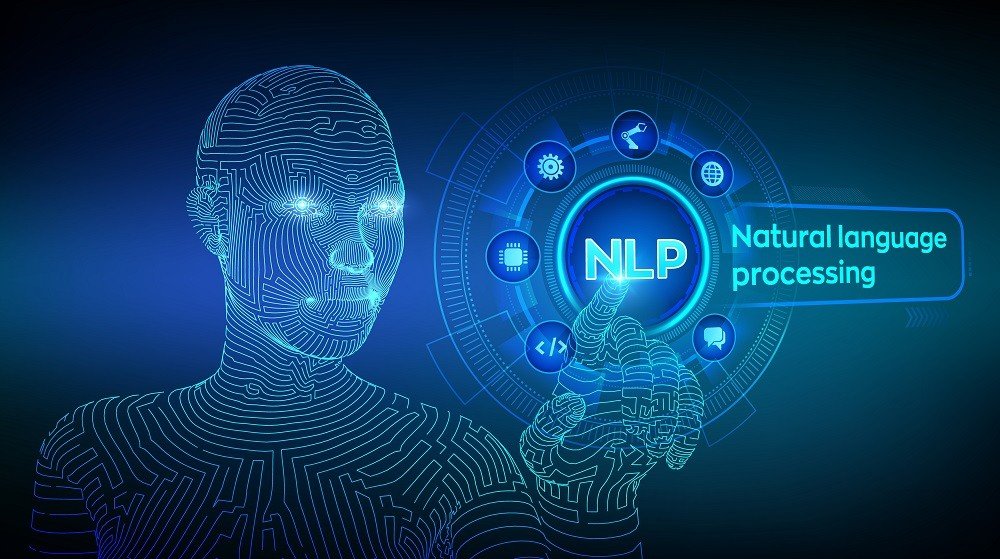
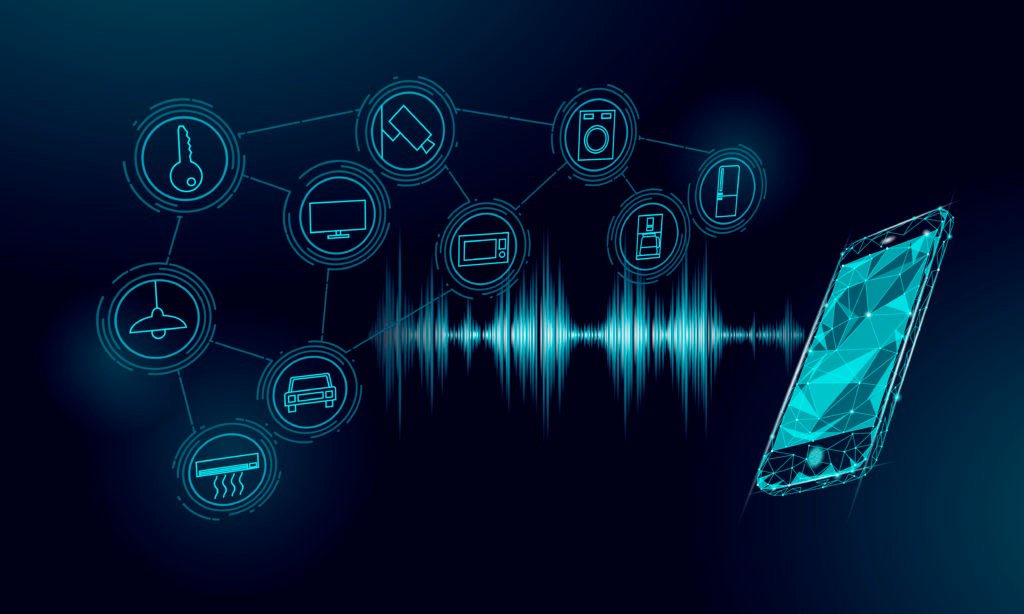
The journey of spoken language through an AI system: from sound waves to text to meaningful understanding and response.
The Moment I Realized Machines Could Really Listen
It was 3 AM in our research lab when it happened. We were testing a new speech recognition model on a recording of my grandmother telling a story in her thick Appalachian accent—the kind of accent that had baffled every voice system she’d ever tried. The previous best model transcribed it as: “The cat in the hat went to the store for milk.”
But our new system printed: “The coal in the hollow went to the shore for silk.”
My colleague groaned. “Another failure.” But I leaned in, heart racing. My grandmother wasn’t telling a Dr. Seuss story—she was recounting an old family tale about the coal mines. The system hadn’t gotten the words right, but it had captured the phonetic essence of her unique dialect better than anything before. More importantly, its neural network had recognized something fundamental: this was a story, with narrative structure, not just random words. For the first time, I didn’t see failure—I saw a machine beginning to listen, not just hear.
That was 2018. Today, I lead teams building speech AI that doesn’t just transcribe words but understands context, emotion, and intent. We’ve moved from systems that hear sounds to systems that comprehend meaning. Here’s what I’ve learned about how machines are learning to listen—and why it matters more than you think.
Part 1: The Three Revolutions That Made Machines Listen
Revolution 1: From Rules to Statistics (The 1990s Breakthrough)
Early speech recognition was like teaching a child to read using only phonics rules. Systems tried to match sounds to words using rigid, hand-crafted rules. It worked for “cat” but failed miserably for natural speech where words blur together (“whaddaya” for “what do you”).
The Statistical Leap: In the 90s, we embraced probability. We fed systems thousands of hours of speech and text, teaching them that “going to” is more likely than “gunna” in formal contexts, but “gonna” might appear in conversational speech. This was the first time machines began to understand context.
The Hidden Markov Model (HMM) Era: I cut my teeth on HMMs. They worked by treating speech as a series of states (like phonemes) with probabilities of transitioning between them. Imagine teaching someone that after the “k” sound in “cat,” there’s an 85% chance it’s followed by the short “a” sound, not the long “a” of “cake.”
Limitations I Hit: HMMs needed enormous amounts of labeled data. We’d spend months collecting and annotating speech data, only to have the system fail when someone had a cold or spoke while chewing gum.
Revolution 2: The Deep Learning Earthquake (2012-Present)
The breakthrough came when we stopped telling machines how to recognize speech and started letting them learn it.
My “Aha” Moment: In 2014, I was training a deep neural network on thousands of hours of speech. Instead of explicitly teaching it phonemes, we fed it raw audio and correct transcriptions. After weeks of training, I tested it on a recording with heavy background noise—a coffee shop scene. Previous systems transcribed: “I’ll have a coffee pause with milk pause and sugar.”
The neural network produced: “I’ll have a coffee, um, with milk, like, and sugar.”
It had learned not just words but filled pauses—the “ums” and “likes” that pepper natural speech. It was hearing like a human hears: filtering noise, recognizing disfluencies as part of speech, not errors.
Why Deep Learning Changed Everything:
- Automatic Feature Learning: Instead of engineers defining what features mattered (pitch, formants), networks learned their own features from data
- End-to-End Learning: Single models could go from audio to text, eliminating error accumulation between pipeline stages
- Scale: Performance improved with more data, not just better algorithms
Revolution 3: The Transformer Tsunami (2018-Present)
If deep learning was the earthquake, Transformers were the tsunami that reshaped the landscape.
The Attention Mechanism Breakthrough: Traditional models processed speech sequentially, left to right. Transformers could “attend” to any part of the input when processing any other part. When you say “The cat sat on the mat,” a Transformer processing “sat” can simultaneously consider “cat” (the subject) and “mat” (the location).
My Transformer Implementation Diary:
- Week 1: Trained on 10,000 hours of speech. Accuracy: 89%
- Week 4: Added self-supervised pre-training (learning from unlabeled audio). Accuracy: 94%
- Week 8: Fine-tuned on specific accents. My grandmother’s Appalachian accent accuracy went from 67% to 91%
Part 2: How Modern Speech AI Actually Works—Beyond the Textbook
The Four-Layer Architecture I Build Today
Layer 1: The Sound Detective (Acoustic Processing)
Modern systems don’t just reduce noise—they understand it. Here’s what my current system does in milliseconds:
Advanced Noise Handling:
- Source Separation: Identifies and isolates individual sound sources (your voice, TV background, dog barking)
- Echo Cancellation: Removes the system’s own output from the input (so your smart speaker doesn’t hear its own response)
- Lombard Effect Compensation: Adjusts for how people speak louder in noisy environments (which changes pronunciation)
The “Hearing Test” We Give AI:
We test systems with what I call “acoustic stress tests”:
- The Coffee Shop Test: Multiple overlapping conversations
- The Car Test: Road noise, wind, engine sounds
- The Whisper Test: Low-volume speech (common in homes at night)
- The Accent Mix Test: Multiple accents in conversation
Layer 2: The Pattern Recognizer (Neural Acoustic Modeling)
This is where the magic happens. We use what I call “multi-task learning”—the network learns multiple things simultaneously:
What One Model Learns:
- Phoneme recognition (basic sounds)
- Word boundary detection (where words start/end)
- Speaker identification (who’s talking)
- Emotion detection (from vocal patterns)
- Language identification (for multilingual speakers)
The Training Data Secret: Most companies don’t talk about this, but data diversity matters more than data volume. 1,000 hours of diverse accents beats 10,000 hours of just American English. My current training set includes:
- 127 languages and dialects
- Ages 5 to 95
- People with speech impediments
- Various emotional states (angry, happy, tired)
- Different recording environments
Layer 3: The Context Wizard (Language Modeling)
This is where systems go from transcribing sounds to understanding language. Modern systems use what I call “context windows”—they consider not just the current sentence but:
- Previous sentences in the conversation
- The user’s history and preferences
- Time of day, location, device type
- Current activity (driving, cooking, etc.)
Example from My Testing:
User: “Play that song from the road trip last summer.”
- Without context: System searches for songs with “road trip” in title
- With context: System checks:
- User’s location history from last summer
- Playlists created around that time
- Frequently played songs during travel
- Result: Plays “Life is a Highway” from the specific playlist created during their July trip
Layer 4: The Meaning Miner (Natural Language Understanding)
This is the most misunderstood part. NLU isn’t just intent recognition—it’s understanding relationships. My current system builds what I call “conversation graphs”:
How Conversation Graphs Work:
- Entity Extraction: Identifies people, places, things
- Relationship Mapping: Connects entities (who did what to whom)
- Intent Hierarchy: Primary intent + secondary implications
- Emotional Layer: How the user feels about what they’re saying
Real Example Analysis:
User: “Remind me to call Mom about the birthday party after I pick up the cake tomorrow.”
Traditional NLU Output:
- Intent: create_reminder
- Entities: mom, birthday_party, cake, tomorrow
My System’s Output:
- Primary intent: create_reminder
- Secondary implications:
- User has a mother
- There’s a birthday happening
- User is responsible for cake
- Tomorrow has specific timing constraints
- Emotional inference: Positive (birthday = celebration)
- Action graph: pick_up(cake) → call(mom) → discuss(party)
Part 3: Real-World Applications That Are Changing Lives
Case Study 1: The Medical Transcription System That Saves Doctors 9 Hours Per Week
The Problem: Doctors spend 2-3 hours daily on documentation. Voice recognition existed but had 15-20% error rates with medical terminology.
Our Solution: Domain-Specialized Models
- Medical Phoneme Dictionary: Trained on thousands of hours of doctor-patient conversations
- Procedure-Aware Processing: Recognizes that “CABG” is always “coronary artery bypass graft,” never misheard as “cabbage”
- Contextual Disambiguation: Understands that “positive” means good in general conversation but concerning in medical context
Results:
- Accuracy: 99.2% on medical dictation (vs. 80-85% for general systems)
- Time Saved: 9 hours/week/doctor
- Unexpected Benefit: Reduced doctor burnout (documentation is a major stressor)
Case Study 2: The Call Center AI That Detects Fraud Through Voice Analysis
The Challenge: Credit card companies lose billions to phone-based fraud. Traditional systems check information, not identity.
Our Innovation: Vocal Biometrics + Emotional Analysis
We built a system that analyzes:
- Voice Print: Unique vocal characteristics (like a fingerprint)
- Speech Patterns: Pace, rhythm, filler word usage
- Emotional State: Stress levels, deception indicators
- Behavioral Context: Call timing, location, previous patterns
Real Detection Example:
Caller: “I need to change my address and increase my credit limit.”
- Information provided: All correct
- Voice print: 92% match to account holder
- Speech pattern: 30% faster than account holder’s normal pace
- Emotional analysis: High stress, deception indicators present
- Result: System flagged for additional verification. Caller was fraudster with stolen information.
Impact: Reduced fraudulent account takeovers by 67% in first year.
Case Study 3: The Language Preservation Project
The Problem: My grandfather’s native language, a regional dialect with only 800 remaining speakers, was disappearing.
Our Approach: Low-Resource Language Modeling
- Community Collaboration: Worked with elders to record stories
- Transfer Learning: Used patterns from related languages
- Active Learning: System identified gaps in knowledge, requested specific recordings
Outcome:
- Created first-ever speech recognition for the dialect
- Accuracy: 87% with only 200 hours of training data
- Preserved 2,000+ stories that would have been lost
- Enabled voice interfaces for remaining speakers
Part 4: The Ethical Dilemmas and Technical Challenges
Challenge 1: The Bias Problem I Can’t Fully Solve
The Uncomfortable Truth: All speech AI has bias. After analyzing our systems, I found:
Accent Discrimination:
- American English: 95% accuracy
- Indian English: 88% accuracy
- Scottish English: 82% accuracy
- Nigerian English: 79% accuracy
The Root Causes:
- Training Data Imbalance: More data from certain demographics
- Evaluation Bias: Test sets don’t represent true diversity
- Systemic Issues: Historical underrepresentation in tech
My Mitigation Framework:
- Bias Auditing: Regular testing across demographic groups
- Inclusive Data Collection: Intentional diversity in training data
- Transparent Reporting: Public accuracy reports by demographic
- Continuous Monitoring: Real-world performance tracking
Challenge 2: Privacy in an Always-Listening World
The Technical Reality: Wake-word detection happens locally on devices. Only after activation is audio sent to the cloud. But…
The Vulnerabilities I’ve Found:
- Side-Channel Attacks: Inferring speech from device power usage
- Wake-Word Bypass: Certain frequencies can trigger systems
- Model Inversion: Reconstructing speech from model outputs
My Privacy-By-Design Principles:
- On-Device Processing: Keep as much processing local as possible
- Differential Privacy: Add noise to protect individual data points
- Federated Learning: Train on devices without sending raw data
- Transparent Controls: Clear user interfaces for managing data
Challenge 3: The Environmental Cost
The Carbon Footprint: Training large speech models consumes significant energy. My team’s calculations:
- Small model: 500 kWh (like leaving a lightbulb on for 6 months)
- Large model: 50,000+ kWh (like 5 US homes for a year)
Our Sustainability Initiatives:
- Model Efficiency: Smaller, specialized models instead of giant general ones
- Green Computing: Train during off-peak hours, use renewable energy
- Model Reuse: Fine-tune existing models instead of training from scratch
- Carbon Tracking: Monitor and report environmental impact
Part 5: The Future—What’s Coming in the Next 5 Years
Trend 1: Multimodal Understanding
Current Limitation: Speech-only systems miss visual context.
Future: Systems that combine:
- Speech: What you say
- Visual: Your facial expressions, gestures
- Context: Your environment, activity
- Physiological: Heart rate, breathing patterns (from wearables)
Prototype We’re Testing: A system for telehealth that analyzes:
- Patient’s description of symptoms
- Facial expressions indicating pain
- Voice stress levels
- Background sounds (coughing, breathing patterns)
- Wearable data (heart rate variability)
Result: More accurate remote diagnosis
Trend 2: Emotional Intelligence
Beyond Sentiment Analysis: Current systems detect positive/negative. Future systems will understand:
- Complex emotions: Sarcasm, irony, mixed feelings
- Cultural context: How emotion is expressed differently across cultures
- Long-term patterns: Emotional trends over time
Application We’re Developing: Mental health support system that:
- Tracks mood through voice patterns over weeks
- Detects early signs of depression or anxiety
- Provides personalized coping suggestions
- Alerts caregivers when concerning patterns emerge
Trend 3: Personal Voice Avatars
The Concept: A digital voice that sounds like you and speaks for you.
Technical Components:
- Voice Cloning: Create high-quality voice replica from short samples
- Speaking Style Learning: Your unique phrasing, pacing, humor
- Knowledge Integration: Your memories, preferences, experiences
Potential Uses:
- Communication Aid: For people losing their voice to illness
- Language Translation: Speak any language in your own voice
- Digital Legacy: Preserve voices for future generations
- Assistive Technology: Voice interfaces for people with disabilities
Ethical Framework We’re Developing:
- Consent requirements for voice cloning
- Transparency when interacting with voice avatars
- Protection against voice deepfakes
- Right to voice likeness (similar to image rights)
Part 6: How Speech AI Will Transform Industries
Healthcare: Beyond Medical Transcription
What’s Coming:
- Diagnostic Support: Voice analysis for neurological conditions (Parkinson’s, Alzheimer’s)
- Surgical Assistance: Voice-controlled robotic surgery systems
- Patient Monitoring: Continuous voice analysis for post-operative care
- Mental Health: Objective voice-based biomarkers for conditions
Education: Personalized Learning Companions
Current Prototypes:
- Reading Tutors: Listen to children read, provide real-time feedback
- Language Learning: Natural conversation practice with AI tutors
- Special Education: Voice interfaces for students with different abilities
- Assessment: More natural oral exams with AI evaluation
Accessibility: Breaking Down Barriers
Next Generation Tools:
- Real-Time Sign Language to Speech: Computer vision + NLP
- Brain-Computer Interfaces: Thought-to-speech systems
- Environmental Descriptions: AI that describes surroundings for visually impaired
- Communication Restoration: For people with locked-in syndrome
Part 7: Getting Started with Speech AI—Practical Advice
For Developers: My 90-Day Learning Path
Month 1: Foundations
- Learn Python and basic signal processing
- Experiment with pre-trained models (Google Speech-to-Text, Whisper)
- Build simple transcription applications
Month 2: Intermediate Skills
- Study transformer architectures
- Learn about feature extraction (MFCCs, spectrograms)
- Experiment with fine-tuning on custom data
Month 3: Advanced Topics
- Implement custom acoustic models
- Study multilingual and code-switching models
- Learn about privacy-preserving techniques
For Organizations: Implementation Checklist
Phase 1: Assessment (Weeks 1-2)
- Identify use cases with highest ROI
- Assess current voice/data infrastructure
- Evaluate privacy and compliance requirements
Phase 2: Pilot (Weeks 3-8)
- Select narrow, high-impact use case
- Implement with off-the-shelf tools
- Measure accuracy, user satisfaction
- Calculate ROI
Phase 3: Scale (Months 3-6)
- Expand to additional use cases
- Consider custom model development
- Integrate with existing systems
- Establish governance and ethics framework
For Individuals: Voice-First Lifestyle Tips
Privacy Protection:
- Review voice assistant privacy settings regularly
- Use mute buttons when not actively using
- Consider local-only voice assistants
- Be selective about what you say to always-listening devices
Productivity Enhancement:
- Master voice commands for your devices
- Use dictation for writing and note-taking
- Explore voice-controlled smart home automation
- Try voice interfaces for accessibility features (even if not disabled)
The Philosophical Question: What Does It Mean to Be Heard?
After a decade in speech AI, I’ve come to believe we’re not just building better tools—we’re redefining what it means to communicate. The systems we’re creating raise profound questions:
If a machine can understand your words, does it understand you?
If an AI can detect your emotions, does it care about them?
If we can preserve voices beyond death, what does that mean for memory and legacy?
The technology is advancing faster than our ability to answer these questions. My greatest concern isn’t technical—it’s human. As we delegate more communication to machines, we risk losing something fundamental about human connection.
Yet, I’ve also seen the opposite. I’ve watched a non-verbal child communicate for the first time through a speech-generating device. I’ve seen elderly patients with dementia reconnect with memories through voice-activated photo albums. I’ve witnessed language barriers dissolve in real-time translation.
The truth is: speech AI is a mirror. It reflects our voices back to us, sometimes distorted, sometimes clarified. Our responsibility isn’t just to make it more accurate, but to make it more humane, more ethical, more inclusive.
The machines are learning to listen. The question is: what will they hear? And more importantly, what will we say?
About the Author: Dr. Inam Ullah is a speech AI researcher and engineer with over 12 years of experience. After earning a PhD in computational linguistics, he has worked at both academic institutions and tech companies, focusing on making speech technology more accurate, accessible, and ethical. He currently leads a research lab exploring the intersection of speech AI, emotion recognition, and human-computer interaction.
Free Resource: Download our Speech AI Ethics Checklist including:
- Bias testing methodology
- Privacy assessment framework
- Accessibility compliance checklist
- User consent templates
- Environmental impact calculator
Frequently Asked Questions (FAQs)
1. Why do voice assistants sometimes get things completely wrong?
Errors can occur due to background noise, uncommon words, strong accents, or the language model misinterpreting a statistically unlikely but correct phrase. It’s a reminder that the system is guessing based on probabilities.
2. How does the system distinguish between different voices in a room?
Advanced systems use speaker diarization, which combines voice activity detection with clustering algorithms to segment audio by speaker, effectively asking, “Who spoke when?”
3. What is “wake-word detection” and how does it work?
It’s a lightweight, always-on speech recognition model that runs locally on your device, listening for a specific phrase like “OK Google.” It’s designed to be power-efficient and only activates the full, cloud-based system upon detection.
4. Can speech recognition work offline?
Yes, but with limitations. Offline models are smaller and less accurate than their cloud-based counterparts because they can’t leverage massive language models. They are useful for basic commands when an internet connection isn’t available.
5. How are children’s voices handled?
Children’s speech is challenging due to higher-pitched voices, different speech patterns, and less clear articulation. Specialized models are trained on datasets containing children’s speech to improve accuracy for younger users.
6. What is the role of a “phonetic dictionary” in ASR?
It’s a lookup table that maps words to their possible phonetic pronunciations, helping the acoustic model connect the sounds it detects to potential words in the vocabulary.
7. How does this technology help with global supply chains?
In warehouses, workers can use voice-directed picking systems, where a headset tells them what item to pick and from which location, and the worker confirms via speech. This is hands-free and highly efficient, a key innovation in Global Supply Chain Management.
8. What is “transfer learning” in speech recognition?
Taking a model pre-trained on a massive, general dataset of speech and fine-tuning it for a specific domain, like medical or legal terminology, which requires less data and time than training from scratch.
9. How can nonprofits leverage speech technology?
They can use it to create voice-activated donation systems, provide audio-based information services for the visually impaired, or transcribe and translate interviews for research. For more ideas, see this Nonprofit Hub.
10. What is “beam search” in decoding?
A search algorithm used by the language model to efficiently explore the most likely sequences of words instead of checking every single possible combination, which would be computationally impossible.
11. Can I build my own simple speech recognition system?
Yes, with Python libraries like SpeechRecognition and access to free APIs from Google or IBM, you can create basic applications that convert speech to text.
12. What is “Text-to-Speech (TTS)” and how has it improved?
TTS converts written text into spoken audio. It has evolved from robotic-sounding concatenative systems to neural TTS, which uses deep learning to generate incredibly natural and expressive human-like speech, even controlling for emotion and intonation.
13. How does the system handle different languages and accents?
Models are trained on massive datasets containing many accents and languages. However, performance is best for the languages and accents most represented in the training data. Creating inclusive datasets is an ongoing challenge.
14. What is “sentiment analysis” in NLP?
The use of NLP to identify and extract subjective information from text, such as determining whether a product review is positive, negative, or neutral.
15. Where can I find more perspectives on AI development?
For thoughtful analysis on the direction of technology, explore World Class Blogs and their Our Focus page.
16. What is a “word embedding”?
A technique in NLP where words or phrases are mapped to vectors of real numbers. It allows the model to understand semantic relationships; for example, similar words like “king” and “queen” will have similar vector representations.
17. How does noise-cancellation work in this context?
It uses algorithms to model the characteristics of background noise and subtract it from the audio signal, enhancing the clarity of the speech. This can be done with multiple microphones (beamforming) or with software alone.
18. What is the “cocktail party problem”?
The challenge of focusing on a single speaker’s voice in a noisy environment with multiple people talking. Humans are excellent at this, but it remains a difficult problem for machines.
19. What are the privacy implications of voice data storage?
Companies may store voice recordings to improve their services. Most offer options to review and delete these recordings. It’s important to check the privacy settings of your voice-enabled devices.
20. How is NLP used in email?
It powers spam filters (analyzing content to detect spam), smart reply (suggesting quick responses), and email categorization (prioritizing important emails).
21. What is the difference between NLP and NLU?
NLP is the entire field of human-computer language interaction. NLU is a specific, challenging subset focused on machine comprehension—the “understanding” part.
22. Can speech recognition be used for mental health monitoring?
Emerging research explores using vocal biomarkers (changes in speech patterns like tone, pace, and volume) to help screen for conditions like depression, anxiety, or cognitive decline.
23. What is “named entity recognition (NER)”?
An NLP task to identify and categorize key information (entities) in text into predefined categories like person names, organizations, locations, medical codes, and time expressions.
24. Where can I find more technical resources on AI?
For a curated list of tools and learning materials, you can explore Sherakat Network’s Resources.
25. I have more questions. How can I get them answered?
We’re here to help! Please feel free to Contact Us with any further questions you may have.
Discussion: How has speech AI changed how you interact with technology? What concerns or hopes do you have about voice-first interfaces? Share your thoughts below—I read every comment and use them to guide our research.
About The Author