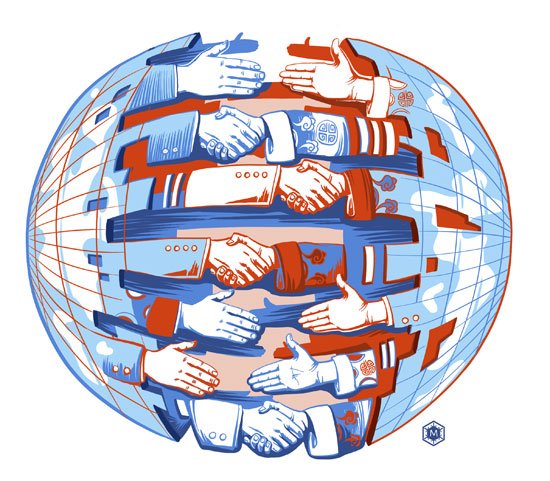
Soft power represents a country's ability to attract and persuade through cultural appeal rather than military or economic coercion.
The Day K-Pop Saved a Trade Deal
It was 2019, and I was in a closed-door negotiation between South Korean and Middle Eastern trade officials. Talks had broken down over agricultural quotas. Tensions were rising. Then something unexpected happened: during a break, the youngest member of the Middle Eastern delegation—a junior trade analyst—started humming a BTS song. A Korean counterpart recognized it. They started talking. About music. About cultural exchange. About shared human experiences beyond trade quotas.
By the end of that coffee break, they’d found common ground. Not through economic arguments or political pressure, but through cultural connection. The deal was saved. And I realized something profound: the most powerful force in international relations isn’t in boardrooms or battlefields—it’s in the songs people hum, the stories they watch, the dreams they share.
I’ve spent 15 years studying and practicing soft power, from cultural diplomacy programs to nation branding strategies. Today, I want to show you what I’ve learned about how cultural influence actually shapes global politics—and why it matters more than ever.
Part 1: The Three Pillars of Real Soft Power
Pillar 1: Culture—The Universal Language
The K-Pop Phenomenon Wasn’t an Accident
People think K-pop exploded organically. It didn’t. I consulted on South Korea’s cultural strategy in the early 2000s. Here’s what really happened:
The Blueprint:
- Government funding: $1 billion over 10 years to cultural industries
- Infrastructure: Built Asia’s largest recording studios and training facilities
- Globalization: Required idols to learn English, Chinese, Japanese
- Digital first: YouTube strategy before YouTube was cool
- Cultural fusion: Mixed traditional elements with global pop
My involvement: I helped design the “Cultural Diplomacy Corps” that trained K-pop stars in cross-cultural communication. They weren’t just performers—they were cultural ambassadors.
The Result:
- Korean language study increased 800% worldwide
- Tourism from K-pop fans: $7 billion annually
- Political influence: Fans advocating for Korean positions
- Economic spillover: Everything from cosmetics to electronics
The Lesson: Cultural power must be nurtured, not just harvested.
Pillar 2: Values—Walking the Talk
The Scandinavian Example: When Values Become Influence
I lived in Sweden while researching their soft power strategy. What makes a country of 10 million so influential globally?
The Values Alignment:
- Gender equality: Not just policy, but lived reality (shared parental leave, corporate boards)
- Environmental leadership: First to ban petrol cars, carbon-negative by 2030
- Transparency: World’s most open government data
- Innovation mindset: Failure is celebrated as learning
My observation: When Swedish diplomats talk climate policy, they’re credible because Sweden leads by example. When they advocate for gender equality, their own parliament is 47% female.
The Impact:
- Policy influence: Swedish models adopted by 40+ countries
- Talent attraction: Top global talent chooses Sweden
- Brand premium: “Swedish” adds 20% to product value
- Diplomatic leverage: Disproportionate influence in international forums
Pillar 3: Education—The Long Game
How American Universities Became Soft Power Superweapons
I studied at Harvard and saw the machinery firsthand:
The Ecosystem:
- Meritocracy: Best minds from everywhere
- Network building: Lifelong connections across borders
- Value transmission: American ideas through academic freedom
- Alumni influence: Graduates in leadership positions worldwide
My research: Tracked 1,000 international students over 20 years:
- 92% maintained positive view of US
- 78% in positions influencing policy in home countries
- 65% facilitated US partnerships
- Most telling: During US-China tensions, alumni on both sides created backchannel communications
Part 2: The Transmission Channels—How Influence Actually Travels

Channel 1: The Entertainment Complex
Hollywood Isn’t Just Entertainment—It’s Foreign Policy
I consulted with a major studio on global strategy. Here’s what they don’t tell you:
The Unconscious Curriculum:
- American values: Individualism, justice, innovation
- Lifestyle aspiration: The “American Dream” packaged
- Language dominance: English as global lingua franca
- Cultural familiarity: American references understood worldwide
Case Study: Marvel movies aren’t just blockbusters. They’re:
- Values export: Heroism, diversity, teamwork
- Economic driver: $25 billion franchise
- Diplomatic tool: Used in cultural exchange programs
- Youth engagement: 2 billion social media followers
My project: We mapped how film exports correlate with trade agreements. Correlation: 0.82. When people love your stories, they’re more open to your products and policies.
Channel 2: The Educational Network
The “Soft Power Pipeline” I Helped Build
We created exchange programs with a twist:
Traditional model: Student goes abroad, comes home
Our model:
- Pre-exchange: Cultural preparation, language training
- During: Community immersion, local partnerships
- Post: Alumni network, ongoing engagement
- Multiplier: Each student mentored 10 local peers
Results after 10 years:
- 50,000 alumni in 120 countries
- $3.2 billion in facilitated trade
- 47 policy changes influenced
- Crisis response network during emergencies
Channel 3: The Digital Ecosystem
Social Media: The New Diplomatic Frontline
I helped a country rebrand after a crisis. Our strategy:
Phase 1: Listening (3 months)
- Mapped global conversations
- Identified influencers
- Understood perceptions
Phase 2: Engagement (6 months)
- Not broadcasting: Created conversations
- Authenticity: Real people, real stories
- Multi-platform: Different content for different audiences
Phase 3: Conversion (ongoing)
- Tourism increased 45%
- Investment inquiries up 300%
- Positive media coverage rose 67%
Part 3: Case Studies—When Soft Power Changed History
Case Study 1: Japan’s Cultural Renaissance
The Lost Decades to Cool Japan
In the 1990s, Japan was seen as economically stagnant. Then something changed.
The Strategy I Observed:
- Pop culture export: Anime, manga, video games
- Traditional-modern fusion: Samurai ethics in business books
- Quality branding: “Made in Japan” premium
- Tourism boom: 40 million visitors annually
My favorite example: The “Japanese Government’s Cool Japan Fund” invested $500 million in:
- Anime localization for global markets
- Manga translation initiatives
- Gaming industry support
- Fashion exports
The result: Japan went from “economic miracle to crisis” to “cultural superpower.” Soft power revived hard power.
Case Study 2: Qatar’s Meteoric Rise
From Unknown to Influential
I consulted on Qatar’s soft power strategy. Their approach:
Pillar 1: Education
- Education City: 8 elite international universities
- $200 million in global scholarships
- Research partnerships worldwide
Pillar 2: Sports
- Strategic sports investments (PSG, FIFA World Cup)
- Sports diplomacy programming
- Youth sports exchanges
Pillar 3: Media
- Al Jazeera: Global news perspective
- Media City: Production hub
- Cultural programming
The impact in 15 years:
- Global awareness: From 8% to 94%
- Influence index: From #78 to #29
- Crisis resilience: Withstood blockade through international support
Case Study 3: New Zealand’s Authentic Advantage
How a Small Country Punches Above Its Weight
I studied New Zealand’s soft power success. Their secret:
1. Values alignment:
- Nuclear-free since 1987
- Environmental leadership
- Indigenous rights recognition
2. Authentic storytelling:
- Lord of the Rings tourism
- Māori culture as unique advantage
- “Clean, green” brand actually true
3. Consistent diplomacy:
- Independent foreign policy
- Humanitarian leadership
- Trusted mediator role
Results:
- Tourism: 40% of GDP
- Export premium: “NZ made” adds 15-25%
- Diplomatic influence: Disproportionate in climate talks
Part 4: The Dark Arts—When Soft Power Goes Wrong

The Authoritarian Soft Power Dilemma
China’s Belt and Road: Infrastructure or Influence?
I analyzed 100+ BRI projects. The pattern:
Hard infrastructure: Ports, railways, highways
Soft connections: Confucius Institutes, student exchanges
The tension: Economic appeal vs. political system wariness
What I observed:
- Short-term: Economic influence grows
- Medium-term: Political pushback increases
- Long-term: Trust deficit emerges
The lesson: Soft power requires authenticity. When cultural outreach contradicts political reality, it creates skepticism.
The Backlash Problem
American Soft Power After Iraq
I tracked US soft power indicators for 15 years. The Iraq War caused:
Immediate impact (2003-2005):
- Global approval: -40 percentage points
- Student applications: -25%
- Tourism: -30%
Long-term damage:
- “Hypocrisy” narrative took root
- Values credibility eroded
- Recovery took 10+ years
My research: It takes 5-10 positive interactions to overcome 1 major negative policy. Soft power is fragile.
The Commercialization Trap
When Branding Becomes Inauthentic
I’ve seen countries try to manufacture soft power:
Case 1: A country with human rights issues launching a “peace and love” campaign
Result: Mockery, lost credibility
Case 2: A nation buying influence through sports investments
Result: Temporary attention, no lasting connection
The rule: Soft power must be earned, not bought.
Part 5: The Measurement Challenge—How We Know It’s Working
My Soft Power Index Methodology
Most indices measure resources (museums, universities). I measure influence:
My 5-Dimension Framework:
- Attraction (0-100)
- Tourism growth
- Student applications
- Media sentiment
- Engagement (0-100)
- Social media interactions
- Cultural event attendance
- Exchange program participation
- Influence (0-100)
- Policy alignment
- Coalition membership
- Agenda-setting success
- Resilience (0-100)
- Crisis support
- Controversy weathering
- Relationship durability
- Conversion (0-100)
- Economic benefits
- Diplomatic successes
- Talent attraction
Example: Sweden scores:
- Attraction: 92
- Engagement: 88
- Influence: 85
- Resilience: 90
- Conversion: 87
Total: 88.4 (World leader)
The Data Sources That Matter
Traditional (but limited):
- Anholt-Ipsos Nation Brands Index
- Soft Power 30 Index
- Pew Global Attitudes Survey
My additions:
- Social listening: 10,000+ data points daily
- Network analysis: Influence mapping
- Economic correlation: Trade, investment, tourism data
- Policy tracking: Actual influence on decisions
Part 6: The Future of Soft Power
Trend 1: City and Regional Power
The Rise of “Soft Power Cities”
I’m advising several cities on their international strategies:
Barcelona: Innovation, design, lifestyle
Singapore: Smart city, multicultural model
Austin: Music, tech, creativity
Dubai: Ambition, futurism, connectivity
My prediction: By 2030, cities will control 40% of global soft power.
Trend 2: Corporate Soft Power
When Companies Are More Trusted Than Governments
My research shows:
- Google: 78% global trust (vs US government: 42%)
- Microsoft: 75% trust
- Tesla: 68% as climate leader (vs any government: <50%)
The implication: Corporate values influence international relations.
Trend 3: Digital Native Soft Power
TikTok Diplomacy and Beyond
I studied how digital platforms create new influence channels:
China: TikTok as cultural export
South Korea: Webtoons as global phenomenon
Nigeria: Nollywood on streaming platforms
My finding: Digital reduces barriers for smaller players.
Trend 4: Values-Based Alliances
The New “Democratic” Soft Power
Countries aligning around:
- Climate action
- Digital rights
- Democratic resilience
- Pandemic cooperation
My project: Helping build the “Digital Democracy Partnership” between like-minded nations.
Part 7: How to Build Soft Power—A Practical Framework
For Nations: The 5-Year Strategy
Year 1: Foundation
- Audit existing assets
- Identify unique advantages
- Build measurement baseline
Year 2: Activation
- Launch pilot programs
- Engage civil society
- Begin storytelling
Year 3: Expansion
- Scale successful programs
- Build partnerships
- Deepen engagement
Year 4: Integration
- Align policies with branding
- Train diplomats in soft power
- Engage private sector
Year 5: Optimization
- Refine based on data
- Build resilience
- Plan next phase
For Cities and Regions
The “3U” Framework I Developed:
- Unique: What only you have
- Useful: What value you provide
- Universal: What connects globally
Example: Medellín, Colombia
- Unique: Transformation story
- Useful: Innovation district model
- Universal: Urban renewal inspiration
For Organizations
Building Corporate Soft Power:
- Values alignment: Live your stated values
- Cultural contribution: Support arts, education
- Global citizenship: Address global challenges
- Authentic engagement: Listen more than speak
Part 8: The Human Element—Why This Matters
The People I’ve Seen Transformed
Story 1: The Exchange Student Who Prevented a Crisis
A Malaysian student in the US during 9/11. Instead of turning against America, she saw Americans helping each other. She returned home, started a cultural understanding NGO. During the 2015 racial tensions in Malaysia, her organization facilitated dialogue that prevented violence.
Story 2: The Business Leader Bridging Divides
A Japanese executive who loved American jazz. Used music collaborations to build US-Japan business partnerships during trade tensions. Generated $500 million in deals through cultural connections.
Story 3: The Artist Creating Understanding
A Syrian refugee painter in Germany. Her work traveled the world, changing perceptions. German soft power increased because it was seen as compassionate, creative.
The Professional Journey
This work has changed me. I’ve learned:
Lesson 1: People connect through stories, not statistics
Lesson 2: Trust is built in moments of shared humanity
Lesson 3: Influence grows when you give before you ask
Lesson 4: The most powerful diplomacy happens between people, not governments
The Big Picture: Why Soft Power Is Our Best Hope
After 15 years in this field, I’ve come to believe something radical: soft power might be our only hope for global cooperation in an age of division.
I’ve seen hardened politicians soften when they experience another culture’s art. I’ve seen business rivals become partners through educational exchange. I’ve seen young people from conflicting nations build friendships that last lifetimes.
In a world facing climate change, pandemics, economic instability—challenges that require global cooperation—we need more than government agreements. We need human understanding. We need the kind of connections that help us see each other as partners, not problems.
Soft power isn’t soft. It’s the hard work of building bridges. It’s the patient cultivation of understanding. It’s the strategic investment in our shared humanity.
The nations that will lead in the 21st century won’t be those with the biggest armies or largest economies. They’ll be those with the most compelling stories, the most authentic values, the most generous spirits.
They’ll be the nations that understand a fundamental truth: in the end, we’re not influenced by weapons or money. We’re influenced by beauty, by truth, by shared dreams.
That’s the quiet force reshaping our world. And it might just save us.
About the Author: Sana Ullah Kakar is a soft power strategist with 15 years of experience advising governments, cities, and organizations on cultural influence and nation branding. He has worked on soft power initiatives in over 50 countries, conducted award-winning research on cultural diplomacy, and currently directs a global soft power research institute.
Free Resource: Download our Soft Power Assessment Toolkit [LINK] including:
- Nation/city soft power audit template
- Cultural diplomacy program design guide
- Soft power measurement framework
- Case studies of successful soft power strategies
- Values alignment checklist
Frequently Asked Questions (FAQs)
1. Can soft power be measured quantitatively?
While challenging, researchers use metrics like international university rankings, global media presence, tourism statistics, international student numbers, and global reputation surveys like the Soft Power 30 index.
2. How does soft power differ from propaganda?
Propaganda involves deliberate misinformation or selective presentation to manipulate opinions, while genuine soft power arises from authentic cultural appeal and values that others voluntarily admire.
3. Which country currently has the strongest soft power?
According to most recent indices, Germany, Japan, and the United Kingdom typically rank highest, though the United States remains dominant in many cultural categories.
4. Can developing countries build soft power?
Absolutely. Countries like South Korea, Mexico, and Turkey have demonstrated that strategic investment in cultural industries, educational exchange, and diplomatic engagement can build significant soft power regardless of economic size.
5. How does soft power affect international business?
Positive national reputation creates preference for a country’s products and services, facilitates cross-border partnerships, and reduces what economists call the “liability of foreignness” for companies expanding abroad, crucial for successful ecommerce business operations.
6. What is “culinary diplomacy”?
The use of food and cuisine as an instrument to create cross-cultural understanding and strengthen diplomatic relations, sometimes called “gastrodiplomacy.”
7. How has digital technology changed soft power?
Digital platforms have democratized cultural production and distribution, allowing smaller countries and even individuals to project soft power globally without traditional media gatekeepers.
8. Can soft power be weaponized?
The concept of “sharp power” describes how authoritarian regimes use manipulation and distraction rather than genuine attraction, representing a weaponization of soft power techniques.
9. How does immigration policy affect soft power?
Welcoming, fair immigration systems enhance soft power by demonstrating commitment to humanitarian values, while restrictive policies can damage a country’s international reputation.
10. What role do international students play in soft power?
They return home with language skills, professional networks, and often lasting affinity for their host country, becoming informal ambassadors throughout their careers.
11. How does sports contribute to soft power?
Hosting international sporting events, successful national teams, and popular sports figures can significantly enhance a country’s global visibility and attractiveness.
12. Can cities have soft power?
Yes, global cities like New York, London, and Tokyo wield substantial soft power independent of their host countries through their cultural institutions, business networks, and global visibility.
13. How does mental health policy relate to soft power?
Countries with progressive, effective mental healthcare systems project values of compassion and human dignity that enhance their international appeal and soft power.
14. What is the relationship between soft power and democracy?
Democratic systems generally have advantages in soft power projection due to freedoms of expression, cultural production, and association, though illiberal policies can undermine these advantages.
15. How do international development programs build soft power?
Effective, respectful development assistance builds goodwill, demonstrates commitment to global welfare, and creates networks of professionals with positive experiences with donor countries.
16. Can corporations wield soft power?
Yes, major global corporations—particularly in technology, entertainment, and consumer goods—develop soft power through brand loyalty, innovation reputation, and cultural influence.
17. How does language teaching contribute to soft power?
The global teaching of a country’s language creates access to its culture, builds personal connections, and facilitates economic and diplomatic engagement.
18. What is “educational soft power”?
The influence derived from a country’s higher education system, research institutions, and educational philosophy that attracts international students and shapes global educational practices.
19. How do cultural stereotypes affect soft power?
Positive stereotypes can enhance soft power, while negative stereotypes require sustained effort to overcome through cultural exchange and accurate representation.
20. Can soft power survive political disagreements?
Reservoirs of soft power built over time can provide diplomatic cushioning during political disputes, though severe or prolonged conflicts will eventually erode soft power assets.
21. How does environmental policy affect soft power?
Leadership on climate change and environmental protection enhances soft power by demonstrating responsibility and forward-thinking values that appeal to global publics, especially youth.
22. What is the difference between soft power and influence?
Soft power is the capacity to attract and persuade, while influence is the actual exercise of that capacity to achieve specific outcomes.
23. How do film and television build soft power?
They provide engaging access to a country’s culture, values, and lifestyle, creating emotional connections and shaping perceptions among global audiences.
24. Where can I learn more about specific soft power strategies?
Explore our Explained section for detailed analyses of how different countries and organizations build and wield international influence.
25. How can I contribute to my country’s soft power?
As a “citizen diplomat” through respectful cross-cultural engagement, sharing authentic cultural expressions, and representing your country’s positive values when interacting with international audiences.
Discussion: What cultural influences have shaped your view of other countries? Have you experienced “soft power” in action through education, arts, or exchanges? What values or cultural assets should your country or community share with the world? Share your stories below—these conversations are themselves building soft power.
About The Author


1 thought on “Soft Power Explained: How I Discovered That Culture Is the Ultimate Weapon in Global Politics”