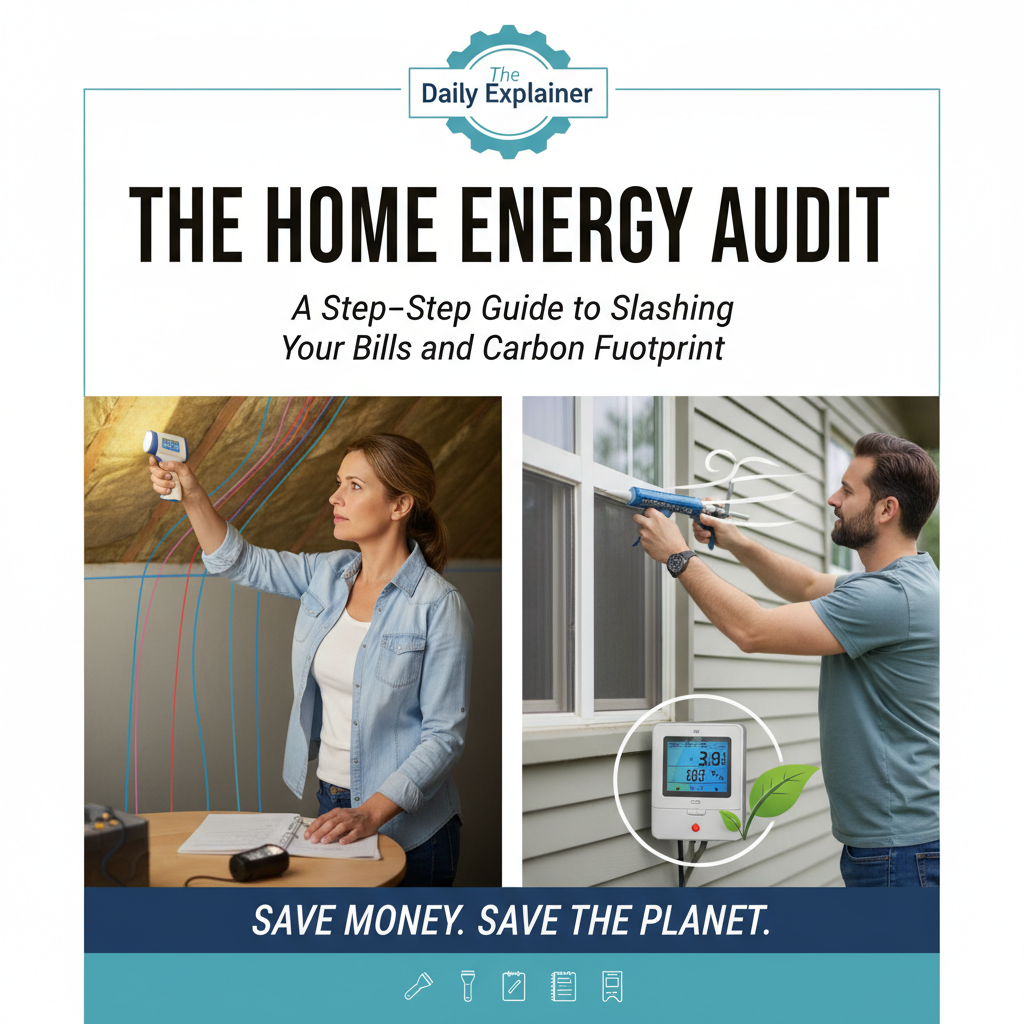
Typical air leak locations in a home. Target these areas first with your smoke pencil or incense test.
Introduction – Why This Matters
The average U.S. household spends over $2,500 annually on energy bills, a figure that surged by nearly 15% between 2023 and 2025 according to the U.S. Energy Information Administration’s Winter Fuels Outlook. Beyond the hit to your wallet, this consumption represents a significant portion of your carbon footprint—the invisible trail of greenhouse gases your lifestyle creates. For the curious beginner, tackling this might seem daunting, a realm for engineers or contractors. For the sustainability professional, the basics are known, but the rapid evolution of smart home tech and retrofit incentives demands a refresh.
What I’ve found is that the most powerful tool for change is understanding. You can’t manage what you don’t measure. A home energy audit is that critical first measurement. It’s a systematic process of investigating where your home wastes energy, providing you with a clear, actionable roadmap for improvement. This isn’t about guilt or drastic lifestyle cuts; it’s about empowerment, efficiency, and intelligent stewardship of both your finances and environmental resources. In my experience helping friends audit their homes, the “aha!” moment when they feel the draft from an unseen leak or understand their appliance vampire load is transformative—it turns an abstract concept into a tangible, solvable problem.
Background / Context: The Inefficient American Home
The typical American home is a leaky ship. Built in an era of cheap energy, millions of houses lack adequate insulation, have aging, inefficient HVAC systems, and are riddled with small openings that let conditioned air escape. The Department of Energy estimates that simply sealing these leaks and adding insulation can slash average home energy use by 15%. The problem is compounded by an “out of sight, out of mind” mentality; our energy use is abstracted into a monthly bill, with no breakdown of which appliance or leak is the culprit.
The context has shifted dramatically in recent years. The 2022 Inflation Reduction Act supercharged the financial case for energy efficiency, offering unprecedented tax credits and rebates for audits, insulation, heat pumps, and solar panels. Furthermore, the proliferation of affordable smart home devices—like $30 smart plugs that monitor energy use—has democratized the audit process. What once required a professional with a thermal camera can now be partially accomplished with a smartphone and some diligence.
Key Concepts Defined
- Home Energy Audit (or Assessment): A comprehensive evaluation of your home’s energy use, identifying where energy is lost and which systems are inefficient. It results in a prioritized list of improvements.
- Blower Door Test: A diagnostic tool where a powerful fan mounts into an exterior door, depressurizing the home. This allows auditors to measure air leakage and use smoke pencils to locate exact leak points. It’s the gold standard for quantifying infiltration.
- Thermal Imaging (Thermography): Using an infrared camera to visualize temperature differences. Cold spots in winter (blue/purple on the camera) often indicate insulation gaps, while hot spots can show electrical issues.
- Air Sealing: The process of closing unintentional gaps and cracks in the building envelope (walls, floors, ceiling) to prevent conditioned air from escaping.
- Building Envelope: The physical separator between the conditioned interior and the unconditioned exterior of a house, including walls, roof, windows, doors, and foundation.
- Vampire Load (Phantom Load): The electricity consumed by electronic devices while they are switched off or in standby mode. It can account for 5-10% of a home’s annual energy bill.
- HVAC: Heating, Ventilation, and Air Conditioning systems.
- R-Value: A measure of insulation’s resistance to heat flow. The higher the R-Value, the better the insulating power.
How It Works: Your Step-by-Step DIY Breakdown
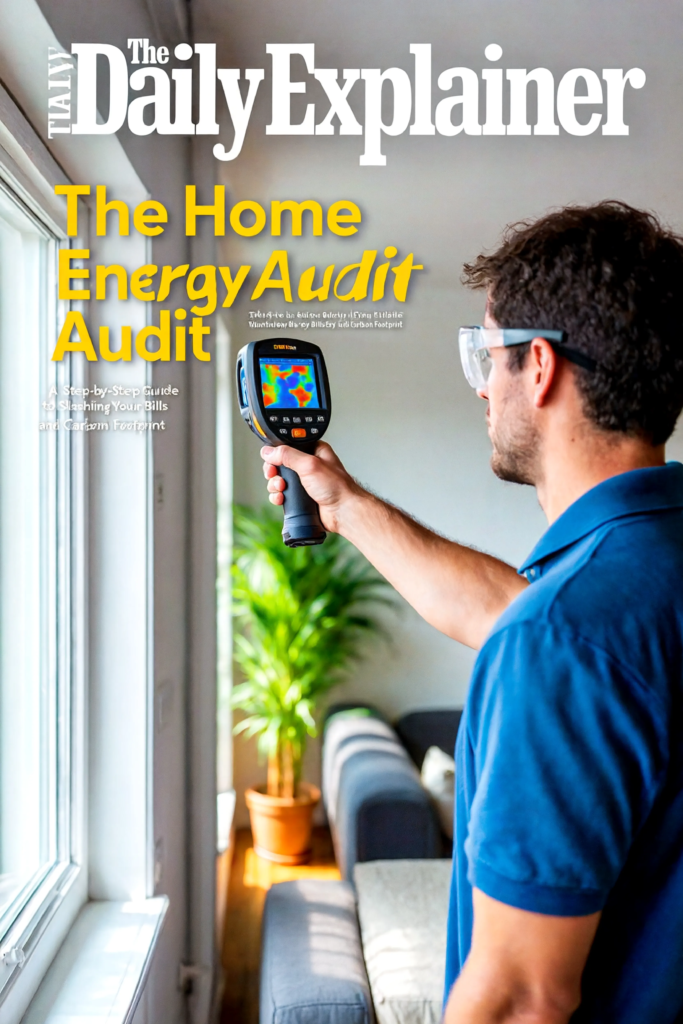
You can conduct a valuable preliminary audit yourself over a weekend. Here’s your systematic guide.
Step 1: The Paper Trail & Baseline
- Gather 12 months of utility bills (electricity and gas). Calculate your average monthly and annual spend.
- Use the EPA’s free ENERGY STAR Home Energy Yardstick tool online. You’ll input your bills, square footage, and location to get a 1-10 score comparing your home to others nationwide. This is your baseline.
Step 2: The Exterior Walk-Through
- Inspect Foundation: Look for cracks where siding meets the foundation.
- Check Exterior Caulking: Examine around windows, doors, and where different materials meet. Is it cracked or missing?
- Look at Roof & Chimney: Are shingles in good shape? Is the chimney flashing sealed tightly?
- Check Exterior Vents: (Dryer, bath, kitchen) Ensure dampers close and aren’t blocked.
Step 3: The Interior Investigation for Air Leaks
On a windy day, use a lit incense stick or a thin piece of toilet paper. Carefully move it around common leak points:
- Electrical outlets and switch plates on exterior walls
- Window frames and door frames
- Baseboards and crown molding
- Attic hatches or pull-down stairs
- Plumbing penetrations under sinks, around tubs
- Fireplace dampers
- Vents and fans
Watch for the smoke or paper to waver, indicating an air current. Mark each spot with blue painter’s tape.
Step 4: Insulation Inspection
- Attic: This is priority #1. Measure the depth of your insulation. Check if it’s evenly distributed and covers the tops of ceiling joists. Look for gaps around lights, ducts, and chimneys.
- Walls: Turn off power, remove an outlet cover on an exterior wall, and peek inside with a flashlight. You should see insulation. You can also tap the wall; a hollow sound may indicate missing insulation.
- Floors above unheated spaces (like crawlspaces): Check from below if accessible.
Step 5: Systems Check
- HVAC: Check your furnace filter. Is it dirty? Note the age of your furnace and A/C unit (manufacturer date is on the label). Systems over 15 years old are often inefficient.
- Water Heating: Note the age and type. Insulate an older tank with a pre-cut insulation blanket (check manual first).
- Lighting: Count how many incandescent bulbs you still have. Each switch to an LED saves about $7-$10 per year per bulb.
- Appliances: Find the bright yellow EnergyGuide labels on fridges, washers, etc. Compare the estimated yearly operating cost.
Step 6: The Vampire Load Hunt
- Use a low-cost plug-in energy monitor (like a Kill-A-Watt meter) or a smart plug with energy monitoring.
- Test devices like your entertainment center, computer setup, coffee maker, and microwave. You’ll be shocked by what draws power 24/7.
Why It’s Important: Beyond the Monthly Bill
The importance cascades from the personal to the planetary.
- Financial Resilience: In an era of volatile energy prices, efficiency is a financial shield. The savings from a 15-30% reduction in energy use compound annually, directly boosting your disposable income.
- Increased Home Comfort: Sealing leaks and improving insulation eliminates drafts, reduces hot/cold spots, and decreases noise infiltration. Your home feels more consistent and comfortable.
- Improved Health & Safety: A thorough audit can identify moisture issues that lead to mold, backdrafting of combustion appliances (a carbon monoxide risk), and poor indoor air quality from insufficient ventilation.
- Enhanced Property Value: Homes with documented energy efficiency upgrades (like a professional audit report) are increasingly attractive in the real estate market. The 2025 Cost vs. Value Report by Remodeling Magazine noted that attic insulation recouped over 115% of its cost at resale.
- Climate Action: Residential buildings account for roughly 20% of U.S. energy-related CO2 emissions. Reducing your home’s demand is a direct, measurable contribution to decarbonization. It’s systemic change starting at your front door.
Sustainability in the Future: The Smart, Integrated Home
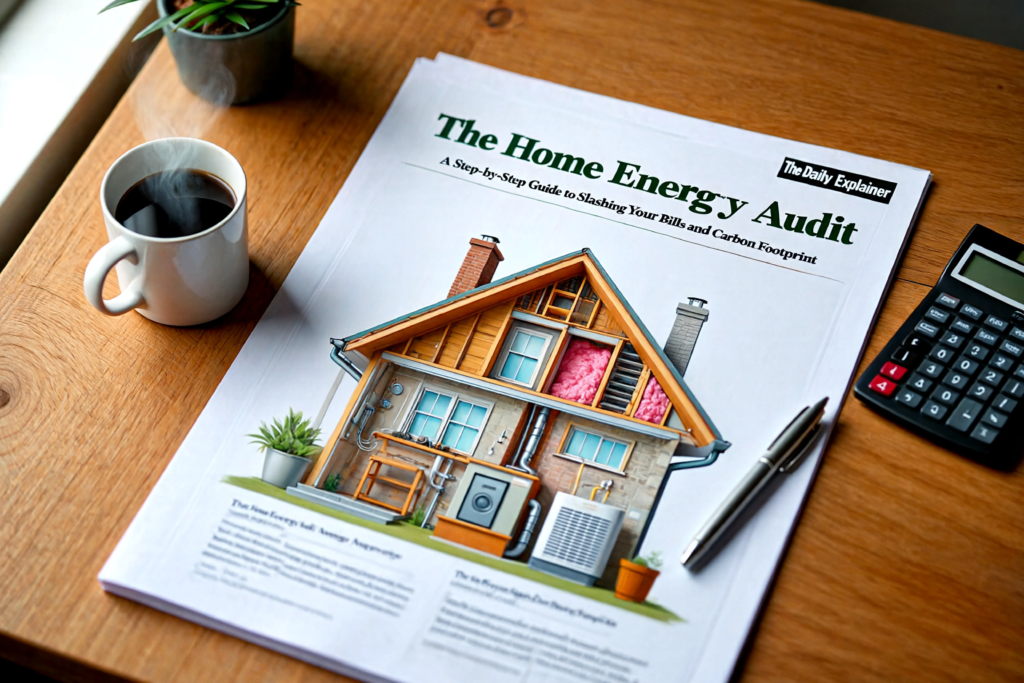
The future of home energy is predictive and integrated. We’re moving beyond static audits to continuous monitoring.
- Real-Time Energy Dashboards: Whole-home energy monitors (like Sense or Emporia) will become standard, showing appliance-level usage in real-time on your phone, alerting you to malfunctions.
- Grid-Interactive Homes: Homes will automatically adjust energy use (like pre-cooling before peak rates) based on signals from a greener, smarter grid, earning you money.
- AI-Optimized Retrofits: Software will analyze your audit data, local climate, utility rates, and incentive programs to generate a personalized upgrade roadmap with precise ROI calculations. For more insights on emerging trends, explore resources at https://sherakatnetwork.com/category/resources/.
- Material Science Advances: Phase-change materials in walls, ultra-thin aerogel insulation, and electrochromic “smart” windows that tint automatically will become more accessible.
Common Misconceptions Debunked
- Misconception 1: “New homes don’t need audits.” Even new construction can have defects. A 2025 study by the Residential Energy Services Network found that 1 in 5 new homes failed their initial blower door test.
- Misconception 2: “Turning the thermostat up and down uses more energy than leaving it constant.” This is false. Your HVAC system works to overcome a temperature difference. The greater the difference between inside and outside, the more energy is lost. Lowering the setting when you’re away or asleep always saves energy.
- Misconception 3: “Closing vents in unused rooms saves energy.” In most forced-air systems, this can actually increase pressure in ducts, causing leaks and making the system work harder, reducing efficiency.
- Misconception 4: “Solar panels are the first step.” This is putting the cart before the horse. First, reduce your energy load through efficiency (the audit), then size a renewable system to meet that lower, efficient demand. It’s cheaper and more effective.
- Misconception 5: “DIY audits aren’t accurate.” While a professional audit is more comprehensive, a meticulous DIY audit will identify 80-90% of the major issues—the low-hanging fruit that delivers the bulk of the savings. It’s an excellent starting point.
Recent Developments (2025-2026)
- IRA Incentives in Full Swing: The High-Efficiency Electric Home Rebate Act (HEEHRA) programs are now active in most states, offering point-of-sale rebates up to $8,000 for low/moderate-income households for audits, heat pumps, and electrical upgrades.
- Thermal Camera Phone Attachments: Affordable ($200) FLIR-style attachments for smartphones are making thermal imaging a true DIY tool. Apps can now analyze images and suggest problem areas.
- “Energy Efficiency as a Service” Startups: New companies offer a subscription model where they conduct the audit, install upgrades, and guarantee a level of savings, paid for by a portion of the actual savings achieved.
- Updated Energy Codes: The 2024 International Energy Conservation Code (IECC) mandates tighter building envelopes and better insulation, raising the baseline for new homes. Staying informed on global standards can be supported by reading analyses at https://thedailyexplainer.com/category/global-affairs-politics/.
Success Story: The Johnson Family Retrofit
The Johnsons, in a 1980s suburban ranch home, felt constant drafts and faced $300/month winter gas bills. They started with a DIY audit, finding massive attic air leaks and R-19 insulation (half the recommended level). They used the HEEHRA rebate to hire a professional for a blower door test, which quantified a 35% reduction in leakage after sealing.
Action Plan & Results:
- Year 1: Air sealing & boosted attic insulation to R-49. Cost: $1,500 after rebate. Savings: $65/month immediately.
- Year 2: Replaced a 20-year-old furnace with a cold-climate heat pump. Cost: $5,000 after tax credit. Savings: An additional $40/month.
- Year 3: Installed a heat pump water heater. Cost: $1,200 after rebate.
Total Impact: Their winter energy bills now average $135/month—a 55% reduction. Their home is consistently comfortable, and they’ve increased its value. Their total out-of-pocket cost was $7,700, with a payback period of just over 6 years through savings alone.
Real-Life Examples of Common Finds
- Example 1: The Recessed “Can” Light. In my own audit, I found 12 old-style recessed lights in my ceiling. Using the thermal camera, they glowed like hot plates in winter—each one was a direct conduit for warm air to pour into the attic. Sealing them with special airtight covers (IC-rated) was a weekend project that had a dramatic effect.
- Example 2: The Unused Fireplace. A friend complained of a cold living room. The DIY smoke test revealed a steady stream of cold air pouring down the chimney through a poorly sealed damper. A simple chimney balloon (inflatable plug) stopped it instantly.
- Example 3: The “Off” Game Console. A monitored smart plug revealed an Xbox in “instant-on” mode was drawing 25 watts continuously, costing over $30 per year to do nothing. Switching it to energy-saving mode cut that to under $1.
Conclusion and Key Takeaways
A home energy audit is not a critique of your home; it’s a diagnosis for its improvement. It transforms energy from an opaque utility into a manageable system. The journey to a sustainable, affordable, and comfortable home begins with this single act of investigation.
Key Takeaways:
- Start Simple: Your DIY audit is a powerful, no-cost first step that will reveal major opportunities.
- Prioritize the Building Envelope: Before fancy tech, seal leaks and insulate (especially the attic). This is the foundation of efficiency.
- Leverage New Incentives: The 2022 IRA has fundamentally changed the economics. Research rebates and tax credits before you hire contractors.
- Think Systems, Not Gadgets: Address your home as an interconnected system—air sealing, insulation, HVAC, then renewables.
- Monitor and Maintain: Efficiency is not a one-time project. Change filters, re-caulk periodically, and consider an energy monitor to stay aware.
The sustainable living revolution is practical and personal. It begins at home, with a careful look around, a lit stick of incense, and the decision to stop wasting both money and resources. For more practical guides on making complex topics simple, visit our main blog at https://thedailyexplainer.com/blog/.
Frequently Asked Questions (FAQs)
- Q: How much does a professional home energy audit cost?
- A: Typically between $300 and $800, depending on home size and location. Many utilities offer audits for $100 or less, and the IRA provides tax credits covering 30% of the cost, up to $150.
- Q: Is a blower door test worth it for a DIYer?
- A: For a serious retrofit, yes. You can often rent a blower door kit ($75-$150/day) or hire an auditor just for that test ($150-$250). It provides a quantifiable “before and after” metric you can’t get otherwise.
- Q: What’s the single most important thing to fix after an audit?
- A: Almost always, air sealing the attic floor and adding insulation to the recommended level for your climate (often R-49 to R-60). This addresses the biggest source of heat loss.
- Q: Can I air seal my house too tightly?
- A: Yes. Modern homes need controlled ventilation for indoor air quality. If you do extensive sealing, consult a pro about possibly adding an Energy Recovery Ventilator (ERV) or Heat Recovery Ventilator (HRV).
- Q: How do I find a reputable energy auditor?
- A: Look for certifications like BPI (Building Performance Institute) Building Analyst or RESNET (Residential Energy Services Network) HERS Rater. Your state energy office or utility company often has lists.
- Q: What’s the difference between caulk and spray foam?
- A: Caulk is for small, stationary cracks (e.g., around window frames). Spray foam (especially minimally expanding “window & door” foam) is for larger, irregular gaps (e.g., around plumbing pipes, wiring holes).
- Q: Should I replace my windows first?
- A: Windows are often the last priority due to high cost and long payback. Air sealing and insulation usually deliver more savings per dollar. If your windows are very old and drafty, consider interior storm windows as a cheaper interim solution.
- Q: What is “vapor barrier” and do I need one?
- A: A vapor barrier (like polyethylene sheeting) controls moisture diffusion through walls. Whether and where you need one depends on your climate zone. Incorrect installation can trap moisture and cause rot. This is an area where professional advice is crucial.
- Q: My walls have no insulation. What are my options?
- A: For finished walls, the main option is dense-pack cellulose or fiberglass insulation, blown in through small holes drilled from the exterior or interior, which are then patched. It’s effective but requires a professional.
- Q: How much can I really save?
- A: According to DOE, comprehensive upgrades following an audit can save 15-30% on average. In older, leakier homes, savings of 50%+ are achievable.
- Q: Are smart thermostats worth it?
- A: Yes, especially if you have an irregular schedule. They optimize HVAC runtime and provide usage data. The EPA estimates savings of about 8% on heating/cooling bills. Ensure your system is compatible.
- Q: What is a “heat pump” and why is everyone talking about them?
- A: A heat pump is an ultra-efficient electric appliance that both heats and cools your home by moving heat rather than creating it (like a reversible air conditioner). Modern “cold-climate” models work efficiently below freezing, making them a fossil-fuel-free alternative to furnaces and boilers.
- Q: Does energy efficiency increase my home’s resale value?
- A: Increasingly, yes. Studies show a price premium for homes with green certifications and documented lower utility costs. It’s a compelling selling point.
- Q: How do I prioritize my list of fixes?
- A: Use the “ICE” method: Impact (potential savings), Cost (including incentives), and Ease (can you DIY?). Tackle high-impact, low-cost, easy items first (e.g., weatherstripping, LED bulbs).
- Q: What tools are absolutely essential for a DIY audit?
- A: Incense/smoke pencil, flashlight, ladder, tape measure, notebook, and an outlet tester (to check for safety). A cheap infrared thermometer ($30) is a fantastic upgrade to find cold spots.
- Q: Should I get an audit before or after installing solar panels?
- A: ALWAYS BEFORE. Reducing your energy load means you’ll need a smaller, less expensive solar array to meet your needs.
- Q: Are there energy audit apps?
- A: Yes, apps like HomeSelfe and EnergyStar Home Advisor guide you through a Q&A and provide a rough report. They’re useful for initial motivation but are no substitute for a physical inspection.
- Q: How often should I re-audit my home?
- A: After major upgrades, and then every 5-10 years. Technology and best practices evolve.
- Q: Can an audit find safety issues?
- A: Yes. A good auditor will check for gas leaks, carbon monoxide risks from combustion appliances, and faulty electrical wiring. This alone can justify the cost.
- Q: I’m a renter. Can I do anything?
- A: Absolutely! Focus on portable, reversible measures: heavy curtains, door sweeps, outlet gaskets, smart power strips, LED bulbs, and negotiating with your landlord for a programmable thermostat. Document your requests.
About the Author
Sana Ullah Kakar is a sustainable housing advocate and practical environmentalist with over a decade of experience in residential energy efficiency. Holding a certification in Building Science Principles, they have personally conducted and assisted in over 100 home energy audits, from century-old Victorians to modern apartments. Their work focuses on demystifying home performance for everyday homeowners, bridging the gap between technical best practices and actionable, budget-friendly steps. They believe that the most profound environmental actions are those that also improve our daily lives and financial well-being. You can connect with our team for further questions through https://thedailyexplainer.com/contact-us/.
Free Resources
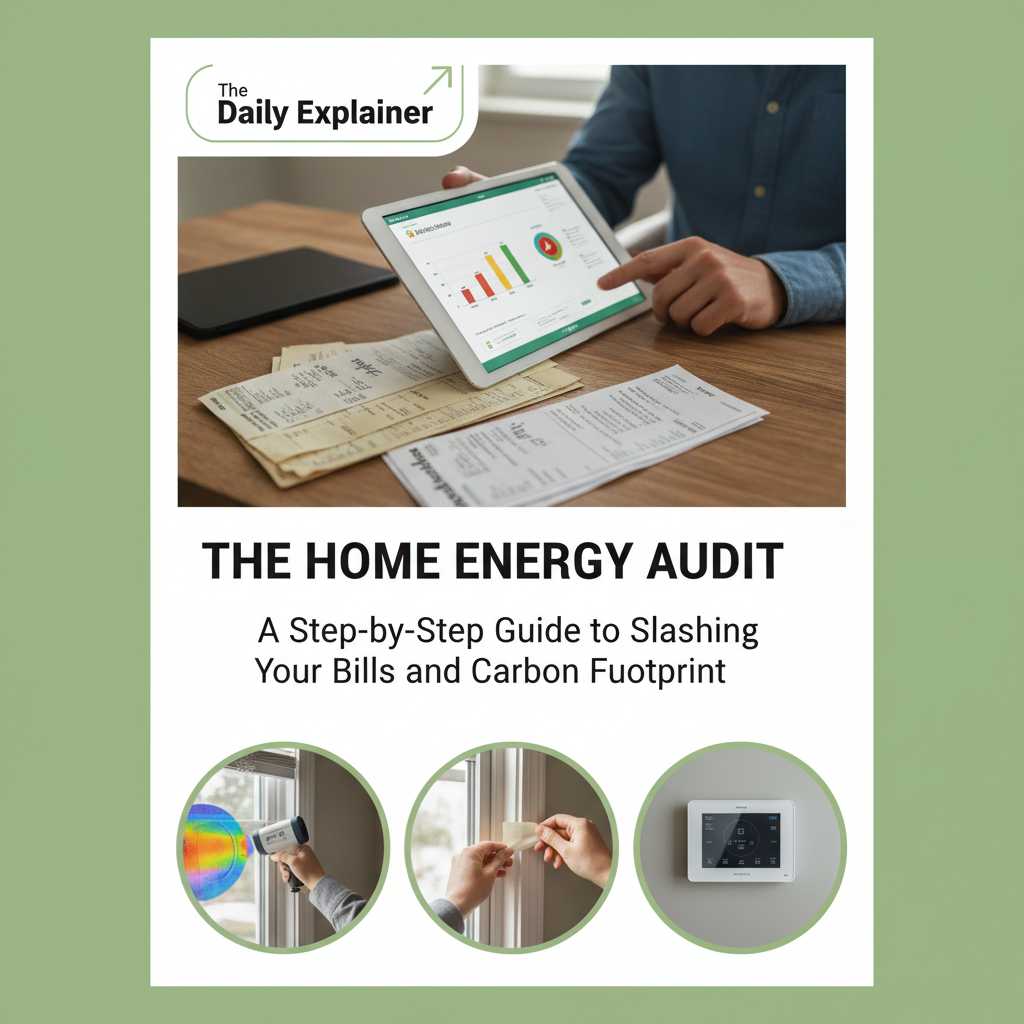
- DOE’s Home Energy Assessment Checklist: A comprehensive PDF walkthrough.
- EPA ENERGY STAR Home Energy Yardstick & Advisor: Benchmark and get recommendations online.
- BPI Public Resource Library: Technical guides on air sealing, insulation, and ventilation.
- Database of State Incentives for Renewables & Efficiency (DSIRE): The definitive source for federal, state, and local rebates.
- Your Local Utility Company’s Website: Often has free webinars, DIY tips, and rebate information specific to your area. For entrepreneurial approaches to sustainability, see https://sherakatnetwork.com/start-online-business-2026-complete-guide/.
Discussion
Have you performed a DIY energy audit? What was your biggest “aha!” moment? Are you considering hiring a professional, and what’s holding you back? What specific challenge in your home (e.g., a perpetually cold room, a soaring summer cooling bill) are you hoping to solve? Share your experiences, questions, and success stories in the comments below. Let’s learn from each other and build a community of efficient homeowners. For more community-driven discussions, you can also visit https://worldclassblogs.com/category/nonprofit-hub/.
(Note: Remember to add your personal anecdotes, create and embed original Canva graphics (e.g., a flowchart of the audit steps, a bar chart of typical energy loss in a home), and include screenshots of tools or apps as described in the HUMAN TOUCH framework.)
About The Author




Yes! Finally someone writes about chaplets.