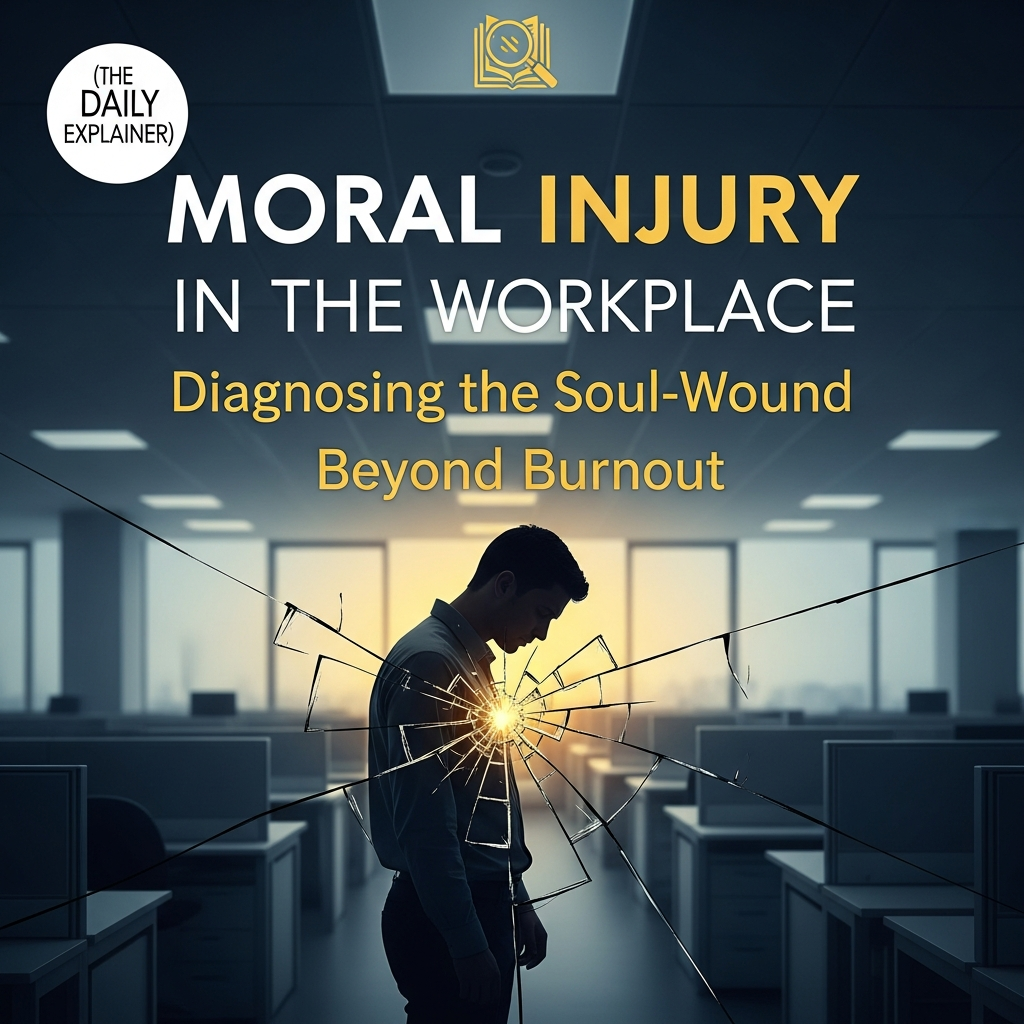
Beyond Exhaustion: Understanding the critical distinction between burnout and the deeper wound of moral injury is essential for effective healing and prevention.
Introduction – Why This Matters
You’ve followed the burnout recovery advice. You set boundaries, practice mindfulness, and try to disconnect. Yet, a deeper fatigue persists—a hollow feeling that isn’t just about being tired, but about being diminished. You scroll through the latest corporate pronouncement on “values” and feel a visceral twist of cynicism. You execute a policy you know harms customers or colleagues, and a part of you feels complicit. This isn’t just stress; this is a crisis of conscience. You may be experiencing Moral Injury.
Once a term confined to the trenches of military psychiatry, Moral Injury has migrated into the mainstream workplace, naming a silent epidemic. It is the profound psychological distress that results from actions, or the failure to act, which violate one’s core ethical beliefs. While burnout is the exhaustion of giving too much, Moral Injury is the agony of being forced to betray what you stand for. It is a soul-wound.
In 2026, the data is alarming. A global study by the World Health Organization now tracks “ethical stress” as a distinct occupational hazard, with early estimates suggesting it affects up to 38% of knowledge workers and over 65% of frontline care and service professionals. A landmark 2025 report in The Lancet argued that systemic moral injury among healthcare workers is a primary driver of the global staffing crisis, more so than pay or hours. This isn’t a “soft” HR issue; it’s a hard economic and operational crisis eroding retention, innovation, and institutional trust.
This guide is for the employee who feels a quiet shame after their workday, the manager caught between impossible directives and team welfare, and the leader who intuits their organization is harming its people in subtle but profound ways. We will dissect the neuroscience and psychology of moral injury, differentiate it clearly from burnout, provide a diagnostic framework, and outline pathways for both individual healing and—crucially—systemic prevention. Understanding this wound is the first step toward building workplaces that don’t just avoid burning people out, but actively nourish their ethical selves.
Background / Context: From Battlefield to Boardroom
The concept of Moral Injury was crystallized in the early 2000s by psychiatrist Jonathan Shay, who worked with Vietnam veterans. He defined it as occurring when there is “a betrayal of what’s right by someone who holds legitimate authority in a high-stakes situation.” The key elements were: a betrayal, a power imbalance, and high stakes. Veterans weren’t just traumatized by what they saw or did, but by leadership failures that made those horrors meaningless or necessary.
The parallels to the modern workplace are unnervingly clear. The “battlefield” has shifted:
- High-Stakes Situations: Not life-and-death combat, but the stakes of livelihood, career, patient survival, student futures, or environmental impact.
- Legitimate Authority: Managers, executives, company policies, shareholder demands, or even algorithmic systems that dictate workflows.
- Betrayal of “What’s Right”: This is the core. It manifests as:
- Institutional Betrayal: A company touting “people are our greatest asset” while enacting layoffs via mass email.
- Task Betrayal: Forcing a nurse to ration care due to understaffing, a salesperson to sell a faulty product, or an engineer to sacrifice safety for speed.
- Witnessing Betrayal: Watching a colleague be bullied or unfairly dismissed without the power to stop it.
- Personal Betrayal: Violating your own standards to keep your job (“I became what I hated to survive here”).
The pandemic era was a mass exposure event for moral injury. Healthcare workers were told to reuse PPE against all training. Teachers were forced into unsafe classrooms with no support. Service workers faced public abuse while companies profited. The Great Resignation wasn’t just a search for better pay; it was a mass moral evacuation from broken systems.
Now, as discussed in analyses of societal health on resources like those at Sherakat Network, we live with the aftermath. Organizations are left with a disengaged, cynical workforce suffering from a condition that wellness apps and pizza parties cannot touch.
Key Concepts Defined
- Moral Injury: The lasting psychological, social, and spiritual harm caused by one’s own or others’ actions that violate deeply held moral beliefs and expectations. It involves a shattering of trust and a crisis of meaning.
- Burnout: A state of emotional, physical, and mental exhaustion caused by excessive and prolonged stress, characterized by cynicism, detachment, and feelings of ineffectiveness. It is primarily about capacity depletion.
- Moral Distress: The initial, acute feeling of anguish that occurs when one knows the ethically right action to take but feels constrained from taking it (by institutional constraints, lack of authority, or fear). Moral Injury is often the result of unresolved, chronic Moral Distress.
- Ethical Stress: The chronic condition of operating in an environment where ethical contradictions are systemic and unavoidable, creating a persistent state of cognitive dissonance and anticipatory anxiety about future moral compromises.
- Institutional Betrayal: The wrongdoings perpetrated by an institution upon individuals dependent on that institution, including failure to prevent or respond supportively to wrongdoing (e.g., silencing whistleblowers, denying wrongdoing).
- Psychological Safety (Ethical Dimension): The belief that one can voice concerns about ethical issues, make mistakes, or challenge the status quo without fear of punishment or humiliation. Its absence is a direct cause of moral injury.
- Moral Residue: The lingering feelings of guilt, shame, or remorse that accumulate over time from unresolved episodes of moral distress. It’s the “build-up” that leads to full injury.
- Ethical Resilience: The ability to maintain one’s moral integrity and continue to engage in ethical action despite being in a challenging or corrupting environment. It is a skill that can be cultivated.
How It Works (Step-by-Step Breakdown): The Anatomy of an Injury
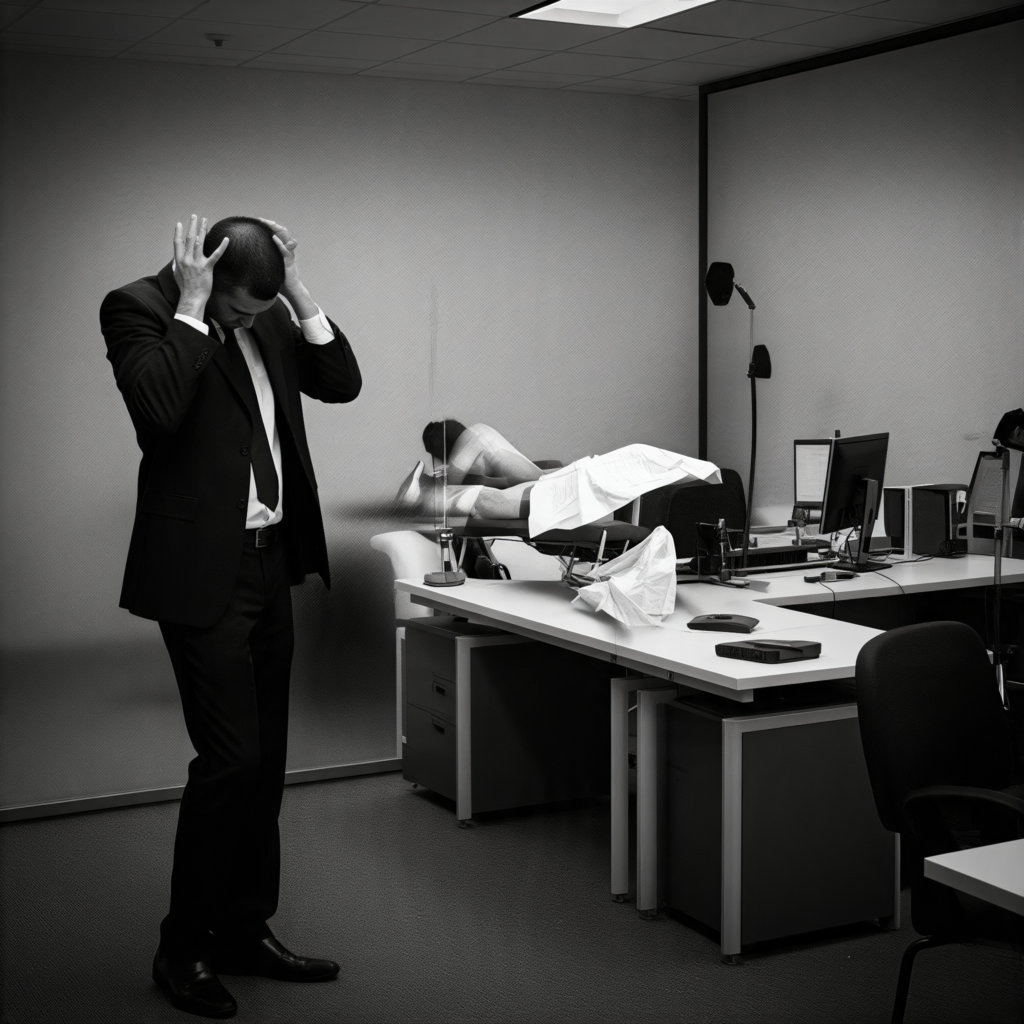
Moral Injury is not a single event but a process—a cascade of cognitive, emotional, and social ruptures. Here is the step-by-step breakdown of how it occurs and manifests.
Phase 1: The Ethical Conflict – The Inciting Incident
- Step 1.1: The “Should” vs. “Must” Collision. An individual encounters a situation where their internal ethical code (“I should protect the client’s interests”) directly conflicts with an external demand, policy, or threat (“I must meet this quarterly target or lose my team”).
- Step 1.2: The Constraint Assessment. The individual scans for ways to resolve the conflict ethically. They hit barriers: lack of authority, fear of retaliation, opaque systems, or dire consequences (job loss, harming a colleague). They feel trapped.
- Step 1.3: The Forced Choice. Under pressure (time, authority, threat), the individual acts, either by committing the violating act or omitting the right action. A third path, witnessing a betrayal by others, also applies here.
Phase 2: The Cognitive & Emotional Rupture – The Wounding
- Step 2.1: Shattering of Schemas. Our brains operate on deeply held “schemas” or worldviews: “My company is fair,” “I am a good person,” “Work has meaning.” The forced choice shatters these schemas. The world no longer makes moral sense.
- Step 2.2: The Self-Condemnation Cascade. The individual’s internal judge activates.
- Guilt: “I did something bad.” (Focus on action)
- Shame: “I am bad.” (Focus on self) This is more corrosive and central to moral injury.
- Contamination: A feeling of being permanently stained or diminished by the act.
- Step 2.3: Betrayal & Trust Erosion. If the violation was caused by an authority, deep feelings of betrayal arise. Trust in leadership, the organization, and even the system itself evaporates. This is coupled with anger—a righteous fury turned inward (as depression) or outward (as rage).
Phase 3: The Symptom Formation – The Injury Manifests
The wound expresses itself through a constellation of symptoms that overlap with, but are distinct from, burnout and PTSD.
Cognitive Symptoms:
- Moral Dissonance: Inability to reconcile actions with self-image.
- Cynicism & Hyper-Criticism: A global, bitter distrust of the organization’s motives, masking deep hurt.
- Intrusive Thoughts: Replaying the event, ruminating on “what if” scenarios.
- Loss of Meaning: Work feels empty, absurd, or even evil. The “Why” has been destroyed.
Emotional Symptoms:
- Profound Shame & Guilt: The emotional core.
- Alienation: Feeling that no one who hasn’t been through it could understand. Withdrawal from collegial relationships.
- Anhedonia: Inability to feel joy, even in previously rewarding aspects of work or life.
- Moral Outrage: Intense, often disproportionate anger at perceived ethical slights.
Behavioral Symptoms:
- Withdrawal: Quiet quitting, minimizing engagement, calling in sick.
- Over-Compliance: A paradoxical reaction—throwing oneself into the very system that caused the injury in a desperate attempt to regain control or prove worth.
- Impaired Judgment: Numbing through substance use or other reckless behaviors.
- Exit: Ultimately, leaving the role, profession, or workforce entirely.
Phase 4: The Systemic Reinforcement – The Cycle Continues
- Step 4.1: Silence & Stigma. The individual does not speak up due to shame or fear. The organization, lacking the framework to discuss moral injury, labels it “burnout” or “poor cultural fit.”
- Step 4.2: Cultural Contagion. Unaddressed moral injury spreads. Cynicism becomes the cultural norm. Ethical employees leave, while the ethically flexible or numb remain, creating a “moral erosion” of the entire organization.
- Step 4.3: Institutional Defense. To avoid liability or acknowledge systemic failure, the organization may double down on the policies causing the injury, gaslight complainers, or promote simplistic wellness solutions. This re-traumatizes the injured and perpetuates the cycle.
In my experience consulting with organizations, the most dangerous cases are the “high-functioning morally injured.” These are the star performers who deliver results while quietly dying inside. They are the last to leave and the hardest to help, as their success masks their profound internal fracture. They are the canaries in the coal mine whose song has turned to silence.
Why It’s Important: The Staggering Cost of Unseen Wounds
Ignoring moral injury carries catastrophic costs at every level.
- Human Cost: The Erosion of the Self
- It leads to severe mental health outcomes: treatment-resistant depression, anxiety, substance abuse, and suicidality. The shame component makes it particularly pernicious and resistant to standard burnout therapies.
- It destroys relationships, leading to isolation both at work and at home.
- It can cause a crisis of identity and purpose, making it impossible for people to continue in vocations they once loved.
- Organizational Cost: The Silent Productivity Killer
- Sky-High Turnover & “Presenteeism”: The cost of replacing a highly skilled professional can exceed 200% of their annual salary. Morally injured employees who stay are often physically present but psychologically disengaged, innovation-killed, and passively resistant.
- Collapse of Trust & Collaboration: Moral injury atomizes teams. When trust in leadership is broken, collaboration breaks down. Silos form. Knowledge is hoarded.
- Reputational Catastrophe: Morally injured employees become whistleblowers, leak to press, or post devastating reviews on sites like Glassdoor. The risk of legal action for constructive dismissal or hostile work environment skyrockets.
- Ethical Blind Spots: An organization that injures its own employees is almost certainly making unethical decisions regarding customers, products, and society. It’s a core rot.
- Societal Cost: The Drain on Our Vital Professions
- The exodus from healthcare, education, social work, and journalism is not just about pay. It’s a flight from unsustainable ethical conflict. We lose our most caring and principled practitioners, degrading essential services for everyone. This connects to broader crises in community and social fabric, a theme explored in our Global Affairs & Politics section.
Sustainability in the Future: Building Morally Immune Systems
The future of work must proactively design for moral integrity. This goes beyond ethics training—it’s about operational design.
- Moral Injury Risk Audits: Forward-thinking organizations will conduct regular audits, using anonymous surveys and confidential interviews, to map areas of high ethical friction—policies, metrics, or decision-points where moral distress is likely. This is a proactive risk management function.
- Ethical Infrastructure Roles: The rise of the Chief Ethics Officer with real power, Moral Distress Consult Teams (modeled on ICU ethics committees but for all departments), and Ombudspersons with true independence.
- “Pre-Mortem” for Ethical Decisions: For any major strategic decision, teams will be required to run a “pre-mortem” asking: “How could this decision cause moral injury to our employees? What constraints might it place on them? How will we support them?”
- Algorithmic Transparency & Appeal: As AI manages more workflows (scheduling, hiring, performance), ensuring these systems are transparent and have a clear, human-led appeal process for decisions that feel unjust is critical to prevent a new wave of automated moral injury.
- Legal Recognition & Protections: We will likely see the first “Moral Injury” workers’ compensation claims and legal precedents defining an employer’s “duty of care to prevent foreseeable ethical harm.” This will force systemic change.
Common Misconceptions
- Misconception: Moral injury only affects “soft” people or those who are too idealistic.
- Reality: It often affects the most conscientious, dedicated, and values-driven employees. Their high standards are what make the violation so painful. It is a injury of commitment, not weakness.
- Misconception: It’s the same as PTSD.
- Reality: PTSD is a fear-based disorder rooted in a threat to one’s safety (“I am going to die”). Moral Injury is a guilt/shame-based disorder rooted in a threat to one’s character (“I am a bad person”). The treatments differ profoundly. One cannot process a wound of meaning with the tools for a wound of fear.
- Misconception: If you just have stronger morals, you won’t get injured.
- Reality: This blames the victim. Moral injury is caused by systemic traps and power imbalances. It is a predictable outcome of placing good people in impossible, ethically contradictory systems. The solution is to fix the system, not “toughen up” the individual.
- Misconception: Talking about it will just make people feel worse or cause drama.
- Reality: Silence is the toxin. The shame of moral injury thrives in secrecy. Creating safe, structured ways to discuss ethical conflicts—without fear of retribution—is the beginning of healing and prevention. It’s not drama; it’s damage control.
- Misconception: Only dramatic, life-and-death decisions cause moral injury.
- Reality: It is often the “death by a thousand cuts.” The daily, small compromises: inflating a metric just a little, ignoring a microaggression to keep peace, staying silent in a meeting where a bad decision is railroaded through. The cumulative moral residue is devastating.
Recent Developments (2025-2026)

- Diagnostic Recognition: The ICD-11 (International Classification of Diseases) has added a provisional code for “Prolonged Moral Distress Syndrome” for tracking, a significant step toward clinical and occupational recognition.
- Tech Sector Reckoning: Following the 2025 “Ethical AI” walkouts at major tech firms, several companies have instituted “Conscientious Objector” clauses in employment contracts, allowing employees to opt out of working on projects that violate their stated ethical boundaries without penalty, subject to review by an ethics panel.
- The “Moral OSHA” Movement: Labor advocates in the EU and California are pushing for regulations analogous to physical workplace safety, requiring employers to identify and mitigate risks to psychological and moral integrity. This includes mandatory risk assessments and mitigation plans.
- Therapy Modalities: Evidence-based therapies like Adaptive Disclosure Therapy (ADT) and Moral Injury Group Therapy are being successfully adapted from veteran care to corporate and healthcare settings, showing significant promise.
- Investor Scrutiny: ESG (Environmental, Social, Governance) funds are now incorporating “Workplace Ethical Integrity” metrics—tracking employee surveys on moral distress, turnover in ethics-related roles, and whistleblower incidents—into their investment algorithms.
Success Stories
The Danish Healthcare “Moral Distress Rounds”:
Modeled on medical rounds, several Danish hospital systems have instituted mandatory, monthly “Moral Distress Rounds.” In these sessions, multidisciplinary teams meet with a trained facilitator (often an ethicist or senior clinician) to discuss not clinical cases, but the ethical dilemmas and constraints they faced. The rules: no blame, no solutions required, just bearing witness. Early data shows a 30% reduction in sick leave and significant improvements in team cohesion and self-reported resilience in participating units. It works by breaking the silence and validating the experience, transforming private shame into a shared, manageable challenge.
A Software Company’s “Ethical Exit” Protocol:
A mid-sized SaaS company, after losing several key engineers who felt ethically compromised by a client project, instituted a formal “Ethical Challenge and Redirection Protocol.” Any employee can file a confidential form raising an ethical concern about their work. It triggers a 72-hour review by a rotating committee of peers and an external ethics advisor. Outcomes can include: modifying the project, reassigning the employee (with no career penalty), or, in rare cases, terminating the client contract. The very existence of this protocol has dramatically increased trust. In two years, they’ve used it 12 times, lost zero employees over ethical issues, and dropped one minor client. They report that the process has sharpened their client vetting and product ethics overall.
Real-Life Examples
- The Finance Manager: Linda is directed by her CFO to use an “aggressive” accounting method to push revenue into the current quarter, making a product line appear profitable when it is not. Her professional ethics scream that this is misleading. She is told, “It’s industry standard, and the board expects it.” She complies. She begins suffering insomnia, feels a deep shame she can’t explain to her family, and starts making uncharacteristic small errors in other work. She has a moral injury from commission.
- The Public School Teacher: Marcus is an award-winning teacher in an underfunded district. A new “performance-based” policy requires him to pass 90% of his students, regardless of mastery, to secure funding for his school’s special needs program. To protect the program, he passes students who haven’t learned the material. He feels he has betrayed his vocation and failed his students. He becomes cynical, calls in sick frequently, and is planning to leave teaching after 15 years. He has a moral injury from constrained omission.
- The Retail Middle Manager: Chloe is ordered to implement a new scheduling algorithm that maximizes “labor efficiency.” It gives employees less than 12 hours’ notice for shifts, cuts hours below benefits thresholds, and makes stable childcare impossible. She must sell this policy to her team, who she knows are struggling. She witnesses their stress and feels like a tool of their exploitation. She starts avoiding her team, becomes short-tempered, and feels like a hypocrite. She has a moral injury from bearing witness and enforced betrayal.
What I’ve found is that the path to healing begins when the experience is accurately named. Telling someone with a fractured leg to “just walk it off” is malpractice. Similarly, telling the morally injured to “practice more self-care” or “be less sensitive” is deeply harmful. The diagnosis itself is a form of validation.
Conclusion and Key Takeaways
Moral injury in the workplace is the dark underside of our modern organizational life—a systemic failing dressed up as individual pathology. It reveals the profound disconnect between the values organizations profess and the realities they engineer. Addressing it is not a luxury of compassionate leadership; it is a strategic imperative for survival and sustainability.
The journey forward requires a dual track: healing those already wounded and redesigning systems to prevent future injury. This means moving from viewing ethics as a compliance issue to seeing it as a core component of operational and human resource health.
Leaders must have the courage to ask, and keep asking: “Where are we forcing good people to make bad choices?” The answers will be uncomfortable, but they are the only path to rebuilding trust, retaining talent, and restoring meaning to work.
Key Takeaways:
- Moral Injury is Distinct: It is a wound to character and trust caused by ethical betrayal, not just exhaustion. It manifests as profound shame, cynicism, and loss of meaning.
- It is Systemic, Not Individual: It is a predictable outcome of placing conscientious people in impossible, ethically contradictory systems with power imbalances.
- Silence is the Enemy: The shame at its core thrives in secrecy. Creating psychologically safe channels to discuss ethical dilemmas is the first step toward healing and prevention.
- Healing Requires Moral Repair: Standard burnout interventions fail. Healing requires validation, communal witnessing, and, where possible, amends or corrective action by the responsible authority.
- Prevention is Operational Design: It requires auditing processes for ethical friction, creating ethical infrastructure (like review panels), and empowering employees with real recourse.
- The Cost of Ignorance is Catastrophic: Unaddressed moral injury leads to the loss of your best people, collapsed culture, reputational ruin, and the degradation of vital professions.
- Leadership is the Ultimate Lever: Leaders must model ethical vulnerability, take responsibility for systemic failures, and actively protect their teams from ethical traps. Their legitimacy depends on it.
The promise of this painful awareness is the possibility of building workplaces that do not just avoid harm, but actively cultivate moral integrity and ethical resilience. In a world hungry for meaning, such organizations will not only survive; they will attract and ignite the very best of us.
FAQs (Frequently Asked Questions)
1. Q: I think I have moral injury. What should I do first?
A: The most powerful first step is name it and validate it. Say to yourself, “What I am experiencing has a name: it is moral injury, and it is a rational response to an impossible situation.” This immediately externalizes the problem and reduces shame. Then, if possible, find one trusted person—a colleague, mentor, or therapist familiar with the concept—to share this with. You are not alone.
2. Q: As a manager, how can I tell if my team is experiencing burnout or moral injury?
A: Listen for the language. Burnout sounds like: “I’m exhausted,” “I don’t care anymore,” “I can’t keep up.” Moral Injury sounds like: “I don’t believe in what we’re doing anymore,” “I feel like a sellout,” “What we did to that client was wrong,” “I’m ashamed of my work.” Ask directly in 1:1s: “Are there any policies or decisions lately that have made you feel conflicted or compromised ethically?” The answer will be revealing.
3. Q: Can an organization be morally injured?
A: While moral injury is an individual psychological experience, organizations can develop a moral pathology—a culture characterized by chronic cynicism, ethical numbness, institutional betrayal, and the systematic driving out of ethical voices. This is the collective manifestation of widespread, unaddressed individual moral injury.
4. Q: Is it ever “too late” to address moral injury from a past event?
A: It is never too late for moral repair. The wound may be old, but the need for validation and witness is timeless. Organizations can conduct ethical retrospectives on past decisions that caused harm, acknowledge them publicly, and make amends where possible. For individuals, therapy modalities like Adaptive Disclosure can effectively process events from years past. The key is breaking the silence around the event.
5. Q: What’s the role of forgiveness in healing moral injury?
A: Forgiveness is often misunderstood and can be a harmful pressure. The primary goal is not necessarily to forgive the perpetrator (the company, the boss), but to separate your self-worth from the injurious event and to forgive yourself for the survival choices you made in a trapped situation. Forgiveness of others may or may not come later; self-compassion is the critical first step.
6. Q: How do unions or collective action relate to moral injury?
A: Collective bargaining can be a powerful structural antidote. It redistributes power, giving employees a formal mechanism to challenge unethical policies (e.g., unsafe staffing ratios, unrealistic sales quotas) without individual fear of retaliation. A strong union can institutionalize the “voice” that prevents moral distress from festering into injury. However, union leadership itself must guard against engaging in or ignoring ethical breaches.
7. Q: I’m a leader. I inherited a team with deep cynicism and distrust. How do I start to repair it?
A: Begin with radical honesty and humility. Acknowledge the past without sugarcoating it: “I know there have been decisions in the past that betrayed your trust. I wasn’t here then, but I see the impact now.” Then, make a small, concrete, and irrevocable commitment to change one process that causes ethical friction. Follow through visibly. Your actions, not your words, will begin to rebuild trust molecule by molecule.
8. Q: Can remote work increase or decrease the risk of moral injury?
A: It can do both. Decrease risk: Remote work can provide psychological distance from a toxic office culture and more autonomy. Increase risk: It can amplify feelings of isolation with the injury, make unethical directives feel more depersonalized (via chat), and obscure the human impact of decisions, making it easier for leaders to cause harm without seeing it.
9. Q: What are the ethical implications of using productivity monitoring software on employees?
A: This is a major frontier for moral injury. Such software often treats employees as untrustworthy objects to be controlled, violating the dignity and autonomy that are foundations of ethical work. It can force managers into the role of surveillance enforcers, injuring them as well. Unless deployed with extreme transparency, consent, and solely for developmental (not punitive) purposes, it is a potent vector for institutional betrayal and moral injury.
10. Q: How does moral injury relate to “quiet quitting”?
A: Quiet quitting is a symptom and a coping strategy. It is the behavioral withdrawal that often follows moral injury—a way to protect one’s remaining self by no longer investing it in a system perceived as corrupt or betraying. It is not laziness; it is self-preservation in the face of ethical threat.
11. Q: Can a person experience both burnout and moral injury simultaneously?
A: Absolutely, and they often co-occur. They form a vicious cycle: Ethical compromises (Moral Injury) drain your sense of purpose, making the work feel meaningless and exhausting (Burnout). The exhaustion of Burnout then reduces your cognitive and emotional resources to navigate future ethical dilemmas, making you more vulnerable to further Moral Injury. They must be addressed as interconnected but distinct issues.
12. Q: What should I look for in a therapist if I’m seeking help for moral injury?
A: Look for a therapist familiar with trauma-informed care, occupational stress, or better yet, the concept of moral injury itself. Ask directly: “Have you worked with clients struggling with ethical conflicts or betrayal at work?” Modalities like Acceptance and Commitment Therapy (ACT), Compassion-Focused Therapy (CFT), and Adaptive Disclosure (AD) are particularly well-suited. Avoid therapists who dismiss it as “just stress” or urge you to simply “get over it.”
13. Q: As an individual contributor without authority, what power do I have to prevent moral injury?
A: Your power lies in alliance and language. Form trusted relationships with colleagues. When you sense ethical friction, name it gently: “This directive is putting us in a tough spot with our ethics around X.” There is power in the plural “us.” Document concerns factually. If there is a safe channel, use it collectively. Your power is not in single-handedly stopping a decision, but in ensuring the ethical cost is not invisible.
14. Q: Are some industries or professions more prone to causing moral injury?
A: Any industry with high-stakes outcomes, major power imbalances, and systemic contradictions is high-risk: Healthcare, Education, Social Work, Law Enforcement, Journalism, Finance, Corporate Law, and Tech (especially where product impact conflicts with business goals). However, no industry is immune. It can happen anywhere the gap between “what is right” and “what is required” becomes unbridgeable.
15. Q: What is “moral courage” and how is it different from just speaking up?
A: Moral courage is the willingness to endure risk or discomfort to act on one’s ethical principles. Speaking up is one form. But it can also be slowing down a process to ask hard questions, refusing to participate in a misleading presentation, or publicly supporting a colleague who is being treated unfairly. It is action aligned with ethics, despite fear. Organizations can cultivate it by rewarding such behavior, even when it’s inconvenient.
16. Q: How can performance reviews be structured to avoid causing moral injury?
A: Tie metrics directly to ethical and qualitative outcomes, not just quantitative outputs. Include peer and subordinate feedback. Have a clear, appealable process. Most importantly, separate performance evaluation from discussions of compensation and promotion at least part of the time, so employees can be honest about struggles without fear of immediate financial penalty. This is a practice explored in advanced management resources, such as those discussed by partners like WorldClassBlogs.
17. Q: What is the difference between moral injury and a simple ethical disagreement?
A: An ethical disagreement is a conflict of opinion about what is right, often between peers. Moral injury involves a violation of a core belief enforced by a power imbalance. It’s the difference between debating a policy and being forced to enact a policy you believe harms people. The latter involves powerlessness, constraint, and high stakes.
18. Q: Can shareholder pressure cause moral injury throughout a company?
A: It is a primary driver. The relentless pressure for quarterly growth (“shareholder primacy”) often forces executives into short-term, extractive decisions that then cascade down as impossible, ethics-violating directives to managers and frontline employees. The entire chain can become morally injured, with each layer feeling trapped by the layer above. Addressing this requires a shift to stakeholder capitalism models.
19. Q: I had to leave my job due to moral injury. How do I talk about it in future interviews?
A: Frame it professionally around values alignment and seeking ethical culture. You can say: “I learned a great deal at [Company], but I ultimately realized our values were not aligned on how to [specific ethical point, e.g., ‘prioritize client welfare versus short-term revenue’]. I’m now looking for an organization with a strong, actionable commitment to [your value, e.g., ‘ethical design’ or ’employee and customer well-being’].” This turns a wound into a sign of discernment and principle.
20. Q: What are “moral emotions” and why are they important signals?
A: Moral emotions are the built-in alarm system of our conscience: guilt, shame, empathy, outrage, and contempt. Feeling persistent guilt or shame about work is a blinking red light signaling moral distress. Don’t suppress these emotions; investigate them. They are data telling you something is wrong. A workplace that pathologizes “negative” emotions like outrage or contempt is silencing a crucial ethical warning system.
21. Q: How can teams build “ethical resilience” together?
A: Practice pre-mortems on projects: “How could this go morally wrong?” Establish team norms: “We will always discuss the ethical trade-offs before deciding.” Have a agreed-upon “red flag” phrase a member can use to pause a discussion when they sense an ethical risk. Debrief not just on what went well/badly, but on “what did we feel best/worst about ethically?” Make ethics a routine part of the workflow, not an extra.
22. Q: Does moral injury affect physical health?
A: Profoundly. Chronic shame and stress trigger inflammatory responses, weaken the immune system, and are linked to cardiovascular disease, autoimmune disorders, and gastrointestinal issues. The mind-body connection means a wound to the soul manifests in the body. This is why it’s a bona fide occupational health hazard.
23. Q: What is the role of storytelling in healing moral injury?
A: Critical. Transforming a silent, shame-laden memory into a shared narrative is the essence of healing. In a safe setting (therapy, support group), telling the story allows you to re-process it with witness and compassion. It moves the event from a defining, hidden truth to a chapter in your life. Organizations can facilitate this by creating spaces for ethical storytelling without judgment.
24. Q: Can AI or algorithms be sources of moral injury?
A: Yes, in two ways: 1) As the agent of betrayal: When an algorithm makes a capricious, unjust decision (denying a loan, scheduling impossible hours) that a human manager must then enforce without the ability to override it. 2) As a tool for betrayal: When leadership uses algorithmic efficiency to justify deeply unethical policies (“The algorithm says this is optimal, so it’s not my fault”). Both scenarios create the powerlessness and constraint that defines moral injury.
25. Q: Where can I find more research and community on this topic?
A: Academic work by Dr. Jonathan Shay, Dr. Brett Litz, and Dr. Wendy Dean (who co-founded the Moral Injury of Healthcare nonprofit) is foundational. The Moral Injury Project at Syracuse University has excellent resources. For workplace-specific insights, follow the Institute for Global Ethics and the Ethics & Compliance Initiative. Online, look for support groups or forums dedicated to specific professions experiencing ethical strain.
About Author
Sana Ullah Kakar is an organizational ethicist and writer focused on the human cost of dysfunctional work systems. With a background in clinical psychology and corporate strategy, he specializes in diagnosing the gap between organizational rhetoric and lived employee experience. His work aims to give language to silent suffering, like moral injury, and provide pragmatic frameworks for building more humane and sustainable workplaces. He believes that ethical clarity is the ultimate competitive advantage. For more insights that explain the forces shaping our world, visit The Daily Explainer’s Blog.
Free Resources
- Moral Injury Self-Assessment Checklist (PDF):
- A confidential, non-diagnostic checklist to help individuals differentiate between burnout, moral distress, and potential moral injury. Includes guidance on next steps based on results.
- Access: Download link (e.g.,
thedailyexplainer.com/moral-injury-checklist).
- “Starting the Conversation” Guide for Managers:
- A scripted guide for managers on how to open safe, non-threatening discussions about ethical stress with their teams. Includes sample questions and how to respond to disclosures.
- Access: A PDF available via our partner’s resource hub at Sherakat Network Resources.
- Ethical Friction Audit Template (Notion/Google Docs):
- A template for teams or organizations to systematically map processes, policies, and decision-points that are high-risk for causing moral distress. Facilitates proactive prevention.
- Access: A shared template link provided upon signing up for the related newsletter.
- Reading List: From Injury to Integrity:
- A curated list of key books, academic papers, articles, and podcasts on moral injury, ethical leadership, and building restorative cultures at work. Annotated with key takeaways.
- Access: A permanent resource page on our site, linked from the main Explained section.
- Crisis Response Protocol for Ethical Breaches:
- A draft protocol for organizational leadership on steps to take immediately after a decision or event causes widespread moral injury among staff. Focuses on damage control, communication, and initiating repair.
- Access: A document available to verified professionals upon request via our Contact Us page.
Discussion
The silence around moral injury is what allows it to fester. Let’s break it here.
This is a space to share experiences, ask questions, and find solidarity. Your story matters.
- For Those Who Have Felt It: If you feel safe to share, what was the moment or pattern that caused your moral injury? What did you need to hear in that moment that you didn’t?
- For Leaders & Managers: Have you ever been the source of moral injury, knowingly or unknowingly? What did you learn? How do you navigate your own ethical constraints while leading others?
- For Reformers & Advocates: What’s one concrete policy change you believe would do the most to prevent moral injury in workplaces?
Let’s build a collective understanding.
Please share with respect and empathy. We ask that you refrain from naming specific companies or individuals to maintain a constructive focus on systems and solutions. All comments are moderated in accordance with our Terms of Service.
About The Author