
Figure 1: Complex interconnected network of global supply chains spanning multiple continents and transportation modes
Introduction: Why This Matters
In today’s interconnected global economy, global supply chain management has emerged as a critical determinant of business success and economic stability. The complex web of suppliers, manufacturers, distributors, and logistics providers that spans continents represents both tremendous opportunity and significant vulnerability for modern businesses. Recent events—from pandemic-related disruptions to geopolitical tensions and climate-related challenges—have demonstrated how fragile these global networks can be, and how essential effective global supply chain management is for business continuity.
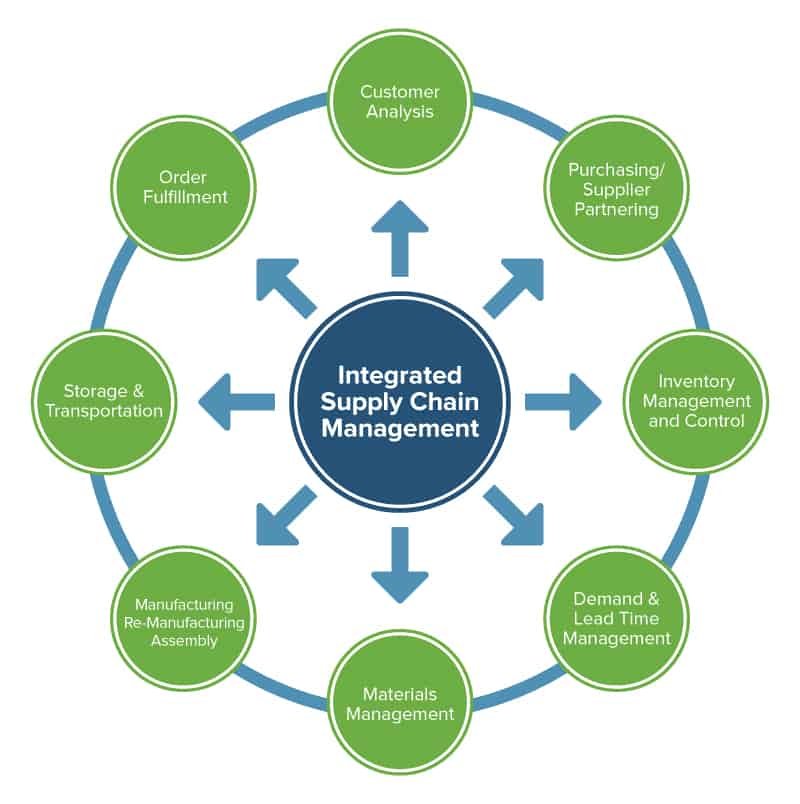
Companies that master global supply chain management achieve remarkable competitive advantages: 40% higher profitability, 50% faster time-to-market, and 30% lower operational costs compared to industry peers. According to analysis from our The Daily Explainer Blog, organizations with optimized supply chains maintained business continuity during recent global disruptions while competitors faced shutdowns and stockouts. This comprehensive guide will explore the intricacies of global supply chain management, providing actionable insights and strategies for building resilient, efficient, and sustainable global operations.
Understanding modern global supply chain management is no longer optional for business leaders—it’s a fundamental requirement for survival and growth in the 21st-century marketplace. The ability to navigate complex international logistics, manage cross-border regulations, and build resilient supplier networks separates market leaders from struggling competitors.
Part 1: Background and Context – The Evolution of Global Supply Chains
The journey of global supply chain management has evolved through several distinct eras, each marked by technological advancements and changing business paradigms:
The Localized Production Era (Pre-1950s)
Businesses operated within regional or national boundaries, with production facilities located close to consumer markets. Supply chains were relatively simple, involving few partners and minimal international coordination. Inventory management relied on basic forecasting and substantial safety stocks.
The Containerization Revolution (1950s-1980s)
The standardization of shipping containers dramatically reduced transportation costs and complexity. This innovation, coupled with advancing communication technologies, enabled the first truly global supply chains. Companies began exploring offshore manufacturing to leverage cost advantages, though coordination remained challenging.
The Lean Manufacturing and Globalization Wave (1980s-2000)
Inspired by Toyota’s production system, businesses embraced just-in-time manufacturing and inventory minimization. The rise of free trade agreements and economic liberalization accelerated globalization. During this period, companies like Walmart and Dell demonstrated how optimized global supply chain management could create massive competitive advantages through cost reduction and efficiency improvements.
The Digital Integration Era (2000-2020)
The internet, enterprise resource planning (ERP) systems, and advanced logistics software enabled real-time visibility and coordination across global networks. Supply chains became increasingly complex and specialized, with companies focusing on core competencies while outsourcing other functions. This era saw the rise of sophisticated global supply chain management strategies but also revealed vulnerabilities in overly lean and concentrated networks.
The Resilience and Transformation Era (2020-Present)
Recent global disruptions have triggered a fundamental rethinking of global supply chain management priorities. According to research from McKinsey & Company, companies are now balancing efficiency with resilience, diversifying sourcing strategies, and accelerating digital transformation. Sustainability and ethical considerations have also become central to modern global supply chain management strategies.
Part 2: Key Concepts Defined
To fully understand global supply chain management, it’s essential to master these foundational concepts:
Supply Chain Management
The active management of supply chain activities to maximize customer value and achieve sustainable competitive advantage. It represents a conscious effort by supply chain firms to develop and run supply chains in the most effective and efficient ways possible.
Logistics Management
That part of global supply chain management that plans, implements, and controls the efficient, effective forward and reverse flow and storage of goods, services, and related information between the point of origin and the point of consumption to meet customers’ requirements.
Procurement and Sourcing
The process of finding, evaluating, and engaging suppliers to obtain goods and services. In global supply chain management, this involves navigating international trade regulations, cultural differences, and currency considerations.
Inventory Management
The supervision of non-capitalized assets (inventory) and stock items. As explained in our Detailed Explanations section, effective inventory management balances the competing objectives of product availability and cost minimization across global networks.
Demand Planning and Forecasting
The process of predicting customer demand to optimize supply decisions. In global supply chain management, this involves analyzing market trends, seasonal patterns, and economic indicators across multiple regions.
Supply Chain Visibility
The ability to track products, components, and materials as they move through the supply chain. Modern global supply chain management relies on advanced technologies to provide real-time visibility across international borders.
Risk Management
The process of identifying, assessing, and controlling threats to an organization’s capital and earnings. These threats in global supply chain management include geopolitical events, natural disasters, supplier bankruptcies, and demand volatility.
Sustainability in Supply Chains
The management of environmental, social, and economic impacts, and the encouragement of good governance practices, throughout the lifecycles of goods and services in global supply chain management.
Part 3: How It Works: Implementing Effective Global Supply Chain Management (Step-by-Step)
Successful global supply chain management follows a structured, comprehensive approach:
Step 1: Strategic Network Design and Planning
Begin by designing an optimal global supply chain network:
- Analyze market demand patterns and customer requirements across regions
- Evaluate potential manufacturing locations, distribution centers, and transportation routes
- Conduct total cost analysis considering labor, transportation, tariffs, and inventory carrying costs
- Develop contingency plans for alternative sourcing and routing options
According to research from the World Economic Forum, companies that invest in strategic network design achieve 15-20% lower supply chain costs and significantly improved service levels.
Step 2: Supplier Selection and Relationship Management
Build a resilient global supplier base:
- Develop comprehensive supplier evaluation criteria including quality, cost, reliability, and ethical standards
- Implement supplier qualification and certification processes
- Establish clear performance metrics and regular review mechanisms
- Build collaborative relationships with key suppliers through joint planning and information sharing
Step 3: Logistics and Transportation Management
Design efficient global transportation networks:
- Optimize modal selection (air, ocean, rail, truck) based on cost, speed, and reliability requirements
- Negotiate contracts with logistics service providers and carriers
- Implement transportation management systems for route optimization and carrier performance tracking
- Manage customs compliance and international trade documentation
Step 4: Inventory Optimization and Management
Balance service levels with inventory costs:
- Develop inventory policies for different product categories and markets
- Implement demand forecasting systems that account for regional variations and seasonality
- Establish safety stock levels based on demand variability and supply reliability
- Deploy inventory management technology for real-time visibility and control
Step 5: Technology Infrastructure Implementation
Leverage digital tools for supply chain visibility and coordination:
- Select and implement Enterprise Resource Planning (ERP) systems
- Deploy Warehouse Management Systems (WMS) and Transportation Management Systems (TMS)
- Integrate Internet of Things (IoT) devices for real-time tracking and monitoring
- Implement data analytics platforms for performance measurement and continuous improvement
Step 6: Risk Management and Contingency Planning
Build resilience into global operations:
- Conduct comprehensive risk assessment across the entire supply chain
- Develop business continuity plans for various disruption scenarios
- Implement supply chain mapping to understand dependencies and vulnerabilities
- Establish crisis management protocols and communication plans
For organizations needing guidance with implementation, our experts at The Daily Explainer Contact provide customized consulting and support services.
Part 4: Why It’s Important – The Business Impact of Global Supply Chain Management
Effective global supply chain management delivers significant competitive advantages across multiple dimensions:
1. Cost Optimization and Efficiency
World-class global supply chain management drives substantial cost savings through:
- Transportation optimization reducing freight costs by 15-25%
- Inventory reduction freeing up working capital and reducing carrying costs
- Procurement savings through strategic sourcing and supplier negotiation
- Labor productivity improvements through process optimization and automation
2. Customer Service Excellence
Superior global supply chain management enhances customer satisfaction through:
- Reliable delivery performance building customer trust and loyalty
- Shorter lead times enabling faster response to market demands
- Perfect order fulfillment reducing errors and returns
- Flexible operations accommodating special customer requests
3. Risk Mitigation and Business Continuity
Proactive global supply chain management protects business operations through:
- Supply chain diversification reducing dependency on single sources or regions
- Early warning systems identifying potential disruptions before they impact operations
- Contingency planning ensuring continuity during crises and disruptions
- Compliance management avoiding regulatory penalties and reputational damage
4. Strategic Competitive Advantage
Advanced global supply chain management creates sustainable competitive edges through:
- Faster time-to-market enabling premium pricing and market share gains
- Customization capabilities meeting specific customer and market requirements
- Sustainability leadership appealing to environmentally conscious consumers
- Innovation in supply chain practices creating barriers to competitor imitation
5. Financial Performance Improvement
According to research from Harvard Business Review, companies with superior global supply chain management achieve:
- 15-20% higher profit margins than industry averages
- 30-50% higher asset utilization through improved inventory turns
- 20-30% higher market valuation multiples
- Stronger cash flow generation through working capital optimization
Part 5: Common Misconceptions About Global Supply Chain Management
Several persistent myths hinder effective global supply chain management:
Misconception 1: “Supply Chain Management is Just About Cost Reduction”
Reality: While cost efficiency is important, modern global supply chain management balances cost with service, risk, sustainability, and innovation. The most successful companies use their supply chains as strategic differentiators rather than mere cost centers.
Misconception 2: “Global Supply Chains Are Too Complex to Manage Effectively”
Reality: While global operations are complex, advanced technologies and management practices make effective global supply chain management achievable. The key is systematic approach, appropriate technology, and skilled personnel.
Misconception 3: “Just-in-Time Inventory is Always the Best Approach”
Reality: The optimal inventory strategy depends on product characteristics, supply reliability, and demand patterns. Recent disruptions have shown that “just-in-case” inventory buffers are sometimes necessary for resilience.
Misconception 4: “Supply Chain Digital Transformation Requires Complete Overhaul”
Reality: Successful digital transformation in global supply chain management typically involves incremental implementation, starting with high-impact areas and expanding gradually. Many solutions integrate with existing systems.
Misconception 5: “Sustainability and Profitability Are Incompatible Goals”
Reality: Sustainable global supply chain management practices often drive profitability through waste reduction, efficiency improvements, and enhanced brand reputation. According to MIT Center for Transportation & Logistics, companies with strong sustainability performance often achieve superior financial results.
Part 6: Recent Developments in Global Supply Chain Management
The field of global supply chain management is evolving rapidly, with several transformative trends:
1. Digital Transformation and Industry 4.0
Advanced technologies are revolutionizing global supply chain management:
- Artificial Intelligence and Machine Learning for predictive analytics and automation
- Internet of Things (IoT) for real-time tracking and condition monitoring
- Blockchain for enhanced transparency and security in transactions
- Digital twins for simulation and optimization of supply chain networks
2. Resilience and Agility Focus
Recent disruptions have accelerated focus on building resilient supply chains:
- Multi-sourcing strategies reducing dependency on single regions or suppliers
- Regionalization and near-shoring bringing production closer to key markets
- Inventory strategy rebalancing with strategic safety stocks
- Enhanced risk monitoring and early warning systems
3. Sustainability and Circular Economy Integration
Environmental considerations are becoming central to global supply chain management:
- Carbon footprint measurement and reduction initiatives
- Circular supply chains focusing on reuse, recycling, and remanufacturing
- Ethical sourcing and supplier sustainability standards
- Green logistics optimizing transportation for environmental impact
4. Advanced Analytics and AI Implementation
Data-driven decision making is transforming global supply chain management:
- Predictive analytics for demand forecasting and risk assessment
- Prescriptive analytics recommending optimal courses of action
- Autonomous planning systems adapting to changing conditions
- Real-time optimization of logistics and inventory decisions
5. Supply Chain as a Service (SCaaS)
New business models are emerging in global supply chain management:
- Platform-based supply chain solutions enabling smaller companies to access sophisticated capabilities
- Flexible logistics services scaling with business needs
- Collaborative networks connecting multiple supply chain partners
- Outcome-based pricing models aligning incentives across the supply chain
Conclusion & Key Takeaways
Global supply chain management has evolved from a back-office function to a strategic capability that directly impacts business performance, customer satisfaction, and competitive positioning. In today’s volatile global environment, excellence in global supply chain management is not just advantageous—it’s essential for business survival and growth.
Key Takeaways:
- Strategic Integration is Essential: Global supply chain management must be fully integrated with business strategy, not treated as a separate operational function. The most successful companies align supply chain capabilities with overall business objectives.
- Balance Efficiency with Resilience: The pursuit of lean operations must be balanced with adequate resilience measures. Companies need to find the optimal point between cost efficiency and operational robustness.
- Technology Enables Transformation: Digital technologies are revolutionizing global supply chain management, providing unprecedented visibility, automation, and analytical capabilities. However, technology should serve business needs rather than drive strategy.
- Talent Development is Critical: The complexity of modern global supply chain management requires skilled professionals with diverse capabilities including analytics, international business, and risk management.
- Collaboration Creates Value: Successful global supply chain management depends on strong relationships and collaboration with suppliers, logistics partners, and customers. Information sharing and joint planning create mutual benefits.
- Sustainability is Strategic: Environmental and social responsibility are no longer optional in global supply chain management. Sustainable practices increasingly drive competitive advantage and business value.
- Continuous Improvement is Necessary: Global supply chain management is not a one-time project but requires ongoing optimization and adaptation to changing market conditions, technologies, and risks.
The future of global supply chain management will be characterized by increased digitization, greater emphasis on resilience and sustainability, and more collaborative business models. Companies that proactively develop these capabilities will be positioned to thrive in an increasingly complex and volatile global business environment.
For additional resources and expert insights on optimizing your supply chain operations, visit our comprehensive Supply Chain Resource Center for case studies, templates, and industry analysis.
About The Author





Hi there mates, its enormous piece of writing about tutoringand completely explained, keep it up all the time.
This information is worth everyone’s attention. Where can I find out more?
Nice blog here! Also your site loads up very fast!
What host are you using? Can I get your affiliate link to
your host? I wish my web site loaded up as fast as yours lol
Pretty nice post. I just stumbled upon your weblog and wanted to say that I have truly enjoyed browsing your
blog posts. After all I’ll be subscribing to your
rss feed and I hope you write again soon!
I like the helpful info you provide to your articles.
I’ll bookmark your weblog and take a look at again here regularly.
I am moderately sure I will be informed lots of new stuff right here!
Best of luck for the next!
Hello, I think your blog might be having browser compatibility
issues. When I look at your blog in Ie, it looks fine but
when opening in Internet Explorer, it has some overlapping.
I just wanted to give you a quick heads up!
Other then that, wonderful blog!
It’s appropriate time to make some plans for the future and
it is time to be happy. I’ve read this post and if I could I wish to suggest you few interesting things or advice.
Perhaps you could write next articles referring to this article.
I want to read more things about it!
Every weekend i used to pay a quick visit this web
page, for the reason that i wish for enjoyment, since this this web page conations really nice funny material too.
With havin so much written content do you ever
run into any issues of plagorism or copyright violation? My website has a lot of completely unique
content I’ve either authored myself or outsourced but it seems a lot of it is popping it
up all over the internet without my permission. Do you know
any methods to help prevent content from being stolen?
I’d really appreciate it.
Appreciate this post. Will try it out.
Have you ever thought about adding a little bit more than just your articles?
I mean, what you say is fundamental and all. But
think about if you added some great visuals or video clips to give your posts more,
“pop”! Your content is excellent but with images and clips, this
website could certainly be one of the most beneficial in its field.
Good blog!
I enjoy what you guys are usually up too. This type of
clever work and coverage! Keep up the awesome works guys I’ve included you guys to
our blogroll.
Link exchange is nothing else except it is just placing the
other person’s blog link on your page at suitable place and other person will also do
same in favor of you.
I’m extremely inspired with your writing skills and
also with the format on your blog. Is this a paid topic or did you modify it your self?
Either way keep up the excellent high quality writing,
it’s rare to look a great weblog like this one nowadays..
Hi! I could have sworn I’ve been to this blog before but after checking through some of the post I realized it’s new to me.
Anyhow, I’m definitely delighted I found it
and I’ll be bookmarking and checking back often!
Hello, I check your new stuff regularly. Your humoristic style is witty, keep
it up!
Fantastic goods from you, man. I’ve understand your stuff previous
to and you’re just too fantastic. I really like what you’ve acquired here, really like what you are saying and the way
in which you say it. You make it enjoyable and you still take care of to keep it wise.
I cant wait to read far more from you. This is really a wonderful website.
Hello! Do you know if they make any plugins to assist with Search Engine Optimization? I’m trying
to get my blog to rank for some targeted keywords but I’m not seeing very good gains.
If you know of any please share. Kudos!
I was wondering if you ever considered changing the layout of
your site? Its very well written; I love what youve got
to say. But maybe you could a little more in the way of content so people could connect with it better.
Youve got an awful lot of text for only having one or
2 images. Maybe you could space it out better?
Fantastic beat ! I would like to apprentice while you amend your
website, how can i subscribe for a blog site?
The account aided me a acceptable deal. I had been a little bit acquainted of this your broadcast
offered bright clear idea
Great blog here! Also your site loads up very fast!
What web host are you using? Can I get your affiliate link to your
host? I wish my website loaded up as quickly as
yours lol
Hello! I know this is somewhat off topic but I was wondering which blog platform are you using for this site?
I’m getting fed up of WordPress because I’ve
had issues with hackers and I’m looking at options for another
platform. I would be fantastic if you could point me in the direction of a good platform.
It’s really a great and helpful piece of information.
I am satisfied that you shared this useful information with us.
Please keep us informed like this. Thank you
for sharing.